Within Haunted Northumberland
Was the Alnwick Vampire Really a Vampire?
The Alnwick Vampire legend reaches back to medieval revenant belief, when the restless dead were blamed for sickness and dread.
On this page
- William de Newburgh's Account
- Revenants Before Gothic Vampires
- Disease, Sin and Social Fear
Page outline Jump by section
Introduction
The Alnwick Vampire is best understood not as a caped Gothic vampire, but as a medieval revenant: a restless corpse said to have returned from the grave, spread fear through a Northumberland community, and been destroyed by fire. The story comes from William of Newburgh’s late 12th-century Historia rerum Anglicarum, where it appears alongside other accounts of walking corpses at Buckingham, Berwick and Melrose. In William’s version, the dead man is morally tainted, dies without proper confession, rises at night, and is blamed for disease until local men dig up and burn the body.[Internet History Sourcebooks]sourcebooks.web.fordham.eduOpen source on fordham.edu.
That makes the tale one of Northumberland’s most valuable haunted-history stories. It is old, unusually specific, and preserved by a named medieval chronicler rather than appearing only in modern ghost-tour retellings. Yet it is also a warning against reading backwards from Dracula. William was writing about sin, death, contagion, parish terror and the dangerous dead, not about the elegant literary vampire that developed much later in English fiction. Modern Alnwick Castle presents the legend as part of the castle’s haunting past, but the medieval source points to a deeper fear: the possibility that a bad death could keep disturbing the living.[Alnwick Castle]alnwickcastle.comOpen source on alnwickcastle.com.
William de Newburgh’s Account
William of Newburgh was an Augustinian canon from Yorkshire whose Historia rerum Anglicarum was produced between about 1196 and his death in 1198. Modern scholarship treats the work mainly as a conventional history of England from the Norman Conquest to the late 12th century, but Book Five contains a striking cluster of four revenant stories in chapters 22 to 24. These are not isolated campfire tales dropped into an otherwise unrelated book; they sit within a chronicle interested in disorder, moral failure, public fear and divine judgement.[Cambridge University Press & Assessment]cambridge.orgOpen source on cambridge.org.
The Alnwick episode appears in William’s chapter “Of certain prodigies”. The place is called “Anantis” in the translated text, and the story is commonly identified with Alnwick. William says he heard it from an aged monk who lived in authority in the area and claimed to have been present when the matter occurred. That is not proof in the modern sense, but it matters for folklore: William frames the account as recent, local and witness-mediated rather than as a remote marvel from antiquity.[Internet History Sourcebooks]sourcebooks.web.fordham.eduOpen source on fordham.edu.
The dead man is introduced as someone of “evil conduct” who had fled from Yorkshire, whether from enemies or the law, and entered the service of the lord of the castle. He marries, suspects his wife of adultery, and stages a trap by pretending to travel away before returning secretly to hide above her chamber. When he sees her with another man, he falls from his hiding place and is badly injured. A priest urges him to confess and receive the Eucharist, but the man delays until the following day. He dies that night, “destitute of Christian grace”, in William’s moralising account.[Internet History Sourcebooks]sourcebooks.web.fordham.eduOpen source on fordham.edu.
The haunting begins after burial. William says the man emerges from his grave at night, is chased by barking dogs, wanders through courts and around houses, and frightens residents so badly that people bar their doors from dusk until sunrise. The revenant is not a pale aristocrat seducing victims in candlelit rooms. He is a dangerous local corpse, imagined as physically present, noisy, foul, and capable of violence.[Internet History Sourcebooks]sourcebooks.web.fordham.eduOpen source on fordham.edu.
The crisis then becomes communal. The air is said to be poisoned by the corpse’s movements; sickness and death fill the houses; the town appears almost deserted as survivors leave. On Palm Sunday, the parish priest gathers wise and religious men to decide what should be done. Before that consultation produces a formal remedy, two brothers whose father has died in the outbreak dig up the body, find it swollen and blood-filled, tear out its heart, and burn it. William says the pestilence ceases after the body is destroyed.[Internet History Sourcebooks]sourcebooks.web.fordham.eduOpen source on fordham.edu.
Revenants Before Gothic Vampires
Calling the Alnwick revenant a “vampire” is understandable, but it can mislead. The modern reader usually thinks of vampires through Dracula, cinema, fangs, coffins, seduction, aristocratic menace and blood-drinking. William’s revenant belongs to an older English and European pattern: the walking corpse that returns because of sin, bad death, demonic agency, unresolved ritual failure, or communal anxiety.[Springer Link]link.springer.comLink The Revenant in Europe: Medieval England | Springer Nature LinkLink The Revenant in Europe: Medieval England | Springer Nature Link
The word “vampire” became central to later literary and folkloric traditions, but the Alnwick story predates the famous English-language vampire tradition by centuries. John Polidori’s The Vampyre emerged from the 1816 Geneva ghost-story circle and helped shape the aristocratic literary vampire, while Bram Stoker’s Dracula appeared in 1897. By contrast, William’s account belongs to the 1190s and is written in the mental world of medieval clerics, confession, burial, pestilence and divine judgement.[British Library]britishlibrary.cnOpen source on britishlibrary.cn.
A revenant, in this setting, is not merely a ghostly image. It is often imagined as a corpse that moves. That is why the remedy is so bodily: open the grave, inspect the corpse, strike it, cut it, remove the heart, burn the remains, scatter ashes, or place a sacred document on the body. The problem is not solved by asking whether the apparition was “real” in a modern paranormal sense. The useful question is what kind of fear the story preserves.
William’s surrounding examples show the pattern clearly. In the Buckingham case, a dead man is said to harass his wife and neighbours until church authorities place a letter of absolution on the corpse. At Berwick, another dead man comes out by night, terrorises the town, and is burned because people fear that his pestiferous movements will spread disease. At Melrose, the so-called “dog-priest” returns from the grave, is wounded with an axe, and is later burned outside the monastery walls.[Internet History Sourcebooks]sourcebooks.web.fordham.eduOpen source on fordham.edu.
Seen beside those cases, the Alnwick Vampire is not an eccentric one-off. It is part of a northern and borderland cluster of stories in which the dead disturb the living, dogs react, communities panic, clergy are consulted, bodies are exhumed, and fire becomes a terrible form of purification. Northumberland’s version stands out because it is attached to Alnwick, a place already heavy with castle history and border identity.
Disease, Sin and Social Fear
The most frightening part of the Alnwick story is not a bite. It is contagion. William says the corpse’s “pestiferous breath” fills houses with disease and death, and that the town, recently populous, seems almost deserted. Medieval people did not understand infection in modern microbiological terms, but they did connect bad air, foul smells, corruption, rotting matter and sickness. The revenant becomes a vivid explanation for an outbreak that has made normal life collapse.[Internet History Sourcebooks]sourcebooks.web.fordham.eduOpen source on fordham.edu.
The tale also links disease to moral disorder. The dead man is not presented as an innocent victim. He is a fugitive from Yorkshire, morally suspect, jealous, violent in temperament, spiritually negligent and unconfessed at death. In William’s Christian framework, that matters. A badly ordered life leads to a badly ordered death; a badly ordered death threatens the community that buried him.[Internet History Sourcebooks]sourcebooks.web.fordham.eduOpen source on fordham.edu.
Modern scholarship has pushed against treating William’s revenant stories as random superstition. One reading sees them as part of William’s broader concern with reform, clerical behaviour and the separation of religious duty from worldly corruption. Another sees the walking dead as “social monsters”, figures through which the chronicle comments on unrest, misrule and disorder in the 1190s. These readings do not make the Alnwick tale less eerie. They make it more revealing, because the revenant is not only a monster but a sign that the social and spiritual order has gone wrong.[OUP Academic]academic.oup.comOpen source on oup.com.
The two brothers who burn the corpse are important for the story’s emotional force. They have lost their father to the plague and expect to die next unless they act. Their response is desperate, practical and vengeful: they go to the cemetery while others are feasting, dig up the body, and destroy it. William’s description of the swollen corpse, torn shroud, flowing blood and removed heart is grim because it turns fear into action. The village does not simply wait for theology to solve the problem; grief pushes ordinary men into the graveyard.[Internet History Sourcebooks]sourcebooks.web.fordham.eduOpen source on fordham.edu.
Why Alnwick Matters in Northumberland’s Haunted History
Alnwick Castle is one of Northumberland’s great historic anchors. The castle’s own timeline says it was built in the 11th century to control and protect the border, and notes that it was besieged by William the Lion of Scotland in 1172 and 1174. Later, from 1309, Henry Percy and his successors developed it into a powerful border fortress.[Alnwick Castle]alnwickcastle.comAlnwick Castle Explore the History of Alnwick Castle | Alnwick CastleAlnwick Castle Explore the History of Alnwick Castle | Alnwick Castle
That setting shapes how the vampire legend is heard today. Alnwick is not a generic haunted house. It is a castle town in a county shaped by frontier politics, warfare, church authority, aristocratic power and exposed northern geography. The revenant tale belongs to that older Northumbrian atmosphere: not cosy Gothic décor, but a world of castle service, parish burial, fear of the night, and communal vulnerability.
The modern castle also keeps the story alive for visitors. Alnwick Castle’s own haunted-history page describes the Alnwick Vampire as a 12th-century legend recorded by William de Newburgh and summarises the familiar elements: a man in service at the castle, suspected adultery, fatal fall, restless burial, illness, livestock death and local fear.[Alnwick Castle]alnwickcastle.comOpen source on alnwickcastle.com.
There is, however, a careful distinction to make. The modern tourist version naturally attaches the tale to Alnwick Castle because that is the recognisable landmark. William’s story is more concerned with the castle’s lord, the dead man’s service, the parish, the town and the graveyard terror than with a specific room, tower or apparition still said to appear. This is a medieval community-haunting, not a single-location ghost sighting.
That distinction helps place the page within Northumberland’s wider haunted map. Chillingham Castle is famous for named apparitions and visitor-facing ghost lore. Bamburgh and Dunstanburgh carry ruined-castle atmosphere and coastal memory. Alnwick’s revenant is different: it is less about seeing a figure today and more about one of the earliest written windows onto the county’s fear of the walking dead.
How Credible Is the Alnwick Vampire Story?
The Alnwick Vampire should be treated as a medieval report of belief, not as evidence that a vampire existed. Its strongest historical value is that it was written down by a known 12th-century chronicler and placed among other revenant accounts in a serious historical work. The Fordham Internet Medieval Sourcebook text is based on Joseph Stevenson’s 1861 translation of The Church Historians of England, with modernised spellings and altered paragraph divisions for readability.[Internet History Sourcebooks]sourcebooks.web.fordham.eduOpen source on fordham.edu.
William’s own framing is revealing. Before the Melrose and Alnwick examples, he admits that it would be hard to believe corpses could leave graves and return to them if frequent recent examples did not, in his view, provide abundant testimony. That line shows both his credulity and his anxiety about credibility. He knows the claim sounds extraordinary, so he supports it by appeal to repeated reports and named or respectable informants.[Internet History Sourcebooks]sourcebooks.web.fordham.eduOpen source on fordham.edu.
From a modern standpoint, several explanations are more plausible than a supernatural corpse. A real outbreak of disease may have been remembered through the language of foul air and a bad burial. A disliked outsider may have become the focus of communal blame after death. Exhumation could have revealed ordinary decomposition effects that looked horrifying to people expecting signs of unnatural life: swelling, blood-like fluids, torn cloth, or apparent freshness. The story may also have been shaped by clerical teaching about confession, the Eucharist and the danger of dying in sin.
That sceptical reading does not empty the tale of meaning. It sharpens it. The Alnwick revenant shows how medieval communities could make sense of sudden mortality by locating it in a body, a biography and a ritual failure. The dead man is frightening because he gives a face to invisible disaster. In a haunted-history setting, that is more interesting than asking whether he meets a checklist for modern vampires.

Was the Alnwick Vampire Really a Vampire?
In the Gothic sense, no. In the older, broader sense of the dangerous dead, the label is defensible but imprecise. The Alnwick figure does not resemble Count Dracula or the seductive vampires of later fiction. He does not live in a grand Transylvanian mode, lure victims romantically, or belong to a recognisable vampire species. He is a corpse believed to have risen because of sin and spiritual failure, spreading terror and pestilence until destroyed by fire.[Internet History Sourcebooks]sourcebooks.web.fordham.eduOpen source on fordham.edu.
The best term is “revenant”, because it keeps the story in its medieval setting. It allows the Alnwick tale to be compared with Berwick and Melrose, where William also describes night-wandering corpses, barking dogs, infected air, exhumation and burning. It also prevents the modern vampire image from swallowing the older local tradition.[Internet History Sourcebooks]sourcebooks.web.fordham.eduOpen source on fordham.edu.
The reason the “Alnwick Vampire” name survives is simple: it is memorable, marketable and close enough to the later vampire tradition to catch attention. But the story’s real power lies beneath that name. It is a Northumberland revenant tale about a community facing death it cannot explain, a grave that will not stay quiet, and a corpse made to carry fears of sin, disease, betrayal and social collapse.
For readers exploring haunted Northumberland, Alnwick’s vampire matters because it is not merely another castle ghost. It is a surviving medieval account of the walking dead before the modern vampire took shape: older, rougher, more local, and in many ways more disturbing.
Amazon book picks
Further Reading
Books and field guides related to Was the Alnwick Vampire Really a Vampire?. Use these as the next step if you want deeper reading beyond the article.
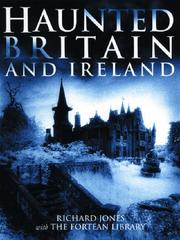
Haunted Britain and Ireland
Broadens interest from Alnwick to British haunting traditions.

Ghostland: In Search of a Haunted Country
Examines enduring British ghost beliefs and landscapes.

Bram Stoker's Dracula omnibus
First published 1897. Subjects: Fiction, horror, Children: Grades 3-4, Dracula, count (fictitious character), fiction, Frankenstein (fict...
eBay marketplace picks
Marketplace Samples
Live-tested eBay searches with available results related to this page.
Endnotes
1.
Source: sourcebooks.web.fordham.edu
Link:https://sourcebooks.web.fordham.edu/basis/williamofnewburgh-five.asp
2.
Source: cambridge.org
Link:https://www.cambridge.org/core/books/haskins-society-journal-32-2020-studies-in-medieval-history/wiley-lecture-monsters-in-anglonorman-historiography-two-notes-on-william-of-newburghs-revenants/91AC0B1D639C59166EEDCB13DD330D01
3.
Source: academic.oup.com
Link:https://academic.oup.com/histres/article/96/273/283/7146770
4.
Source: link.springer.com
Title: Link The Revenant in Europe: Medieval England | Springer Nature Link
Link:https://link.springer.com/rwe/10.1007/978-3-031-24734
5.
Source: sourcebooks.web.fordham.edu
Title: williamofnewburgh one.asp
Link:https://sourcebooks.web.fordham.edu/basis/williamofnewburgh-one.asp
6.
Source: vampires.com
Title: william of newburghs chronicles on vampires in the middle ages
Link:https://www.vampires.com/william-of-newburghs-chronicles-on-vampires-in-the-middle-ages/
7.
Source: youtube.com
Title: Exit 94: Haunting Tales of Alnwick Castle
Link:https://www.youtube.com/watch?v=4tf0XoYBjoQ
Source snippet
Revenants - Europe's Punchiest Undead - Scottish - Extra Mythology...
8.
Source: youtube.com
Link:https://www.youtube.com/watch?v=egJT2bN_uDU
Source snippet
The (True?) Medieval Ghost Stories of William of Newburgh...
9.
Source: alnwickcastle.com
Link:https://www.alnwickcastle.com/blog/the-secrets-of-alnwick-castles-haunting-past
10.
Source: britishlibrary.cn
Link:https://www.britishlibrary.cn/en/works/dracula/
11.
Source: stories.uq.edu.au
Link:https://stories.uq.edu.au/contact-magazine/2023/polidoris-the-vampyre/index.html
12.
Source: alnwickcastle.com
Title: Alnwick Castle Explore the History of Alnwick Castle | Alnwick Castle
Link:https://www.alnwickcastle.com/about-alnwick-castle/the-history-of-alnwick-castle/the-history-of-the-castle
13.
Source: stephenrgordon.wordpress.com
Link:https://stephenrgordon.wordpress.com/page/2/
14.
Source: Wikipedia
Title: William of Newburgh
Link:https://en.wikipedia.org/wiki/William_of_Newburgh
15.
Source: Wikipedia
Title: Alnwick Castle
Link:https://en.wikipedia.org/wiki/Alnwick_Castle
16.
Source: Wikipedia
Link:https://en.wikipedia.org/wiki/Revenant
17.
Source: Wikipedia
Title: The Vampyre
Link:https://en.wikipedia.org/wiki/The_Vampyre
18.
Source: Wikipedia
Link:https://en.wikipedia.org/wiki/Dracula
19.
Source: alnwickcastle.com
Title: discover the percy family
Link:https://www.alnwickcastle.com/blog/discover-the-percy-family
20.
Source: alnwickcastle.com
Title: The Percy Family | History of the Percy
Link:https://www.alnwickcastle.com/about-alnwick-castle/the-history-of-alnwick-castle/the-percy-family
21.
Source: alnwickcastle.com
Link:https://www.alnwickcastle.com/
22.
Source: alnwickcastle.com
Link:https://www.alnwickcastle.com/blog/alnwick-castle-past-and-present
23.
Source: historicengland.org.uk
Title: Alnwick Castle, Denwick
Link:https://historicengland.org.uk/listing/the-list/list-entry/1001041
24.
Source: hprltd.co.uk
Link:https://www.hprltd.co.uk/projects/alnwick-castle
25.
Source: youtube.com
Link:https://www.youtube.com/watch?v=lQx_aalqSBs
26.
Source: hauntedhosts.com
Link:https://hauntedhosts.com/haunted-places/northumberland/location/768-alnwick-castle-vampire-legend
27.
Source: facebook.com
Link:https://www.facebook.com/groups/735389799823006/posts/5936134846415116/
28.
Source: gazetteer.org.uk
Link:https://gazetteer.org.uk/place/Alnwick_Castle%2C_Northumberland_299560
29.
Source: great-castles.com
Link:https://great-castles.com/alnwick.html
30.
Source: thehistoryjar.com
Title: alnwick castle
Link:https://thehistoryjar.com/2018/07/05/alnwick-castle/
31.
Source: mainlymuseums.com
Link:https://mainlymuseums.com/post/879/alnwick-castle/
32.
Source: northeastbylines.co.uk
Title: the alnwick vampire
Link:https://northeastbylines.co.uk/region/north-east/the-alnwick-vampire/
33.
Source: spookyisles.com
Title: william of newburgh
Link:https://www.spookyisles.com/william-of-newburgh/
34.
Source: bars.ac.uk
Link:https://www.bars.ac.uk/blog/?p=2344
35.
Source: books.google.com
Title: Historia rerum Anglicarum
Link:https://books.google.com/books/about/Historia_rerum_Anglicarum.html?id=TGyazgEACAAJ
Additional References
36.
Source: ghostwalksalnwick.co.uk
Link:https://ghostwalksalnwick.co.uk/
37.
Source: brill.com
Link:https://brill.com/downloadpdf/book/9789004358331/B9789004358331_006.pdf?srsltid=AfmBOoqVHyy08cY71f4H5Y6ojkcdQW0s5iP0avbWxN2goZrjzZ8sqNjW
38.
Source: amazon.nl
Link:https://www.amazon.nl/Dracula-Penguin-English-Library-ebook/dp/B007FX9EPM?tag=searcht-20
39.
Source: northumberlandestates.co.uk
Link:https://northumberlandestates.co.uk/rural-estate/historic-property/
40.
Source: andersonandgarland.com
Link:https://www.andersonandgarland.com/alnwick-castle/
41.
Source: academia.edu
Link:https://www.academia.edu/8820300/Jason_Nolan_Unearthing_Medieval_Vampire_Stories_in_England_Fragments_from_De_Nugis_Curialium_and_Historia_Rerum_Anglicarum_
42.
Source: instagram.com
Link:https://www.instagram.com/reel/DW1iGCZkj8M/
43.
Source: allegro.pl
Link:https://allegro.pl/produkt/selections-from-the-historia-rerum-anglicarum-of-william-of-newburgh-1920-cd3d4428-1fd6-4150-b7d7-f49359631679
44.
Source: facebook.com
Link:https://www.facebook.com/lovegreatbritain/posts/sink-your-teeth-into-one-of-britains-oldest-vampire-legends-this-halloween-its-d/1244916884334084/
45.
Source: facebook.com
Link:https://www.facebook.com/groups/1279677515381432/posts/8334456256570154/
Topic Tree