Within Haunted Hampshire
Does William Rufus Still Haunt the Forest?
The Rufus Stone turns a disputed royal hunting death into Hampshire's most famous roadside ghost tradition.

On this page
- The royal death at Stoney Cross
- Anniversary apparitions and forest folklore
- Accident, murder and tourist tradition
Page outline Jump by section
Introduction
The Rufus Stone is the New Forest’s most famous meeting point between royal history and ghost tradition. It stands near Minstead and Stoney Cross in Hampshire, marking the supposed place where King William II, known as William Rufus, was killed by an arrow during a hunt on 2 August 1100. The haunting story is not that the stone proves a ghost, but that a disputed royal death became fixed to a roadside landmark, then gathered anniversary apparitions, blood-trail legends and murder theories around it. Modern visitors are usually asking three linked questions: did William really die here, was it an accident or an assassination, and why do people still speak of his restless presence in this quiet patch of forest? The best answer is that the history is real, the exact place is uncertain, and the ghost story belongs to the long afterlife of a death that never felt fully settled.[historicengland.org.uk]historicengland.org.ukHistoric England Rufus Stone, MinsteadHistoric EnglandRufus Stone, Minstead - 11674314/16 Rufus Stone 8.4.76 GV II… inscriptions on each face. Erected on supposed spot of o…
The royal death at Stoney Cross
The traditional story begins with a royal hunting party in the New Forest. William II, the third son of William the Conqueror, had ruled England since 1087. On 2 August 1100 he was hunting in the forest with nobles including Walter Tirel, often spelt Tyrrell in later versions. The familiar tale says Tirel shot at a stag, the arrow glanced from an oak tree, and it struck William in the breast, killing him almost at once. Historic England’s listing for the Rufus Stone preserves the cautious wording: the monument stands on the “supposed spot” of the oak tree from which the fatal arrow was said to have glanced.[Historic England]historicengland.org.ukHistoric England Rufus Stone, MinsteadHistoric EnglandRufus Stone, Minstead - 11674314/16 Rufus Stone 8.4.76 GV II… inscriptions on each face. Erected on supposed spot of o…
The stone itself is not medieval. Historic England dates the monument to 1745, erected by the Earl De La Warr, and records that it was encased in cast iron in 1841 by Sturges Bourne. That matters because the Rufus Stone is not a contemporary witness to William’s death. It is an eighteenth-century act of commemoration, later protected and formalised, placed where local tradition had already settled the story. Its Grade II listing gives the site official heritage status, but not certainty about the precise location of the death.[Historic England]historicengland.org.ukHistoric England Rufus Stone, MinsteadHistoric EnglandRufus Stone, Minstead - 11674314/16 Rufus Stone 8.4.76 GV II… inscriptions on each face. Erected on supposed spot of o…
The inscription makes the legend feel unusually concrete. It names the oak, Walter Tyrrell, the stag, the glancing arrow, the king’s instant death and the date: 2 August 1100. Another face of the monument says William’s body was laid in the cart of a man named Purkis and carried to Winchester Cathedral. A third explains that the stone was set up so “an event so memorable” would not be forgotten. These inscriptions turn a doubtful forest location into a readable roadside narrative: visitor, tree, arrow, corpse, cart, cathedral.[Hampshire History]hampshire-history.comHampshire History William Rufus – His DeathHampshire History William Rufus – His Death
The geography also helps the legend. The Rufus Stone is close to the A31 and accessible from a small car park, yet it sits in a wooded New Forest setting where the road noise and the trees can easily coexist in the imagination. New Forest tourism presents it as a short, accessible walk and picnic stop, but also as a place where the “legend on the stone” is part of the visit. That mix of easy access and eerie story is one reason it has become Hampshire’s best-known roadside haunting rather than just a medieval footnote.[The New Forest]thenewforest.co.ukOpen source on thenewforest.co.uk.

Why the exact place is part of the mystery
The strongest historical caution is simple: William II was killed in the New Forest, but the exact spot is not securely known. Archaeology Travel notes that the Minstead-area monument is the place marked since the eighteenth century and supported by local lore, while also reporting the view that the actual death may have occurred nearer Beaulieu. That does not make the Rufus Stone meaningless. It means the landmark is best understood as the traditional focus of the story rather than a proven crime scene.[Archaeology Travel]archaeology-travel.comOpen source on archaeology-travel.com.
This uncertainty has helped the haunting rather than weakened it. A confirmed site can become a monument; an uncertain site can become a legend. The Rufus Stone sits in the gap between medieval chronicle, later local memory and tourist interpretation. Visitors are not only looking at a memorial. They are looking at the place where Hampshire has chosen to anchor the story of a king whose death still feels unresolved. Historic England’s “supposed spot” phrasing is therefore useful: it keeps the heritage claim honest while leaving room for folklore to explain why the location still matters.[Historic England]historicengland.org.ukHistoric England Rufus Stone, MinsteadHistoric EnglandRufus Stone, Minstead - 11674314/16 Rufus Stone 8.4.76 GV II… inscriptions on each face. Erected on supposed spot of o…
The stone’s own history adds another layer. It commemorates an oak that no longer survives, and the present monument replaced or protected earlier memorial material after damage and erosion. University of Northern Iowa’s monuments project records the stone as standing since 1745, with the iron casing added in 1841 to prevent vandalism and erosion. The result is a physical object that looks old enough to feel solemn, but whose form also tells a story about later generations repeatedly repairing, enclosing and reasserting the memory.[UNI ScholarWorks]scholarworks.uni.eduhis monuments sp2022his monuments sp2022
Anniversary apparitions and forest folklore
The most direct ghost tradition around the Rufus Stone says that William II may still be seen near the place of his death. The New Forest’s own heritage material describes a claimed apparition on a summer evening: a short, stocky man with red hair, a tunic and stout boots, interpreted as the ghost of King William II. This is a classic local haunting form. The figure is not a vague shadow; he is recognisable because he carries visual clues that match the popular image of “Rufus”, the red king.[The New Forest]thenewforest.co.ukThe New ForestWitchcraft, Ghosts, Legends & Myths of the New ForestIt is claimed that on a summer's evening you may see a short, stocky m…
A second version is more dramatic and more strongly tied to the calendar. Haunted Britain preserves the tradition that William’s ghost returns each year on the anniversary of his death to follow the blood trail left when his body was taken from the forest to Winchester. Britain Express records a similar legend: the corpse, carried to Winchester, left blood on the forest floor, and the king’s ghost returns annually to follow that route. These are folklore claims, not verified witness records, but they show how the haunting moved beyond the stone itself into a remembered journey through Hampshire.[Haunted Britain]haunted-britain.comHaunted Britain The Rufus StoneHaunted Britain The Rufus Stone
The anniversary matters because 2 August gives the legend a ritual shape. Instead of a ghost that appears randomly, William becomes a returning figure bound to the date of his death. That pattern is common in British ghost lore: violent deaths, executions, battles and betrayals often acquire calendar hauntings because anniversaries make memory repeatable. At Rufus Stone, the date is not a later invention loosely attached to the tale; it is also the recorded date of the king’s death and appears in the monument’s inscription.[Historic England]historicengland.org.ukOpen source on historicengland.org.uk.
Modern ghost tourism has kept this anniversary structure alive. Haunted New Forest advertised a “Rufus Stone 925th Anniversary Ghost Walk & Paranormal Investigation” for 2 August 2025, explicitly connecting the 925th anniversary of the death with “ghostly sightings at the site” and calling it perhaps the New Forest’s most famous ghost story. That kind of event does not prove the apparition tradition, but it shows how the legend is still being performed in the present: through guided walks, anniversary visits and public retellings.[Haunted New Forest]hauntednewforest.co.ukrufus stone 925th anniversary ghost walk paranormal investigation 8pmrufus stone 925th anniversary ghost walk paranormal investigation 8pm
Accident, murder and tourist tradition
The haunting endures because the death itself has always invited suspicion. The official-looking story is a hunting accident: an arrow meant for a stag rebounds from a tree and kills the king. Yet the circumstances have long seemed convenient to later readers. Tirel fled, William’s younger brother Henry moved quickly to secure the treasury and the crown, and the king’s body was not treated with the ceremonious urgency one might expect for a reigning monarch. The modern scholarly debate is cautious: C. W. Hollister’s influential article, “The Strange Death of William Rufus”, notes that Tirel fled to France, but also that his English lands were not seized and no investigation was conducted.[JSTOR]jstor.orgOpen source on jstor.org.
The murder theory is powerful because it supplies motive and drama. William Rufus had enemies among nobles and churchmen, and his succession was politically charged. His brother Henry benefited immediately from his death. Even so, suspicion is not proof. Medieval hunting was dangerous, accounts were written after the event, and chroniclers often shaped royal deaths into moral stories. The Reading Museum summary treats William’s death as a historic event wrapped in later uncertainty, while Historic England keeps the heritage description focused on commemoration rather than claiming a solved assassination.[Reading Museum]readingmuseum.org.ukdeath william iideath william ii
For folklore, the uncertainty is almost ideal. If William was killed by accident, the ghost is a shocked soul bound to the place of a sudden death. If he was murdered, the ghost becomes a sign of injustice, betrayal and unfinished reckoning. If the exact spot is wrong, the Rufus Stone still works as a symbolic centre where the New Forest gathers the story. The legend does not need a single solved answer; it thrives because several plausible readings remain in tension.
Tourist tradition has made that tension easy to encounter. The stone is promoted as heritage, walking destination, picnic stop, royal mystery and spooky landmark. New Forest visitor material describes the death as mysterious and notes modern reports of an unsettling chill near the stone, while other local and travel sources emphasise the accident-or-murder question. The site is therefore doing several jobs at once: it is a listed monument, a walking landmark, a royal death marker and a ghost-story stage.[The New Forest]thenewforest.co.ukmyths and legendsmyths and legends

The Purkis cart and the road to Winchester
One of the most memorable parts of the Rufus Stone tradition is what happened after the arrow. According to the inscription and later retellings, William’s body was placed in a cart belonging to Purkis, often described as a charcoal burner, and taken to Winchester for burial. This detail gives the story a striking social contrast: the king dies among nobles, but his body is carried by a local working man. The monument itself names Purkis and Winchester Cathedral, making the cart journey part of the official-looking roadside narrative.[Hampshire History]hampshire-history.comHampshire History William Rufus – His DeathHampshire History William Rufus – His Death
The Purkis element is important because it localises a national event. Without it, William’s death might belong mainly to royal history. With it, the story belongs to the forest community: charcoal burners, rough tracks, a body jolting towards Winchester, and blood imagined on the ground. National Parks UK’s account of a family connection to Purkis shows how this piece of the story still has personal and local resonance, even where spellings and details vary.[National Parks]nationalparks.ukNational Parks Discover: The Rufus StoneNational Parks Discover: The Rufus Stone
Winchester completes the Hampshire arc. William was buried in Winchester Cathedral, and later tradition connected his burial with misfortune when the cathedral’s central tower collapsed in 1107. Some accounts say the collapse was blamed on the presence of William’s remains beneath it. Whether read as pious interpretation, hostile memory or architectural coincidence, the tower story extends the sense that Rufus did not rest easily after death.[Timeref]timeref.comwinchester cathedralwinchester cathedral
This is why the haunting is not confined to one stone. The strongest folklore pattern links three points: the death-place in the New Forest, the body’s journey through Hampshire, and the burial at Winchester. That route allows the ghost to become more than an apparition by a monument. He becomes a moving memory, returning from the forest towards the old royal and ecclesiastical centre of the county.
How credible is the Rufus Stone haunting?
The historical core is strong: William II died in the New Forest on 2 August 1100, and the Rufus Stone is an officially listed eighteenth-century monument marking the traditional place associated with that death. The details around the precise tree, exact location, Tirel’s intention and later apparition reports are much less secure. That distinction is the key to reading the site fairly. The Rufus Stone is excellent evidence for how Hampshire remembered the event; it is not decisive evidence for exactly where the arrow struck or whether a ghost has appeared.[Historic England]historicengland.org.ukHistoric England Rufus Stone, MinsteadHistoric EnglandRufus Stone, Minstead - 11674314/16 Rufus Stone 8.4.76 GV II… inscriptions on each face. Erected on supposed spot of o…
The ghost claims themselves are folkloric rather than evidential in a strict sense. They appear in local tourism pages, ghost-story websites and guided-walk publicity, usually in forms that are typical of place-based legend: a figure in old clothing, an anniversary return, a blood trail, a restless royal victim. These sources are valuable for understanding the tradition, but they should not be treated like legal testimony or contemporary medieval evidence.[thenewforest.co.uk]thenewforest.co.ukThe New ForestWitchcraft, Ghosts, Legends & Myths of the New ForestIt is claimed that on a summer's evening you may see a short, stocky m…
The most credible reading is therefore layered:
- As history: a Norman king really did die suddenly while hunting in the New Forest.
- As heritage: the Rufus Stone is a protected listed monument marking the traditional location, with inscriptions that preserve the eighteenth- and nineteenth-century form of the story.
- As folklore: the apparition, anniversary walk and blood-trail motifs express the unease around a death seen as sudden, suspicious and morally charged.
- As tourism: the site remains famous because it is easy to visit, visually simple and attached to a story visitors can grasp in minutes.
The sceptical explanation does not strip the place of interest. On the contrary, it makes the Rufus Stone more revealing. The haunting shows how a community turns uncertainty into narrative: where the evidence runs out, the forest supplies atmosphere; where politics looks murky, folklore supplies a restless king; where a tree has vanished, a stone keeps telling the tale.

Why the Rufus Stone still defines haunted Hampshire
Among Hampshire ghost stories, the Rufus Stone has unusual force because it binds a named historical event to a precise visitor landmark. Many haunted places depend on anonymous monks, vague footsteps or later house legends. The Rufus Stone has a king, a date, a weapon, a named suspected archer, a journey to Winchester and a monument that repeats the story in public view. That gives the haunting a clarity many local legends lack, even though its central facts remain disputed.[Historic England]historicengland.org.ukOpen source on historicengland.org.uk.
It also belongs specifically to the New Forest. The story needs royal hunting ground, deep woodland, old tracks, deer, uncertain sightlines and the social memory of Norman power. The forest is not just scenery; it is the mechanism that makes the death plausible and the haunting atmospheric. A fatal arrow in an open court would be a political assassination story. A fatal arrow among trees becomes a legend of accident, concealment and return.
For readers exploring Hampshire’s haunted geography, the Rufus Stone is best understood as a threshold site. It is neither a castle ruin nor a haunted inn, neither a battlefield nor a churchyard, but it touches all those traditions: royal violence, contested memory, burial, landscape, annual return and public storytelling. Its power lies in the fact that the haunting does not ask visitors to believe everything. It asks them to stand by a quiet forest road and consider how a death in 1100 could still feel unfinished.
Amazon book picks
Further Reading
Books and field guides related to Does William Rufus Still Haunt the Forest?. Use these as the next step if you want deeper reading beyond the article.
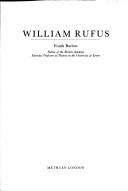
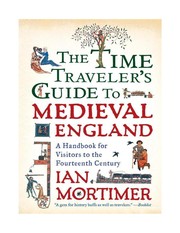
The time traveller's guide to medieval England
Explains the medieval world surrounding William Rufus.
The Haunted
First published 1988. Subjects: Catholic traditionalist movement, Exorcism, History, Fallstudiensammlung, Spuk.

eBay marketplace picks
Marketplace Samples
Live-tested eBay searches with available results related to this page.


Endnotes
1.
Source: jstor.org
Link:https://www.jstor.org/stable/2856221
2.
Source: hampshire-history.com
Title: Hampshire History William Rufus – His Death
Link:https://www.hampshire-history.com/william-rufus-his-death/
3.
Source: archaeology-travel.com
Link:https://archaeology-travel.com/england/the-rufus-stone-monument-new-forest-hampshire/
4.
Source: scholarworks.uni.edu
Title: his monuments sp2022
Link:https://scholarworks.uni.edu/his_monuments_sp2022/27/
5.
Source: haunted-britain.com
Title: Haunted Britain The Rufus Stone
Link:https://www.haunted-britain.com/rufus-stone.htm
6.
Source: timeref.com
Title: winchester cathedral
Link:https://www.timeref.com/places/winchester_cathedral.htm
7.
Source: youtube.com
Title: 6 km Ghostly Gravel Ride
Link:https://www.youtube.com/watch?v=8XyBxkO8CRQ
Source snippet
The Rufus Stone - Was A King MURDERED Here?...
8.
Source: youtube.com
Title: The Rufus Stone
Link:https://www.youtube.com/watch?v=AEHIkRdhkXg
Source snippet
The Strange Death of King William Rufus in the New Forest...
9.
Source: historicengland.org.uk
Title: Historic England Rufus Stone, Minstead
Link:https://historicengland.org.uk/listing/the-list/list-entry/1167431
Source snippet
Historic EnglandRufus Stone, Minstead - 11674314/16 Rufus Stone 8.4.76 GV II... inscriptions on each face. Erected on supposed spot of o...
10.
Source: thenewforest.co.uk
Link:https://www.thenewforest.co.uk/explore/new-forest-heritage/witchcraft-and-ghosts/
Source snippet
The New ForestWitchcraft, Ghosts, Legends & Myths of the New ForestIt is claimed that on a summer's evening you may see a short, stocky m...
11.
Source: historicengland.org.uk
Link:https://historicengland.org.uk/education/schools-resources/educational-images/rufus-stone-minstead-hampshire-ioe01-01976-14
12.
Source: thenewforest.co.uk
Link:https://www.thenewforest.co.uk/trail/rufus-stone-trail/64f1e90912ec8e5c82df1b20/
13.
Source: hauntednewforest.co.uk
Title: rufus stone 925th anniversary ghost walk paranormal investigation 8pm
Link:https://www.hauntednewforest.co.uk/event-details/rufus-stone-925th-anniversary-ghost-walk-paranormal-investigation-8pm
14.
Source: thenewforest.co.uk
Link:https://www.thenewforest.co.uk/event/rufus-stone-925th-anniversary-ghost-walk/237058101/
15.
Source: readingmuseum.org.uk
Title: death william ii
Link:https://www.readingmuseum.org.uk/blog/death-william-ii
16.
Source: thenewforest.co.uk
Title: myths and legends
Link:https://www.thenewforest.co.uk/blog/post/myths-and-legends/
17.
Source: nationalparks.uk
Title: National Parks Discover: The Rufus Stone
Link:https://www.nationalparks.uk/2023/05/30/discover-the-rufus-stone/
18.
Source: historicengland.org.uk
Title: New Forest
Link:https://historicengland.org.uk/local/locations/new-forest/
19.
Source: spookyisles.com
Title: rufus stone
Link:https://www.spookyisles.com/rufus-stone/
20.
Source: thenewforest.co.uk
Link:https://www.thenewforest.co.uk/explore/new-forest-heritage/
21.
Source: new-forest-national-park.com
Title: The Rufus Stone
Link:https://new-forest-national-park.com/the-rufus-stone/
22.
Source: bitaboutbritain.com
Title: rufus stone
Link:https://bitaboutbritain.com/rufus-stone/
23.
Source: Wikipedia
Title: Walter Tirel
Link:https://en.wikipedia.org/wiki/Walter_Tirel
24.
Source: en.wikisource.org
Title: William II
Link:https://en.wikisource.org/wiki/Dictionary_of_National_Biography%2C_1885-1900/William_II
25.
Source: britainexpress.com
Title: winchester cathedral
Link:https://www.britainexpress.com/counties/hampshire/winchester/winchester-cathedral.htm
26.
Source: thehistoryjar.com
Title: walter tirel
Link:https://thehistoryjar.com/tag/walter-tirel/
Additional References
27.
Source: youtube.com
Title: The Strange Death of King William Rufus in the New Forest
Link:https://www.youtube.com/watch?v=LeY7T5YY2Ls
Source snippet
Rufus Stone New Forest history murder A narrated history of the Rufus Stone in The New Forest #newforesthistory Living in The New Forest...
28.
Source: youtube.com
Title: NEW FOREST WALK at RUFUS STONE & JANESMOOR POND (NEW FOREST NATIONAL PARK) (4K)
Link:https://www.youtube.com/watch?v=YA3LEbA2Aks
Source snippet
A narrated history of the Rufus Stone in The New Forest #newforesthistory...
29.
Source: youtube.com
Title: A narrated history of the Rufus Stone in The New Forest #newforesthistory
Link:https://www.youtube.com/watch?v=6mcCToH8XlE
Source snippet
6 km Ghostly Gravel Ride - Haunted New Forest Cycling Route...
30.
Source: tripadvisor.co.uk
Link:https://www.tripadvisor.co.uk/Attraction_Review-g1636947-d2307195-Reviews-Rufus_Stone-Minstead_New_Forest_National_Park_Hampshire_Hampshire_England.html
31.
Source: britainexpress.com
Link:https://www.britainexpress.com/counties/hampshire/rufus-stone.htm
32.
Source: reddit.com
Link:https://www.reddit.com/r/AskHistorians/comments/b4msd1/how_much_evidence_is_there_to_suggest_william/
33.
Source: facebook.com
Link:https://www.facebook.com/groups/522570995968187/posts/1462042768687667/
34.
Source: facebook.com
Link:https://www.facebook.com/groups/522471662730776/posts/1358332905811310/
35.
Source: newforestwalks.co.uk
Link:https://newforestwalks.co.uk/rufus-stone-the-925th-anniversary-of-the-death-of-king-william-ii/
36.
Source: facebook.com
Link:https://www.facebook.com/groups/500323898702432/posts/1326526499415497/
Topic Tree