Where Berwickshire's Ghost Stories Still Linger
Berwickshire’s haunted history is quieter than the famous ghost circuits of Edinburgh or Northumberland, but it has a distinctive Border character: ruined coastal castles, old tower houses, vanished mansions, smuggling cellars, fishing disasters and family legends that cling to named places.
Page outline Jump by section
Introduction
For this page, Berwickshire means the historic county in south-east Scotland, not simply the modern Scottish Borders council area. The county’s eerie geography runs from the Lammermuirs and the Merse to Eyemouth, Coldingham, St Abbs and the Berwickshire coast, with Duns, Greenlaw, Coldstream and Lauder among its main historic settlements. Modern administration has changed: Berwickshire County Council ended in 1975, later district structures ended in 1996, and the area now sits within Scottish Borders, while the historic-county identity remains important for local history and mapping.[wikipedia.org]WikipediaOpen source on wikipedia.org.
What counts as Berwickshire haunted history?
Berwickshire is a border county in every sense: political, coastal, literary and folkloric. Its ghost stories often grow from thresholds — the Scotland–England border, the cliff edge, the harbour mouth, the old road, the ruined house, the locked room. That matters because many Berwickshire tales are not tidy “case files” with dates, named witnesses and repeatable evidence. They are inherited stories attached to places where ordinary history already feels unsettled.
The historic county took its name from Berwick-upon-Tweed, once its county town before the town finally passed to English control in 1482. Later county functions shifted between Greenlaw and Duns, and Duns became the county town in the twentieth century. The low-lying agricultural part between the Tweed and the Lammermuirs is known as the Merse, while the coast around Eyemouth, Coldingham and St Abbs gives Berwickshire its harsher, maritime atmosphere.[wikipedia.org]WikipediaOpen source on wikipedia.org.
This historic-county frame matters for haunted-place writing because many modern “Scottish Borders” ghost lists mix together Berwickshire, Roxburghshire, Selkirkshire and Peeblesshire. Those lists can be useful leads, but they easily blur geography. For Berwickshire itself, the most relevant haunted and eerie anchors are Allanbank and Blackadder, Gunsgreen House in Eyemouth, Houndwood House near Reston, Duns Castle, Fast Castle near Coldingham, Coldingham Priory, the Lammermuir setting of Scott’s gothic imagination, and the memorial landscape of the Eyemouth fishing disaster.
Pearlin Jean: Berwickshire’s best-known ghost
Pearlin Jean is the county’s outstanding ghost legend because it has both a strong local setting and a documented place in nineteenth-century supernatural literature. The story is attached to Allanbank, near Allanton, historically connected with the Blackadder estate in Berwickshire. The basic tradition says that Jean, often presented as a Frenchwoman or religious novice, was wronged by a Stuart or Steuart of Allanbank and returned as a lace-clad apparition after her death. “Pearlin” refers to the pearled or laced clothing by which the ghost was recognised.[Wikipedia]WikipediaPearlin JeanPearlin Jean
The most important source trail runs through Catherine Crowe’s The Night-Side of Nature, a major Victorian collection of ghost narratives first published in 1848. Crowe’s account drew on Charles Kirkpatrick Sharpe, an antiquary and collector of traditions, and presented Pearlin Jean as a long-established household haunting. The story includes classic haunted-house motifs: rustling silk, footsteps in passages, doors opening and slamming, servants becoming used to the disturbance, and attempts by ministers to “lay” or exorcise the spirit.[gutenberg.org]gutenberg.orgOpen source on gutenberg.org.
The legend’s most vivid version says that Jean confronted her former lover as he left with another bride, was fatally dragged or crushed by the carriage, and then appeared at the gateway of Allanbank with her head and shoulders covered in blood. A later housekeeper, Betty Norrie, was said to have seen Jean often enough that the ghost became part of household routine rather than a single shock. Two women visiting in 1790 were also said to have been disturbed by footsteps during the night, an anecdote that helped the story feel less like a single family romance and more like a continuing house tradition.[ERA]era.ed.ac.ukERAGhosts in Enlightenment ScotlandERAGhosts in Enlightenment Scotland
As evidence, Pearlin Jean is best treated as folklore with unusually good literary preservation, not as a verified apparition. Crowe wrote as a believer in supernatural testimony, and her book belongs to a period when ghost stories circulated through letters, antiquarian networks and drawing-room anecdote. Yet that is exactly why the tale is valuable: it shows how a Berwickshire family legend moved from local speech into printed supernatural culture. It also preserves a recognisable pattern found across Britain — the betrayed woman, the haunted ancestral house, the restless sound of silk, and the failed clerical attempt to quiet the dead.
The physical setting has also changed. Allanbank House and the wider Blackadder estate landscape have been altered, demolished or reworked over time. Later summaries note that the old house associated with the haunting no longer survives in its original form, which weakens modern “haunted house” claims but strengthens the story’s status as a memory attached to a vanished domestic world. Blackadder House itself was later demolished after wartime damage and economic decline, leaving fragments, estate structures and place-names rather than the grand house culture in which such a ghost legend first made sense.[Wikipedia]WikipediaBlackadder HouseBlackadder House

Gunsgreen House: smuggling, secrecy and the Grey Lady
Gunsgreen House in Eyemouth is one of Berwickshire’s most atmospheric buildings even before any ghost is mentioned. It was built in 1753 for John Nisbet, a local merchant whose public respectability sat beside a notorious smuggling operation. The house was adapted for illicit trade, with cellars leading towards the sea and hidden spaces associated with tea, brandy and tobacco. Its own heritage presentation calls it a “splendid palace built by a smuggler”, and Historic Environment Scotland records it as a mid-eighteenth-century Palladian villa of national architectural interest.[gunsgreenhouse.org]gunsgreenhouse.orgOpen source on gunsgreenhouse.org.
That smuggling context helps explain why Gunsgreen attracts ghost stories. Buildings with hidden chutes, cellars, harbour access and double lives naturally invite tales of footsteps, secret figures and uneasy presences. The commonly repeated haunting is a Grey Lady: a woman in a grey dress or gown said to appear in or around the house. A Scottish castles gazetteer notes reports of “an apparition of a woman in a grey dress”, while other haunted-place summaries repeat the Grey Lady motif but admit that firm details about first sightings or named witnesses are limited.[thecastlesofscotland.co.uk]thecastlesofscotland.co.ukOpen source on thecastlesofscotland.co.uk.
The credibility balance is therefore mixed. Gunsgreen’s smuggling history is well evidenced and central to the building’s public identity; the Grey Lady is much thinner as a documented apparition. It may be a later visitor legend, a local embellishment, or a conventional ghost attached to an already mysterious house. That does not make it worthless. It shows how a real social history — illicit trade, fear of discovery, night landings and hidden goods — can generate a ghostly atmosphere even when the apparition itself cannot be traced to a robust early source.
For readers visiting Berwickshire, Gunsgreen is one of the most accessible places where eerie history and tourism meet. The house has operated as accommodation, event space and visitor attraction, though its museum and cellars have faced periods of closure because of water ingress. That practical detail matters: the “haunted” experience here is not a guaranteed ghost encounter but a chance to stand inside a building whose architecture was shaped by secrecy.[Gunsgreen House]gunsgreenhouse.orgGunsgreen House Welcome to Gunsgreen HouseGunsgreen House Welcome to Gunsgreen House
Houndwood House and the problem of fragmentary ghosts
Houndwood House, near Reston, shows the other side of Berwickshire ghost research: intriguing traditions preserved in brief entries rather than full narrative accounts. Historic Environment Scotland’s record describes Houndwood as incorporating a medieval tower house with later country-house development. It also records local claims that there had been a dwelling at Houndwood in 1143 and that Mary, Queen of Scots, was said to have stayed there in 1555, though these details are given as reported information rather than fully documented proof.[Trove]trove.scotOpen source on trove.scot.
The ghost material is much slimmer. Paranormal catalogues mention a “legs” apparition at Houndwood, where only the lower part of a ghost is said to have been seen striding, and another retelling names a weeping child ghost called “Chappie”, associated with knocking at doors and windows and supposedly linked to a murder by soldiers in the sixteenth century.[Paranormal Database]paranormaldatabase.comParanormal Database The Paranormal DatabaseParanormal Database The Paranormal Database
These are exactly the kind of stories that should be handled carefully. They are memorable, localised and worth recording within Berwickshire’s haunted map, but they lack the stronger source chain that Pearlin Jean has. There is no obvious early printed account, no firm date for the first report, and no named witness evidence in the accessible sources. Houndwood is therefore better described as a reputedly haunted tower-house site than as one of the county’s best-attested hauntings.
Its value lies in pattern rather than proof. The “partial apparition” is a common ghost motif: a figure reduced to one recognisable detail, such as legs, footsteps, a dress, a hand, a knock or a cry. In a house with a medieval core, later alterations and family tradition, such fragments are often enough for a haunting to persist. Houndwood’s story reminds readers that county ghost maps are built not only from famous legends, but also from odd scraps of local memory.
Duns Castle, Fast Castle and the gothic Border imagination
Duns Castle is sometimes described as haunted by Alexander Hay, said in brief retellings to have been killed at Waterloo in 1815. The castle itself is an important Berwickshire landmark near the old county town of Duns, but the ghost story is not especially well evidenced in the accessible record. Wikishire and modern haunted-place articles repeat the claim, yet the available references do not provide the same depth of early testimony, witness detail or literary transmission found in the Pearlin Jean material.[wikishire.co.uk]wikishire.co.ukDuns CastleDuns Castle
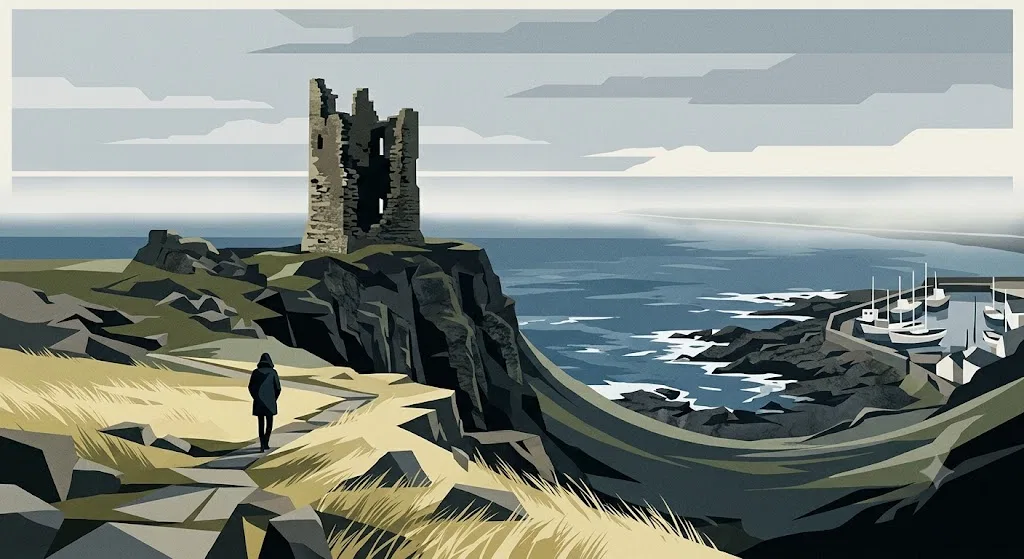
Fast Castle, by contrast, is not chiefly famous for a named ghost, but it is one of Berwickshire’s most powerfully gothic places. Historic Environment Scotland’s record places it in the parish of Coldingham, in the former county of Berwickshire, on a dramatic coastal site. A Society of Antiquaries of Scotland paper describes the ruined castle as standing on a rocky promontory on the Berwickshire coast, with only parts of the keep and surrounding walls surviving.[Trove]trove.scotOpen source on trove.scot.
Fast Castle’s haunted importance comes through literature. It has long been associated with Sir Walter Scott’s fictional Wolf’s Crag in The Bride of Lammermoor. Scott himself noted that some readers had identified Wolf’s Crag with Fast Castle, while saying he had only seen Fast Castle from the sea and could not judge the resemblance fully. He did, however, acknowledge that its position near the Lammermuirs made the association plausible.[Project Gutenberg]gutenberg.orgOpen source on gutenberg.org.
This distinction is important. Fast Castle should not be oversold as a ghost site simply because it looks haunted. Its real contribution to Berwickshire’s eerie history is that it helped shape the county’s gothic imagination: a cliff fortress, exposed to sea and weather, linked to Scott’s tragic romance of family pressure, broken vows and psychological dread. The National Galleries of Scotland notes that Fast Castle was generally taken to be the inspiration for Scott’s imaginary Wolf’s Crag, and that the painter John Thomson made multiple images of it in different weather and viewpoints.[National Galleries of Scotland]nationalgalleries.orgOpen source on nationalgalleries.org.
For a haunted-history reader, Fast Castle is best understood as a place where landscape does the work of a ghost story. The ruin, the cliffs and the literary association carry the atmosphere, even without a strong local apparition tradition.
Eyemouth: when tragedy becomes a haunted landscape
Not every eerie place in Berwickshire needs a ghost. Eyemouth’s haunted feeling is rooted in communal memory, especially the fishing disaster of 14 October 1881, still known locally as Black Friday. A sudden storm struck while boats were at sea, and 189 fishermen died, including 129 from Eyemouth. Scottish Archives for Schools describes fishing as essential to the local economy and notes the scale of loss among Eyemouth families.[scottisharchivesforschools.org]scottisharchivesforschools.orgOpen source on scottisharchivesforschools.org.
Eyemouth Museum gives the local setting in: in autumn 1881, Eyemouth had 55 fishing boats, and after a week of bad weather the men gathered on Friday morning to judge whether they could finally put to sea. Other accounts emphasise that many deaths happened within sight of families watching from shore, a detail that has shaped the disaster’s emotional afterlife.[Eyemouth Museum]eyemouthmuseum.co.ukfishing disasterfishing disaster
The Widows and Bairns memorial makes that memory visible. Visit Berwickshire Coast states that the sculpture commemorates those left behind by the storm of 14 October 1881, when Berwickshire ports lost 189 men and the disaster left widows and fatherless children across the coastal villages. A Scottish Civic Trust account describes the Eyemouth bronze as individually modelling the widows and children, with figures tied to real named people rather than anonymous grief.[Visit Berwickshire Coast]visitberwickshirecoast.co.ukwidows and bairnswidows and bairns
This is not a ghost story in the narrow sense. There is no need to invent apparitions of drowned fishermen to make Eyemouth relevant to haunted Berwickshire. The harbour, museum, memorial and coastal villages are part of a landscape where loss is still publicly remembered. For many readers, that is more affecting than a conventional spectre: the past is not hidden in a legend, but cast in bronze, named, and placed where the sea can still be heard.
Coldingham, St Abbs and the older sacred landscape
Coldingham and the coast around St Abbs add an older layer to Berwickshire’s eerie geography. Coldingham Priory has early medieval roots, with the site associated with a Benedictine priory founded by King Edgar in 1098 on the site of an earlier religious house. The priory was damaged during the Earl of Hertford’s invasion in 1545 and later by Cromwell’s forces in 1650, leaving a layered religious ruin and parish church landscape.[wikishire.co.uk]wikishire.co.ukOpen source on wikishire.co.uk.
The accessible sources do not support a single dominant Coldingham ghost on the level of Pearlin Jean. Instead, the haunting value is contextual: ruined ecclesiastical sites, coastal paths, old monastic memory and nearby tower houses. In haunted-history terms, Coldingham works as a hub rather than a single case. It connects Fast Castle, Houndwood, St Abbs Head, the Berwickshire coast and the long tradition of Borders religious and military upheaval.
This is also where Berwickshire’s stories can cross into neighbouring project branches. Coastal ghost traditions often move along routes rather than county lines: sailors, smugglers, pilgrims, soldiers and fishers did not live inside neat modern administrative boxes. A Berwickshire page can therefore acknowledge nearby Northumberland and East Lothian parallels without moving its centre of gravity away from Coldingham, Eyemouth, Fast Castle and the historic county.
How credible are Berwickshire’s hauntings?
Berwickshire’s ghost evidence is uneven, which is typical of county-level haunted history. The stories fall into three broad levels of reliability.
Strongest as folklore: Pearlin Jean. The tale has a named Berwickshire location, a clear narrative, nineteenth-century literary preservation, and links to antiquarian testimony. It is not proof of a ghost, but it is a well-rooted supernatural tradition with a traceable source history.[gutenberg.org]gutenberg.orgOpen source on gutenberg.org.
Strongest as atmosphere attached to real history: Gunsgreen House, Fast Castle and Eyemouth. Gunsgreen’s smuggling architecture is well documented, while the Grey Lady is lightly evidenced. Fast Castle’s power lies in ruin, landscape and Scott’s gothic association rather than in a firm apparition report. Eyemouth is not a conventional haunting, but the fishing disaster is a deeply documented trauma that continues to shape the coast’s emotional memory.[gunsgreenhouse.org]gunsgreenhouse.orgOpen source on gunsgreenhouse.org.
Weakest as documented cases but still part of local ghost mapping: Houndwood House and Duns Castle. These have repeated haunted-place mentions, but accessible sources give little early documentation, few named witnesses and limited detail. They are best included with careful wording: “said to be haunted”, “reputed”, “local tradition claims”, rather than presented as established fact.[paranormaldatabase.com]paranormaldatabase.comParanormal Database The Paranormal DatabaseParanormal Database The Paranormal Database
Sceptically, many Berwickshire hauntings can be read as stories that organise memory. Betrayal becomes Pearlin Jean. Smuggling secrecy becomes the Grey Lady of Gunsgreen. A medieval house becomes knocking, footsteps or a partial figure. A cliff ruin becomes a gothic castle in the imagination. A fishing disaster becomes a harbour landscape of grief. None of that requires treating ghosts as confirmed facts; it means taking folklore seriously as a way people attach emotion, warning and identity to place.
Why Berwickshire’s ghost stories feel different
Berwickshire does not offer a single blockbuster haunted attraction. Its strength is quieter and more local. The county’s stories are scattered across houses, ruins, harbours and roads, and many are bound to what has disappeared: demolished mansions, broken castles, lost fishing crews, altered estates and old county structures absorbed into modern administration.
That gives Berwickshire’s haunted history a particular mood. It is less about jump scares and more about residue. Pearlin Jean lingers after the house is gone. Gunsgreen’s Grey Lady borrows force from hidden cellars and smuggling routes. Fast Castle feels haunted because Scott, painters and visitors have taught readers to see it through storm, cliff and ruin. Eyemouth’s shore is haunted by documented grief rather than by a named apparition.
For visitors and readers, the most rewarding route through haunted Berwickshire is therefore not a checklist of “most haunted” claims. It is a journey through different kinds of evidence: a Victorian ghost legend at Allanbank, a smuggler’s house at Eyemouth, a ruined fortress near Coldingham, a tower-house fragment at Houndwood, a castle tradition at Duns, and the memorial coast shaped by Black Friday. Together they show how Berwickshire’s supernatural reputation has been made from folklore, architecture, literature and remembered loss.
Amazon book picks
Further Reading
Books and field guides related to Where Berwickshire's Ghost Stories Still Linger. Use these as the next step if you want deeper reading beyond the article.
Scottish Ghost Stories
Introduces readers to traditional Scottish hauntings similar in tone to Berwickshire.
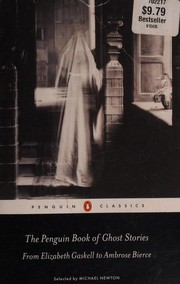
The Penguin Book of Ghost Stories
Places local ghost lore within the wider British ghost-story tradition.
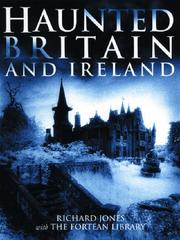
Haunted Britain and Ireland
Covers haunted locations across Britain, complementing Berwickshire research.
The Lore of Scotland
Provides strong context for Berwickshire's ghost traditions within Scotland.
eBay marketplace picks
Marketplace Samples
Live-tested eBay searches with available results related to this page.


Endnotes
1.
Source: Wikipedia
Link:https://en.wikipedia.org/wiki/Berwickshire
2.
Source: wikishire.co.uk
Title: Great Britain and Ireland
Link:https://wikishire.co.uk/map/
3.
Source: Wikipedia
Title: Pearlin Jean
Link:https://en.wikipedia.org/wiki/Pearlin_Jean
4.
Source: gutenberg.org
Link:https://www.gutenberg.org/ebooks/47800.txt.utf-8
5.
Source: gutenberg.org
Link:https://www.gutenberg.org/files/54532/54532-h/54532-h.htm
6.
Source: era.ed.ac.uk
Title: ERAGhosts in Enlightenment Scotland
Link:https://era.ed.ac.uk/bitstreams/04878578-6ea2-4b44-b3d4-6c1cf0ff1279/download
7.
Source: Wikipedia
Title: Blackadder House
Link:https://en.wikipedia.org/wiki/Blackadder_House
8.
Source: Wikipedia
Title: Allanbank, Scottish Borders
Link:https://en.wikipedia.org/wiki/Allanbank%2C_Scottish_Borders
9.
Source: trove.scot
Link:https://www.trove.scot/place/59900
10.
Source: tartans.com
Link:https://www.tartans.com/articles/ghost-child.html
11.
Source: wikishire.co.uk
Title: Duns Castle
Link:https://wikishire.co.uk/wiki/Duns_Castle
12.
Source: trove.scot
Link:https://www.trove.scot/place/59944
13.
Source: gutenberg.org
Link:https://www.gutenberg.org/files/471/471-h/471-h.htm
14.
Source: scottisharchivesforschools.org
Link:https://www.scottisharchivesforschools.org/naturalscotland/eyemouthdisaster.asp
15.
Source: wikishire.co.uk
Link:https://wikishire.co.uk/wiki/Berwickshire
16.
Source: Wikipedia
Title: Duns, Scottish Borders
Link:https://en.wikipedia.org/wiki/Duns%2C_Scottish_Borders
17.
Source: Wikipedia
Title: Scottish Borders
Link:https://en.wikipedia.org/wiki/Scottish_Borders
18.
Source: Wikipedia
Title: The Bride of Lammermoor
Link:https://en.wikipedia.org/wiki/The_Bride_of_Lammermoor
19.
Source: Wikipedia
Title: Fast Castle
Link:https://en.wikipedia.org/wiki/Fast_Castle
20.
Source: Wikipedia
Title: Eyemouth disaster
Link:https://en.wikipedia.org/wiki/Eyemouth_disaster
21.
Source: Wikipedia
Title: Unglück von Eyemouth
Link:https://de.wikipedia.org/wiki/Ungl%C3%BCck_von_Eyemouth
22.
Source: gutenberg.org
Link:https://www.gutenberg.org/ebooks/20034.epub.images
23.
Source: gutenberg.org
Link:https://www.gutenberg.org/ebooks/49548.txt.utf-8
24.
Source: gutenberg.org
Title: pg45362 images
Link:https://www.gutenberg.org/cache/epub/45362/pg45362-images.html
25.
Source: trove.scot
Link:https://www.trove.scot/place/165426
26.
Source: trove.scot
Link:https://www.trove.scot/place/60207
27.
Source: scotland.org
Title: scottish myths folklore and legends
Link:https://www.scotland.org/inspiration/scottish-myths-folklore-and-legends
28.
Source: lammermoor.org
Title: janet dalrymple the inspiration for lucy ashton and lucia di lammermoor
Link:https://lammermoor.org/2021/04/30/janet-dalrymple-the-inspiration-for-lucy-ashton-and-lucia-di-lammermoor/
29.
Source: youtube.com
Title: ‘Pearlin’ Jean’ of Allanbank by Elliott O’Donnell | A Scottish Ghost Story
Link:https://www.youtube.com/watch?v=UR_UnUqP67w
Source snippet
Gunsgreen House & the Harbour...
30.
Source: youtube.com
Title: Gunsgreen House & the Harbour
Link:https://www.youtube.com/watch?v=Z26Oe0QKG2I
Source snippet
The Dunter — Scotland's Death-Omen Spirit...
31.
Source: gazetteer.org.uk
Link:https://gazetteer.org.uk/place/Berwickshire
32.
Source: theseaofbooks.com
Title: hereditary ghosts some tales from the night side of nature 1848
Link:https://theseaofbooks.com/2016/10/03/hereditary-ghosts-some-tales-from-the-night-side-of-nature-1848/
33.
Source: gunsgreenhouse.org
Link:https://gunsgreenhouse.org/about-us/our-history/
34.
Source: portal.historicenvironment.scot
Link:https://portal.historicenvironment.scot/apex/f?p=1505%3A300%3A%3A%3A%3A%3AVIEWTYPE%2CVIEWREF%3Adesignation%2CLB31133
35.
Source: visitberwickshirecoast.co.uk
Link:https://www.visitberwickshirecoast.co.uk/listings/gunsgreen-house/
36.
Source: thecastlesofscotland.co.uk
Link:https://www.thecastlesofscotland.co.uk/the-best-castles/stately-homes-and-mansions/gunsgreen-house/
37.
Source: hauntedhosts.com
Title: Haunted Hosts The Grey Lady of Gunsgreen
Link:https://hauntedhosts.com/haunted-places/scottish-borders/location/5344-the-grey-lady-of-gunsgreen
38.
Source: gunsgreenhouse.org
Title: Gunsgreen House Welcome to Gunsgreen House
Link:https://gunsgreenhouse.org/
39.
Source: paranormaldatabase.com
Title: Paranormal Database The Paranormal Database
Link:https://www.paranormaldatabase.com/lowlands/borddata.php
40.
Source: nationalgalleries.org
Link:https://www.nationalgalleries.org/art-and-artists/5499
41.
Source: eyemouthmuseum.co.uk
Title: fishing disaster
Link:https://eyemouthmuseum.co.uk/the-museum/fishing-disaster/
42.
Source: visitberwickshirecoast.co.uk
Title: widows and bairns
Link:https://www.visitberwickshirecoast.co.uk/listings/widows-and-bairns/
43.
Source: facebook.com
Link:https://www.facebook.com/GunsgreenHousetrust/
44.
Source: youtube.com
Title: Fast Castle
Link:https://www.youtube.com/watch?v=Vi3G6y8lB_4
45.
Source: hauntedhosts.com
Title: The Legs of Houndwood House
Link:https://hauntedhosts.com/haunted-places/scottish-borders/location/3702-the-legs-of-houndwood-house
46.
Source: portal.historicenvironment.scot
Title: scot Scheduled Monuments
Link:https://portal.historicenvironment.scot/downloads/scheduledmonuments
47.
Source: visitberwickshirecoast.co.uk
Title: 1881 fishing disaster memorials
Link:https://www.visitberwickshirecoast.co.uk/listings/1881-fishing-disaster-memorials/
48.
Source: scotlandstartshere.com
Link:https://scotlandstartshere.com/point-of-interest/fast-castle/
49.
Source: csyarchitects.com
Title: gunsgreen house
Link:https://www.csyarchitects.com/project/gunsgreen-house/
50.
Source: fairweatherlewis.wordpress.com
Title: pearlin jean
Link:https://fairweatherlewis.wordpress.com/2010/06/15/pearlin-jean/
51.
Source: tripadvisor.com
Title: Gunsgreen House
Link:https://www.tripadvisor.com/Attraction_Review-g551952-d3405559-Reviews-Gunsgreen_House-Eyemouth_Scottish_Borders_Scotland.html
52.
Source: eyemouthmuseum.co.uk
Link:https://eyemouthmuseum.co.uk/product/product-5/
53.
Source: eyemouthmuseum.co.uk
Title: the museum
Link:https://eyemouthmuseum.co.uk/the-museum/
54.
Source: en.wikisource.org
Link:https://en.wikisource.org/wiki/1911_Encyclop%C3%A6dia_Britannica/Scotland
55.
Source: must-visit.co.uk
Title: Gunsgreen House
Link:https://must-visit.co.uk/gunsgreen-house-eyemouth/
56.
Source: tripadvisor.co.uk
Title: EYEMOUT H MUSEUM
Link:https://www.tripadvisor.co.uk/Attraction_Review-g551952-d297126-Reviews-Eyemouth_Museum-Eyemouth_Scottish_Borders_Scotland.html
57.
Source: intimation.uk
Title: GUNSGREE N HOUSE
Link:https://intimation.uk/works/gunsgreen_house/
58.
Source: neverendingfamily.blogspot.com
Title: the eyemouth fishing disaster
Link:https://neverendingfamily.blogspot.com/2017/02/the-eyemouth-fishing-disaster.html
Additional References
59.
Source: youtube.com
Title: The Dunter — Scotland’s Death-Omen Spirit
Link:https://www.youtube.com/watch?v=Ln4fzZdsgnE
Source snippet
History for Sleep | Great Scottish Castles: Duns & Dunnottar (1hr Story + 1hr Rain & Fire)...
60.
Source: visitscotland.com
Link:https://www.visitscotland.com/nl-nl/things-to-do/attractions/castles/haunted
61.
Source: instagram.com
Link:https://www.instagram.com/p/DQce0l3iExZ/
62.
Source: skyvrit.com
Link:https://skyvrit.com/FLC-book-library/book/554397094/50-classic-horror-fiction-include-dracula-draculas-guest-the-jewel-of-seven-stars-the-lady-of-the-shroud-lair-of-the-white-worm-the-man-an-occurrence-at-owl-creek-bridge-the-damned-thing1898-from-in-the-midst-of-life-the-damned-four-weird-tales-the-insanity-of-jones-the-man-who-found-out-the-glamour-of-the-snow-sand-the-wendigo-the-willows
63.
Source: facebook.com
Link:https://www.facebook.com/groups/2686102378119843/posts/7353853368011364/
64.
Source: instagram.com
Link:https://www.instagram.com/p/DV4LX39ALMV/
65.
Source: abcounties.com
Link:https://abcounties.com/counties/county-profiles/berwickshire/
66.
Source: englandsnortheast.co.uk
Link:https://englandsnortheast.co.uk/berwickshire-scotland-borders/
67.
Source: fulltextarchive.com
Link:https://www.fulltextarchive.com/book/Bride-of-Lammermoor/
68.
Source: scribd.com
Link:https://www.scribd.com/document/325293444/Denham-Tracts
Topic Tree
Follow this branch
Related pages 91
- Haunted Clackmannanshire
- Haunted Antrim
- Haunted Armagh
- Haunted Durham
- Haunted Londonderry
- +86 more in sidebar