Within Haunted Perthshire
Why Is Killiecrankie Said To Be Haunted?
Killiecrankie's ghost stories turn a bloody Jacobite battle into anniversary legends of phantom soldiers and red grass.
On this page
- The 1689 battle in the pass
- Phantom soldiers and anniversary folklore
- Soldier's Leap and battlefield tourism
Page outline Jump by section
Introduction
Killiecrankie is said to be haunted because the Pass of Killiecrankie carries two memories at once: the real violence of the 1689 battle and the later folklore that imagines the battle repeating itself in sound, shadow and blood-coloured signs. The stories are usually attached to phantom soldiers, marching footsteps on the battle anniversary, musket fire in the pass, the gruesome apparition of a looting girl, and, in some retellings, grass that turns red as if the ground still remembers the dead. These should be treated as traditions and literary ghost stories rather than proven events, but they matter because they show how Perthshire’s Jacobite landscape became a place where history, tourism and eerie memory meet.
The setting is not a vague “haunted glen” but a specific battlefield in historic Perthshire, near Pitlochry, where Government troops under Major General Hugh Mackay faced Jacobites led by John Graham of Claverhouse, Viscount Dundee, on 27 July 1689. Historic Environment Scotland identifies Killiecrankie as the opening battle of the first Jacobite Rising in Scotland and one of the bloodiest battles of the Jacobite period.[Historic Environment Scotland]portal.historicenvironment.scotHistoric Environment Scotland Battle of Killiecrankie (BTL12Historic Environment Scotland Battle of Killiecrankie (BTL12
The 1689 Battle In The Pass
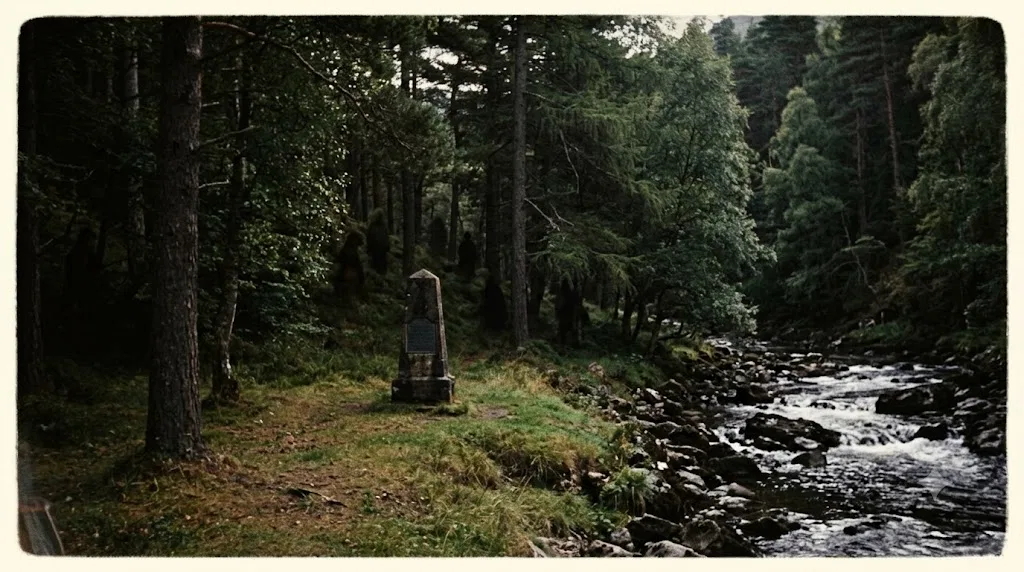
The haunted reputation of Killiecrankie begins with the geography. The Pass of Killiecrankie is a steep, wooded gorge cut by the River Garry, now promoted by the National Trust for Scotland as a place where natural beauty and violent history sit side by side. The Trust describes it as a magnificent wooded river gorge where “one of the goriest battles in Jacobite history” took place, and points visitors towards Soldier’s Leap, the spot where a Redcoat soldier is said to have jumped 18 feet across the River Garry while fleeing Jacobite pursuers.[National Trust for Scotland]nts.org.ukNational Trust for Scotland Killiecrankie | National Trust for ScotlandNational Trust for Scotland Killiecrankie | National Trust for Scotland
The battle itself was short, chaotic and devastating. Historic Environment Scotland records that the Jacobites won the field, but that their victory was undermined by the death of Dundee, their most important commander. In strategic terms, Killiecrankie was a triumph that the Jacobites could not properly use: it inspired later Jacobite memory, but the loss of leadership helped prevent the first rising from building on its success.[Historic Environment Scotland]portal.historicenvironment.scotHistoric Environment Scotland Battle of Killiecrankie (BTL12Historic Environment Scotland Battle of Killiecrankie (BTL12
That mixture of victory and catastrophe is central to the haunting tradition. Killiecrankie is not remembered like a simple patriotic battlefield where one side wins and history marches on. It is remembered as a place of sudden collapse, flight and slaughter. Historic Environment Scotland’s battlefield boundary includes the base of the pass as the approach line of the Government troops, the slopes of Creag Eallaich where the main lines and close fighting are understood to have been, and the village and south-eastern lands connected with the rout and retreat, including Soldier’s Leap and land with high potential for graves.[Historic Environment Scotland]portal.historicenvironment.scotHistoric Environment Scotland Battle of Killiecrankie (BTL12Historic Environment Scotland Battle of Killiecrankie (BTL12
The casualty figures vary by source, but the scale of loss is consistently presented as severe. A modern archaeological account in The Past gives around 2,000 casualties for Mackay’s Government army and between 600 and 800 for Dundee’s force, stressing again that Dundee’s death left the Jacobites without effective leadership.[The Past]the-past.comOpen source on the-past.com. The Battlefield Trust gives a similar broad picture, placing the Government force at between about 3,500 and 5,000 men and the Jacobites at around 2,400, with Government losses around 2,000 and Jacobite casualties around 600–800.[Battlefields Trust]battlefieldstrust.comBattlefields Trust Battle of KilliecrankieBattlefields Trust Battle of Killiecrankie
For ghost stories, the important point is not just the numbers. It is the shape of the event. The Government troops entered the pass, found the Jacobites above them, endured a fierce Highland charge, and many then fled back through a landscape that made escape difficult. Later folklore turns that movement into a spectral pattern: marching, running, pursuit, musket fire, drums, bodies on the ground, and the pass itself echoing with what happened there.
Phantom Soldiers And Anniversary Folklore
The most widely repeated Killiecrankie haunting is the idea that the battle returns on or around its anniversary. The National Trust for Scotland’s own ghost-story feature says that on 27 July, the anniversary of the battle, the Pass is said to ring with the sound of footsteps as the Government army marches to its doom; it also notes “terrifying encounters” with a gruesome floating head.[National Trust for Scotland]nts.org.ukOpen source on nts.org.uk.
That is a classic battlefield-ghost pattern. The apparitions are not usually presented as conversational spirits with names and messages. They behave more like an echo: a replay of movement and fear. People hear troops, muskets, drums, marching feet, or see figures apparently trapped in the last action of their lives. This is why Killiecrankie often sits beside other Scottish battlefield legends, especially Culloden, in popular ghost writing. The difference is historical position: Culloden marks the end of the Jacobite military story in 1746, while Killiecrankie marks its first dramatic battlefield success in 1689.
The oldest substantial literary version that is easy for modern readers to consult is Elliott O’Donnell’s 1911 collection Scottish Ghost Stories, which includes a chapter called “The Phantom Regiment of Killiecrankie”. O’Donnell presents the story as an account told to him by a woman who had been cycling in Scotland and had made Pitlochry her temporary base before visiting the pass. His framing is important: he says many stories had circulated about phantom soldiers at Killiecrankie, but the case he prints is a dramatic narrated experience rather than a parish record, police report or signed witness statement.[Project Gutenberg]gutenberg.orgThe Project Gutenberg eBook of Scottish Ghost Stories, by Elliott O'Donnell…
In O’Donnell’s version, the witness spends the night in the pass and hears what she first associates with distant musketry. A Highlander then appears running as if pursued, followed by the sound of drums, fifes and flutes, and a regiment of scarlet-clad soldiers moving through the moonlit pass. The detail that makes the passage memorable is auditory as much as visual: the witness hears the ground vibrate, gravel crunch, and the soldiers’ feet keep a steady, monotonous tramp.[Project Gutenberg]gutenberg.orgThe Project Gutenberg eBook of Scottish Ghost Stories, by Elliott O'Donnell…
The same account then turns from phantom procession to battlefield horror. O’Donnell’s narrator sees bodies of soldiers and horses spread through the valley, hears groans, smells blood, and sees a Highland girl with a basket and knife looting and killing the wounded. This is not a restrained antiquarian note; it is a full Edwardian ghost-story set piece, written for shock and atmosphere.[Project Gutenberg]gutenberg.orgThe Project Gutenberg eBook of Scottish Ghost Stories, by Elliott O'Donnell…
That does not make it useless. It shows what Killiecrankie had become by the early twentieth century: not only a battlefield, but a stage on which readers could imagine the moral afterlife of violence. The soldiers do not explain the politics of James VII and William of Orange. They march, flee, bleed and lie where the night can find them. The story’s power comes from the pass becoming a theatre of repetition.
Red Grass, Red Light And The Memory Of Blood
The “red grass” tradition is one of Killiecrankie’s most striking pieces of folklore, though it is also harder to pin to an early, high-quality source than the phantom-regiment story. Modern ghost guides and haunted-Scotland retellings often say that on the anniversary of the battle the grass in the pass turns red, or that a red glow hangs over the battlefield. Some versions add that the colour is sticky to the touch, making the legend feel less like a sunset effect and more like a supernatural return of blood.[Spooky Scotland]spookyscotland.netSpooky Scotland The Battle of Killiecrankie: Scotland's Most HauntedSpooky Scotland The Battle of Killiecrankie: Scotland's Most Haunted
As evidence, this is weak. It appears mainly in popular paranormal retellings rather than in the official battlefield inventory or in a clearly dated local deposition. As folklore, however, it is revealing. “Red grass” is a simple image that gives the landscape a wound. It also suits Killiecrankie unusually well because the pass is both scenic and violent in public memory. The National Trust for Scotland markets the place through autumn colours, wildlife, geology and battle history, so a visitor may already be looking at red and gold foliage while thinking about bloodshed.[National Trust for Scotland]nts.org.ukNational Trust for Scotland Killiecrankie | National Trust for ScotlandNational Trust for Scotland Killiecrankie | National Trust for Scotland
A sceptical reading does not need to flatten the legend. There are ordinary reasons why a wooded gorge might produce red impressions: late-evening light, autumn bracken, copper beech leaves, wet vegetation, iron-rich staining, or the simple suggestive power of visiting a battlefield on a known anniversary. But the story survives because it gives people a way to say that the ground itself remembers. Instead of a named ghost, Killiecrankie’s earth becomes the witness.
This is also why the red-grass motif belongs on a page about Jacobite memory, not just a list of “spooky sightings”. The battle was politically complicated, with Highland Jacobites, Lowland Government troops, religious tensions, dynastic loyalty and local clan commitments all involved. A red stain avoids that complexity and turns the event into one unforgettable emotional truth: many people died here, and the place has not entirely let go.
Soldier’s Leap And Battlefield Tourism
Soldier’s Leap is the most visitor-friendly part of the Killiecrankie story because it gives the battle a single human body in motion. The National Trust for Scotland presents it as the place where a Redcoat soldier leapt 18 feet across the River Garry while fleeing the Jacobites, and its main Killiecrankie page places the story alongside the gorge, woodland, wildlife and visitor centre.[National Trust for Scotland]nts.org.ukNational Trust for Scotland Killiecrankie | National Trust for ScotlandNational Trust for Scotland Killiecrankie | National Trust for Scotland
The soldier is usually identified as Donald McBane, whose memoirs helped preserve the episode. Historic Environment Scotland notes that Donald MacBane, a private soldier who was present at Killiecrankie, “immortalised his exploits in his memoirs”.[Historic Environment Scotland]portal.historicenvironment.scotHistoric Environment Scotland Battle of Killiecrankie (BTL12Historic Environment Scotland Battle of Killiecrankie (BTL12 The National Trust for Scotland also links McBane and Barthold Balfour to the site’s visible memory, naming Soldier’s Leap and the Balfour Stone as legacies of the Government retreat through the pass.[National Trust for Scotland]nts.org.ukOpen source on nts.org.uk.
This matters for the ghost stories because it shows how Killiecrankie turns history into route, landmark and bodily imagination. Visitors can walk the pass, look down at the River Garry, and picture the panic of the retreat. The haunting tradition then overlays that same route with marching footsteps and phantom soldiers. In other words, the visitor trail and the ghost story use the same landscape grammar: movement through a narrow place, danger from behind, and the sense that the pass channels the past.
Historic Environment Scotland also records that the battlefield’s cultural associations include Robert Burns’s first three verses of “Braes o’ Killiecrankie”, a sonnet by William Wordsworth, the well-known story of Soldier’s Leap, and the National Trust for Scotland visitor centre as a recognised attraction.[Historic Environment Scotland]portal.historicenvironment.scotHistoric Environment Scotland Battle of Killiecrankie (BTL12Historic Environment Scotland Battle of Killiecrankie (BTL12 This is a useful reminder that Killiecrankie’s afterlife has never belonged to ghostlore alone. Song, poetry, military history, conservation, walking routes and supernatural storytelling all compete to shape what visitors expect to feel there.
The modern walking experience can be atmospheric even without accepting any haunting claim. The Trust’s walking route invites visitors to follow in the footsteps of Jacobite and Redcoat soldiers who moved through the pass on 27 July 1689, with a moderate there-and-back walk from the visitor centre.[National Trust for Scotland]nts.org.ukOpen source on nts.org.uk. That phrase, “follow in the footsteps”, is practical tourism language, but at Killiecrankie it also brushes against the ghost tradition: footsteps are exactly what the anniversary legend says can still be heard.
Why Jacobite Memory Makes The Haunting Stronger
Killiecrankie’s ghost stories have lasted because the battle is historically important but emotionally unresolved. It was a Jacobite victory, but not a stable one. It gave the cause “first blood”, as Historic Environment Scotland puts it from the Jacobite perspective, and frightened the Lowlands with the apparent power of the Highland charge. Yet from the Government perspective, Dundee’s death was the decisive fact because it deprived the Jacobites of their greatest general.[Historic Environment Scotland]portal.historicenvironment.scotHistoric Environment Scotland Battle of Killiecrankie (BTL12Historic Environment Scotland Battle of Killiecrankie (BTL12
That double meaning gives the haunting unusual tension. If Killiecrankie were only remembered as a triumphant victory, the ghosts might seem decorative. If it were only remembered as a defeat, they might seem mournful in a simpler way. Instead, the stories hover between triumph and waste. The Jacobites win, but their leader dies. The Government army is routed, but the broader political settlement survives. The pass becomes a place where a spectacular charge and a failed rising occupy the same ground.
The battlefield also sits at the beginning of a long Jacobite memory chain. Later risings, later songs, later romantic retellings and later tourism all look back to 1689 as an origin point. Historic Environment Scotland says Killiecrankie’s success would be a continual inspiration to Jacobites in Scotland, even though Dundee’s death fatally weakened the cause.[Historic Environment Scotland]portal.historicenvironment.scotHistoric Environment Scotland Battle of Killiecrankie (BTL12Historic Environment Scotland Battle of Killiecrankie (BTL12 That is exactly the sort of historical contradiction that ghost stories like: a victory that feels haunted by its own consequences.
O’Donnell’s “Phantom Regiment” fits this pattern even when read cautiously. The account does not simply show noble dead soldiers. It shows fear, pursuit, wounds, looting and the stripping of the dead. The apparition of the basket-carrying girl is especially harsh because it refuses to let the battlefield become clean romance. Her role in the tale is morally ugly: she profits from the fallen and dispatches the wounded.[Project Gutenberg]gutenberg.orgThe Project Gutenberg eBook of Scottish Ghost Stories, by Elliott O'Donnell…
That ugliness is part of the memory work. Romantic Jacobite culture often turns conflict into song, loyalty and doomed courage. Killiecrankie ghostlore drags the reader back to bodies. It says that beneath the music and the monument there was a night of terror, and that the pass is haunted not merely by soldiers but by the human behaviour that follows violence.
How Credible Are The Killiecrankie Ghost Stories?
The history of the battle is strong; the ghost evidence is not. There is a well-documented battle, an officially recognised battlefield, archaeological work, visitor interpretation, primary-source references, and a clear place in Jacobite history. Historic Environment Scotland’s inventory even notes the battlefield’s archaeological potential and records military details such as the Highland charge, plug-bayonet problems, and early grenade evidence.[Historic Environment Scotland]portal.historicenvironment.scotHistoric Environment Scotland Battle of Killiecrankie (BTL12Historic Environment Scotland Battle of Killiecrankie (BTL12 Transport Scotland also reported that A9-related survey work recovered battle-related artefacts, including buckles, buttons, horse shoes and musket munitions, reinforcing the material reality of conflict in the landscape.[Transport Scotland]transport.gov.scota9 unearths killiecrankie battle relicsa9 unearths killiecrankie battle relics
The supernatural claims sit on a different footing. The National Trust for Scotland preserves the anniversary-footsteps and floating-head traditions as ghost stories, not as verified events.[National Trust for Scotland]nts.org.ukOpen source on nts.org.uk. O’Donnell’s 1911 version is valuable as a published literary source, but it is not the same as a modern investigated case file. O’Donnell was a prolific ghost writer, and his narrative style is dramatic, polished and strongly shaped for sensation. The chapter itself begins by saying that many stories had circulated about phantom soldiers before introducing one especially strange account.[Project Gutenberg]gutenberg.orgThe Project Gutenberg eBook of Scottish Ghost Stories, by Elliott O'Donnell…
A fair assessment would divide the traditions into three levels:
Well-grounded history: the 1689 battle, the pass, the rout, Dundee’s death, Soldier’s Leap as a preserved battlefield tradition, and Killiecrankie’s importance in Jacobite memory.
Documented folklore: anniversary footsteps, phantom troops, the floating head, and O’Donnell’s “Phantom Regiment” as published ghost tradition.
Weakly sourced popular embellishment: red grass, sticky bloodstains, red lights, and detailed modern claims that circulate mainly through paranormal websites or retellings without clear early documentation.
This does not make the stories worthless. It makes them folklore rather than evidence. For a haunted Perthshire page, that distinction is useful. Killiecrankie is not compelling because it proves ghosts; it is compelling because its ghost stories are so tightly fitted to the place. The pass narrows, echoes, darkens early under trees and cliffs, and already asks visitors to imagine men running for their lives. In that setting, footsteps in the dusk are not a random scare. They are the sound memory would choose.

Killiecrankie’s Place In Haunted Perthshire
Within Perthshire’s haunted history, Killiecrankie is the county’s strongest battlefield haunting. Huntingtower Castle has the romance of the Green Lady, Ballechin House has psychical-research controversy, and Perthshire’s old roads and inns have their own smaller legends, but Killiecrankie offers something different: a whole landscape haunted by a public event.
Its ghost stories also help explain why battlefields become haunted in the popular imagination. A castle ghost often grows from family secrecy, betrayal or a death inside walls. A battlefield ghost grows from numbers, repetition and unfinished collective memory. There are too many dead for one neat apparition, so the haunting becomes a procession, a noise, a stain, a replay.
That is why Killiecrankie remains more than a stop on a Jacobite-history route. It is a place where Perthshire’s scenery makes the past feel close. The River Garry still runs through the gorge; the slopes still shape the visitor’s sense of enclosure; Soldier’s Leap still gives panic a physical measurement; and the anniversary stories still invite people to imagine the Government army marching through the pass towards disaster. Whether read as ghostlore, local legend, literary horror or battlefield memory, Killiecrankie’s haunting belongs to the same question: how does a beautiful place carry the knowledge that it was once a killing ground?
Amazon book picks
Further Reading
Books and field guides related to Why Is Killiecrankie Said To Be Haunted?. Use these as the next step if you want deeper reading beyond the article.

The Mammoth Book of Celtic Myths and Legends
First published 2002. Subjects: Celtic Mythology, Tales, Fiction, Celts, Mythology, Celtic.
eBay marketplace picks
Marketplace Samples
Live-tested eBay searches with available results related to this page.


Endnotes
1.
Source: the-past.com
Link:https://the-past.com/feature/the-bluidy-battle-of-killiecrankie-excavating-the-first-jacobite-rising/
2.
Source: gutenberg.org
Title: Project Gutenberg
Link:https://www.gutenberg.org/files/20034/20034-h/20034-h.htm
Source snippet
The Project Gutenberg eBook of Scottish Ghost Stories, by Elliott O'Donnell...
3.
Source: clan.com
Title: Folklore Thursday: The Ghosts of Culloden Battlefield
Link:https://clan.com/blog/folklore-thursday-the-ghosts-of-culloden-battlefield?srsltid=AfmBOoqt2Ah_w0h_RnUo0KizZCMk7xD_LDAzm5gVlK8hTav9ZyvimKt4
4.
Source: portal.historicenvironment.scot
Title: Historic Environment Scotland Battle of Killiecrankie (BTL12)
Link:https://portal.historicenvironment.scot/apex/f?p=1505%3A300%3A%3A%3A%3A%3AVIEWTYPE%2CVIEWREF%3Adesignation%2CBTL12
5.
Source: nts.org.uk
Title: National Trust for Scotland Killiecrankie | National Trust for Scotland
Link:https://www.nts.org.uk/visit/places/killiecrankie
6.
Source: battlefieldstrust.com
Title: Battlefields Trust Battle of Killiecrankie
Link:https://www.battlefieldstrust.com/resource-centre/battleview.asp?BattleFieldId=65
7.
Source: nts.org.uk
Link:https://www.nts.org.uk/stories/scottish-ghost-stories-witches-murder-and-folklore-part-2
8.
Source: spookyscotland.net
Title: Spooky Scotland The Battle of Killiecrankie: Scotland’s Most Haunted
Link:https://spookyscotland.net/the-battle-of-killiecrankie-scotlands-most-haunted-battlefield/
9.
Source: nts.org.uk
Link:https://www.nts.org.uk/visit/places/killiecrankie/highlights/battle-of-killiecrankie
10.
Source: nts.org.uk
Link:https://www.nts.org.uk/visit/places/killiecrankie/highlights/walks
11.
Source: transport.gov.scot
Title: a9 unearths killiecrankie battle relics
Link:https://www.transport.gov.scot/news/a9-unearths-killiecrankie-battle-relics/
12.
Source: nts.org.uk
Link:https://www.nts.org.uk/stories/discovering-bonnie-prince-charlie-and-the-jacobites
13.
Source: nts.org.uk
Link:https://www.nts.org.uk/stories/scottish-ghost-stories-witches-murder-and-folklore
14.
Source: nts.org.uk
Link:https://www.nts.org.uk/maps/places-for-school-visits/killiecrankie
15.
Source: play.google.com
Title: The Phantom Regiment of Killiecrankie
Link:https://play.google.com/store/audiobooks/details/The_Phantom_Regiment_of_Killiecrankie?hl=en_GB&id=AQAAAEBMLCpsdM
16.
Source: books.google.com
Title: Scottish Ghost Stories
Link:https://books.google.com/books/about/Scottish_Ghost_Stories.html?id=TpBHDaovLEsC
17.
Source: play.google.com
Title: The Phantom Regiment of Killiecrankie
Link:https://play.google.com/store/audiobooks/details/The_Phantom_Regiment_of_Killiecrankie?hl=en_US&id=AQAAAEBMLCpsdM
18.
Source: battlefieldstrust.com
Link:https://www.battlefieldstrust.com/media/604.pdf
19.
Source: iheart.com
Title: The Phantom Regiment of Killiecrankie
Link:https://www.iheart.com/podcast/53-mystery-suspense-daily-shor-88731828/episode/the-phantom-regiment-of-killiecrankie–325816698/
20.
Source: storytel.com
Title: Scottish Ghost Stories
Link:https://www.storytel.com/sg/series/scottish-ghost-stories-83949
21.
Source: estories.com
Link:https://www.estories.com/audiobook/251590/Elliott-ODonnell/The-Phantom-Regiment-of-Killiecrankie
22.
Source: jacobitescotland.org
Title: Pass of Killiecrankie
Link:https://jacobitescotland.org/explore/pass-of-killiecrankie/
23.
Source: ons.gov.uk
Link:https://www.ons.gov.uk/
24.
Source: nationalarchives.gov.uk
Link:https://www.nationalarchives.gov.uk/
Additional References
25.
Source: youtube.com
Title: Phantoms of Killiecrankie: A Haunted Battlefield (Paranormal & Mystery)
Link:https://www.youtube.com/watch?v=1suU7d_5O24
Source snippet
The Battle of Killiecrankie and Bonnie Dundee: Jacobite Rebellion or Counter Revolution...
26.
Source: youtube.com
Link:https://www.youtube.com/watch?v=TBRk4Ay1aMg
Source snippet
Battlefield tour at the Battle of Killiecrankie 1689...
27.
Source: youtube.com
Title: Drums of the beyond: The ghosts of Killiecrankie
Link:https://www.youtube.com/watch?v=1UJQBFwrAO0
Source snippet
Phantoms of Killiecrankie: A Haunted Battlefield (Paranormal & Mystery)...
28.
Source: youtube.com
Link:https://www.youtube.com/watch?v=zmeGNtSHJnU
Source snippet
330th Anniversary of the Battle of Killiecrankie...
29.
Source: reddit.com
Link:https://www.reddit.com/r/Scotland/comments/1iuvb8d/phantoms_of_killiecrankie_a_haunted_battlefield/
30.
Source: outlanderpastlives.com
Link:https://outlanderpastlives.com/scotland-through-our-lens/mist-on-culloden-battlefield/
31.
Source: electricscotland.com
Link:https://electricscotland.com/history/killiecrankie.htm
32.
Source: soldiersofkilliecrankie.co.uk
Link:https://www.soldiersofkilliecrankie.co.uk/
33.
Source: ebsco.com
Link:https://www.ebsco.com/research-starters/military-history-and-science/battle-killiecrankie
34.
Source: facebook.com
Link:https://www.facebook.com/groups/scotlandbeautifulandhistoric/posts/1191047519493785/
Topic Tree