Within Berwickshire Hauntings
Why Pearlin Jean Became Berwickshire's Famous Ghost
Pearlin Jean is Berwickshire's strongest ghost legend, linking Allanbank family memory with Victorian supernatural literature.
On this page
- The Allanbank story and its setting
- Catherine Crowe, Sharpe and the printed legend
- Folklore, evidence and the vanished house
Page outline Jump by section
Introduction
Pearlin Jean is the ghost story that gives Berwickshire its clearest claim to a nationally known haunting. The tradition belongs to Allanbank, near Allanton, on the old Blackadder estate in the historic county of Berwickshire. In its best-known form, Jean is a lace-clad apparition: a wronged woman connected with Sir Robert Stuart of Allanbank, said to have followed him from continental Europe to Scotland after betrayal, death and a terrible vow. The story matters because it is not just a vague local rumour. It was preserved by named nineteenth-century writers, especially Catherine Crowe and Charles Kirkpatrick Sharpe, and later folded into Border travel writing and Scottish ghost literature.[Project Gutenberg]gutenberg.orgOpen source on gutenberg.org.
The legend is strongest when treated as folklore with a documented source trail, not as a proven supernatural case. Its power lies in the mix: a vanished house, an old landed family, a tale of sexual betrayal, servants’ testimony, ministers failing to “lay” a spirit, and Victorian writers who turned local memory into a ghost famous far beyond the Merse. Historic Environment Scotland records that Blackadder House was demolished in 1925 and Allanbank House in 1969, so the modern visitor is dealing with a haunted landscape more than an intact haunted mansion.[Historic Environment Scotland]portal.historicenvironment.scotHistoric Environment ScotlandBLACKADDER SUSPENSION BRIDGE (LB44477)…
The Allanbank story and its setting
Allanbank sits in the country around Allanton, where the Blackadder and Whiteadder waters help shape one of the most atmospheric parts of inland Berwickshire. Andrew and John Lang’s Highways and Byways in the Border places the story near Allanton and the meeting of the Whitadder with its tributary, Blackadder, describing Allanbank as the haunt of Pearlin Jean, an apparition “famous in Scotland”.[Project Gutenberg]gutenberg.orgHighways and Byways in the Border, by Andrew Lang and John Lang…
The physical setting matters because Pearlin Jean is not a roaming Border phantom. She belongs to a household tradition: doorways, passages, bedrooms, an orchard, an old room, a portrait, and the social life of a country house. The story is usually attached to Allanbank and to the wider Blackadder estate. Historic Environment Scotland’s designation record for Blackadder Suspension Bridge notes the later relationship between the Allanbank and Blackadder estates, stating that Allanbank was succeeded by the Houstons in 1836 and became the dower house in the 1840s. The same record fixes the losses that now shape the legend’s modern atmosphere: Blackadder House was demolished in 1925, and Allanbank House in 1969.[Historic Environment Scotland]portal.historicenvironment.scotHistoric Environment ScotlandBLACKADDER SUSPENSION BRIDGE (LB44477)…
The local-history context is still visible in fragments and estate memory. Trove, drawing on Scotland’s national historic-environment data, identifies Allanbank as also known as Allanbank House or Bryce House and classifies it as a nineteenth-century country house site. It also places Allanbank among recorded images, references and nearby designations rather than as a surviving mansion open for ordinary ghost-tour inspection.[Trove]trove.scotAllanbank | Place | trove.scotAllanbank | Place | trove.scot
Dunse History Society’s account of Blackadder House helps explain why the area could carry such a strong landed-house legend. It describes Blackadder House as a “magnificent classical Palladian house” standing on the Blackadder estate about a mile south of Allanton, and connects the estate name with the nearby river. The same account traces the Blackadder name back into medieval landholding and notes the later transfer of the estate to the Houston family in 1836.[Dunse History Societ]dunsehistorysociety.co.ukDunse History Societ Blackadder House | Dunse History SocietDunse History Societ Blackadder House | Dunse History Societ
In ghost-story terms, that creates an unusually rich setting. Pearlin Jean is not merely “a woman in white”; she is tied to the fallibility of a household, the anxieties of servants, the reputation of a laird, and the later disappearance of the building that supposedly contained the haunting. The ghost survives because the place became a memory site.

The core legend: a wronged woman in lace
The most influential version of the story was printed by Catherine Crowe in The Night-Side of Nature, a major Victorian collection of supernatural narratives. Crowe says she owed the account to Charles Kirkpatrick Sharpe, the Scottish antiquary and collector of traditions. That source chain is important: the story reaches print through a named literary collector rather than through an anonymous modern ghost list.[Project Gutenberg]gutenberg.orgOpen source on gutenberg.org.
In Crowe’s account, Sharpe remembers Pearlin Jean as the most remarkable ghost in Scotland in his youth, and says the haunting had become so well established that it hindered the letting of Allanbank. He gives the story a domestic witness base: Bettie Norrie, a housekeeper who had lived at Allanbank for many years, reportedly said that she and others had often seen Jean; Sharpe’s old nurse, Jenny Blackadder, had served there and heard the apparition rustling in silk on stairs and passages.[Project Gutenberg]gutenberg.orgOpen source on gutenberg.org.
The backstory is a classic betrayal narrative. Sharpe says Jean was a French woman whom the first baronet of Allanbank, then Mr Stuart, met in Paris while completing his education as a gentleman. Some versions made her a nun, though Crowe’s text qualifies this by suggesting that, if so, she would have been a sister of charity rather than cloistered. Stuart either became faithless or was recalled to Scotland; as he left, Jean stepped onto the fore-wheel of his coach to address him, the coach moved on, and a wheel passed over her forehead, killing her.[Project Gutenberg]gutenberg.orgOpen source on gutenberg.org.
The haunting begins with a dramatic homecoming. Sharpe’s version says that, on a dusky autumn evening, Stuart drove under the arched gateway of Allanbank and saw Pearlin Jean above it, her head and shoulders covered with blood. After that, the house was said to be troubled for many years by doors opening and shutting at midnight, rustling silks, and the patter of high-heeled shoes in bedrooms and passages.[Project Gutenberg]gutenberg.orgOpen source on gutenberg.org.
Her name is part of the evidence of folklore transmission. Crowe’s footnote explains “Pearlin” as a kind of thread lace, while the Langs later repeat that “pearlin” is the Scottish term for lace. The detail is memorable because the ghost is recognised not only by place but by texture: lace, silk, shoes, a woman’s clothing heard and glimpsed in a house where servants knew the sounds of rank and fashion.[Project Gutenberg]gutenberg.orgOpen source on gutenberg.org.
Catherine Crowe, Sharpe and the printed legend
Pearlin Jean became famous because the story moved from household memory into nineteenth-century print culture. Crowe’s The Night-Side of Nature framed ghost stories as material worthy of inquiry rather than simple entertainment. In her preface, she says her aim was to “suggest inquiry and stimulate observation” into obscure psychical experiences, while also acknowledging that strange events were often either dismissed as ridiculous or accepted too quickly as supernatural intervention.[Project Gutenberg]gutenberg.orgOpen source on gutenberg.org.
That matters for reading Pearlin Jean fairly. Crowe was not writing a modern archive report, and she was not testing the haunting in a controlled way. She was collecting stories at a time when supernatural anecdote, mesmerism, psychical curiosity and literary ghost culture overlapped. Yet her account still preserves valuable information: who told the story, what kind of witnesses were named, what phenomena were claimed, and how the legend was understood before later tourist and popular retellings simplified it.[Project Gutenberg]gutenberg.orgOpen source on gutenberg.org.
Sharpe’s role is especially important. He does not present the story as something he personally witnessed. Instead, he supplies a chain of remembered testimony: servants, a nurse, a housekeeper, a husband who supposedly saw the ghost, and later visitors who experienced footsteps without knowing the story beforehand. This is stronger than a wholly invented modern tale, but weaker than a dated first-hand deposition. It is family-and-servant tradition filtered through an antiquary and then through Crowe’s supernatural collection.[Project Gutenberg]gutenberg.orgOpen source on gutenberg.org.
Crowe’s version also includes details that became standard in later retellings. Seven ministers were said to have been called to lay the spirit, without much success. A portrait of Jean was reportedly hung between the pictures of her lover and his wife, keeping her comparatively quiet until it was removed. Sharpe also gives two later anecdotes: Thomas Blackadder mistaking a light-clad female figure in the orchard for his sweetheart Jenny, and two ladies around 1790 being disturbed all night by footsteps in their chamber despite reportedly knowing nothing of the ghost beforehand.[Project Gutenberg]gutenberg.orgOpen source on gutenberg.org.
For a reader trying to judge the story, those details are the heart of the Allanbank tradition. They show Pearlin Jean as a repeated household haunting rather than a single crisis apparition. They also show why the legend was locally useful: it explained noises, gave servants a shared language for fear, attached moral blame to a male ancestor, and gave later residents a ready-made story for every rustle, footstep and difficult letting.

How later Border writers reshaped Pearlin Jean
Andrew and John Lang’s Highways and Byways in the Border gives a slightly different texture to the legend. Their version keeps the essentials: Allanbank near Allanton, a French woman named Jeanne, Sir Robert Stuart, the rich lace, the vow to be in Scotland before him, and the apparition greeting him when he returned with another bride. But it also signals that the tale had variations, saying that the usual story was only one version and that “another story” was less known but more probable.[Project Gutenberg]gutenberg.orgHighways and Byways in the Border, by Andrew Lang and John Lang…
That second version shifts the geography and emotional logic. Instead of a woman dying in Paris as the carriage leaves, the Langs present Jeanne as having lived for a time at Allanbank itself. She becomes the daughter of a Flemish Jew, brought to Scotland by Stuart, accepted affectionately by some servants and country people, then abandoned when Stuart prepares to marry a woman of his own rank. In this telling, Jeanne returns with a child and is killed at Allanbank itself, under the horses of Stuart’s coach as he brings home his new bride.[Project Gutenberg]gutenberg.orgHighways and Byways in the Border, by Andrew Lang and John Lang…
The difference is not a minor flourish. In Crowe and Sharpe, the haunting is uncanny because Jean’s ghost arrives before Stuart, fulfilling a vow from abroad. In the Langs’ alternative, the haunting is rooted more directly in the estate: Jean lived there, loved there, suffered there, and died there. The old room, the untouched chamber, the servants’ reluctance to enter it, and the portrait in the drawing room become more central.[Project Gutenberg]gutenberg.orgHighways and Byways in the Border, by Andrew Lang and John Lang…
This is one reason Pearlin Jean is such a strong folklore case. The variants do not cancel each other out so much as reveal the story’s work. One version stresses supernatural pursuit across distance; another stresses the moral stain left in a specific house. Both versions turn a private sexual wrong into a public haunting. Both also make Jean’s clothing central, so that lace becomes a shorthand for beauty, status, femininity, vulnerability and accusation.
The Langs also preserve a telling moment of local afterlife. They report that country people said the ghost haunted the house until it was pulled down, and they quote the anxious question attributed to an old woman after demolition: where would Pearlin Jean go now?[Project Gutenberg]gutenberg.orgHighways and Byways in the Border, by Andrew Lang and John Lang… That question may be the most human line in the tradition. It treats the ghost not as a monster, but as a displaced resident.
Folklore, evidence and credibility
Pearlin Jean is best understood as a well-attested legend, not a verified haunting. The evidence has several layers, and each layer deserves a different level of confidence.
The strongest evidence is not that a ghost existed, but that the story existed early, was widely known, and was attached to Allanbank by named nineteenth-century sources. Crowe explicitly attributes the account to Charles Kirkpatrick Sharpe, while Sharpe names or identifies several channels of household memory: Bettie Norrie, Jenny Blackadder, Jenny’s husband, Thomas Blackadder, and unnamed ladies who stayed around 1790.[Project Gutenberg]gutenberg.orgOpen source on gutenberg.org.
The weaker part is the original event. There is no firm contemporary record in these sources proving that a French or Flemish woman died in the manner described. Even within the tradition, important details shift: Paris or the Hague, death abroad or death at Allanbank, nun or non-cloistered religious woman, betrayed lover or discarded mistress, prophecy fulfilled by apparition or tragedy replayed at the estate. These variations are precisely what one expects from a long-lived oral legend.[Project Gutenberg]gutenberg.orgOpen source on gutenberg.org.
The historical anchor, however, is not imaginary. Sir Robert Steuart of Allanbank is a traceable figure. The tradition itself states that he was created a baronet in 1687, and modern summaries of the Allanbank baronetcy identify Sir Robert Steuart, 1st Baronet, as a Scottish merchant and politician associated with Allanbank, born in 1643 and dead in 1707.[Project Gutenberg]gutenberg.orgOpen source on gutenberg.org.
A sceptical reading does not need to flatten the story into “nothing happened”. There are several plausible layers: household noises in an old building, servants’ storytelling, moral judgement of a powerful man, unease around illegitimacy or sexual exploitation, and later literary shaping. Crowe’s own preface shows she was interested in experiences that seemed to sit between dismissal and belief, which is exactly the zone Pearlin Jean occupies.[Project Gutenberg]gutenberg.orgOpen source on gutenberg.org.
For haunted-history readers, the most trustworthy claim is this: Allanbank had a strong ghost tradition by the nineteenth century, Pearlin Jean was one of Scotland’s most famous named apparitions in that literature, and the story was remembered as affecting the reputation and even the letting of the place. The claim that Jean literally appeared in lace, opened doors, walked bedrooms and resisted seven ministers remains a matter of belief, inherited testimony and folklore.
Why Pearlin Jean became Berwickshire’s famous ghost
Pearlin Jean outlasted many Berwickshire ghost stories because she has all the elements a haunting needs to travel: a name, a costume, a moral wound, a precise house, and a chain of writers. Many local apparitions are vague “grey ladies” or “monks” with little to distinguish them. Pearlin Jean is specific. She is lace, silk, blood, a coach wheel, an arched gateway, an orchard, a portrait and a room servants feared to enter.[Project Gutenberg]gutenberg.orgOpen source on gutenberg.org.
She also belongs to a Border landscape that already lends itself to memory. The Merse is not a gothic mountain wilderness; it is agricultural, river-bound, estate-shaped and historically layered. That makes the Allanbank story feel domestic rather than theatrical. The horror is not a ruined dungeon but the corridor outside a bedroom, the sound of high-heeled shoes, the question of whether a house can remember what its owners would rather forget.
The legend also carries a social charge. In every main version, Jean is wronged by a man with status. The haunting reverses power. The woman who could be abandoned in life becomes impossible to evict in death. Ministers fail, portraits must be negotiated, servants learn to live with her, prospective tenants hesitate, and later writers keep repeating her name.[Project Gutenberg]gutenberg.orgOpen source on gutenberg.org.
That is why the vanished-house element matters so much. When Blackadder House and Allanbank House disappeared, the story did not simply vanish with the buildings. Historic Environment Scotland’s record of the demolitions makes the modern landscape feel like an aftermath: the architecture that supposedly held the haunting is gone, but the name Pearlin Jean still marks the place.[Historic Environment Scotland]portal.historicenvironment.scotHistoric Environment ScotlandBLACKADDER SUSPENSION BRIDGE (LB44477)…
Pearlin Jean’s fame is therefore not just a matter of fright. She became Berwickshire’s famous ghost because she turned a local estate into a moral stage. The story asks what remains after betrayal, demolition and disbelief. In the Allanbank tradition, what remains is a woman in lace, still crossing the boundary between family history and folklore.
Amazon book picks
Further Reading
Books and field guides related to Why Pearlin Jean Became Berwickshire's Famous Ghost. Use these as the next step if you want deeper reading beyond the article.
The Penguin Book of Ghost Stories
Offers broader ghost literature for interested readers.
The Lore of Scotland
Explores the folklore tradition surrounding stories like Pearlin Jean.
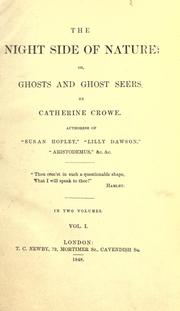
The night side of nature, or, Ghosts and ghost seers
First published 1848. Subjects: Apparitions, Ghosts, Parapsychology, Physics, Research.
eBay marketplace picks
Marketplace Samples
Live-tested eBay searches with available results related to this page.




Endnotes
1.
Source: gutenberg.org
Link:https://www.gutenberg.org/files/54532/54532-h/54532-h.htm
2.
Source: gutenberg.org
Title: Project Gutenberg
Link:https://www.gutenberg.org/files/47800/47800-h/47800-h.htm
Source snippet
Highways and Byways in the Border, by Andrew Lang and John Lang...
3.
Source: trove.scot
Title: Allanbank | Place | trove.scot
Link:https://www.trove.scot/place/94328
4.
Source: gutenberg.org
Link:https://www.gutenberg.org/ebooks/45362.epub.images
5.
Source: gutenberg.org
Link:https://www.gutenberg.org/cache/epub/47800/pg47800-images.html
6.
Source: archive.org
Link:https://archive.org/download/nightsideofnatur00crowuoft/nightsideofnatur00crowuoft.pdf
7.
Source: archive.org
Link:https://archive.org/download/proverbsproverbi00chevuoft/proverbsproverbi00chevuoft_bw.pdf
8.
Source: archive.org
Link:https://archive.org/stream/denhamtractscoll00denh/denhamtractscoll00denh_djvu.txt
9.
Source: archive.org
Link:https://archive.org/download/highwaysbywaysin00languoft/highwaysbywaysin00languoft.pdf
10.
Source: trove.scot
Link:https://www.trove.scot/place/59724
11.
Source: portal.historicenvironment.scot
Link:https://portal.historicenvironment.scot/apex/f?p=1505%3A300%3A%3A%3A%3A%3AVIEWTYPE%2CVIEWREF%3Adesignation%2CLB44477
Source snippet
Historic Environment ScotlandBLACKADDER SUSPENSION BRIDGE (LB44477)...
12.
Source: dunsehistorysociety.co.uk
Title: Dunse History Societ Blackadder House | Dunse History Societ
Link:https://www.dunsehistorysociety.co.uk/blackadder-house
13.
Source: Wikipedia
Title: Sir Robert Steuart, 1st Baronet
Link:https://en.wikipedia.org/wiki/Sir_Robert_Steuart%2C_1st_Baronet
14.
Source: Wikipedia
Title: Pearlin Jean
Link:https://en.wikipedia.org/wiki/Pearlin_Jean
15.
Source: Wikipedia
Title: Blackadder House
Link:https://en.wikipedia.org/wiki/Blackadder_House
16.
Source: aroundus.com
Title: Blackadder House
Link:https://aroundus.com/p/12853456-blackadder-house
17.
Source: portal.historicenvironment.scot
Link:https://portal.historicenvironment.scot/apex/f?p=1505%3A300%3A%3A%3A%3A%3AVIEWTYPE%2CVIEWREF%3Adesignation%2CLB44478
18.
Source: amazon.com
Title: Highways and Byways in the Border
Link:https://www.amazon.com/Highways-Byways-Border-Classic-Reprint/dp/1330861051?tag=searcht-20
19.
Source: electricscotland.com
Link:https://electricscotland.com/history/nation/stuart.htm
20.
Source: electricscotland.com
Link:https://electricscotland.com/history/nation/steuart.htm
21.
Source: worldlibrary.ai
Title: Pearlin Jean
Link:https://worldlibrary.ai/book/draa/wplbn0000619470
22.
Source: fairweatherlewis.wordpress.com
Title: pearlin jean
Link:https://fairweatherlewis.wordpress.com/2010/06/15/pearlin-jean/
Additional References
23.
Source: youtube.com
Title: Most Haunted Places in Scotland
Link:https://www.youtube.com/watch?v=Zsy14VK75Fc
Source snippet
"The Haunting of Woodhouselee: Scotland's Forgotten White Lady[https://www.youtube.com/watch?v=F04CWyh1STg..."](https://www.youtube.com/watch?v=F04CWyh1STg...")...
24.
Source: scribd.com
Link:https://www.scribd.com/document/325293444/Denham-Tracts
25.
Source: electricscotland.com
Link:https://electricscotland.com/history/nation/elliot.htm
26.
Source: amazon.com
Link:https://www.amazon.com/-/zh_TW/dp/1330861051?tag=searcht-20
27.
Source: forgottenbooks.com
Link:https://www.forgottenbooks.com/de/books/HighwaysandBywaysintheBorder_10115065
28.
Source: community-council.org.uk
Link:https://www.community-council.org.uk/killearnan/index.asp?pageid=259055
29.
Source: electricscotland.com
Link:https://electricscotland.com/history/borders/northsouthoftwee00languoft.pdf
30.
Source: public-library.uk
Link:https://www.public-library.uk/ebooks/74/8.pdf
31.
Source: bol.com
Link:https://www.bol.com/be/nl/p/pearlin-jean-the-ghost-of-allanbank/9300000233311555/
32.
Source: electricscotland.com
Link:https://www.electricscotland.com/kids/ghost/chapter07.htm
Topic Tree