Within Haunted Ross shire
Who Is Tulloch Castle's Green Lady?
Tulloch Castle gives Ross-shire its most visible hotel ghost story, centred on a Green Lady tradition linked to the Davidson past.
On this page
- The castle above Dingwall
- Elizabeth Davidson and the Green Lady tradition
- Hotel haunting, tourism and cautious reading
Page outline Jump by section
Introduction
Tulloch Castle’s Green Lady is Ross-shire’s most visible hotel ghost story: a reputed apparition at the castle above Dingwall, usually identified in modern tellings as Elizabeth Davidson, a young woman from the family whose name became closely attached to the house. The legend says she died after falling on the castle stairs, and that her presence is still sensed in corridors, on stairways and around the historic rooms now used by guests. The story matters because Tulloch is not a remote ruin but a working hotel, where family memory, Highland tourism and paranormal folklore meet in one place. The strongest reading is cautious: Tulloch Castle is a real historic building with a documented Davidson connection, while the Green Lady is best treated as a well-developed local and hotel tradition rather than a proven historical event or verified haunting.[historicenvironment.scot]portal.historicenvironment.scotHistoric Environment ScotlandTULLOCH CASTLE AND ARCHED TUNNEL ENTRANCE…25 Mar 1971 — 16th century square tower with later alterations…
The castle above Dingwall
Tulloch Castle stands at Dingwall in historic Ross-shire, now within the Highland Council area. For a haunted-place reader, the location is part of the atmosphere: the castle sits close to one of Ross-shire’s old county towns, with views and estate associations that make it feel less like an isolated fantasy castle and more like a landed Highland house layered with family history. Historic Environment Scotland lists “Tulloch Castle and arched tunnel entrance” as a Category B listed building and describes the core as a sixteenth-century square tower with later alterations and extensions from the seventeenth to early twentieth centuries.[Historic Environment Scotland]portal.historicenvironment.scotHistoric Environment ScotlandTULLOCH CASTLE AND ARCHED TUNNEL ENTRANCE…25 Mar 1971 — 16th century square tower with later alterations…
That official description is important because it steadies the story. Hotel and tourism copy often presents Tulloch as a twelfth-century castle connected with the Bains and later Clan Davidson, while the statutory heritage record gives the firmer architectural baseline: a sixteenth-century tower, repeatedly altered, restored and extended. Historic Environment Scotland also records work by A. Maitland and Sons in 1891 and further alterations by Sir Robert Lorimer in 1920–22, reminding us that the building visitors see today is a palimpsest rather than a frozen medieval survival.[Historic Environment Scotland]portal.historicenvironment.scotHistoric Environment ScotlandTULLOCH CASTLE AND ARCHED TUNNEL ENTRANCE…25 Mar 1971 — 16th century square tower with later alterations…
The Davidson association is not just decorative. Clan Davidson material says the Davidsons bought Tulloch from the Bayne family and that six successive Davidsons were lairds of Tulloch Castle until 1917, playing a prominent role in Dingwall and across Ross-shire. That makes the Green Lady’s usual identification with Elizabeth Davidson more than a random name attached to a ghost: it places the legend inside the social memory of a family that genuinely shaped the castle’s later history.[Clan Davidson Society of North America]clandavidson-na.orgClan Davidson Society of North America DINGWALL & THE DavidsonsBurgh of Dingwall, and across the County of Ross-shire…. • Duncan Davidson [1800-1881]…1840.Read more…
There is also a useful contrast between the documented house and the story-world surrounding it. The hotel emphasises retained period features such as the panelled Great Hall, restored fireplaces and ceilings, and the Green Lady Bar remains part of the visitor experience. A haunted hotel story becomes durable when the building itself gives guests recognisable “evidence anchors”: a stair, a portrait, a hall, a bar name, a corridor and a family past. Tulloch has all of these, which helps explain why the Green Lady has become the Ross-shire ghost story most likely to be encountered by visitors rather than only by folklore specialists.[Bespoke Hotels]bespokehotels.comBespoke Hotels HomeBespoke HotelsHome - Tulloch Castle HotelTulloch Castle dates from the 12th century, when the Bains and later the Clan Davidson laid clai…
Elizabeth Davidson and the Green Lady tradition
The modern form of the legend usually identifies the Green Lady as Elizabeth Davidson. Haunted Rooms, a commercial haunted-accommodation and ghost-tour site, says she is the most talked-about spirit at Tulloch, that a portrait believed to show Elizabeth hangs in the Great Hall, and that the hotel bar is named after her. Celtic Castles repeats the same broad tradition: Tulloch is said to have several ghosts, but the Green Lady is the famous one, with Elizabeth Davidson named as the likely identity.[Haunted Rooms®]hauntedrooms.co.ukHaunted Rooms®The Ghosts of Tulloch Castle Hotel, Dingwall, ScotlandShe has been sighted so frequently, the bar in the castle is actually…
The story most often told is that Elizabeth discovered her father with another woman, fled in distress, slipped or fell on the castle stairs, and died from the fall. A history page for Tulloch hosted by Storied Collection gives this version in concise form, while ScotlandShop’s Clan Davidson article repeats the same narrative and places it within a wider tour of Davidson-associated sites. These are useful for tracing how the story is currently circulated, but they are not the same as a parish register, inquest record or contemporary newspaper report of Elizabeth’s death.[Storied Collection]storiedcollection.comOpen source on storiedcollection.com.
That distinction is the key to reading Tulloch responsibly. The Davidson ownership of Tulloch is historically supported; the specific ghost narrative is preserved mainly through hotel lore, tourism writing, paranormal websites and modern retellings. The tale has the shape of a classic domestic castle haunting: a young woman, a family scandal, a fatal staircase, a lingering apparition and a portrait that keeps the lost person visually present. Those features do not make it false, but they do mean the account behaves like folklore as much as family history.
The “Green Lady” label also belongs to a wider Scottish and British haunted-castle vocabulary. Green, grey, white and blue ladies appear across ghost traditions because colour makes an apparition memorable and gives a repeated sighting an identity. At Tulloch, however, the generic motif has been localised. The apparition is not merely “a lady in green”; she has been folded into the Davidson story, the Great Hall portrait, the named bar and the hotel’s public identity. That localisation is what gives the Ross-shire case its particular force.
The family background adds another layer. The Davidsons of Tulloch were not marginal figures: one Duncan Davidson of Tulloch, born in 1800, served as MP for Cromartyshire and later as Lord Lieutenant of Ross-shire, according to History of Parliament material summarised in biographical sources. Clan Davidson publications also emphasise the family’s civic prominence in Dingwall and Ross-shire. A ghost story attached to such a family carries more than a fright; it turns elite domestic space into a place where private shame, inheritance and memory can be retold in public.[Wikipedia]WikipediaDuncan Davidson (Cromartyshire MP, born 1800Duncan Davidson (Cromartyshire MP, born 1800
Why the staircase, portrait and bar make the legend stick
The Green Lady story has become memorable because it is physically staged inside the hotel. Many castle ghosts are vague presences “seen in the grounds” or “heard at night”, but Tulloch’s legend has specific props and routes. The staircase matters because the death story centres on a fall. The Great Hall portrait matters because it gives visitors a face to attach to the name Elizabeth Davidson. The Green Lady Bar matters because the haunting has been made part of the ordinary hospitality setting: guests can encounter the legend over food or a drink, not only during a ghost hunt.[Haunted Rooms®]hauntedrooms.co.ukHaunted Rooms®The Ghosts of Tulloch Castle Hotel, Dingwall, ScotlandShe has been sighted so frequently, the bar in the castle is actually…
This does not mean the haunting is verified. It means the legend has unusually good conditions for survival. A guest who hears about a fatal stair while standing near an old staircase is primed to notice creaks, draughts, cold patches or tricks of light. A portrait in a historic hall encourages the familiar feeling that painted eyes “follow” the viewer. A named bar keeps the ghost in staff patter, menus, reviews and travel memories. Folklore often persists not because every detail is documented, but because places keep giving the story occasions to be retold.
The legend has also been strengthened by alleged photographs and paranormal investigations. Haunted Rooms says the Green Lady is among the ghosts claimed to have been captured on film and mentions reports by paranormal teams of orbs, cold patches, noises, clicks, bangs and thuds. A later Scottish Sun travel piece, drawing on a haunted-stay ranking rather than original investigation, likewise repeats claims of film evidence and paranormal activity. These accounts are part of the modern fame of the Tulloch story, but they should be read as claims about experiences and publicity rather than proof of an apparition.[Haunted Rooms®]hauntedrooms.co.ukHaunted Rooms®The Ghosts of Tulloch Castle Hotel, Dingwall, ScotlandShe has been sighted so frequently, the bar in the castle is actually…
The widely repeated “captured on film” motif is especially worth handling carefully. Ghost photographs often become famous because they seem to offer a fixed image of something that is otherwise fleeting. Yet photographs taken in hotels, stairwells and low-light interiors can be ambiguous: motion blur, reflections, pareidolia, shadows, camera artefacts and expectation can all shape what viewers believe they see. Tulloch’s photographic claims therefore belong in the story’s modern afterlife, not in the same evidential category as the listed-building record or the documented Davidson ownership.
Hotel haunting, tourism and cautious reading
Tulloch Castle’s present life as a hotel is central to the Green Lady legend. A private family ghost might have remained a local anecdote; a hotel ghost is repeatedly encountered by outsiders, reviewed online, packaged in travel writing and folded into the visitor economy. The official hotel site presents Tulloch as a historic castle hotel with period features and a Green Lady Bar, while haunted-accommodation sites turn the same setting into an overnight paranormal destination.[Bespoke Hotels]bespokehotels.comBespoke Hotels HomeBespoke HotelsHome - Tulloch Castle HotelTulloch Castle dates from the 12th century, when the Bains and later the Clan Davidson laid clai…
This does not cheapen the story, but it changes how it should be read. Hotel hauntings often sit between folklore and marketing. Staff stories, guest impressions, wedding photographs, ghost tours and travel articles all reinforce one another. A claim may begin as an anecdote, become a page on a haunted hotel website, reappear in a newspaper Halloween feature, and then return to the hotel as something new guests have already heard before arrival. Tulloch’s Green Lady has clearly travelled through that loop.
The strongest sources for the building and family context are heritage and clan-history sources; the strongest sources for the haunting are tourism, paranormal and visitor-facing sources. That unevenness is normal in haunted-place research. Historic Environment Scotland can tell us what the building is and how it developed; Clan Davidson sources can show why the Davidson connection matters locally; hotel and haunted-travel sources show how the Green Lady is now narrated. None of these, on its own, proves that Elizabeth Davidson appears in the castle. Together, they explain why this particular legend has become so visible in Ross-shire.[historicenvironment.scot]portal.historicenvironment.scotHistoric Environment ScotlandTULLOCH CASTLE AND ARCHED TUNNEL ENTRANCE…25 Mar 1971 — 16th century square tower with later alterations…
A cautious reader should separate three layers:
- Documented setting: Tulloch Castle is a listed historic building at Dingwall with a sixteenth-century core and later additions.[Historic Environment Scotland]portal.historicenvironment.scotHistoric Environment ScotlandTULLOCH CASTLE AND ARCHED TUNNEL ENTRANCE…25 Mar 1971 — 16th century square tower with later alterations…
- Documented family association: The Davidsons held Tulloch for generations and were prominent in Dingwall and Ross-shire.[Clan Davidson Society of North America]clandavidson-na.orgClan Davidson Society of North America DINGWALL & THE DavidsonsBurgh of Dingwall, and across the County of Ross-shire…. • Duncan Davidson [1800-1881]…1840.Read more…
- Folkloric haunting claim: The Green Lady is said to be Elizabeth Davidson, linked to a fatal fall on the stairs, but the commonly available sources preserve this as legend rather than as firmly documented death history.[Storied Collection]storiedcollection.comOpen source on storiedcollection.com.
That layered reading makes the story more interesting, not less. It lets the Green Lady remain an atmospheric Ross-shire legend while avoiding the common mistake of presenting every repeated ghost tale as established fact.
What the Green Lady says about Ross-shire’s haunted history
Tulloch Castle’s Green Lady is not Ross-shire’s oldest or most rigorously documented supernatural tradition, but it is probably its most accessible haunted-hotel story. It sits near Dingwall, carries a named family association, and is still visible through the hotel’s public spaces and branding. For readers exploring haunted Ross-shire, Tulloch is therefore a natural starting point: not because it proves ghosts exist, but because it shows how a Highland family seat can become a modern folklore landmark.
The legend also shows how haunted history often works in lived places. Ruins can preserve atmosphere through abandonment; hotels preserve it through repetition. Every guest who asks about the Green Lady, every article that names Elizabeth Davidson, every mention of the bar, portrait or staircase adds another layer to the tradition. The haunting is not only a claim about an apparition; it is a continuing story about how Tulloch Castle remembers itself.
Within the wider Ross-shire branch, Tulloch belongs beside other place-based traditions such as castle hauntings, road legends and family-linked apparitions, but its distinctive value is its public visibility. The Green Lady gives the county a recognisable haunted destination with a clear setting and a named figure. The best evidence supports the castle’s age, alterations and Davidson importance; the ghost story itself remains a compelling, carefully qualified legend attached to that real historical frame.
Amazon book picks
Further Reading
Books and field guides related to Who Is Tulloch Castle's Green Lady?. Use these as the next step if you want deeper reading beyond the article.
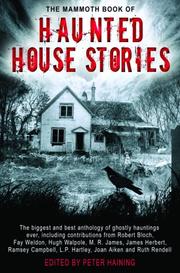
The Mammoth Book of Haunted House Stories
Explores haunted historic houses and castles.
eBay marketplace picks
Marketplace Samples
Live-tested eBay searches with available results related to this page.
Endnotes
1.
Source: scotlandshop.com
Title: castles clan davidson
Link:https://www.scotlandshop.com/tartanblog/castles-clan-davidson
2.
Source: Wikipedia
Title: Duncan Davidson (Cromartyshire MP, born 1800)
Link:https://en.wikipedia.org/wiki/Duncan_Davidson_%28Cromartyshire_MP%2C_born_1800%29
3.
Source: Wikipedia
Title: Tulloch Castle
Link:https://en.wikipedia.org/wiki/Tulloch_Castle
4.
Source: Wikipedia
Title: Duncan Davidson (Cromartyshire MP, born 1733)
Link:https://en.wikipedia.org/wiki/Duncan_Davidson_%28Cromartyshire_MP%2C_born_1733%29
5.
Source: portal.historicenvironment.scot
Link:https://portal.historicenvironment.scot/apex/f?p=1505%3A300%3A%3A%3A%3A%3AVIEWTYPE%2CVIEWREF%3Adesignation%2CLB24518
Source snippet
Historic Environment ScotlandTULLOCH CASTLE AND ARCHED TUNNEL ENTRANCE...25 Mar 1971 — 16th century square tower with later alterations...
6.
Source: bespokehotels.com
Title: Bespoke Hotels Home
Link:https://bespokehotels.com/tullochcastlehotel/
Source snippet
Bespoke HotelsHome - Tulloch Castle HotelTulloch Castle dates from the 12th century, when the Bains and later the Clan Davidson laid clai...
7.
Source: hauntedrooms.co.uk
Link:https://www.hauntedrooms.co.uk/product/tulloch-castle-hotel-dingwall-ross-shire-scotland
Source snippet
Haunted Rooms®The Ghosts of Tulloch Castle Hotel, Dingwall, ScotlandShe has been sighted so frequently, the bar in the castle is actually...
8.
Source: clandavidson-na.org
Title: Clan Davidson Society of North America DINGWALL & THE Davidsons
Link:https://clandavidson-na.org/Miscellaneous-PDFs/TC%20-%20Dingwall%20%26%20The%20Davidsons.pdf
Source snippet
Burgh of Dingwall, and across the County of Ross-shire.... • Duncan Davidson [1800-1881]…1840.Read more...
9.
Source: storiedcollection.com
Link:https://storiedcollection.com/history-tulloch/
10.
Source: bespokehotels.com
Title: Bespoke Hotels Dining
Link:https://bespokehotels.com/tullochcastlehotel/dining/
11.
Source: tripadvisor.co.uk
Title: green lady bar
Link:https://www.tripadvisor.co.uk/LocationPhotoDirectLink-g644370-d566381-i188616342-Tulloch_Castle_Hotel-Dingwall_Ross_and_Cromarty_Scottish_Highlands_Scotla.html
12.
Source: celticcastles.com
Title: Tulloch Castle
Link:https://www.celticcastles.com/castles/tulloch/
13.
Source: findagrave.com
Title: duncan davidson
Link:https://www.findagrave.com/memorial/284943238/duncan-davidson
14.
Source: stravaiging.com
Link:https://www.stravaiging.com/history/castle/tulloch-castle/
15.
Source: electricscotland.com
Link:https://electricscotland.com/familytree/magazine/augsep2003/tulloch.htm
16.
Source: clandavidson-na.org
Link:https://clandavidson-na.org/Miscellaneous-PDFs/TC%20-%20Ghosts%20at%20Tulloch%207-21-10.pdf
Additional References
17.
Source: facebook.com
Link:https://www.facebook.com/LindsaysHighlandTours/posts/12th-century-tulloch-castle-is-widely-considered-haunted-the-most-prominent-spir/1338386678316890/
18.
Source: instagram.com
Link:https://www.instagram.com/p/CkYzr3vM6k6/
19.
Source: celticcastles.com
Link:https://www.celticcastles.com/articles/the-most-haunted-castle-hotels-you-can-stay-in/
20.
Source: nts.org.uk
Link:https://www.nts.org.uk/stories/ghosts-of-the-trust
21.
Source: hauntedhosts.com
Link:https://hauntedhosts.com/library/famous-hauntings/green-lady-tulloch-castle/
22.
Source: instagram.com
Link:https://www.instagram.com/reel/DQeXwh8D879/?hl=en
23.
Source: facebook.com
Link:https://www.facebook.com/groups/608385346662426/posts/1903963067104641/
24.
Source: clandavidson.org.uk
Link:https://clandavidson.org.uk/wp-content/uploads/2019/03/Rev-309-H_Memorials.pdf
25.
Source: clandavidson.org.uk
Link:https://clandavidson.org.uk/wp-content/uploads/2019/03/Clan-Dhai-List-rev01.pdf
26.
Source: thescottishsun.co.uk
Link:https://www.thescottishsun.co.uk/travel/13733534/scottish-castle-ghosts-named-most-haunted-stay-europe/
Topic Tree