Within Haunted Dumfriesshire
Why Does Comlongon's Green Lady Endure?
Comlongon's Green Lady legend turns a bitter inheritance dispute into Dumfriesshire's most memorable castle haunting.
On this page
- Marion Carruthers and the Mouswald inheritance
- The fall from the tower and rival versions
- How Comlongon became haunted heritage
Page outline Jump by section
Introduction
Comlongon Castle’s Green Lady endures because the story is not just a castle ghost tale. It gives a name, a place and a legal wound to a haunting: Marion Carruthers of Mouswald, a 16th-century Dumfriesshire heiress whose inheritance and marriage rights became entangled with the ambitions of powerful border families. The tradition says she died after falling from the tower at Comlongon, near Clarencefield, and that her restless apparition still appears as a weeping woman in green. The historical record supports the larger conflict over her lands; the haunting itself belongs to folklore, shaped by later retelling, local memory and the grim physical theatre of the tower house. Comlongon matters in Dumfriesshire’s haunted map because it turns a dispute over wardship, marriage and property into one of southern Scotland’s most memorable tragic female apparition traditions.[carothers-carruthers.com]carothers-carruthers.comCarothers ResourcesCarothers Resources
Where Is Comlongon Castle?
Comlongon Castle stands in historic Dumfriesshire, in the civil parish of Ruthwell, west of Clarencefield and south-east of Dumfries. Modern descriptions usually place it within Dumfries and Galloway, but for this haunting the older county setting matters: the story belongs to Annandale and to the border world of Mouswald, Ruthwell, Caerlaverock, Drumlanrig influence and competing landed families. Gatehouse’s record of the 1590 Aglionby Platt identifies “Cumlonga castel” as Comlongon Castle, in Ruthwell parish and the historic county of Dumfriesshire, with the likely 1590 form recorded as a baronial tower house.[gatehouse-gazetteer.info]gatehouse-gazetteer.infoCumlonga castel (The Gatehouse Record of the Aglionby PlattCumlonga castel (The Gatehouse Record of the Aglionby Platt
The building itself gives the legend much of its force. Historic Environment Scotland lists Comlongon Castle and Mansion House as Category A, describing a 15th-century large rectangular tower house, five storeys high, attached to a mansion house of 1900–02 by Dumfries architects James Barbour and J. M. Bowie. Its north wall entrance, iron yett, small gridded openings, crenellated parapet and crow-stepped cap houses make it easy to understand why the Green Lady story clings to this particular place rather than to a vague “old castle” setting.[Historic Environment Scotland]portal.historicenvironment.scotOpen source on historicenvironment.scot.
Architectural scholarship adds a useful correction to the usual romantic shorthand. Alastair Maxwell-Irving’s study for the Proceedings of the Society of Antiquaries of Scotland argues that Comlongon and Elphinstone are best understood as sophisticated tower houses of around the turn of the 16th century or shortly after, rather than simply as mid-15th-century strongholds. The paper also notes Comlongon’s many mural chambers and architectural refinements, but points out that its internal features weakened parts of the structure, making the castle less purely “military” than its forbidding appearance might suggest.[Society of Antiquaries of Scotland]journals.socantscot.orgSociety of Antiquaries of Scotland
Marion Carruthers and the Mouswald Inheritance
The human story behind the haunting begins with Marion Carruthers of Mouswald, usually presented as the younger daughter and co-heiress of Sir Simon Carruthers. Later Carruthers family histories and local haunting accounts agree on the broad outline: after Sir Simon’s death, Marion and her sister Janet became valuable heiresses, and their marriages and property rights attracted the attention of Sir James Douglas of Drumlanrig. The folklore is dramatic, but the underlying legal setting is not imaginary. It reflects a period when wardship and marriage could give a guardian enormous leverage over a young heiress and her lands.[carothers-carruthers.com]carothers-carruthers.comCarothers ResourcesCarothers Resources
The Carothers-Carruthers account, drawing on Records of the Carruthers Family by A. Stanley Carruthers and R. C. Reid, gives the most detailed online version of the legal sequence. It states that Janet Carruthers, with the consent of her husband Thomas Rorison of Bardannoch, alienated her half of the Mouswald estates to Sir James Douglas of Drumlanrig in a charter dated 16 July 1562, confirmed by precept on 8 January 1562/3. The same account lists the Mouswald holdings as extensive, including lands, tower, fortalice, mill, church rights and other properties across Annandale.[carothers-carruthers.com]carothers-carruthers.comCarothers ResourcesCarothers Resources
Marion’s position appears to have been more resistant and more vulnerable. On 28 January 1563, Marion and her uncle Charles Murray of Cockpool appeared before Queen Mary and the Lords of Secret Council. The account says she sought time to consult friends in Edinburgh about what the Council required of her, while Charles Murray undertook to present her again and to ensure she did not marry or dispose of lands in the meantime. The same source interprets the “thing” required of her as marriage to the husband chosen by Sir James Douglas.[carothers-carruthers.com]carothers-carruthers.comCarothers ResourcesCarothers Resources
What makes the story haunting, even before any apparition appears, is the pressure of law closing around a personal choice. In February 1563 Marion was sent for a period to the household of Lord Borthwick, under financial penalties that she should not leave for Annandale or elsewhere without notice to Queen and Council. By March she had made up her part of the Barony of Mouswald at Lochmaben as one of Sir Simon’s two heiresses; by September, sureties were being given that she would not marry a “Brokkin Man” or ally herself with such a person. These details show a woman whose marriage, mobility and property were all being watched.[carothers-carruthers.com]carothers-carruthers.comCarothers ResourcesCarothers Resources
The Fall from the Tower and Rival Versions
The core legend says Marion eventually took refuge at Comlongon Castle, associated with her Murray relatives, and died after falling from the tower. The common ghost-story version presents her as a desperate young woman who jumped from the lookout tower rather than submit to an unwanted marriage or surrender her inheritance. Goblinshead’s account, based on Martin Coventry’s Scotland’s Ghastly Ghosts, says she sought refuge at Comlongon, became exhausted by the long dispute, and died after leaping from the tower on 25 September 1570.[Goblinshead]goblinshead.co.ukGoblinshead - Comlongon…
The darker local variant is that Marion did not jump at all. In that telling, agents or supporters of Douglas gained access to her room and threw her from the roof, with the suicide explanation serving the interests of those who benefited from her death. This version is not provable from the sources available online, but it is important because it explains why the Green Lady became more than a sorrowful suicide ghost. The suspected-murder tradition turns the haunting into a moral protest: a woman’s apparition remains because the official story is not trusted.[carothers-carruthers.com]carothers-carruthers.comCarothers ResourcesCarothers Resources
The most striking documentary detail is the escheat granted by King James VI on 17 October 1570. The Carothers-Carruthers account quotes the deed as saying Marion’s lands had fallen to the Crown through her wilful self-killing after leaping over the wall of the tower and breaking her neck and bones. That record points towards suicide as the formal legal explanation. The same account immediately notes, however, that district tradition asserted she was murdered and that suspicions of foul play surrounded her death.[carothers-carruthers.com]carothers-carruthers.comCarothers ResourcesCarothers Resources
There are also inconsistencies in dates and names across later retellings, which is a warning against treating every detail as equally secure. Some accounts give 25 September 1570, while a Clan Carruthers page notes uncertainty around dates such as 1564/65, 1568 and the later traditional date. Some versions connect the unwanted marriage with John MacMath of Dalpeddar, nephew of Sir James Douglas, while simplified ghost stories sometimes make Douglas himself the intended husband. Those variations do not destroy the tradition, but they do show how historical grievance, family history and ghost lore have been braided together over time.[CLAN CARRUTHERS]clancarruthers.comCLAN CARRUTHERSThe Tragedy of Marion Carruthers – CLAN CARRUTHERSCLAN CARRUTHERSThe Tragedy of Marion Carruthers – CLAN CARRUTHERS

What Is the Green Lady Said to Do?
The Green Lady is usually described as the spirit of Marion Carruthers, appearing as a sorrowful young woman in or around Comlongon Castle. Goblinshead’s account says her apparition has reportedly been seen in the castle and grounds as a forlorn, sobbing girl; other claims include sounds of weeping and a presence that seems to push past people. The tale also preserves the traditional motif that no grass would grow where she fell, a familiar kind of physical “mark” often attached to violent-death folklore.[Goblinshead]goblinshead.co.ukGoblinshead - Comlongon…
As with many named castle ghosts, the Green Lady’s “evidence” is not a neat set of signed witness statements. It is a layered tradition: architectural setting, family tragedy, reported apparitions, repeated local storytelling and later heritage presentation. That does not make it worthless. For haunted-place history, the useful question is not whether the ghost can be proved, but why this particular story kept being told. At Comlongon, the answer lies in the unusually tight fit between place and plot: a real tower, a known heiress, a property dispute, an official suicide record, local suspicion and a haunting figure whose colour and grief make the legend easy to remember.
The “Green Lady” label also places Marion within a wider Scottish and British ghost vocabulary. Green ladies are often connected with castles, aristocratic households, betrayal, frustrated love, family guilt or an unresolved death. Comlongon’s version is distinctive because the apparition is not merely decorative. Marion’s green-clad figure functions as a shorthand for the Mouswald inheritance dispute, the vulnerability of heiresses under wardship, and the way border power politics could be remembered through a single tragic woman.
Why the Story Became Haunted Heritage
Comlongon’s Green Lady became locally famous because the legend is easy to locate, easy to retell and emotionally legible. A visitor does not need deep knowledge of 16th-century Scots law to grasp the essential drama: a young heiress, a forced or unwanted marriage arrangement, powerful men competing for land, flight to a relative’s castle, a fatal fall and a ghost said to weep afterwards. The story turns legal history into a scene: the tower, the parapet, the fall and the patch of ground where no grass is said to grow.[carothers-carruthers.com]carothers-carruthers.comCarothers ResourcesCarothers Resources
The castle’s later life helped keep the haunting visible. Comlongon was long presented as a romantic historic venue, and popular castle guides and ghost collections gave the Green Lady a wider audience beyond Dumfriesshire. The Castles of Scotland’s account repeats the main tradition, including Marion’s flight to Comlongon, the rival suicide and murder versions, the alleged denial of Christian burial and the barren patch where she died. Such guidebook-style retellings are not primary evidence for a haunting, but they are important evidence for how the story entered modern heritage culture.[The Castles of Scotland]thecastlesofscotland.co.ukOpen source on thecastlesofscotland.co.uk.
The building’s modern status also shapes how readers encounter the tale. Comlongon Castle was formerly run as a hotel and wedding venue, entered business administration in 2019, and has more recently been discussed in terms of restoration and conservation plans. Current estate material describes proposed restoration and consolidation works, with an emphasis on protecting the tower house and reviving the wider site for education, tourism and cultural use. That means the Green Lady sits at the intersection of folklore and heritage management: a ghost story attached to a fragile, high-status historic building rather than to an anonymous ruin.[Insider]insider.co.uktrustee appointed deal bankrupt wedding 14389530trustee appointed deal bankrupt wedding 14389530
How Credible Is the Green Lady Tradition?
The strongest part of the Comlongon story is the documented inheritance conflict. The record of Marion’s appearances before council, the attempted conveyance of her lands to Charles Murray, Douglas’s challenge, the later escheat and the eventual absorption of Mouswald interests into Douglas power give the tale a firmer historical backbone than many castle hauntings possess. Even when relying on family-history presentations rather than direct archival images, the sequence is specific enough to show that Marion was not invented merely to explain a spooky tower.[carothers-carruthers.com]carothers-carruthers.comCarothers ResourcesCarothers Resources
The weakest part, in evidential terms, is the apparition itself. Reports of weeping, sightings and a ghostly presence are preserved in modern ghost collections and castle-haunting summaries, but they are not presented as verifiable contemporary witness records. The murder theory is also a tradition rather than a settled fact. The official record described self-killing; the local story suspected foul play. A careful reading has to keep both in view without pretending that either proves a ghost.[carothers-carruthers.com]carothers-carruthers.comCarothers ResourcesCarothers Resources
The most plausible historical reading is that Marion Carruthers’ death became a vessel for local unease about coercion, inheritance and the treatment of women under elite power. The ghost story may preserve a communal suspicion that the legal outcome was morally rotten, even if the exact circumstances of the fall cannot now be recovered. In that sense, Comlongon’s Green Lady is credible as folklore attached to real conflict, less credible as a demonstrable supernatural event, and most powerful as haunted memory.
Why Comlongon Still Matters in Dumfriesshire’s Ghost Map
Within Dumfriesshire, Comlongon stands apart because its haunting is unusually personal. Caerlaverock has siege atmosphere, the A75 has roadside apparition lore, and Dumfries town has theatre, institutional and ghost-walk traditions, but Comlongon’s Green Lady centres on a named woman whose story can be followed through family, land and legal pressure. It is not just “a lady seen in a castle”; it is Marion Carruthers of Mouswald, remembered at the point where private fear and public inheritance collided.
The legend also shows how haunted history works in border counties. The supernatural layer is not separate from history; it grows out of it. The tower house gives the story architecture. The Mouswald lands give it stakes. The Douglas and Murray connections give it power politics. The disputed fall gives it mystery. The weeping Green Lady gives it an image that survives when the legal paperwork has faded from ordinary memory.
That is why Comlongon’s Green Lady endures. She is frightening, but not because the tale depends on shock. She endures because the story gives shape to a recognisable injustice: a young woman caught between family strategy, property law and male authority, remembered not through a monument or courtroom victory but through a ghost said to wander the castle where her struggle ended.
Amazon book picks
Further Reading
Books and field guides related to Why Does Comlongon's Green Lady Endure?. Use these as the next step if you want deeper reading beyond the article.
The Penguin Book of Ghost Stories
Adds classic ghost literature alongside historical hauntings.
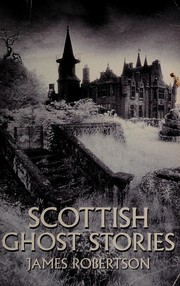
Scottish Ghost Stories
Readers interested in tragic female apparitions are a natural audience.
eBay marketplace picks
Marketplace Samples
Live-tested eBay searches with available results related to this page.
Endnotes
1.
Source: carothers-carruthers.com
Title: Carothers Resources
Link:https://www.carothers-carruthers.com/suicidemouswald.html
2.
Source: gatehouse-gazetteer.info
Title: Cumlonga castel (The Gatehouse Record of the Aglionby Platt)
Link:https://www.gatehouse-gazetteer.info/AP/Cumlongacastel.html
3.
Source: journals.socantscot.org
Title: Society of Antiquaries of Scotland
Link:https://journals.socantscot.org/index.php/psas/article/download/9950/9917
4.
Source: clancarruthers.com
Title: CLAN CARRUTHERSThe Tragedy of Marion Carruthers – CLAN CARRUTHERS
Link:https://clancarruthers.com/the-tragedy-of-marion-carruthers-clan-carruthers-a-proud-and-ancient-border-reiver-family/
5.
Source: youtube.com
Title: Comlongon Castle
Link:https://www.youtube.com/watch?v=z-g-jY-2BmU
Source snippet
3 Dumfries town: ghost walks...
6.
Source: goblinshead.co.uk
Link:https://www.goblinshead.co.uk/bogles/comlongon/
Source snippet
Goblinshead - Comlongon...
7.
Source: portal.historicenvironment.scot
Link:https://portal.historicenvironment.scot/apex/f?p=1505%3A300%3A%3A%3A%3A%3AVIEWTYPE%2CVIEWREF%3Adesignation%2CLB17245
8.
Source: thecastlesofscotland.co.uk
Link:https://www.thecastlesofscotland.co.uk/the-best-castles/other-articles/comlongon-castle/
9.
Source: insider.co.uk
Title: trustee appointed deal bankrupt wedding 14389530
Link:https://www.insider.co.uk/news/trustee-appointed-deal-bankrupt-wedding-14389530
10.
Source: douglashistory.co.uk
Link:https://www.douglashistory.co.uk/history/Places/mouswald.htm
11.
Source: goblinshead.co.uk
Link:https://www.goblinshead.co.uk/goblinshead-titles/scottish-history-wee-guide/sons-of-canmore/
12.
Source: scottisharchitects.org.uk
Link:https://www.scottisharchitects.org.uk/apex/r/dsa/dsa/architects?p8_id=200350&session=14643695948638
13.
Source: portal.historicenvironment.scot
Link:https://portal.historicenvironment.scot/apex/f?p=1505%3A300%3A%3A%3A%3A%3AVIEWTYPE%2CVIEWREF%3Adecision%2C500001751
14.
Source: historicenvironment.scot
Link:https://www.historicenvironment.scot/visit/check-for-closures/
15.
Source: clancarrutherssociety.org
Title: the tearful mouswald tragedy
Link:https://clancarrutherssociety.org/2018/09/12/the-tearful-mouswald-tragedy/
16.
Source: clancarrutherssociety.org
Link:https://clancarrutherssociety.org/2023/01/28/clan-carruthers-carruthers-of-mouswald-shield-bearer-to-the-red-douglas-and-more-on-marion-of-mouswald/
17.
Source: Wikipedia
Title: Comlongon Castle
Link:https://en.wikipedia.org/wiki/Comlongon_Castle
18.
Source: carrothersclan.wordpress.com
Link:https://carrothersclan.wordpress.com/2018/04/02/clan-carruthers-carruthers-and-drumlanrig-castle/
19.
Source: carruthersclan.wordpress.com
Title: clan carruthers int mouswald
Link:https://carruthersclan.wordpress.com/1700/04/14/clan-carruthers-int-mouswald/
20.
Source: trove.scot
Link:https://www.trove.scot/place/66058
21.
Source: borderreiverheritage.com
Link:https://borderreiverheritage.com/clan-carruthers/
22.
Source: clancarruthersusa.org
Link:https://clancarruthersusa.org/about/
23.
Source: thecastlesofscotland.co.uk
Link:https://www.thecastlesofscotland.co.uk/the-best-castles/
24.
Source: ticketsource.com
Link:https://www.ticketsource.com/date/400937
25.
Source: wikishire.co.uk
Title: mlongon Castle
Link:https://wikishire.co.uk/wiki/Comlongon_Castle
26.
Source: ghosts.fandom.com
Title: Comlongon Castle
Link:https://ghosts.fandom.com/wiki/Comlongon_Castle
Additional References
27.
Source: wikidata.org
Link:https://www.wikidata.org/wiki/Q17571304
28.
Source: bonnieescapes.com
Link:https://bonnieescapes.com/places/comlongon-castle/
29.
Source: schottland-wegweiser.de
Link:https://www.schottland-wegweiser.de/schottland_burgen_comlongoncastle.html
30.
Source: ancientmonuments.uk
Link:https://ancientmonuments.uk/125158-comlongon-castle-annandale-south-ward
31.
Source: facebook.com
Link:https://www.facebook.com/BorderReiverGenealogy/posts/comlongon-castle-in-dumfrieshire-scotland-is-reportedly-haunted-by-the-ghost-of-/4774814409199971/
32.
Source: instagram.com
Link:https://www.instagram.com/p/DWtmfIkDACd/
33.
Source: facebook.com
Link:https://www.facebook.com/obantimes/posts/after-56-years-under-the-ownership-of-the-nelson-family-glengorm-castle-and-esta/1595419022588379/
34.
Source: flickr.com
Link:https://www.flickr.com/photos/tags/Robert%20Riddell/
35.
Source: colliers.com
Link:https://www.colliers.com/en-gb/news/01-07-20-16th-century-medieval-castle-and-baronial-mansion-house-comlongon-castle-hotel
36.
Source: youtube.com
Title: Caerlaverock Castle: siege-haunted atmosphere
Link:https://www.youtube.com/watch?v=rHBOEJCj7g0
Source snippet
5 Drumlanrig Castle’s aristocratic spectres...
Topic Tree