Within Argyllshire Hauntings
When Does History Become A Haunting?
Glencoe's haunted reputation comes from a documented massacre whose emotional weight later shaped reports of cries, shadows and fugitive figures.
On this page
- The massacre of 13 February 1692
- Ghost stories built on documented violence
- Archaeology, memory and sceptical reading
Page outline Jump by section
Introduction
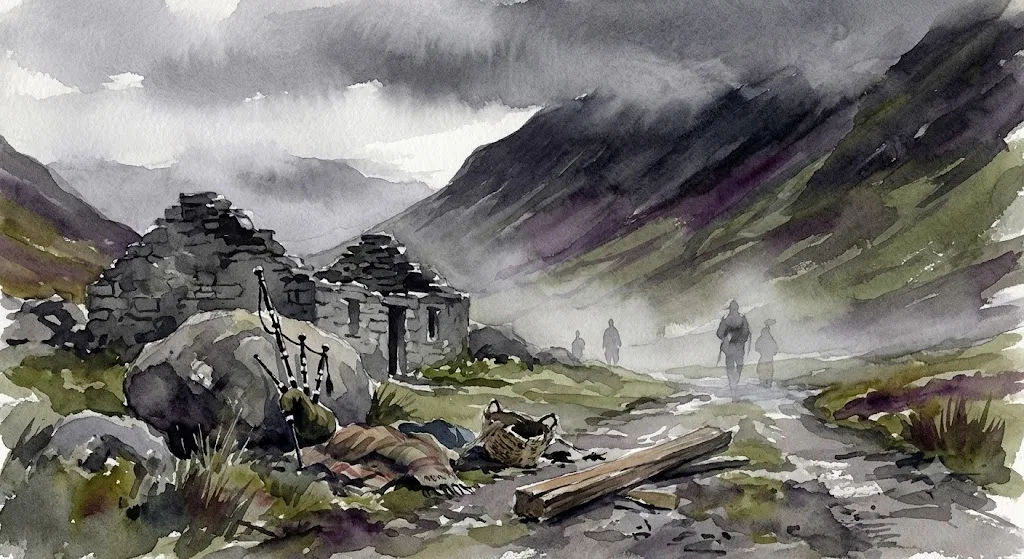
Glencoe’s haunted reputation is inseparable from the Massacre of 13 February 1692. The glen is not famous because of one tidy ghost story with a named witness and a neat ending. It is famous because documented violence, winter landscape, clan memory, tourism, commemoration and folklore have fused into a place where visitors often read the scenery as if it still carries the shock of betrayal. The stories usually speak of screams heard around the anniversary, shadowy figures on the slopes, fugitive shapes among the rocks, and the sense that the dead are not quite absent. The strongest evidence is historical rather than paranormal: orders, inquiries, memorials, museum interpretation and archaeology all show why Glencoe became one of Argyllshire’s most emotionally charged haunted landscapes. The ghost stories are best understood as folklore built around a real atrocity, not as proof that the massacre literally repeats itself in the glen.[nts.org.uk]nts.org.ukNational Trust for Scotland The Glencoe Massacre | National Trust for ScotlandNational Trust for Scotland The Glencoe Massacre | National Trust for Scotland
Why Glencoe belongs to Argyllshire’s haunted map
Glencoe lies in the north of historic Argyllshire, close to Lochaber, though modern visitors usually encounter it through Highland Council, Lochaber and National Trust for Scotland visitor material. That boundary detail matters for a county-based haunted history: the glen sits at the edge of historic Argyll, but its massacre story is deeply tied to Argyllshire clan politics, the Earl of Argyll’s Regiment of Foot, and the wider west Highland memory of violence, hospitality and betrayal. Wikishire describes Glen Coe as a glen in Argyllshire, while modern tourism tends to frame it through Lochaber, Loch Leven and the Highlands more broadly.[wikishire.co.uk]wikishire.co.ukOpen source on wikishire.co.uk.
The place itself helps explain the haunting tradition. Glencoe is not a single building where a ghost appears in a corridor; it is a long, steep-sided landscape of passes, settlements, river ground, scree, ruins, memorials and weather. The National Trust for Scotland describes it as known for “haunting past” as well as wild beauty, and its visitor guidance places the massacre across several locations rather than in one fixed room or ruin: Inverigan, Coire Gabhail, An Torr, Loch Leven, the Devil’s Staircase, Glencoe village and the massacre memorial.[National Trust for Scotland]nts.org.ukNational Trust for Scotland The Glencoe Massacre | National Trust for ScotlandNational Trust for Scotland The Glencoe Massacre | National Trust for Scotland
That spread is important. In many haunted-house stories, the legend clings to a staircase, bedroom or locked chamber. At Glencoe, the haunting clings to movement: soldiers arriving, hosts feeding them, orders being delivered, shots fired before dawn, people fleeing uphill in snow, survivors hiding in harsh ground, and later generations walking the same routes with the story already in mind. The result is a haunted landscape rather than a haunted object.
The massacre of 13 February 1692
The core event is well documented. In late January 1692, about 120 soldiers from the Earl of Argyll’s Regiment of Foot arrived in Glencoe and were quartered among the MacDonalds. They stayed for almost two weeks, eating, sleeping and socialising in the homes of the people they would later be ordered to attack. Both the National Trust for Scotland and Glencoe Folk Museum stress that the horror lay not only in the killing, but in the breach of hospitality: the soldiers were not strangers charging down from the mountains, but guests who turned on their hosts.[National Trust for Scotland]nts.org.ukNational Trust for Scotland The Glencoe Massacre | National Trust for ScotlandNational Trust for Scotland The Glencoe Massacre | National Trust for Scotland
The order itself survives as an archival object. The National Library of Scotland catalogue identifies Major Robert Duncanson’s 1692 letter to Captain Robert Campbell of Glenlyon as the order “to fall on the Macdonalds of Glencoe and destroy them”, now held as Adv.MS.23.6.24. The wording preserved in public accounts is stark: the soldiers were ordered to fall upon the MacDonalds of Glencoe and put all under seventy to the sword.[Manuscripts NLS]manuscripts.nls.ukOpen source on nls.uk.
The attack began at about 5am on 13 February. The National Trust for Scotland gives the commonly cited figure of 38 men, women and children killed in the assault, with many more dying after fleeing into the freezing mountains. Glencoe Folk Museum places the killing across Invercoe, Inverigan and Achnacon, while noting that pursuit and burning spread the violence through the glen.[National Trust for Scotland]nts.org.ukNational Trust for Scotland The Glencoe Massacre | National Trust for ScotlandNational Trust for Scotland The Glencoe Massacre | National Trust for Scotland
For a haunted-history reader, the details that matter most are not only the numbers. They are the circumstances that made the story memorable: winter, darkness, households, sudden gunfire, flight into snow, a trusted social code broken, and an official massacre later judged through the language of “murder under trust”. The National Trust for Scotland notes that a Scottish Parliamentary Commission of Inquiry later determined the killings to be murder under trust, an especially shocking crime in a culture where hospitality carried moral force.[National Trust for Scotland]nts.org.ukNational Trust for Scotland The Glencoe Massacre | National Trust for ScotlandNational Trust for Scotland The Glencoe Massacre | National Trust for Scotland

Ghost stories built on documented violence
The most common Glencoe haunting claims are not elaborate apparitions with names, costumes and long witness statements. They are recurring atmospheric claims: screams and cries in the glen, ghostly shadows of fleeing clanspeople, and spectral re-enactments said to be noticed around 13 February. Modern ghost and tourism accounts repeat these motifs, often linking them directly to the anniversary of the massacre.[spookyscotland.net]spookyscotland.netSpooky Scotland Haunted Scottish Highlands: The Massacre at GlencoeSpooky Scotland Haunted Scottish Highlands: The Massacre at Glencoe
That does not make the reports worthless, but it does shape how they should be read. The ghost stories are largely secondary and folkloric: they are preserved through paranormal round-ups, local storytelling, travel writing and popular retellings rather than through a strong chain of named first-hand testimonies. The most reliable sources for Glencoe establish the massacre, the place, the order, the commemoration and the archaeology; they do not prove that cries heard in the glen are supernatural.[nts.org.uk]nts.org.ukNational Trust for Scotland The Glencoe Massacre | National Trust for ScotlandNational Trust for Scotland The Glencoe Massacre | National Trust for Scotland
The haunting, then, works as an emotional interpretation of evidence. Visitors know people were killed in bed, that others fled in winter conditions, and that the landscape still contains routes and sites associated with the attack. Once that knowledge is present, a gust, echo, low cloud, sheep movement, loose stone, distant walkers or the sudden silence of the glen can feel charged. Glencoe’s ghost stories sit precisely in that space between documented history and the human tendency to experience traumatic places as if the past has not finished speaking.
One reason the stories have persisted is that the massacre already has the structure of a ghost tale: warnings ignored, a pre-dawn attack, people vanishing into storm, a wrong never properly answered, and a landscape that appears to preserve the scene. Unlike a castle legend that may begin with “it is said”, Glencoe begins with records, artefacts and memorial practice. The spectral layer comes afterwards.
The anniversary and the feeling of repetition
The date 13 February is central to the haunted tradition. Popular accounts often say that the dead are heard or seen around the anniversary, when the massacre is imagined as recurring in sound or shadow. The Daily Record, drawing on the Paranormal Database, summarised the tradition as ghosts of Clan MacDonald appearing on 13 February, with some accounts claiming screams and cries through Glencoe at night. Spooky Scotland gives a similar version, describing shadowy fugitive figures among the crags and claims of the massacre being re-enacted.[Daily Record]dailyrecord.co.ukghosts scotland emerge every february 29105287ghosts scotland emerge every february 29105287
The anniversary matters because Glencoe is also a place of formal remembrance, not only spooky retelling. The memorial in Glencoe village, at Upper Carnoch, is a key focus for commemoration, and recent reporting still describes members of Clan Donald gathering there for an annual pilgrimage and wreath-laying.[West Coast Today]westcoasttoday.co.ukWest Coast Today Glencoe Massacre remembered at annual wreath layingWest Coast Today Glencoe Massacre remembered at annual wreath laying
This overlap gives the haunting a serious tone. In some places, ghost tourism and memorial culture pull in opposite directions: one seeks entertainment, the other respect. At Glencoe they are harder to separate, because the strongest “haunting” is the massacre’s continued presence in public memory. The annual return to the date makes the story cyclical. The ghost legend turns that cycle into sensory form: cries return, figures return, the glen remembers.
The landscape as witness
Several named places help anchor the massacre story in the ground. The National Trust for Scotland identifies Inverigan as a site where several MacDonalds were killed, though no buildings from the massacre period survive there. Coire Gabhail, often known in English as the Hidden Valley, is presented as a refuge for some who fled. An Torr, or Signal Rock, has a traditional association with the start of the attack, although the Trust now says it believes no warning was given there. The Devil’s Staircase is associated with government troops travelling from Fort William, delayed by blizzards and arriving after the massacre was over.[National Trust for Scotland]nts.org.ukNational Trust for Scotland The Glencoe Massacre | National Trust for ScotlandNational Trust for Scotland The Glencoe Massacre | National Trust for Scotland
These details change how the ghost stories work. A reader does not have to imagine a vague “haunted valley”. The tradition is attached to real movement through specific terrain: the approach from Fort William, the settlements in the glen, the escape routes, the slopes above the houses, the burial and memorial places near Loch Leven and Glencoe village. The landscape is almost a witness statement in itself.
The National Trust’s turf and creel house interpretation adds another important correction. Modern Glencoe can look like wilderness, but the Trust notes that, about 350 years ago, the lower slopes of the glen were home to a community of roughly 400–500 people spread between townships. Archaeological work at Achtriachtan found buildings, enclosures, cultivation traces, a grain-drying kiln, a flagstone floor, pottery, glass beads and other remains.[National Trust for Scotland]nts.org.ukNational Trust for Scotland Turf and creel house | National Trust for ScotlandNational Trust for Scotland Turf and creel house | National Trust for Scotland
That matters because a purely scenic Glencoe can make the massacre feel like a tragedy imposed on empty mountains. The archaeology restores the missing domestic world: homes, gardens, food, work, clothing, social visits, and daily routines. The haunting becomes more powerful, but also more grounded, when the dead are not reduced to misty figures. They were people living in a worked landscape.
Archaeology, memory and what the ground can still say
Recent archaeology has made Glencoe’s massacre memory more precise. In 2024, the University of Glasgow reported that archaeologists and students, supported by the National Trust for Scotland, had spent a second year digging in Glencoe to understand the years leading up to the 1692 massacre. The work at Achnacon identified remains of four or five buildings, a small kitchen garden and traces of rig cultivation, with researchers stressing that the material record brings back lives overshadowed by the massacre itself.[University of Glasgow]gla.ac.ukOpen source on gla.ac.uk.
The National Trust’s 2024 account gives one of the most vivid recent examples. At Achnacon, excavations uncovered what is thought to be MacDonald of Achnacon’s turf-walled house. According to the tradition reported by the Trust, he had been drinking and gambling with guests when shots were fired into the house at 5am; he was later taken outside to be shot, but escaped by throwing his plaid cloak over the soldiers and fleeing into the winter darkness. Finds near the house included a scatter of 17th-century bronze coins, a bent plaid pin and pieces of lead musket ball, all cautiously interpreted as possible traces of that escape story.[National Trust for Scotland]nts.org.ukOpen source on nts.org.uk.
This is where Glencoe’s haunted landscape becomes especially interesting. Archaeology does not confirm ghosts. It does something more historically useful: it shows how oral memory, place and physical evidence can overlap without becoming simple proof. A bent pin is not a spectre. A musket ball does not cry out in the night. But such objects make the human scene more imaginable, and that imagination is part of why haunted traditions form around atrocity sites.
The Trust’s reconstructed turf and creel house also pushes the story away from spectacle. It asks visitors to picture the MacDonalds’ homes before the attack, not only the violence that destroyed or emptied them. That shift matters for ethical haunted history. The better question is not “where can I find a ghost?” but “what kind of life was interrupted here, and why did later generations feel the landscape remained unsettled?”
Folklore warnings and the problem of beautiful stories
Some Glencoe traditions move beyond ghostly aftermath into supernatural warning. One recurring motif is the wailing death-spirit said to have warned the MacDonalds before the massacre. Modern paranormal retellings sometimes present this as a clan omen: a lament heard before disaster, prompting some to flee while others stayed.[Spooky Scotland]spookyscotland.netSpooky Scotland Haunted Scottish Highlands: The Massacre at GlencoeSpooky Scotland Haunted Scottish Highlands: The Massacre at Glencoe
These stories need careful handling. They are powerful folklore, but not straightforward evidence for what happened on 12–13 February 1692. Warning legends often develop around disasters because they help communities explain survival, guilt, chance and confusion. If some people escaped and others did not, later storytelling naturally asks why. Did someone warn them? Did a soldier quietly disobey? Did a sound in the night make them uneasy? Did a family simply move faster? Over time, those possibilities can harden into legend.
The National Trust for Scotland allows for a more human version of warning: it says it seems likely that some soldiers alerted families, giving them a chance to escape. That is historically different from a supernatural omen, but both versions answer the same emotional question: how did anyone get out?[National Trust for Scotland]nts.org.ukNational Trust for Scotland The Glencoe Massacre | National Trust for ScotlandNational Trust for Scotland The Glencoe Massacre | National Trust for Scotland
This is one of Glencoe’s most important credibility lessons. Folklore may preserve a moral truth even when it cannot be treated as literal evidence. The moral truth here is that people sensed betrayal, feared what was coming, or later remembered that some members of the attacking force were disturbed by their orders. The ghostly warning dramatizes that tension in a form that can be retold.
Why the “Campbell versus MacDonald” version is too simple
A common popular version frames Glencoe as a straightforward Campbell-MacDonald feud. That version is memorable, and the Campbell name is strongly associated with the massacre because Captain Robert Campbell of Glenlyon led the troops quartered in the glen. But both the National Trust for Scotland and Glencoe Folk Museum warn that the truth was more complicated: this was a government action to bring Highland clans into line, not simply a private clan raid.[National Trust for Scotland]nts.org.ukNational Trust for Scotland The Glencoe Massacre | National Trust for ScotlandNational Trust for Scotland The Glencoe Massacre | National Trust for Scotland
That distinction affects the haunting. If the massacre is reduced to clan rivalry, the ghost story becomes a tale of old Highland vengeance. If it is understood as state violence carried out through the abuse of lodging and hospitality, the haunting becomes darker and more modern: bureaucracy, orders, military obedience, political calculation and local relationships all converging before dawn in a domestic space.
The archival survival of the order is crucial here. It prevents the story from floating away into vague legend. The ghosts of Glencoe, in public imagination, are not attached to an uncertain rumour of violence; they are attached to a documented command structure and a later inquiry.[Manuscripts NLS]manuscripts.nls.ukOpen source on nls.uk.
How credible are the haunting claims?
The historical credibility of the massacre is strong. The massacre date, the presence of billeted soldiers, the order, the approximate death toll, the later judgement of murder under trust, the memorial tradition and the archaeological investigations are all supported by institutional, archival or specialist sources.[nts.org.uk]nts.org.ukNational Trust for Scotland The Glencoe Massacre | National Trust for ScotlandNational Trust for Scotland The Glencoe Massacre | National Trust for Scotland
The paranormal credibility is much weaker in the strict evidential sense. Claims about screams, re-enactments and shadowy figures are usually reported in modern ghost features, tourist writing and folklore summaries. They are valuable as evidence of reputation, not as proof of apparitions. They show what people have come to expect, fear, feel or imagine at Glencoe, especially in winter and around 13 February.[spookyscotland.net]spookyscotland.netSpooky Scotland Haunted Scottish Highlands: The Massacre at GlencoeSpooky Scotland Haunted Scottish Highlands: The Massacre at Glencoe
A sceptical reading has several obvious explanations. Glencoe is acoustically and visually suggestive: wind, water, loose rock, sheep, deer, walkers, car lights, mist and sudden weather changes can produce ambiguous sounds and shapes. Visitors also arrive primed by one of Scotland’s best-known atrocity stories. Knowing the massacre took place at 5am in winter makes ordinary darkness feel narrative. Expectation does not mean witnesses are lying; it means perception is shaped by place, memory and mood.
A fair reading leaves room for folklore without overstating it. Glencoe is “haunted” in the cultural sense even if no ghost account can be verified. Its dead are named in commemoration, its violence is preserved in archives, its townships are being excavated, and its story still changes how people hear the wind in the glen.
What visitors are really encountering
A visitor looking for the haunted Glencoe of popular imagination should understand that the most meaningful encounter is not likely to be a theatrical apparition. It is the layered experience of walking through a landscape where beauty and atrocity have become inseparable. The same glen marketed for hiking, photography, mountaineering and film scenery is also interpreted through massacre sites, a visitor centre, reconstructed domestic life, museum displays and memorial practice.[National Trust for Scotland]nts.org.ukOpen source on nts.org.uk.
The most useful way to read the place is through three layers at once:
- The documented layer: the 1692 order, the attack, the deaths, the flight into winter, and the later judgement of murder under trust.
- The memorial layer: the village monument, annual remembrance, museum interpretation and the continuing importance of the massacre to Clan Donald memory.
- The folklore layer: anniversary screams, shadowy fugitives, warning cries and the feeling that the landscape repeats or retains the trauma.
These layers do not cancel one another. The folklore is not as firm as the history, but it helps explain why the history still feels present. The memorial is not a ghost story, but it performs one of the functions often given to ghosts: it refuses to let the dead be treated as gone and forgotten.
When does history become a haunting?
At Glencoe, history becomes a haunting when a documented atrocity is repeatedly encountered through place. The massacre did not happen in an anonymous past; it happened in named settlements, beneath recognisable slopes, along routes people still walk and drive. The order survives. The museum tells the story in a reconstructed domestic setting. Archaeologists continue to uncover the material traces of homes, work, food, clothing and violence. Visitors know the date, the hour and the weather.[nts.org.uk]nts.org.ukNational Trust for Scotland The Glencoe Massacre | National Trust for ScotlandNational Trust for Scotland The Glencoe Massacre | National Trust for Scotland
That combination gives Glencoe its distinctive position in Argyllshire’s haunted history. It is not merely a scenic place with a spooky legend attached. Nor is it simply a battlefield where later folklore added atmosphere. It is a landscape where betrayal, winter survival, legal memory, clan remembrance, archaeological recovery and ghost tradition all point back to the same morning.
The most responsible conclusion is also the most powerful one: Glencoe does not need confirmed apparitions to be haunted. Its haunting lies in the way the massacre remains legible in the land, in the institutions that preserve the story, and in the recurring human sense that some places do not allow violence to become ordinary history.
Amazon book picks
Further Reading
Books and field guides related to When Does History Become A Haunting?. Use these as the next step if you want deeper reading beyond the article.

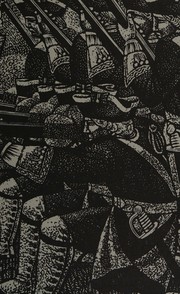
Glencoe The Story Of The Massacre
Directly covers the massacre behind Glencoe's haunted reputation.
eBay marketplace picks
Marketplace Samples
Live-tested eBay searches with available results related to this page.
Endnotes
1.
Source: manuscripts.nls.uk
Link:https://manuscripts.nls.uk/repositories/2/resources/15554
2.
Source: visitscotland.com
Title: Visit Scotland Glencoe
Link:https://www.visitscotland.com/places-to-go/glencoe
3.
Source: visitscotland.com
Link:https://www.visitscotland.com/things-to-do/attractions/haunted-sites
4.
Source: nts.org.uk
Title: National Trust for Scotland The Glencoe Massacre | National Trust for Scotland
Link:https://www.nts.org.uk/visit/places/glencoe/the-glencoe-massacre
5.
Source: glencoemuseum.com
Title: glencoe-museum Massacre of Glencoe | glencoe-museum
Link:https://www.glencoemuseum.com/massacre-of-glencoe
6.
Source: wikishire.co.uk
Link:https://wikishire.co.uk/wiki/Glencoe
7.
Source: spookyscotland.net
Title: Spooky Scotland Haunted Scottish Highlands: The Massacre at Glencoe
Link:https://spookyscotland.net/haunted-glencoe/
8.
Source: dailyrecord.co.uk
Title: ghosts scotland emerge every february 29105287
Link:https://www.dailyrecord.co.uk/scotland-now/ghosts-scotland-emerge-every-february-29105287
9.
Source: gla.ac.uk
Link:https://www.gla.ac.uk/news/archiveofnews/2024/november/headline_1127146_en.html
10.
Source: nts.org.uk
Link:https://www.nts.org.uk/stories/glencoe-archaeology-digs-reveal-poignant-artefacts-from-past
11.
Source: westcoasttoday.co.uk
Title: West Coast Today Glencoe Massacre remembered at annual wreath laying
Link:https://www.westcoasttoday.co.uk/news/glencoe-massacre-parade
12.
Source: nts.org.uk
Title: National Trust for Scotland Turf and creel house | National Trust for Scotland
Link:https://www.nts.org.uk/visit/places/glencoe/highlights/turf-and-creel-house
13.
Source: nts.org.uk
Link:https://www.nts.org.uk/visit/places/glencoe
14.
Source: nts.org.uk
Link:https://www.nts.org.uk/stories/scottish-ghost-stories-witches-murder-and-folklore
15.
Source: nts.org.uk
Link:https://www.nts.org.uk/stories/uncover-the-secrets-of-glencoe
16.
Source: nts.org.uk
Link:https://www.nts.org.uk/stories/love-scotland-podcast-season-2
17.
Source: nts.org.uk
Title: uncovering the story of glencoe
Link:https://www.nts.org.uk/stories/uncovering-the-story-of-glencoe
18.
Source: facebook.com
Link:https://www.facebook.com/RealCounties/photos/welcome-to-the-county-of-argyll-a-land-of-soaring-mountains-dramatic-peninsulas-/1089843243299242/
19.
Source: glencoemuseum.com
Title: Murt Ghlinnhe Comhann
Link:https://www.glencoemuseum.com/post/murt-ghlinnhe-comhann-the-murder-of-glencoe
20.
Source: Wikipedia
Title: Glen Coe
Link:https://en.wikipedia.org/wiki/Glen_Coe
21.
Source: Wikipedia
Link:https://en.wikipedia.org/wiki/Argyll
22.
Source: wikishire.co.uk
Title: Glencoe Village
Link:https://wikishire.co.uk/wiki/Glencoe_Village
23.
Source: wikishire.co.uk
Link:https://wikishire.co.uk/wiki/Argyll
24.
Source: catalog.hathitrust.org
Link:https://catalog.hathitrust.org/Record/009040350
Additional References
25.
Source: youtube.com
Link:https://www.youtube.com/watch?v=JftI-goaoR4
Source snippet
7 The Scottish Massacre: Unearthing The Secrets Of Glencoe...
26.
Source: youtube.com
Title: Forgotten Massacre of Jacobite Rebellion Uncovered
Link:https://www.youtube.com/watch?v=ScIPHTCljLE
Source snippet
6 An Archaeology of Life Before and After the 1692 Massacre of Glencoe...
27.
Source: youtube.com
Title: History and Hauntings: Exploring Scotland’s Historic Glencoe
Link:https://www.youtube.com/watch?v=9A3g-yyx8mI
Source snippet
5 Forgotten Massacre of Jacobite Rebellion Uncovered...
28.
Source: youtube.com
Title: The Glencoe Massacre: Scotland’s Darkest Betrayal
Link:https://www.youtube.com/watch?v=wlebXFiji8w
Source snippet
4 History and Hauntings: Exploring Scotland's Historic Glencoe...
29.
Source: youtube.com
Title: The Scottish Massacre: Unearthing The Secrets Of Glencoe
Link:https://www.youtube.com/watch?v=bwKidU_7PvU
Source snippet
8 Haunted Highlands: The Ghosts of Glencoe...
30.
Source: woodlands.scot
Link:https://www.woodlands.scot/blog/10-incredible-stories-from-glencoe/
31.
Source: deadlive.co.uk
Link:https://www.deadlive.co.uk/11-of-the-most-haunted-locations-in-scotland-ghosts-castles/
32.
Source: alamy.com
Link:https://www.alamy.com/a-late-19th-century-view-of-glen-coe-a-glen-in-the-highlands-of-scotland-lying-in-the-north-of-the-county-of-argyll-close-to-the-border-with-the-historic-province-of-lochaber-within-the-highlands-it-is-famed-for-the-massacre-of-glencoe-that-took-place-on-13-february-1692-following-the-jacobite-uprising-of-168992-an-estimated-thirty-eightmembers-and-associates-of-clan-macdonald-of-glencoe-were-killed-by-government-forces-billeted-with-them-with-others-later-alleged-to-have-died-of-exposure-on-the-grounds-they-had-not-been-prompt-in-pledging-allegiance-to-the-new-monarchs-image435769872.html
33.
Source: glencoescotland.com
Link:https://www.glencoescotland.com/about-glencoe/
34.
Source: abcounties.com
Link:https://abcounties.com/counties/county-profiles/argyllshire/
Topic Tree