Where Does Cambridgeshire's Haunted Memory Gather?
Cambridgeshire’s haunted reputation is built less on ruined castles and more on places where ordinary life pressed hard against history: college courts, fenland tracks, old inns, plague-struck streets, river crossings, bookshops, parish roads and half-drained marsh.
Page outline Jump by section
Introduction
For this project, Cambridgeshire is best understood through the historic county frame rather than simply the modern administrative county. The Wikishire historic-counties map treats Cambridgeshire as one of England’s historic counties, while modern Cambridgeshire has also absorbed areas historically associated with Huntingdonshire and the Soke of Peterborough. That matters for ghost lore: stories in Cambridge, Ely, Wisbech and the southern Fenland sit naturally within Cambridgeshire’s haunted history, while Peterborough and Huntingdonshire material may appear in modern “Cambridgeshire” lists but belongs to neighbouring historic branches unless clearly signposted.[wikimedia.org]commons.wikimedia.orgFile:England Historic Counties Cambridgeshire map.svgFile:England Historic Counties Cambridgeshire map.svg
Where Cambridgeshire’s ghosts are said to gather
The county’s most recognisable haunted settings fall into three broad landscapes. The first is Cambridge itself, where colleges, chapels, lanes and old houses have generated a dense urban folklore. The second is the Fenland, where marsh lights, black dogs and lonely roads turn geography into story. The third is the county’s older towns and villages, where inns, bridges, farms, castles and parish memories attach apparitions to particular deaths, scandals or unexplained noises.
The strongest sources are not all of one type. Some stories survive through local folklore collecting, especially the work of Enid Porter, curator of the Cambridge & County Folk Museum from 1947 to 1976 and a major recorder of Cambridgeshire customs, beliefs and oral memory. Others appear in local-history projects, college histories, museum interpretation, ghost-walk traditions, local journalism and paranormal-tour publicity. These sources do not carry equal evidential weight. A college history can confirm a real death or plague episode; a ghost-tour page can show how a story is now told to visitors; an oral folklore collection can preserve what people in a village believed or repeated, even when the original event is beyond recovery.[The Museum of Cambridge]museumofcambridge.org.ukThe Museum of Cambridge AboutThe Museum of Cambridge About
That distinction is important because Cambridgeshire’s haunted stories often sit on a line between memory and embellishment. A reported apparition may be weak evidence for a ghost, but strong evidence for what a community found unsettling: a suicide during plague, a drowned traveller, a woman seen on a road, a dangerous fen light, or a religious house dissolved and repurposed.
Cambridge: college ghosts, plague memory and the city’s theatrical afterlife
Cambridge is the county’s most crowded haunted stage. The city’s colleges provide the perfect architecture for ghost tradition: enclosed courts, locked staircases, chapels, attics, old kitchens and long institutional memory. Many stories have been retold through ghost walks and student folklore, but some are anchored to documented lives.
The most historically grounded example is Henry Butts of Corpus Christi College. Corpus Christi’s own history records that during the plague of 1630 Butts remained when others fled, trying to organise supplies and relief; in 1632 he was found hanging in his garters after the strain of the crisis. Later ghost traditions present him as Corpus’s most troubling spectral resident, with stories of a presence around the old Master’s Lodge or kitchens. The haunting cannot be verified, but the emotional core of the legend is clear: Cambridge remembers a man trapped between public duty, epidemic fear and personal collapse.[Corpus Cambridge]corpus.cam.ac.ukcollege historycollege history
Jesus College has a different kind of ghost story: the Grey Lady, usually linked to the college’s pre-Reformation past as the Benedictine nunnery of St Radegund. Modern retellings describe a nun who broke her vows, was confined, or passed through secret ways; local-history material also shows how such stories overlap with literary Cambridge, including the ghost stories of Arthur Gray, Master of Jesus College from 1912 to 1940. The result is not one clean legend but a cluster: medieval nunnery memory, secret-passage folklore, college storytelling and literary invention all feeding one another.[cam.ac.uk]pem.cam.ac.ukSpooky storiesSpooky stories
The Haunted Bookshop in St Edward’s Passage shows how a ghost story can become part of a living business’s identity. Sarah Key Books describes itself as occupying “The Haunted Bookshop” in a passage near St Edward King and Martyr and close to King’s College Chapel; local interviews and student journalism have preserved stories of unexplained presences, including older accounts from the building’s past. Here the attraction is not an ancient battlefield or castle dungeon, but the intimacy of a small shop in a narrow medieval-feeling lane: a good example of Cambridge’s talent for turning atmosphere into folklore.[sarahkeybooks.co.uk]sarahkeybooks.co.ukOpen source on sarahkeybooks.co.uk.
Not every eerie Cambridge story is a ghost story in the strict sense. The Eagle pub, famous for its Second World War graffiti ceiling and its connection with Watson and Crick’s DNA announcement, is sometimes drawn into haunted Cambridge routes because of its age and atmosphere. The historically secure story is the wartime ceiling: airmen from nearby bases left names, numbers and markings, later conserved as an unusual survival of service life. That is a good reminder that “haunted” places often work by accumulation. A room can feel ghostly because it contains visible human traces, even when no specific apparition is needed.[biancamadden.com]biancamadden.comBianca Madden The Eagle: A Second World War Graffiti CeilingBianca Madden The Eagle: A Second World War Graffiti Ceiling
The Fenland: lantern men, black dogs and the fear of being led astray
The Cambridgeshire Fens produce a different sort of haunting from Cambridge’s colleges. Here the stories are less about rooms and more about light, water, mud and disorientation. Wicken Fen is especially important because it preserves a sense of the old fen landscape. The National Trust explains that the fens formed from waterlogged peat after the last Ice Age, and Wicken remained an exceptional surviving fenland site while much of the surrounding basin was altered by drainage and agriculture.[National Trust]nationaltrust.org.ukOpen source on nationaltrust.org.uk.
The Lantern Men are the county’s most atmospheric fen spirits. They are usually described as ghostly or deceptive lights seen over marshland, especially around Wicken Fen and other fen areas, luring travellers into reed beds or watery ground. Modern explanations often treat them as a local version of will-o’-the-wisp folklore: lights misread in difficult conditions, sometimes explained through marsh gas or other natural phenomena. Folklorically, however, the point is not simply “what was the light?” but “why was the fen dangerous?” The Lantern Man turns a real hazard — losing the path in wet, dark, unstable country — into a memorable warning.[Cambridge News]cambridge-news.co.ukOpen source on cambridge-news.co.uk.
Black dog legends also belong to this watery borderland. Black Shuck is most famous across East Anglia, especially Norfolk and Suffolk, but accounts and variants extend into the Cambridgeshire Fens. The creature is usually described as a large black dog, sometimes an omen of death, sometimes a guardian or ambiguous presence. Cambridgeshire versions cluster around fen roads and rivers, including Littleport and the A10 area in later retellings. As with the Lantern Men, the story is tied to travel anxiety: footsteps behind you, breath at your legs, a shape on a lonely road, a river close by.[Wikipedia]WikipediaBlack ShuckBlack Shuck
These fen legends are among the county’s most useful cross-branch links. They connect Cambridgeshire naturally with Norfolk, Suffolk and the wider East Anglian ghost-dog tradition, while still keeping Cambridgeshire’s own setting distinct: flat land, watercourses, old droveways, reed beds and the memory of a landscape that could kill the unwary long before it became a nature reserve or weekend walking route.
Village roads, inns and White Ladies
Away from Cambridge, Cambridgeshire’s hauntings often become more local and more practical: a stretch of road, a bridge, a former inn, a farm, or a place where someone was said to have died. These stories rarely have the elaborate architecture of college ghosts. Their strength lies in exactness: “she walked from here to there”, “the sound was heard at this farm”, “the figure appeared near the river”.
Harston’s Queen’s Head is a good example because the story is tied to recorded local testimony. Capturing Cambridge cites Enid Porter’s Cambridgeshire Customs and Folklore, noting that members of Harston Women’s Institute recorded in 1935 a White Lady said to walk from the Queen’s Head along Mill Road. The same local informants also preserved a story of a woman seen throwing herself into the river near the bridge towards Haslingfield. Whether or not anyone accepts the apparition, the account shows folklore doing its ordinary work: fixing grief, warning and place-memory onto a route villagers knew.[Capturing Cambridge]capturingcambridge.orgOpen source on capturingcambridge.org.
Steeple Morden offers a darker example of how real violence can become ghostly memory. The Museum of Cambridge discusses Enid Porter’s account of Elizabeth Pateman, murdered in 1734 and buried at the church, and notes that ghost reports at Moco Farm appeared in the Cambridge Daily News in 1901, including agonising cries and mysterious gunshots heard by a gamekeeper. This is not a neat haunted-house tale; it is a chain of memory running from a documented death, to a grave with carved murder weapons, to later sounds interpreted through the earlier crime.[The Museum of Cambridge]museumofcambridge.org.ukThe Museum of Cambridge Ghosts – Should we embrace them?The Museum of Cambridge Ghosts – Should we embrace them?
Historic inns bring in a different kind of folklore: the romance of roads, coaches and criminal celebrity. The Bell Inn at Stilton is widely promoted in modern haunted Cambridgeshire lists as a place associated with Dick Turpin’s ghost, reflecting the inn’s position near the Great North Road and the national habit of attaching highwayman legends to old coaching routes. The caution is that Turpin stories are often repeated far beyond what the evidence can prove. In county-haunting terms, the Bell is best treated as a road legend: a story about travel, danger and reputation, rather than a securely documented apparition.[Cambridge News]cambridge-news.co.ukdick turpin bell inn stilton 20500792dick turpin bell inn stilton 20500792
Ely and Wisbech: sacred memory, prison history and the pull of old buildings
Ely’s ghost stories draw power from its religious skyline. Ely Cathedral’s own history reaches back to St Etheldreda’s monastery, founded in 673; the monastery was dissolved under Henry VIII in 1539, with shrine destruction and later refounding as a cathedral foundation in 1541. That long sacred history helps explain why Ely ghost tours and local accounts favour monks, old soldiers, Oliver Cromwell associations and figures seen in narrow streets or around historic buildings. The apparitions are not independently verifiable, but the setting gives them emotional logic: Ely is a city where medieval religion, Reformation damage and Civil War memory remain visible.[elycathedral.org]elycathedral.orgEly Cathedral The Story of ElyEly Cathedral The Story of Ely
Silver Street in Ely is one of the better-known local clusters in recent popular reporting. Local press accounts describe a ghost reported in the 1980s and 1990s around three cottages, once thought to have formed a single house. This is a modern witness-tradition rather than an old antiquarian legend, and it shows how ghost lore keeps renewing itself. A city does not need a medieval monk for every haunting; sometimes the story attaches to a domestic building because residents or neighbours repeatedly interpret odd sights, sounds or feelings through a haunted frame.[Cambridge News]cambridge-news.co.ukOpen source on cambridge-news.co.uk.
Wisbech Castle is a more complicated case because the word “castle” itself can mislead. The site began as a Norman castle associated with William I’s fortification of Wisbech, was rebuilt and altered, became a bishop’s palace, and in the Tudor period was used as a prison, including for Catholic clergy detained under Elizabethan penal laws. The present Regency building and vaults are later survivals within a heavily redeveloped site, so claims about “Norman dungeons” or exact prisoner spaces need care.[wisbechcastle.org]wisbechcastle.orgOpen source on wisbechcastle.org.
That caution does not make Wisbech uninteresting as a haunted place. It makes it more interesting. Paranormal-event pages describe women in white or black, dark figures and unsettling vaults, but the strongest historical atmosphere comes from what can be documented: fortification, episcopal power, imprisonment, religious division, redevelopment and the survival of vault-like spaces that invite imaginative interpretation. Wisbech is a good example of a place where public ghost hunting, local heritage and architectural ambiguity overlap.[haunted-houses.co.uk]haunted-houses.co.ukOpen source on haunted-houses.co.uk.

How credible are Cambridgeshire’s haunted stories?
The fairest answer is mixed. Cambridgeshire has some well-sourced historical anchors, but the supernatural layer is usually folkloric, anecdotal or tour-based. That does not make the stories worthless. It means they should be read in the right way.
The strongest cases are those where a haunting is attached to a documented person, event or local record. Henry Butts at Corpus Christi is the clearest example: the death, plague context and college setting are historically grounded, while the apparition belongs to later tradition. Harston’s White Lady and Steeple Morden’s farm reports are valuable because they pass through named folklore-collection channels and local memory, even though they do not prove what witnesses saw.[cam.ac.uk]corpus.cam.ac.ukcollege historycollege history
Medium-strength cases are those preserved by local journalism, ghost walks, museum interpretation or long-running business identity. Ely’s Silver Street reports and the Haunted Bookshop fall here. They tell us that stories circulated and were meaningful to residents, visitors or owners, but the evidential base is usually interview-led and retrospective.[cambridge-news.co.uk]cambridge-news.co.ukOpen source on cambridge-news.co.uk.
The most fragile cases are generic haunted-place lists and promotional ghost-hunt descriptions. They can be useful for finding what stories are currently being marketed, but they often repeat claims without showing where they first appeared. In Cambridgeshire, this is especially relevant for places such as Wisbech Castle or inns associated with famous figures. The reader should ask: is there a named witness, a dated newspaper report, a folklore collector, an institutional history, or only a repeated modern claim?
Why Cambridgeshire’s haunted history still works
Cambridgeshire’s ghost stories endure because they match the county’s landscapes unusually well. Cambridge gives them cloisters, staircases, plague rooms and scholarly secrecy. Ely gives them sacred ruin, Reformation memory and cathedral shadow. Wisbech gives them prisons, vaults and religious conflict. The Fens give them darkness, water, lights and the dread of losing the path.
The result is a haunted county that feels quieter than some of Britain’s castle-heavy ghost regions, but often more intimate. Its stories are strongest when they are allowed to remain uncertain: not “this ghost is real”, but “this is what people said they saw, this is where they placed it, and this is the history that made the story believable”. In Cambridgeshire, the haunting is usually not a spectacle. It is a figure crossing a road, a light over wet ground, a sound from a farm, a college room with a remembered death, or a narrow passage where a bookshop has learned to live with its name.
Amazon book picks
Further Reading
Books and field guides related to Where Does Cambridgeshire's Haunted Memory Gather?. Use these as the next step if you want deeper reading beyond the article.
The lore of the land
Provides the wider folklore context for Cambridgeshire ghost traditions.
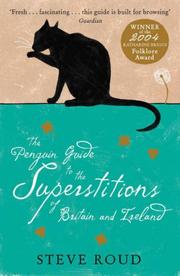
The Penguin Guide to the Superstitions of Britain and Ireland
Useful for understanding East Anglian beliefs and ghost lore.

Ghosts
First published 2015. Subjects: Ghosts, History, BODY, MIND & SPIRIT, Parapsychology, General.
eBay marketplace picks
Marketplace Samples
Live-tested eBay searches with available results related to this page.


Endnotes
1.
Source: commons.wikimedia.org
Title: File:England Historic Counties Cambridgeshire map.svg
Link:https://commons.wikimedia.org/wiki/File%3AEngland_Historic_Counties_Cambridgeshire_map.svg
2.
Source: pem.cam.ac.uk
Title: Spooky stories
Link:https://www.pem.cam.ac.uk/kit-smarts-blog/spooky-stories
3.
Source: sarahkeybooks.co.uk
Link:https://www.sarahkeybooks.co.uk/
4.
Source: love-cambridge.com
Title: Love Cambridge Meet Sarah
Link:https://www.love-cambridge.com/hidden-gems/meet-the-owners/meet-sarah-2/
5.
Source: Wikipedia
Title: Lantern man
Link:https://en.wikipedia.org/wiki/Lantern_man
6.
Source: Wikipedia
Title: Black Shuck
Link:https://en.wikipedia.org/wiki/Black_Shuck
7.
Source: Wikipedia
Link:https://en.wikipedia.org/wiki/Littleport
8.
Source: ely.org.uk
Title: Ely Online
Link:https://www.ely.org.uk/strange-tales-of-ely/
9.
Source: haunted-houses.co.uk
Link:https://www.haunted-houses.co.uk/ghost-hunt/wisbech-castle-and-vaults-cambridgeshire-ghost-hunting-experience/
10.
Source: Wikipedia
Title: Wisbech Castle
Link:https://en.wikipedia.org/wiki/Wisbech_Castle
11.
Source: Wikipedia
Title: History of parliamentary constituencies and boundaries in Cambridgeshire
Link:https://en.wikipedia.org/wiki/History_of_parliamentary_constituencies_and_boundaries_in_Cambridgeshire
12.
Source: Wikipedia
Link:https://en.wikipedia.org/wiki/Cambridgeshire
13.
Source: Wikipedia
Title: Victoria County History
Link:https://en.wikipedia.org/wiki/Victoria_County_History
14.
Source: Wikipedia
Title: Enid Porter
Link:https://en.wikipedia.org/wiki/Enid_Porter
15.
Source: Wikipedia
Title: Wicken Fen
Link:https://en.wikipedia.org/wiki/Wicken_Fen
16.
Source: nature.com
Link:https://www.nature.com/articles/143046a0
17.
Source: haunted-houses.co.uk
Link:https://www.haunted-houses.co.uk/ghost-hunt/peterborough-museum-ghost-hunt/
18.
Source: youtube.com
Title: Meet Cambridge Ghost Stories: Corpus Christi College, Cambridge, Part i
Link:https://www.youtube.com/watch?v=s1AegWNJud0
Source snippet
The Eagle pub - Spine Chilling Ghost story Behind this Pub in Cambridge...
19.
Source: youtube.com
Title: The Eagle pub
Link:https://www.youtube.com/watch?v=LTW4hV1wzH0
Source snippet
The Famously Haunted Peterborough Museum: A Rich History and Ghostly Secrets...
20.
Source: corpus.cam.ac.uk
Title: college history
Link:https://www.corpus.cam.ac.uk/about/college-history
21.
Source: museumofcambridge.org.uk
Title: The Museum of Cambridge About
Link:https://www.museumofcambridge.org.uk/about/
22.
Source: capturingcambridge.org
Link:https://capturingcambridge.org/places-in-south-cambridgeshire/harston/queens-head-harston/
23.
Source: nationaltrust.org.uk
Link:https://www.nationaltrust.org.uk/visit/cambridgeshire/wicken-fen-national-nature-reserve/history-of-wicken-fen
24.
Source: wikishire.co.uk
Title: Wikishire Great Britain and Ireland
Link:https://wikishire.co.uk/map/
25.
Source: museumofcambridge.org.uk
Title: tracing traditions
Link:https://www.museumofcambridge.org.uk/projects/tracing-traditions/
26.
Source: capturingcambridge.org
Link:https://capturingcambridge.org/online-exhibitions-of-prior-years/herstory/enidporter/
27.
Source: corpus.cam.ac.uk
Link:https://www.corpus.cam.ac.uk/articles/henry-butts-and-turmoil-during-time-plague
28.
Source: britishfolklore.com
Title: British Folklore Cambridge, Abbey House
Link:https://britishfolklore.com/cambridge-abbey-house/
29.
Source: capturingcambridge.org
Link:https://capturingcambridge.org/centre/jesus-lane/jesus-college/
30.
Source: biancamadden.com
Title: Bianca Madden The Eagle: A Second World War Graffiti Ceiling
Link:https://biancamadden.com/news/the-eagle-a-second-world-war-graffiti-ceiling/
31.
Source: greeneking.co.uk
Title: Greene King The Eagle Pub Restaurant in Cambridge,
Link:https://www.greeneking.co.uk/pubs/cambridgeshire/eagle
32.
Source: cambridge-news.co.uk
Link:https://www.cambridge-news.co.uk/news/history/cambridgeshires-terrifying-lantern-men-roam-24150833
33.
Source: cambridge-news.co.uk
Title: lantern man wicken fen folklore 18517642
Link:https://www.cambridge-news.co.uk/news/local-news/lantern-man-wicken-fen-folklore-18517642
34.
Source: museumofcambridge.org.uk
Title: The Museum of Cambridge Ghosts – Should we embrace them?
Link:https://www.museumofcambridge.org.uk/2024/10/ghosts-should-we-embrace-them/
35.
Source: cambridge-news.co.uk
Title: dick turpin bell inn stilton 20500792
Link:https://www.cambridge-news.co.uk/news/local-news/dick-turpin-bell-inn-stilton-20500792
36.
Source: cambridge-news.co.uk
Title: haunted pub inn dick turpin 18502852
Link:https://www.cambridge-news.co.uk/news/local-news/haunted-pub-inn-dick-turpin-18502852
37.
Source: elycathedral.org
Title: Ely Cathedral The Story of Ely
Link:https://www.elycathedral.org/about/history-heritage/the-story-of-ely
38.
Source: cambridge-news.co.uk
Link:https://www.cambridge-news.co.uk/news/local-news/terrifying-tales-ghosts-haunt-streets-19047945
39.
Source: wisbechcastle.org
Link:https://wisbechcastle.org/the-castle/
40.
Source: jesuitarchives.co.uk
Title: the jesuits and wisbech castle
Link:https://www.jesuitarchives.co.uk/post/the-jesuits-and-wisbech-castle
41.
Source: capitalofthefens.org.uk
Title: wisbech castle by dr francis young
Link:https://capitalofthefens.org.uk/wisbech-castle-by-dr-francis-young/
42.
Source: capturingcambridge.org
Title: wisbech castle
Link:https://capturingcambridge.org/fenland/wisbech/wisbech-castle/
43.
Source: paranormaleyeuk.co.uk
Link:https://www.paranormaleyeuk.co.uk/wisbech-castle-ghost-hunts
44.
Source: wikishire.co.uk
Link:https://wikishire.co.uk/wiki/Cambridgeshire
45.
Source: wikishire.co.uk
Title: Soke of Peterborough
Link:https://wikishire.co.uk/wiki/Soke_of_Peterborough
46.
Source: facebook.com
Link:https://www.facebook.com/RealCounties/photos/the-county-of-northampton-is-a-shire-in-the-midlands-of-englanda-rose-has-long-b/894393302844238/
47.
Source: facebook.com
Link:https://www.facebook.com/groups/192268810935110/posts/2048801108615195/
48.
Source: hauntingnights.co.uk
Link:https://hauntingnights.co.uk/event/wisbech-castle-and-vaults-ghost-hunt-wisbech-cambridgeshire/
49.
Source: history.ac.uk
Link:https://www.history.ac.uk/research/victoria-county-history/counties-z/cambridgeshire
50.
Source: cambridgeppf.org
Title: enid porter
Link:https://cambridgeppf.org/enid-porter/
51.
Source: cambridge-news.co.uk
Title: most haunted house cambridge people 27912687
Link:https://www.cambridge-news.co.uk/news/history/most-haunted-house-cambridge-people-27912687
52.
Source: cambridge-news.co.uk
Title: Inside Cambridge’s Haunted Bookshop
Link:https://www.cambridge-news.co.uk/news/cambridge-news/inside-cambridges-haunted-bookshop-eerie-17166218
53.
Source: cambridge-news.co.uk
Title: cambridge universitys haunted colleges home 23498614
Link:https://www.cambridge-news.co.uk/news/cambridge-news/cambridge-universitys-haunted-colleges-home-23498614
54.
Source: cambridge-news.co.uk
Title: peterborough ghosts museum cathedral haunted 19125624
Link:https://www.cambridge-news.co.uk/news/local-news/peterborough-ghosts-museum-cathedral-haunted-19125624
55.
Source: cambridge-news.co.uk
Title: historian who travelled over cambs 27358754
Link:https://www.cambridge-news.co.uk/news/history/historian-who-travelled-over-cambs-27358754
56.
Source: wisbechcastle.org
Link:https://wisbechcastle.org/
57.
Source: greeneking.co.uk
Title: cambridge spookiest pubs
Link:https://www.greeneking.co.uk/behind-the-bar/cambridge-spookiest-pubs
58.
Source: tripadvisor.co.uk
Title: WISBEC H CASTLE
Link:https://www.tripadvisor.co.uk/Attraction_Review-g499502-d1791128-Reviews-Wisbech_Castle-Wisbech_Cambridgeshire_England.html
59.
Source: castellogy.com
Link:https://castellogy.com/sites/sites-east-of-england/wisbech-castle
60.
Source: currybet.net
Title: Haunted Cambridge
Link:https://www.currybet.net/cbet_blog/2007/11/haunted-cambridge—part-2.php
Additional References
61.
Source: youtube.com
Title: Cambridge Ghost Walk | Cool Dudes Walking Club
Link:https://www.youtube.com/watch?v=r7T67Bzn5b4
Source snippet
Meet Cambridge Ghost Stories: Corpus Christi College, Cambridge, Part i...
62.
Source: facebook.com
Link:https://www.facebook.com/groups/1026849820769556/posts/3061341777320340/
63.
Source: mjwayland.com
Link:https://www.mjwayland.com/10-most-haunted-places-in-cambridgeshire/
64.
Source: tripadvisor.co.uk
Link:https://www.tripadvisor.co.uk/Attraction_Review-g186225-d21368567-Reviews-Haunted_Cambridge-Cambridge_Cambridgeshire_England.html
65.
Source: gbmaps.com
Link:https://www.gbmaps.com/free-county-maps/Cambridgeshire.php
66.
Source: amazon.com
Link:https://www.amazon.com/Cambridgeshire-Customs-Folklore-Routledge-Editions/dp/1138842567?tag=searcht-20
67.
Source: paranormaldatabase.com
Link:https://www.paranormaldatabase.com/cambridge/campages/cambdata.php
68.
Source: reddit.com
Link:https://www.reddit.com/r/cambridge/comments/1d9clcx/does_cambridge_have_fascinating_folklore/
69.
Source: haunted-britain.com
Link:https://www.haunted-britain.com/haunted-cambridgeshire.htm
70.
Source: terribletours.co.uk
Link:https://terribletours.co.uk/haunted-colleges-cambridge-university/
Topic Tree
Follow this branch
Related pages 91
- Haunted Clackmannanshire
- Haunted Antrim
- Haunted Armagh
- Haunted Durham
- Haunted Londonderry
- +86 more in sidebar