Why Does Lancashire Feel So Haunted?
Lancashire’s haunted reputation rests on three overlapping traditions: old houses with family legends, trial-and-prison sites tied to the 1612 Lancashire witch trials, and northern folklore creatures such as boggarts and black dogs.
Page outline Jump by section
Introduction
This page treats hauntings as stories, reports and traditions rather than proven events. Some are preserved by historic sites and tourism bodies; others come from folklore collections, local history writing, ghost-tour culture, paranormal groups or later retellings. The most useful question is not “are they real?” but “why did this story cling to this place, and what does it reveal about Lancashire’s past?”
Which Lancashire is meant here?
This page uses Lancashire in the historic-county sense used by the project’s county map approach. That matters because historic Lancashire is larger and stranger than the modern county council area: it ran from the Mersey northwards to Morecambe Bay and included a detached northern part around Furness, “north of the sands”. The Association of British Counties describes historic Lancashire as running up England’s west coast from the Mersey to Morecambe Bay, with a further part north at Furness, while Wikishire similarly defines the County Palatine of Lancaster as stretching from the River Mersey to the Furness Fells.[Association of British Counties]abcounties.comAssociation of British Counties LancashireAssociation of British Counties Lancashire
Modern administrative changes mean that some places historically associated with Lancashire identity now sit in Greater Manchester, Merseyside, Cumbria or other present-day administrative areas. For a haunted-history page, this is not a pedantic detail. Ghost stories often follow older parish, estate, market-town and newspaper geographies, not neat modern council boundaries. Lancashire’s supernatural map therefore stretches from castles and moated halls to coastal theatres, mill towns, Pennine villages and old routes where folklore creatures were said to lurk.
Why Lancashire became one of England’s great haunted counties
Lancashire’s ghost stories are unusually varied because the county’s history is unusually varied. It has castles and prisons, recusant Catholic gentry houses, moated medieval halls, industrial towns, seaside resorts, bleak moorland, old roads and a nationally famous witch-trial landscape. These settings give the county’s supernatural stories several distinct moods: the White Lady at a timber-framed hall, the condemned prisoner at Lancaster, the theatrical apparition in a decaying auditorium, the black dog on a road, and the boggart in a clough or farmstead.
The county’s most durable haunted narratives tend to attach themselves to three kinds of memory:
- Judgement and punishment: Lancaster Castle, the Pendle witch trials and execution sites give Lancashire a strong tradition of courtroom and prison haunting.
- Family tragedy and religious conflict: Samlesbury Hall and Chingle Hall are repeatedly framed through old gentry families, Catholic hiding places, forbidden love, persecution and betrayal.
- Folk landscape: boggarts, black dogs, road apparitions and moorland presences make Lancashire’s lanes, cloughs and hill country feel haunted even without a single named building.
That variety is why Lancashire works well as a county-level haunted-history page. The county does not have one master ghost story. It has a network of stories in which architecture, folklore and local identity reinforce one another.
Lancaster Castle and Pendle: the haunting power of a real trial
Lancaster Castle is central to Lancashire’s dark folklore because it was not merely a picturesque fortress. It was a working court, prison and execution site, and it is inseparable from the Lancashire witch trials of 1612. Lancaster Castle’s own history pages state that ten people convicted of witchcraft at the Summer Assize were taken to the gallows on the moors above Lancaster on 20 August 1612.[Lancaster Castle]lancastercastle.comthe pendle witchesthe pendle witches
The Pendle story has such force because it is both legendary and unusually well documented for an English witch trial. Thomas Potts, clerk to the Lancaster Assizes, published The Wonderfull Discoverie of Witches in the Countie of Lancaster in 1613, and modern historians still have to wrestle with it because it is the principal early account. The Public Domain Review notes that Potts’s account was published soon after the trials, while Robert Poole’s work stresses both the importance of the text and the need to read it critically, not as neutral courtroom audio but as a shaped legal document.[The Public Domain Review]publicdomainreview.orgpotts s discovery of witches in the county of lancaster 1845potts s discovery of witches in the county of lancaster 1845
That tension is exactly what makes Pendle so powerful in haunted Lancashire. The “witches” are now often treated as tragic figures, victims of fear, poverty, accusation and legal violence; yet tourism and ghost lore have turned Pendle Hill, Lancaster Castle, Newchurch-in-Pendle and the wider “witch country” into an eerie landscape of apparitions, curses, ghost walks and night-time storytelling. The strongest evidence is historical: people were accused, tried, imprisoned and executed. The ghostly layer is later, more folkloric and more variable.
Lancaster Castle’s own execution history also gives later haunting stories a grim setting. The castle describes “Hanging Corner” as the place where executions after 1800 took place and notes that the “Drop Room” contains relics of executions visible on guided tours.[Lancaster Castle]lancastercastle.comOpen source on lancastercastle.com. Reports of castle ghosts therefore sit on top of a documented history of imprisonment and death, which is one reason they feel locally plausible even when individual sightings are hard to verify.
Samlesbury Hall: the White Lady and the haunted house as heritage
Samlesbury Hall, near Preston, is probably Lancashire’s best-known haunted house. The hall itself promotes its ghost lore openly, saying it has 13 different ghosts and that reports from guests, staff and former inhabitants date back centuries; it also states that the first published account of ghosts at Samlesbury appeared in a book from 1873.[Samlesbury Hall]samlesburyhall.co.ukOpen source on samlesburyhall.co.uk.
The historical building gives the stories their weight. Samlesbury Hall’s own history says it dates from 1325, was built under Gilbert de Southworth as a Southworth family seat, and passed through four families over seven centuries before becoming a visitor attraction. Historic England lists Samlesbury Hall as Grade I and describes it as a large fourteenth- and sixteenth-century house associated with the Southworth family, with surviving medieval and Tudor fabric.[Samlesbury Hall]samlesburyhall.co.ukOpen source on samlesburyhall.co.uk.
The hall’s most famous apparition is usually called the White Lady and is commonly identified in retellings as Dorothy or Dorothea Southworth. The story varies in detail, but the pattern is familiar across British haunted houses: a young woman, a family tragedy, thwarted love, grief and a recurring pale figure seen in or near the house. Visit Lancashire’s tourism writing says Samlesbury Hall has “many resident spirits” and repeats the tradition that Dorothy Southworth has been seen by motorists crossing the nearby road.[Visit Lancashire]visitlancashire.comOpen source on visitlancashire.com.
Samlesbury is also linked with the 1612 Samlesbury witches, a separate but connected thread in the Lancashire witch-trial story. A local parish history notes Jane Southworth, Jennet Bierley and Ellen Bierley as women falsely accused of witchcraft in 1612, known as the “famous witches of Salmesbury”.[Samlesbury and Cuerdale Parish Council]samlesburyandcuerdaleparishcouncil.gov.ukSamlesbury and Cuerdale Parish Councila brief history of samlesbury & cuerdaleSamlesbury and Cuerdale Parish Councila brief history of samlesbury & cuerdale This adds another layer to the hall’s atmosphere: not just an alleged ghost in white, but the memory of accusations, Catholic gentry families and early modern fear.
The careful reading is that Samlesbury Hall’s hauntings are part heritage interpretation, part local folklore and part visitor experience. The building is real, old and well documented; the stories are long-lived and locally famous; the apparitions themselves remain claims and traditions rather than confirmed events.
Chingle Hall and the private haunted house problem
Chingle Hall, near Goosnargh and Whittingham, shows how a place can become famous in ghost lore even when public access and source quality are limited. It has often been described in paranormal writing as one of Britain’s most haunted houses, with stories involving priest holes, footsteps, poltergeist-like activity, apparitions and religious persecution. Yet it is now a private residence, which makes modern verification difficult and encourages recycled retellings.
The underlying site is historically significant. Historic England lists Chingle Old Hall, with its bridge over the moat, as a Grade II building, describing the present house as probably early seventeenth century and extended in the nineteenth century. Historic England separately schedules the moated site, describing a raised rectangular island about 44 by 40 metres, with waterlogged moat sections and altered arms of the moat still readable in the landscape.[Historic England]historicengland.org.ukOpen source on historicengland.org.uk.
Heritage Gateway preserves the older tradition that Chingle Hall was originally built in 1260 by Adam de Singleton and first known as Singleton Hall, while noting that the present house dates mainly from the early seventeenth century.[Heritage Gateway]heritagegateway.org.ukResults Single.aspxResults Single.aspx That distinction is important. Ghost tourism often compresses centuries into one dramatic atmosphere, but the physical fabric, documentary history and legend layers do not always line up neatly.
Chingle’s haunting reputation is strongly tied to secrecy: moats, old Catholic families, priest holes, hidden rooms and the feeling of a house set slightly apart from ordinary life. A local church blog notes that ghost hunters and paranormal investigators have long been drawn to Chingle Hall, but also frames the “most haunted” claim with caution.[Salem Chapel]martintop.org.ukchingle hall haunted whatchingle hall haunted what As a Lancashire ghost story, Chingle is best understood as a classic private-house haunting: powerful in reputation, evocative in setting, but difficult for ordinary readers to check beyond listing records, local histories and the accumulated paranormal tradition.
Hoghton Tower and Rufford Old Hall: gentry houses with recurring figures
Hoghton Tower and Rufford Old Hall show another side of haunted Lancashire: the great-house ghost. These stories do not usually depend on one legal catastrophe like Pendle, but on the long continuity of elite houses, family memory and visitors walking through rooms where centuries of domestic life have accumulated.
Hoghton Tower, near Preston, is repeatedly promoted in local tourism as a haunted site. Visit Preston describes reports of a Tudor woman in the courtyard, a young girl, a monk and other figures, while Visit Lancashire says the site has a “ghost file” of unusual occurrences and identifies the Green Lady, a little girl, a monk and a black dog among its reported apparitions.[Visit Preston]visitpreston.comHaunted Preston Hoghton TowerHaunted Preston Hoghton Tower Those accounts are tourism-facing rather than archival proof, but they show how the house’s ghost reputation is actively preserved and offered to visitors.
Rufford Old Hall, now a National Trust property in West Lancashire, belongs to a similar tradition. The strongest historical point is the hall itself: it is a major Tudor and later house associated with the Hesketh family, with a great hall surviving from the late fifteenth or early sixteenth century. Repeated ghost accounts identify three main figures: a Grey Lady, a man in Elizabethan dress and, more boldly, Queen Elizabeth I. Local and regional retellings repeat these three figures, while also acknowledging the theatrical quality of such claims.[The Lancashire magazine]thelancashiremagazine.co.ukThe Lancashire magazine The haunted halls of LancashireThe Lancashire magazine The haunted halls of Lancashire
The Queen Elizabeth I claim should be handled especially carefully. Royal ghost traditions often attach themselves to prestigious old houses because they elevate a site’s drama, not because there is strong evidence of a literal haunting. The more grounded point is that Rufford’s architecture, age and Hesketh-family history make it a natural home for stories about grey ladies, Elizabethan figures and lingering household presences.

Morecambe Winter Gardens: when memory itself feels haunted
Not all Lancashire hauntings are medieval. Morecambe Winter Gardens shows how a Victorian seaside theatre can become haunted through atmosphere, abandonment, restoration and public memory. The theatre opened in 1897 as the Victoria Pavilion, was part of the wider Winter Gardens entertainment complex, closed in 1977, and has since been the subject of long restoration efforts. The Theatres Trust describes it as a Grade II* listed building, a rare large concert-party hall, built in 1897 to designs by Mangnall & Littlewood and now thought to be one of a kind.[Theatres Trust]theatrestrust.org.uk182 winter gardens182 winter gardens
The ghost stories fit the building’s theatrical identity. Visit Lancashire reports claims of shadows crossing the stage, a grumpy presence that pushes or pokes performers and guests, and a seamstress said to haunt a dressing room after dreaming of the stage.[Visit Lancashire]visitlancashire.comOpen source on visitlancashire.com. Haunted-venue accounts add similar reports of stage shadows, footsteps, voices and figures in the auditorium.[Haunted Rooms®]hauntedrooms.co.ukOpen source on hauntedrooms.co.uk.
The more interesting interpretation is not just “a theatre has ghosts”. It is that Morecambe Winter Gardens is haunted by performance, decline and memory. A Guardian feature on the building’s revival described the theatre as a fragile, semi-derelict seaside palace caught between its glamorous past and uncertain future, and quoted the idea of the building as “one big ghost” haunting itself.[The Guardian]theguardian.comOpen source on theguardian.com. In this case, even a sceptical reader can see why ghost stories have stuck. Empty stages, dressing rooms, old applause, restoration scaffolding and the fading memory of a resort town all create a natural language of haunting.
Boggarts, black dogs and Lancashire’s older folklore
Lancashire’s haunted map is not limited to named buildings. Its deeper folklore includes boggarts: troublesome, shape-shifting or place-bound spirits associated especially with northern England and the North West. Simon Young’s open-access Boggart Sourcebook describes “boggart” as a generic term for solitary supernatural creatures, with a substantial Lancashire section, while the older folklore tradition distinguishes house boggarts from outdoor boggarts linked to roads, cloughs, bridges and fields.[OAPEN Library]library.oapen.orgLibrary The Boggart SourcebookLibrary The Boggart Sourcebook
This matters because a boggart is not simply a “ghost” in the modern sense. It might be a household nuisance, a frightening outdoor presence, a shapeshifter, a black dog, a headless figure or a local explanation for uncanny noises and misfortunes. The word belongs to a world in which haunting was not always about a dead person returning. Sometimes the uncanny thing was attached to a place itself.
Lancashire and the wider old county area are especially rich in boggart place-name traditions. Boggart Hole Clough, now in Manchester but historically within Lancashire’s cultural orbit, is one of the best-known examples: a wooded valley whose name and stories preserve the idea of a spirit-haunted clough. The “boggart” tradition also helps explain why Lancashire’s ghost lore so often moves outdoors, towards lanes, bridges, moors and bends in the road rather than staying inside castles and halls.
Black dog traditions overlap with this world. Some Lancashire tales describe headless or spectral black dogs as omens, guardians or deathly presences. A discussion of the Black Dog of Preston traces early written references to Charles Hardwick’s nineteenth-century folklore writing and describes a headless boggart haunting Preston’s streets and neighbouring lanes with the sound of chains.[The Sanctuary of Vindos]thesanctuaryofvindos.comThe Sanctuary of Vindos The Black Dog of PrestonThe Sanctuary of Vindos The Black Dog of Preston These stories are best read as folklore rather than eyewitness evidence, but they are central to Lancashire’s haunted identity because they show fear attached to movement: walking home, crossing a bridge, passing a gate, hearing something in the dark.
How credible are Lancashire ghost stories?
Lancashire’s haunted traditions sit on a broad credibility spectrum. At one end are well-documented historical events: the 1612 trials, Lancaster Castle’s use as court and prison, Samlesbury Hall’s medieval fabric, Chingle Hall’s scheduled moat, Morecambe Winter Gardens’ Victorian theatre history. At the other end are claims of apparitions, cold spots, unexplained touches, black dogs and spectral ladies, which are usually preserved through local testimony, tourism copy, newspaper-style retelling, paranormal investigation or folklore collection.
A fair reading separates four levels of evidence:
Documented history: Lancaster Castle, the Pendle witch trials, Samlesbury Hall, Chingle Hall and Morecambe Winter Gardens all have strong historical anchors through official site histories, Historic England listings, heritage records or surviving primary texts.[lancastercastle.com]lancastercastle.comthe pendle witchesthe pendle witches
Long-lived tradition: Samlesbury’s published ghost reputation, boggart lore in nineteenth-century and modern folklore study, and Pendle’s centuries of retelling belong here. These stories are culturally real even when their supernatural content cannot be proved.[samlesburyhall.co.uk]samlesburyhall.co.ukOpen source on samlesburyhall.co.uk.
Tourism and performance: Ghost tours, haunted weekends and seasonal events keep stories alive, but they also shape them for visitors. This does not make them worthless; it means they should be read as heritage performance as well as evidence.
Anecdotal paranormal claims: Reports of figures, voices, touches, footsteps and moving shadows are interesting, but they are usually hard to verify independently. They are strongest when they can be placed in a clear tradition and weakest when they appear as repeated listicle claims without dates, witnesses or primary sources.
Sceptical explanations do not make the stories unimportant. Old buildings creak, coastal theatres produce strange acoustics, ruins play tricks with light, and expectation changes what visitors notice. But that is part of the point. Haunting is often where physical atmosphere, historical knowledge and human imagination meet.
The places readers usually ask about first
For a reader planning a haunted Lancashire route, the county’s most useful starting points are the places where history, access and story all meet.
Lancaster Castle is the essential site for anyone interested in the Pendle witch trials, prison history and execution lore. Its ghosts are inseparable from documented punishment and the memory of people condemned there.[Lancaster Castle]lancastercastle.comthe pendle witchesthe pendle witches
Pendle Hill and the Pendle villages are less about a single ghost than a whole landscape of accusation, fear and later remembrance. The haunting here is cultural as much as spectral: a hill and its villages made famous by one of England’s best-known witch-trial episodes.
Samlesbury Hall is the classic haunted manor, with a strong visitor-facing ghost tradition and a well-documented medieval house. Its White Lady story is the one many readers encounter first.[Samlesbury Hall]samlesburyhall.co.ukOpen source on samlesburyhall.co.uk.
Chingle Hall is atmospheric but harder to assess because it is private and its paranormal reputation often outruns the available public evidence. Its moat, age and recusant associations still make it important in Lancashire ghost lore.[Historic England]historicengland.org.ukOpen source on historicengland.org.uk.
Hoghton Tower and Rufford Old Hall are strong examples of gentry-house haunting, where named apparitions and family history are part of the visitor imagination.[Visit Preston]visitpreston.comHaunted Preston Hoghton TowerHaunted Preston Hoghton Tower
Morecambe Winter Gardens is the county’s great haunted theatre story: a Victorian pleasure palace whose reported ghosts are bound up with performance, abandonment, memory and restoration.[Theatres Trust]theatrestrust.org.uk182 winter gardens182 winter gardens
What Lancashire’s hauntings really preserve
Lancashire’s ghost stories preserve more than fear. They preserve social memory. The Pendle and Samlesbury witch stories remember how accusation could become lethal. Castle ghosts remember imprisonment and execution. White Ladies remember the way family tragedy was romanticised in old houses. Boggarts and black dogs remember a rural and industrial North where roads, cloughs and thresholds felt dangerous after dark. Theatre ghosts remember lost audiences and resort-town decline.
The county’s haunted history is strongest when read in layers. First comes the place: a castle, hall, hill, road, theatre or clough. Then comes the documented past: a trial, a family, a building phase, a prison, a closure, a restoration. Then comes the story people tell to make the place feel alive after dark. In Lancashire, those three layers often sit unusually close together, which is why the county remains one of Britain’s richest landscapes for ghost stories, haunted travel and eerie local history.
Amazon book picks
Further Reading
Books and field guides related to Why Does Lancashire Feel So Haunted?. Use these as the next step if you want deeper reading beyond the article.
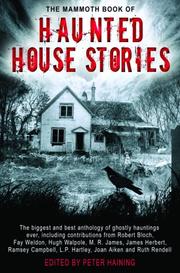
The Mammoth Book of Haunted House Stories
Fits readers exploring Britain's famous haunted locations.
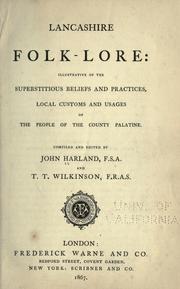
Lancashire folk-lore
Primary collection of Lancashire traditions and supernatural lore.
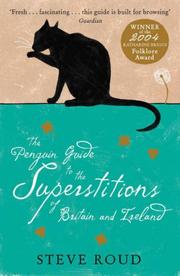
The Penguin Guide to the Superstitions of Britain and Ireland
Explains the traditions behind many Lancashire ghost beliefs.
eBay marketplace picks
Marketplace Samples
Live-tested eBay searches with available results related to this page.
Endnotes
1.
Source: abcounties.com
Title: Association of British Counties Lancashire
Link:https://abcounties.com/counties/county-profiles/lancashire/
2.
Source: wikishire.co.uk
Link:https://wikishire.co.uk/wiki/Lancashire
3.
Source: lancastercastle.com
Title: the pendle witches
Link:https://www.lancastercastle.com/history-heritage/further-articles/the-pendle-witches/
4.
Source: publicdomainreview.org
Title: potts s discovery of witches in the county of lancaster 1845
Link:https://publicdomainreview.org/collection/potts-s-discovery-of-witches-in-the-county-of-lancaster-1845/
5.
Source: lancastercastle.com
Link:https://www.lancastercastle.com/history-heritage/a-dark-history/executions/
6.
Source: samlesburyhall.co.uk
Link:https://samlesburyhall.co.uk/ghosts-hauntings/
7.
Source: samlesburyhall.co.uk
Link:https://samlesburyhall.co.uk/history/
8.
Source: historicengland.org.uk
Title: list entry
Link:https://historicengland.org.uk/listing/the-list/list-entry/1361389
9.
Source: visitlancashire.com
Link:https://www.visitlancashire.com/blog/things-that-go-bump-in-the-night
10.
Source: samlesburyandcuerdaleparishcouncil.gov.uk
Title: Samlesbury and Cuerdale Parish Councila brief history of samlesbury & cuerdale
Link:https://www.samlesburyandcuerdaleparishcouncil.gov.uk/downloads/history.pdf
11.
Source: historicengland.org.uk
Link:https://historicengland.org.uk/listing/the-list/list-entry/1073521
12.
Source: historicengland.org.uk
Title: Historic England Chingle Hall moated site, Whittingham
Link:https://historicengland.org.uk/listing/the-list/list-entry/1011878
13.
Source: heritagegateway.org.uk
Title: Results Single.aspx
Link:https://www.heritagegateway.org.uk/Gateway/Results_Single.aspx?resourceID=19191&uid=42659
14.
Source: martintop.org.uk
Title: chingle hall haunted what
Link:https://martintop.org.uk/blog/chingle-hall-haunted-what
15.
Source: visitpreston.com
Title: Haunted Preston Hoghton Tower
Link:https://www.visitpreston.com/article/6215/Haunted-Preston-Hoghton-Tower
16.
Source: thelancashiremagazine.co.uk
Title: The Lancashire magazine The haunted halls of Lancashire
Link:https://thelancashiremagazine.co.uk/the-haunted-halls-of-lancashire/
17.
Source: theatrestrust.org.uk
Title: 182 winter gardens
Link:https://www.theatrestrust.org.uk/how-we-help/theatres-at-risk/182-winter-gardens
18.
Source: hauntedrooms.co.uk
Link:https://www.hauntedrooms.co.uk/morecambe-winter-gardens-lancaster
19.
Source: theguardian.com
Link:https://www.theguardian.com/stage/2014/sep/18/sea-breeze-morecambe-winter-gardens-music-light-theatre
20.
Source: library.oapen.org
Title: Library The Boggart Sourcebook
Link:https://library.oapen.org/bitstream/id/3ef41182-edc4-4526-9c42-7388d12c6290/9781905816958.pdf
21.
Source: Wikipedia
Link:https://en.wikipedia.org/wiki/Boggart
22.
Source: thesanctuaryofvindos.com
Title: The Sanctuary of Vindos The Black Dog of Preston
Link:https://thesanctuaryofvindos.com/2014/08/31/the-black-dog-of-preston/
23.
Source: publicdomainreview.org
Title: the lancashire witches 1612 2012
Link:https://publicdomainreview.org/essay/the-lancashire-witches-1612-2012/
24.
Source: facebook.com
Link:https://www.facebook.com/SamlesburyHall/posts/samlesbury-hall-has-13-different-ghosts-which-haunt-the-historic-manor-and-groun/1074402271396940/
25.
Source: facebook.com
Link:https://www.facebook.com/groups/fabulousnorth/posts/1107983924354098/
26.
Source: facebook.com
Link:https://www.facebook.com/groups/584528982020638/posts/samlesbury_halls_history_and_architecture_in/2504414636698720/
27.
Source: Wikipedia
Title: Chingle Hall
Link:https://en.wikipedia.org/wiki/Chingle_Hall
28.
Source: Wikipedia
Title: The Wonderfull Discoverie of Witches in the Countie of Lancaster
Link:https://en.wikipedia.org/wiki/The_Wonderfull_Discoverie_of_Witches_in_the_Countie_of_Lancaster
29.
Source: Wikipedia
Title: Samlesbury Hall
Link:https://en.wikipedia.org/wiki/Samlesbury_Hall
30.
Source: Wikipedia
Title: Rufford Old Hall
Link:https://en.wikipedia.org/wiki/Rufford_Old_Hall
31.
Source: Wikipedia
Title: Morecambe Winter Gardens
Link:https://en.wikipedia.org/wiki/Morecambe_Winter_Gardens
32.
Source: hauntedrooms.co.uk
Link:https://www.hauntedrooms.co.uk/pendle-hill-witches
33.
Source: hauntedrooms.co.uk
Link:https://www.hauntedrooms.co.uk/samlesbury-hall-preston-lancashire
34.
Source: hauntedrooms.co.uk
Link:https://www.hauntedrooms.co.uk/haunted-places/lancashire
35.
Source: hauntedhappenings.co.uk
Link:https://www.hauntedhappenings.co.uk/samlesbury-hall/
36.
Source: arthurlloyd.co.uk
Link:https://www.arthurlloyd.co.uk/Morecambe.htm
37.
Source: heritagegateway.org.uk
Title: Results Single.aspx
Link:https://www.heritagegateway.org.uk/Gateway/Results_Single.aspx?resourceID=19191&uid=1152901
38.
Source: lancastercastle.com
Title: lancashire witch trials
Link:https://www.lancastercastle.com/history-heritage/a-dark-history/lancashire-witch-trials/
39.
Source: lancastercastle.com
Title: executions in lancaster 1801 1910
Link:https://www.lancastercastle.com/history-heritage/further-articles/executions-in-lancaster-1801-1910/
40.
Source: historicengland.org.uk
Title: West Lancashire
Link:https://historicengland.org.uk/local/locations/west-lancashire/
41.
Source: historicengland.org.uk
Title: The Winter Gardens, Morecambe
Link:https://historicengland.org.uk/listing/the-list/list-entry/1025280
42.
Source: samlesburyhall.co.uk
Link:https://samlesburyhall.co.uk/event/charles-dickens-haunted-house/
43.
Source: samlesburyhall.co.uk
Title: WELCOM E TO SAMLESBURY HALL
Link:https://samlesburyhall.co.uk/
44.
Source: samlesburyhall.co.uk
Title: a ghost story for christmas 2
Link:https://samlesburyhall.co.uk/event/a-ghost-story-for-christmas-2/
45.
Source: visitpreston.com
Title: Haunted Preston Samlesbury Hall s Spooky History
Link:https://www.visitpreston.com/article/3057/Haunted-Preston-Samlesbury-Hall-s-Spooky-History
46.
Source: lancashire.gov.uk
Link:https://www.lancashire.gov.uk/media/957240/1-lancashire-is-50-history-materials-slides-full-page.pdf
47.
Source: lancashire.gov.uk
Title: lancashires heritage
Link:https://www.lancashire.gov.uk/lancashire-insight/environment/lancashires-heritage/
48.
Source: lancasterandmorecambebay.com
Title: winter gardens
Link:https://lancasterandmorecambebay.com/things-to-do/winter-gardens?mkevt=1&mkcid=1&mkrid=710-53481-19255-0&campid=5339151051&customid=endnote-source&toolid=10001
49.
Source: mikehigginbottominterestingtimes.co.uk
Title: morecambe winter gardens
Link:https://www.mikehigginbottominterestingtimes.co.uk/2014/01/11/morecambe-winter-gardens/
50.
Source: planning.data.gov.uk
Link:https://www.planning.data.gov.uk/entity/13910703
51.
Source: mythus.fandom.com
Link:https://mythus.fandom.com/wiki/Boggart
52.
Source: nationalarchives.gov.uk
Title: morecambe winter gardens 1897
Link:https://www.nationalarchives.gov.uk/education/resources/selling-the-victorians/morecambe-winter-gardens-1897/
53.
Source: blackpoolgrand.co.uk
Title: Haunted Lancashire
Link:https://www.blackpoolgrand.co.uk/haunted-lancashire
54.
Source: mylancs.uk
Title: Historic England
Link:https://www.mylancs.uk/p/historic-england.html
55.
Source: gazetteer.org.uk
Title: Samlesbury Hall, Lancashire 304249
Link:https://gazetteer.org.uk/place/Samlesbury_Hall%2C_Lancashire_304249
56.
Source: uk.pinterest.com
Title: rufford old hall
Link:https://uk.pinterest.com/gailormston/rufford-old-hall/
57.
Source: preston.gov.uk
Link:https://www.preston.gov.uk/article/1191/The-historic-environment
Additional References
58.
Source: youtube.com
Title: DON’T SAY HER NAME: The Haunting Lancashire Legend of the Bannister Doll
Link:https://www.youtube.com/watch?v=EW8Km7f98Vs
Source snippet
Gawthorpe Hall. Lancashire's Most Haunted Building...
59.
Source: youtube.com
Title: The 13 Ghosts of Samlesbury Hall Dark secrets, Witches & The White Lady
Link:https://www.youtube.com/watch?v=bxoknowauD8
Source snippet
The Pendle Witches: Their FINAL Hour Alive...
60.
Source: youtube.com
Title: Gawthorpe Hall. Lancashire’s Most Haunted Building
Link:https://www.youtube.com/watch?v=63W6VmeUp-8
Source snippet
The 13 Ghosts of Samlesbury Hall Dark secrets, Witches & The White Lady...
61.
Source: facebook.com
Link:https://www.facebook.com/blackpoolgazette/posts/17-of-the-spookiest-buildings-in-lancashire-the-horrifying-tales-behind-themsee-/1291954329645456/
62.
Source: facebook.com
Link:https://www.facebook.com/groups/336409379770446/posts/7456697571074889/
63.
Source: facebook.com
Link:https://www.facebook.com/groups/143520235831162/posts/2517819385067890/
64.
Source: themapcentre.com
Link:https://www.themapcentre.com/county-map-of-lancashire-incl-greater-manchester–liverpool—2024-22096-p.asp
65.
Source: thegreatbritishbookshop.co.uk
Link:https://www.thegreatbritishbookshop.co.uk/products/red-rose-paranormal-everyday-paranormal-tales-and-classic-cases-from-lancashire?srsltid=AfmBOoppauI7KcQx6dmy-vM7ZhsuBxk8N7dOs5fV-igTQ2cx0DanM-ir
66.
Source: facebook.com
Link:https://www.facebook.com/lancslive/posts/ghosts-rumoured-to-have-been-spotted-at-rufford-old-hall-include-a-grey-lady-que/4615142261857917/
67.
Source: manchestersfinest.com
Link:https://www.manchestersfinest.com/articles/haunted-manchester-boggart-hole-clough/
Topic Tree
Follow this branch
Related pages 91
- Haunted Clackmannanshire
- Haunted Antrim
- Haunted Armagh
- Haunted Durham
- Haunted Londonderry
- +86 more in sidebar