Within Haunted Selkirkshire
What Haunted Ettrick Forest Before Ghost Tourism?
Selkirkshire's quieter spirit lore links farms, towers and Covenanting memory through brownies, hidden fugitives and ghostly hounds.
On this page
- The Brownie of Bodsbeck as household spirit
- Buckholm Tower and spectral hounds
- How folklore turns guilt and labour into haunting
Page outline Jump by section
Introduction
Ettrick Forest’s older spirit lore is not built around a single famous ghost tour. It is stranger, quieter and more revealing: a landscape of farm brownies, disguised fugitives, ruined towers, Covenanting memory and ghostly hounds. In historic Selkirkshire, these stories often ask the same question in different forms: who does the hidden work, who carries the guilt, and what happens when violence is remembered as haunting?
The most useful way to read the tradition is not as proof of apparitions, but as folklore doing social work. The Brownie of Bodsbeck turns a household spirit into a cover for persecuted Covenanters. Buckholm Tower turns a cruel laird’s alleged crimes into a punishment story, complete with spectral dogs. Together they show why Ettrick Forest’s supernatural reputation feels older than modern “haunted place” marketing: its spirits belong to farms, glens, labour, fear and moral memory rather than to ticketed ghost walks.
Why Ettrick Forest’s spirits feel different from ordinary ghosts
Ettrick Forest is central to Selkirkshire’s haunted imagination because it is both a real district and a literary-folkloric landscape. James Hogg, the “Ettrick Shepherd”, lived and worked for much of his life in Ettrick Forest, and local heritage accounts emphasise that he inherited a vivid tradition of ballad and legend before turning it into literature.[ettrickandyarrow.org.uk]ettrickandyarrow.org.ukjames hogg exhibitionCelebrated Scottish writer, James Hogg (1770-1835) was born near the head of the Ettrick Valley and lived in either Ettrick or Yarrow alm…
That matters for readers of haunting history because Hogg’s Forest is not simply a backdrop. It is a place where older oral traditions, farming practice, religious persecution and supernatural explanation overlap. A biographical account of Hogg describes the Ettrick and Yarrow district as a place where “weird tale, ghostly legend, fairy visitations” and stories of disappearances in woods and hills formed part of the atmosphere in which he grew up.[Electric Scotland]electricscotland.comElectric Scotland Memorials of James Hogg, the Ettrick shepherdEttrick and the Yar- row,—the main part of the Forest of the Stuart kings,—carried his imagination back into the past, as to an ideal wor…
Selkirkshire’s geography also helps explain the pattern. The historic county is tied to Ettrick, Yarrow, Gala Water and the Tweed; Galashiels lies on the Gala Water near its confluence with the Tweed, while the Ettrick meets the Tweed below Selkirk.[Gazetteer]gazetteer.org.ukSearch the GazetteerThe Tweed crosses the north-east of the county, meeting the Ettrick below Selkirk. Galashiels lies on the Ga… The stories discussed here sit within that older Border geography, even where modern local authority boundaries or nearby county edges complicate the map.
The key point is that Ettrick Forest spirits are often mechanism-stories rather than simple apparition stories. A brownie explains unseen labour. A hidden Covenanter explains a haunting. A ghost hound explains guilt, pursuit and punishment. The supernatural does not merely frighten; it makes sense of secrecy, overwork, cruelty and local memory.

The Brownie of Bodsbeck as household spirit
The brownie was one of the most recognisable household spirits in Scottish and northern British folklore. In broad tradition, brownies were said to live around houses and farms, work at night, help with domestic or agricultural tasks, and expect small offerings rather than formal wages. Accounts also warn that they might leave if insulted, named, baptised or given the wrong kind of payment.[TOTA]tota.worldOpen source on tota.world.
The Bodsbeck version is especially important because Sir Walter Scott preserved it as a Border tradition before James Hogg reshaped it into fiction. In the older anecdote, the last brownie known in Ettrick Forest lived at Bodsbeck, a remote place near the head of Moffat Water. An old woman supposedly drove him away by leaving milk and money, effectively “hiring” him off; the spirit then lamented his departure from Bodsbeck through the night.[ia800403.us.archive.org]ia800403.us.archive.orgOpen source on archive.org.
This is not a modern ghost sighting. It is a compact folklore tale about the rules of unseen service. The brownie helps so long as the household observes the old relationship: food, respect and tact. Once money enters the exchange, the spirit becomes a servant rather than a mysterious helper, and the bond is broken. For a farming district, that is a powerful kind of haunting: the supernatural figure stands at the edge between gift, labour and exploitation.
The location also gives the tale its Border flavour. Bodsbeck is not presented as a grand castle or public ruin, but as a remote upland place where household work, sheep farming and solitude make the idea of an unseen helper plausible within the story-world. The eerie force comes from intimacy: the spirit is not outside the house rattling chains, but inside the moral economy of the farm.
Hogg’s Brownie turns folklore into Covenanting memory
James Hogg’s The Brownie of Bodsbeck, published in 1818, is the version that made the name widely memorable. Project Gutenberg’s edition identifies it as an 1818 novel set in the Scottish Borders in 1685, following Walter Laidlaw, a farmer who helps persecuted Covenanters hiding near his land, while his daughter Katharine uses local superstition to disguise their leader as a supernatural brownie.[Project Gutenberg]gutenberg.orgOpen source on gutenberg.org.
That plot is crucial. Hogg does not simply repeat the old brownie tale. He turns the spirit into a practical disguise. The “haunting” at Chapelhope is partly a social technology: fear of the brownie keeps people away, protects fugitives, and gives ordinary farm events a supernatural cover. In the second volume, Hogg has the Brownie perform recognisably brownie-like labour: corn is cut down in one night, and over a hundred ewes are found smeared before the shepherds expect it.[Reading Rooms]readingroo.msOpen source on readingroo.ms.
Scholarly discussion of Hogg’s Ettrick material stresses this doubleness. Valentina Bold’s study of Hogg and oral tradition notes that Hogg claims traditional authority for his tales, while the Brownie figure both resembles Scottish supernatural tradition and receives a rational explanation: he is connected to a wounded Covenanter and performs farm tasks such as harvesting and sheep-smearing.[Enlighten Publications]eprints.gla.ac.ukEnlighten Publications Hogg, Ettrick, and Oral TraditionEnlighten Publications Hogg, Ettrick, and Oral Tradition
For a haunted-history page, this is the most interesting feature. Hogg gives the reader both the ghostly thrill and the unmasking. The Brownie is frightening because the community believes in him; he is moving because he also represents hidden suffering and mutual aid. The mechanism is not “a ghost was seen”, but “a community’s supernatural vocabulary made concealment possible”.
The Covenanting setting deepens that mechanism. The novel’s 1685 world belongs to the era of severe repression of Presbyterian Covenanters, and later local writing notes Hogg’s use of Claverhouse, Chapelhope and the Yarrow-side landscape in connection with “the Killing Time”.[AJB Hope]ajbhope.netAJB Hope9. Tweedsmuir and The CovenantersAJB Hope9. Tweedsmuir and The Covenanters The Brownie therefore becomes a bridge between two memories: older household spirit lore and later Protestant martyr tradition.
Buckholm Tower and spectral hounds
Buckholm Tower brings the darker half of the theme into view. Historic Environment Scotland describes Buckholm Tower as probably dating from 1582, with later additions, a three-storey and attic rectangular tower-house overlooking the Gala Water.[Historic Environment Scotland]portal.historicenvironment.scotOpen source on historicenvironment.scot. Trove, drawing on Historic Environment Scotland records, places it in the Galashiels area and records its National Grid reference, noting that the tower was built in 1582 and had become ruinous by the twentieth-century survey record.[Trove Scot]trove.scotOpen source on trove.scot.
The haunting tradition is attached to a Pringle laird, usually called James Pringle in popular retellings. The Clan Pringle Association preserves a version in which the ruins are said to be haunted by a former laird of Buckholm who lived in the latter part of the seventeenth century; the story includes terrible noises from a dungeon-like cellar, cruelty to his wife and son, and the hunting of Covenanters with two ferocious hounds.[Clan Pringle Association]pringle.infoClan Pringle Association Buckholm ghost storyClan Pringle Association Buckholm ghost story
In the fuller legend, Pringle captures or mistreats Covenanting victims and is cursed. Later he is pursued, at least in his own terror-stricken perception, by hounds. Retellings describe baying, scratching, banging, screams and a spectral pursuit on the anniversary of his death.[Discover Scottish Borders]discoverscottishborders.comDiscover Scottish Borders The Haunting of Buckholm Tower: A Tale of Murder,Discover Scottish Borders The Haunting of Buckholm Tower: A Tale of Murder,
The hounds are the important detail. They are not just decorative monsters. In the tale, dogs are first instruments of persecution, used to hunt human beings. The supernatural reversal then makes the persecutor the quarry. The ghost hounds transform violence into moral consequence: what Pringle allegedly set loose on others returns to hunt him.
This is why Buckholm belongs beside Bodsbeck in a page about Ettrick Forest spirits. The Brownie protects hidden labour and fugitives; the hounds expose cruelty and guilt. One story uses supernatural disguise to save life. The other uses supernatural pursuit to punish wrongdoing.
How guilt and labour become haunting
These stories survive because they turn social pressure into memorable supernatural form. The Brownie of Bodsbeck is about labour that appears from nowhere: corn cut overnight, sheep smeared, farm work completed by unseen hands. In ordinary brownie lore, that labour belongs to a household spirit. In Hogg’s version, it also belongs to hidden people whose safety depends on remaining unseen.[Enlighten Publications]eprints.gla.ac.ukEnlighten Publications Hogg, Ettrick, and Oral TraditionEnlighten Publications Hogg, Ettrick, and Oral Tradition
Buckholm Tower reverses the pattern. Instead of unseen labour, it offers unheard guilt becoming noise: baying dogs, banging doors, dungeon sounds, screams. The alleged haunting makes private cruelty public. Even if the details cannot be treated as verifiable history, the structure of the legend is clear: a household, tower or lairdship that hides violence will eventually sound with it.[Clan Pringle Association]pringle.infoClan Pringle Association Buckholm ghost storyClan Pringle Association Buckholm ghost story
Several mechanisms are at work:
- Disguise: In the Bodsbeck tradition, belief in spirits can hide living people. Fear becomes useful.
- Moral reversal: At Buckholm, the hunter becomes hunted. The hounds become judgement.
- Place-memory: Both stories attach themselves to named places, not vague “somewhere in the Borders”.
- Domestic unease: The haunting enters farms, towers, cellars and work routines, making ordinary spaces feel unstable.
- Covenanting memory: Both tales draw force from seventeenth-century religious conflict, even when their details are literary or legendary rather than documentary.
This is the difference between a simple ghost story and a local haunting tradition. A simple ghost story asks whether something appeared. These Ettrick Forest stories ask why a community needed a spirit in that place, doing that kind of work, or making that kind of noise.
How credible are these stories?
The strongest evidence is not evidence for ghosts, but evidence for transmission. The Brownie of Bodsbeck has a traceable literary and folkloric life: Scott records an Ettrick Forest brownie tradition; Hogg transforms brownie lore into an 1818 Covenanting novel; later scholarship reads the work as deeply rooted in Ettrick oral tradition and local topography.[archive.org]ia800403.us.archive.orgOpen source on archive.org.
Buckholm Tower is firmer as a place than as a paranormal case. The tower itself is well attested in heritage records, including its likely 1582 date and architectural form.[Historic Environment Scotland]portal.historicenvironment.scotOpen source on historicenvironment.scot. The ghost story, by contrast, is preserved mainly through clan, local-history and folklore retellings. Those are valuable for understanding legend, but they are not the same as contemporary legal records proving each alleged event.
The date problem is worth noticing. Some versions place the Pringle story in the later seventeenth century; others call James Pringle an eighteenth-century laird.[Clan Pringle Association]pringle.infoClan Pringle Association Buckholm ghost storyClan Pringle Association Buckholm ghost story That inconsistency does not destroy the legend’s meaning, but it does warn against reading it as a clean historical case file. It is better understood as a moralised Border tale shaped around Covenanting persecution, family cruelty and the frightening image of hounds.
For public haunted history, that makes the stories more interesting, not less. Their value lies in the way they reveal what Selkirkshire remembered: hidden worship, fugitives in the hills, hard farm work, predatory power, and the fear that wrongdoing might cling to a place long after the actors are gone.
Why these spirits still matter in Selkirkshire’s haunted map
Ettrick Forest’s brownies and ghost hounds show that Selkirkshire’s supernatural tradition is broader than castles with apparitions or battlefields with phantom cries. It includes spirits that explain work, secrecy, punishment and survival. That makes it especially useful as a bridge between the county’s fairy lore, Covenanting stories, ruined towers and more familiar haunted-place narratives.
The Brownie of Bodsbeck belongs naturally beside Selkirkshire’s fairy and ballad traditions, but it also belongs beside Covenanting memory. Buckholm Tower belongs with Border tower lore, but its spectral hounds also connect it to a wider British motif of demonic or ghostly dogs pursuing the guilty. In both cases, the supernatural figure is doing a job: protecting, revealing, punishing or translating social fear into story.
For a visitor or reader, the lesson is simple. Ettrick Forest was not haunted only by “ghosts” in the narrow sense. It was haunted by explanations: why the work was done, why the fugitive survived, why the cruel man heard hounds, why a remote farm or tower seemed to hold more than ordinary history. That is the particular chill of Selkirkshire’s older spirit lore.
Amazon book picks
Further Reading
Books and field guides related to What Haunted Ettrick Forest Before Ghost Tourism?. Use these as the next step if you want deeper reading beyond the article.

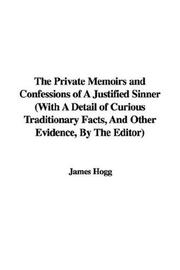
The Private Memoirs and Confessions of A Justified Sinner (Wi...
First published 1824. Subjects: fiction, Scottish fiction, Murderers, Classics, Psychological.
eBay marketplace picks
Marketplace Samples
Live-tested eBay searches with available results related to this page.


Endnotes
1.
Source: ettrickandyarrow.org.uk
Title: james hogg exhibition
Link:https://ettrickandyarrow.org.uk/james-hogg-exhibition
Source snippet
Celebrated Scottish writer, James Hogg (1770-1835) was born near the head of the Ettrick Valley and lived in either Ettrick or Yarrow alm...
2.
Source: tota.world
Link:https://www.tota.world/article/2521/
3.
Source: ia800403.us.archive.org
Link:https://ia800403.us.archive.org/18/items/minstrelsyofscot01scot/minstrelsyofscot01scot.pdf
4.
Source: gutenberg.org
Link:https://www.gutenberg.org/ebooks/40955
5.
Source: trove.scot
Link:https://www.trove.scot/place/54385
6.
Source: pringle.info
Title: Clan Pringle Association Buckholm ghost story
Link:https://pringle.info/contents/buckholm-ghost-story/
7.
Source: gutenberg.org
Link:https://www.gutenberg.org/ebooks/39782.epub.images
8.
Source: gutenberg.org
Link:https://www.gutenberg.org/files/40955/40955-h/40955-h.htm
9.
Source: gutenberg.org
Link:https://www.gutenberg.org/files/48207/48207-h/48207-h.htm
10.
Source: jameshogg.stir.ac.uk
Title: james hogg
Link:https://jameshogg.stir.ac.uk/james-hogg/
Source snippet
13 Feb 2017 — James Hogg (1770-1835), also known as 'The Ettrick Shepherd', lived and worked for most of his life in Ettrick Forest in th...
11.
Source: electricscotland.com
Title: Electric Scotland Memorials of James Hogg, the Ettrick shepherd
Link:https://electricscotland.com/bible/jameshogg.pdf
Source snippet
Ettrick and the Yar- row,—the main part of the Forest of the Stuart kings,—carried his imagination back into the past, as to an ideal wor...
12.
Source: gazetteer.org.uk
Link:https://gazetteer.org.uk/search?place=Selkirkshire&type=em
Source snippet
Search the GazetteerThe Tweed crosses the north-east of the county, meeting the Ettrick below Selkirk. Galashiels lies on the Ga...
13.
Source: readingroo.ms
Link:https://readingroo.ms/4/1/7/9/41796/41796-h/41796-h.htm
14.
Source: eprints.gla.ac.uk
Title: Enlighten Publications Hogg, Ettrick, and Oral Tradition
Link:https://eprints.gla.ac.uk/65953/1/65963.pdf
15.
Source: ajbhope.net
Title: AJB Hope9. Tweedsmuir and The Covenanters
Link:https://www.ajbhope.net/tweedsmuir-and-the-covenanters/
16.
Source: portal.historicenvironment.scot
Link:https://portal.historicenvironment.scot/apex/f?p=1505%3A300%3A%3A%3A%3A%3AVIEWTYPE%2CVIEWREF%3Adesignation%2CLB19716
17.
Source: discoverscottishborders.com
Title: Discover Scottish Borders The Haunting of Buckholm Tower: A Tale of Murder,
Link:https://discoverscottishborders.com/the-haunting-of-buckholm-tower-a-tale-of-murder-betrayal-and-ghostly-hounds/
18.
Source: faeryfolklorist.blogspot.com
Title: ettrick forest brownie
Link:https://faeryfolklorist.blogspot.com/2011/07/ettrick-forest-brownie.html
19.
Source: electricscotland.com
Link:https://electricscotland.com/History/social/social06.htm
20.
Source: electricscotland.com
Title: james hogg
Link:https://electricscotland.com/history/other/james_hogg.htm
21.
Source: electricscotland.com
Link:https://electricscotland.com/history/other/scottcountry.pdf
22.
Source: electricscotland.com
Link:https://electricscotland.com/familytree/frank/burns_lives32.htm
23.
Source: electricscotland.com
Link:https://www.electricscotland.com/history/fairy/
24.
Source: electricscotland.com
Link:https://electricscotland.com/history/north/noctesambrosiana004wils.pdf
25.
Source: electricscotland.com
Link:https://electricscotland.com/history/biographicaldictionary09.pdf
26.
Source: electricscotland.com
Title: 18619 8.txt
Link:https://electricscotland.com/etexts/18619-8.txt
27.
Source: electricscotland.com
Link:https://electricscotland.com/history/borders/reminiscencesofy00russuoft.pdf
28.
Source: Wikipedia
Title: The Brownie of Bodsbeck
Link:https://en.wikipedia.org/wiki/The_Brownie_of_Bodsbeck
29.
Source: Wikipedia
Link:https://en.wikipedia.org/wiki/Buckholm
30.
Source: Wikipedia
Title: James Hogg
Link:https://en.wikipedia.org/wiki/James_Hogg
31.
Source: stir.ac.uk
Link:https://www.stir.ac.uk/research/hub/file/567308
32.
Source: booksfromscotland.com
Title: james hogg
Link:https://booksfromscotland.com/bfs-author/james-hogg/
33.
Source: drmarkjardine.wordpress.com
Title: james hogg
Link:https://drmarkjardine.wordpress.com/category/by-name/james-hogg/
34.
Source: visionofbritain.org.uk
Link:https://www.visionofbritain.org.uk/place/21756
Additional References
35.
Source: youtube.com
Title: The Ghost of James Pringle: The Devil of Buckholm Tower
Link:https://www.youtube.com/watch?v=w54wL2dJ9-w
Source snippet
"THE BROWNIE OF THE BLACK HAGGS - Tale of Scottish Highland horror by James Hogg. BBC drama.[https://www.youtube.com/watch?v=WGBi8aZ-LsQ..."](https://www.youtube.com/watch?v=WGBi8aZ-LsQ...")...
36.
Source: scotlandstartshere.com
Link:https://scotlandstartshere.com/tours/buckholm-circular/
37.
Source: thecastleguide.co.uk
Link:https://thecastleguide.co.uk/castle/buckholm-tower/
38.
Source: facebook.com
Link:https://www.facebook.com/groups/739179902901018/posts/2974162669402719/
39.
Source: castfox.net
Link:https://www.castfox.net/podcast/caledonia-sleeps-7617569
40.
Source: scotclans.com
Link:https://www.scotclans.com/blogs/bletherskite/evil-laird-pringle-and-the-haunting-of-buckholm-tower?srsltid=AfmBOoruSYvTTmgj8xbjZctvFFC2gUPnh8hQW4HYESx_-xqtw4XzJmWj
41.
Source: scotclans.com
Link:https://www.scotclans.com/blogs/bletherskite/evil-laird-pringle-and-the-haunting-of-buckholm-tower?srsltid=AfmBOooyZoo9aeVrl665UhljCRum6FR0u9C-EYSNdGzRmwfFvF9SWEMI
42.
Source: thebottleimp.org.uk
Link:https://www.thebottleimp.org.uk/2016/12/fairies-faith-and-fatherland-in-james-hoggs-the-brownie-of-bodsbeck/
43.
Source: ramshornstudio.com
Link:https://www.ramshornstudio.com/hogg.htm
44.
Source: facebook.com
Link:https://www.facebook.com/DiscoverSouthScotland/posts/james-hogg-was-a-scottish-poet-and-novelist-nicknamed-the-ettrick-shepherd-this-/1472626494871773/
Topic Tree