Where Pembrokeshire's Ghost Stories Still Linger
Pembrokeshire’s haunted reputation is strongest where old stone, dangerous coast and family memory meet: Carew Castle with its White Lady and Barbary ape, the blue-glowing Waterston Lady on the road near Llanstadwell, St Govan’s Chapel with its saint, pirates and bell in the rock, and Picton Castle with a witch legend attached to a long-lived aristocratic...
Page outline Jump by section
Introduction
Pembrokeshire’s haunted reputation is strongest where old stone, dangerous coast and family memory meet: Carew Castle with its White Lady and Barbary ape, the blue-glowing Waterston Lady on the road near Llanstadwell, St Govan’s Chapel with its saint, pirates and bell in the rock, and Picton Castle with a witch legend attached to a long-lived aristocratic seat. The evidence is not proof of ghosts. It is a layered record of folklore, tourism, local testimony, antiquarian writing, newspapers, museum talks and place-based storytelling. That is what makes Pembrokeshire useful for a haunted-county page: the stories are not just isolated scares, but ways of remembering invasion, shipwreck, death omens, class power, exposed roads, coastal danger and the strange authority of old ruins.
For this project, Pembrokeshire is treated as the historic county in south-west Wales. The Wikimedia Commons historic-county map identifies Pembrokeshire as one of Wales’s thirteen historic counties, while modern Pembrokeshire is also a present-day unitary authority; the older county frame is still the best organising lens for folklore because stories cluster around castles, parishes, roads, harbours and estates rather than modern service boundaries.[Wikimedia Commons]commons.wikimedia.orgCommons File:Wales Historic Counties map Pembrokeshire.svgCommons File:Wales Historic Counties map Pembrokeshire.svg
Where Pembrokeshire’s hauntings cluster
Pembrokeshire’s ghost stories are unusually tied to visible places. The county’s haunted map is not dominated by one town or one famous house; instead it stretches from Norman castles and estate houses to exposed coastal chapels, old roads, inns, villages and harbours. Carew Castle provides the clearest public-facing haunted site, partly because the Pembrokeshire Coast National Park Authority presents its ghost traditions alongside the castle’s official history and visitor offer.[Pembrokeshire Coast National Park]pembrokeshirecoast.walesPembrokeshire Coast National Park Ghosts of Carew CastlePembrokeshire Coast National Park Ghosts of Carew Castle
The county’s folklore also sits within a wider Welsh tradition in which supernatural stories were attached to ancient monuments, wells, standing stones, castles and inns. The Royal Commission on the Ancient and Historical Monuments of Wales notes that such beliefs were encountered by antiquarians and archaeologists because communities treated supernatural associations as part of a site’s meaning, not merely as entertainment.[Royal Commission Wales]rcahmw.gov.ukNews | Haunted by the Past: Antiquarian Curiosity and a ‘Roman’ Ghost in Eighteenth-Century Pembrokeshire…
A practical haunted itinerary through Pembrokeshire would usually begin with:
- Carew Castle, for the White Lady, Princess Nest, the kitchen boy, the Celtic warrior and the Barbary ape.
- Waterston Road, between Llanstadwell and Waterston, for the county’s best-known roadside apparition.
- St Govan’s Chapel, near Bosherston, for a coastal saint legend involving pirates, a magic bell and a rock that preserves the warning.
- Picton Castle, near Haverfordwest, for a witch legend attached to a 14th-century stronghold and powerful local family.
- Pembroke Castle and Haverfordwest, not because every claim is equally well sourced, but because their castles, museums, ghost tours and archives keep the county’s older supernatural material in circulation.
Carew Castle: why one castle carries so much of the county’s ghost lore
Carew Castle is the key haunted site in Pembrokeshire because its legends are specific, repeated and tied to recognisable rooms, figures and family stories. The National Park’s own Carew Castle material says the site has several supposed ghosts: a Celtic warrior in the undercroft, a kitchen boy linked with clanking pots and pans, a White Lady, and the famous Barbary ape. It also notes that Carew has hosted paranormal investigations and can be hired overnight by groups for investigations.[Pembrokeshire Coast National Park]pembrokeshirecoast.walesPembrokeshire Coast National Park Ghosts of Carew CastlePembrokeshire Coast National Park Ghosts of Carew Castle
The White Lady is usually identified in the site tradition as Princess Nest, daughter of Rhys ap Tewdwr of Deheubarth. In the Carew version, she is seen as a kindly spirit walking the ruins in daylight or under a full moon, connected to the land at Carew through her marriage to Gerald de Windsor and the early castle said to have been built there. The story folds a real medieval political world into a ghostly romance: Norman power in south-west Wales, dynastic marriage, abduction, contested loyalty and the afterlife of a woman remembered as beautiful, powerful and vulnerable.[Pembrokeshire Coast National Park]pembrokeshirecoast.walesPembrokeshire Coast National Park Ghosts of Carew CastlePembrokeshire Coast National Park Ghosts of Carew Castle
The Barbary ape story is stranger and more memorable. In the National Park version, Sir Roland Rhys, believed to have been a 17th-century tenant of the castle, returns from the Barbary Coast with an ape rescued from a wrecked Spanish galleon. When his son runs away with a merchant’s daughter, Sir Roland refuses to believe the girl’s father and releases the ape against him. The merchant survives, curses Sir Roland, and by morning Sir Roland is found dead while the ape has vanished; the ape is then said to return on dark, stormy nights.[Pembrokeshire Coast National Park]pembrokeshirecoast.walesPembrokeshire Coast National Park Ghosts of Carew CastlePembrokeshire Coast National Park Ghosts of Carew Castle
As evidence, Carew’s ghosts are best treated as site legend rather than documented apparition history. The stories are too shaped, symbolic and theatrical to read as neutral witness reports. Yet they are valuable because they show how haunted folklore works: a medieval castle becomes a stage where anxieties about family obedience, foreign travel, class violence, curses and animal savagery can be replayed in a form visitors remember.
The Waterston Lady: Pembrokeshire’s roadside ghost
The Waterston Lady is one of Pembrokeshire’s strongest examples of a road ghost rather than a building ghost. Land of Legends, a Welsh folklore and tourism resource, describes roads and crossroads as common settings in Welsh ghost stories and calls the Waterston Lady “Pembrokeshire’s most prolific ghost sighting”. The apparition is said to be an old woman in a ragged dress, giving off an eerie blue glow, walking along Waterston Road between Llanstadwell and Waterston, sometimes carrying a bundle of rags and most often reported between 10 pm and midnight on Saturdays. A ghostly horse and carriage is also said to have appeared further west towards Blackbridge.[Land of Legends]landoflegends.walesOpen source on landoflegends.wales.
This tradition matters because it differs from the castle pattern. There is no grand lineage, no furnished room, no named aristocratic spirit. The fear comes from repetition, darkness and ordinary movement: a road used by local people becomes uncanny at particular hours. The blue glow also places the story close to Welsh death-light traditions, even when the Waterston Lady herself is presented as a distinct local apparition rather than a formal omen.
Road ghosts often survive because they are easy to retell: a driver, walker or passenger sees something human where no one should be, and the location can be checked by the next generation. In credibility terms, that makes the Waterston Lady both more immediate and harder to verify. The story is locally vivid, but its public form is folkloric: repeated sightings, fixed route, striking visual signature and a strong warning atmosphere.
St Govan’s Chapel: not a ghost story, but essential haunted Pembrokeshire
St Govan’s Chapel is not primarily a ghost site, yet it belongs in Pembrokeshire’s haunted history because it has all the ingredients of sacred coastal folklore: a hermit, pirates, a miraculous hiding place, a warning bell, a storm and a rock that preserves the miracle. The Pembrokeshire Coast National Park’s account says St Govan rang a magic bell to warn of pirates; the pirates stole it, their ship was wrecked in a storm, and the bell was restored in supernatural fashion.[Pembrokeshire Coast National Park]pembrokeshirecoast.walesPembrokeshire Coast National Park St Govan's Chapel He also had a magic bell and this St Govan would always ring, The pirates were not haPembrokeshire Coast National Park St Govan's Chapel He also had a magic bell and this St Govan would always ring, The pirates were not ha
Later visitor retellings add the familiar details that the bell was set into stone and that the chapel steps are difficult to count consistently, both motifs that turn a real coastal place into a participatory legend. Bluestone’s walking guide likewise preserves the version in which angels build a new bell into the rock so that only St Govan can ring it.[Bluestone Wales]bluestonewales.comOpen source on bluestonewales.com.
The chapel’s eerie force comes from setting. It is not a drawing-room haunting but a legend embedded in limestone, sea noise and isolation. The supernatural element protects the coast: the saint’s bell warns people of danger, while pirates and storm represent the real maritime hazards of south Pembrokeshire. In a county where many communities faced shipwreck, invasion scares and exposed sea routes, this is haunted-adjacent folklore with a clear social function.
Picton Castle and the witch tradition
Picton Castle’s haunted reputation is less securely documented in official heritage material than Carew’s, but its witch legend is now part of the county’s popular folklore circuit. A Pembrokeshire travel and local-interest article summarises the story as a woman accused of witchcraft, sentenced to death and burned at the stake, whose spirit is said to linger around Picton Castle and has been claimed by some to wander the grounds.[The Pembrokeshire Holiday Company]thepembrokeshireholidaycompany.co.ukThe Pembrokeshire Holiday Company Discover Welsh Legends in PembrokeshireThe Pembrokeshire Holiday Company Discover Welsh Legends in Pembrokeshire
The historical setting makes the legend plausible as folklore even where the specific ghost claim is thin. Picton Castle’s own history says it was built around 1315 by Sir John Wogan, became a fortified medieval home, resisted Owain Glyndŵr in 1405, and then passed into the Philipps family, who remained associated with it for nearly 500 years. In the 18th and 19th centuries the Philipps family were among Pembrokeshire’s most powerful landed families, with major political, social and economic influence.[Picton Castle Gardens]pictoncastle.co.ukOpen source on pictoncastle.co.uk.
That matters because witch legends often attach themselves to places associated with authority: castles, courts, estates, prisons and parish power. The Picton story should not be presented as a proven execution record without stronger evidence. Its value is as a local memory of accusation, punishment and lingering injustice, set against a real castle whose long family history gives the legend a convincing stage.

Phantom funerals, corpse candles and Welsh death omens
Not all Pembrokeshire hauntings are tied to a named building. Some belong to a broader Welsh death-omen tradition, especially corpse candles and phantom funerals. Brian John’s work is important here. His Pembrokeshire folklore publications are described as drawing together stories from across the county, including ghosts, goblins, corpse candles, phantom funerals, omens, poltergeists and hauntings, with some tales from recent times and many from the 1700s and 1800s. Brian John
The digitised Pembrokeshire folk-tale material also makes clear that local tradition includes “ghosts and fairies” and “phantom funerals”, while John’s own note on the digitisation of the Pembrokeshire folk-tale books says the four volumes contain more than 500 stories, reproduced close to the wording used when many were first published in the 19th and 20th centuries.[People's Collection Wales]peoplescollection.walesOpen source on peoplescollection.wales.
Corpse candles are usually described in Welsh folklore as lights that appear before death or trace the route from a house to a burial place. Modern folklore explainers link them to phantom funeral processions and old corpse roads, while also noting sceptical possibilities such as glow-worms or other natural lights.[Burials & Beyond]burialsandbeyond.comBurials & Beyond Corpse CandlesBurials & Beyond Corpse Candles
For Pembrokeshire, these motifs are important because they shift the focus from “which building is haunted?” to “how did communities imagine death approaching?” In rural and coastal places, where funerals, chapels, lanes and family houses were central to communal life, a moving light or spectral procession was a way of giving shape to dread before a death became known.
Archives, newspapers and the problem of proof
The strongest way to read Pembrokeshire’s haunted history is as a record of transmission rather than proof. The stories survive because they have been preserved by local historians, heritage bodies, tourism sites, newspapers, museum talks and folklore collectors. A 2026 event listing for Dr Simon Hancock’s “Historic Ghosts and Legends of Pembrokeshire” describes a talk based on ghosts, legends and the supernatural “as recorded in archives, books, and newspapers from the time of Giraldus Cambrensis through to the twentieth century”, including apparitions, poltergeists, prophecies and phantom funerals.[Cardigan Bay]cardigan-bay.comOpen source on cardigan-bay.com.
That is an important claim for readers because it shows that Pembrokeshire’s ghost lore is not simply a modern Halloween overlay. It has an archival life, even if individual tales vary in reliability. Hancock is also curator and manager of Haverfordwest Town Museum, according to the museum’s own site, and is described by Haverfordwest Heritage as a local historian and curator with a PhD on Pembrokeshire in the First World War.[Haverfordwest Town Museum]haverfordwest-town-museum.org.ukOpen source on haverfordwest-town-museum.org.uk.
Modern press accounts add another layer, though they need careful handling. For example, the Herald reported in 2023 on alleged poltergeist activity and unexplained shadows at the Seaman’s Chapel in Pill, Milford Haven, including claims about knocks inside a locked building and a local story that the chapel had once stored bodies recovered from the Irish Sea. This is useful as a contemporary claim and as evidence of continuing belief, but it is not the same as independent confirmation of paranormal activity.[Herald.Wales]herald.walesOpen source on herald.wales.
How credible are Pembrokeshire’s ghost stories?
Pembrokeshire’s haunted traditions are credible as folklore, uneven as history and unproven as paranormal evidence. Carew Castle’s stories are especially well preserved because an official heritage body presents them clearly, but even there the wording is cautious: “there are thought to be” ghosts, and “legend has it” that the ape returns. That is exactly the right register for a public haunted-history page.[Pembrokeshire Coast National Park]pembrokeshirecoast.walesPembrokeshire Coast National Park Ghosts of Carew CastlePembrokeshire Coast National Park Ghosts of Carew Castle
A fair reading separates the material into three broad levels:
Strong site folklore: Carew Castle, Waterston Road and St Govan’s Chapel have clear place-based traditions with repeated public retellings. These are the strongest haunted-Pembrokeshire anchors.
Popular local legend: Picton Castle’s witch story is memorable and locally useful, but the publicly available evidence for a specific historical execution or apparition is thinner than the evidence for the castle’s real medieval and estate history.
Contemporary claims and investigations: modern ghost tours, paranormal events and press stories show that belief and performance continue, but they should be read as present-day haunted culture rather than proof.
Sceptical explanations do not make the stories worthless. A blue roadside figure may be a misperceived person, vehicle light, reflective clothing, marshy light or retold rumour. Castle noises may come from wildlife, weather, masonry, plumbing, visitor expectation or the acoustics of ruined spaces. Corpse candles may overlap with natural lights or the psychology of grief. The point is not to flatten the legends, but to understand why particular places made certain experiences feel meaningful.
Why Pembrokeshire feels so haunted
Pembrokeshire’s haunted atmosphere comes from contrast. It is a famously beautiful county, but its beauty is edged by danger: cliffs, tidal races, isolated chapels, exposed roads, ruined castles, old harbours and weather that can turn quickly. Its stories often place the supernatural at thresholds — castle gates, roads after dark, chapel steps, coast paths, towers, undercrofts and shorelines.
The county also has a deep historical layering. Norman and Flemish settlement, medieval lordship, powerful landed families, maritime trade, religious sites, Civil War disruption and rural death customs all give the folklore something to attach to. Carew’s ghosts are remembered through medieval romance and family violence; the Waterston Lady through a lonely road; St Govan through coastal danger and sacred protection; Picton through elite power and witchcraft memory.
That is why Pembrokeshire works best as a haunted county of stories rather than a list of “most haunted” claims. Its ghosts are not just things said to appear. They are local ways of talking about who belonged, who suffered, who travelled, who drowned, who was accused, who was remembered, and why certain places still feel charged after dark.
Amazon book picks
Further Reading
Books and field guides related to Where Pembrokeshire's Ghost Stories Still Linger. Use these as the next step if you want deeper reading beyond the article.
The Mammoth Book of Celtic Myths and Legends
Broadens understanding of Welsh legend traditions.
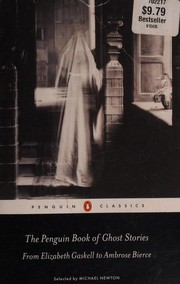
The Penguin Book of Ghost Stories
Complements interest in haunted locations and folklore.

Pembrokeshire Folk Tales
Focuses specifically on stories and legends from Pembrokeshire.
eBay marketplace picks
Marketplace Samples
Live-tested eBay searches with available results related to this page.


Endnotes
1.
Source: commons.wikimedia.org
Title: Commons File:Wales Historic Counties map Pembrokeshire.svg
Link:https://commons.wikimedia.org/wiki/File%3AWales_Historic_Counties_map_Pembrokeshire.svg
2.
Source: rcahmw.gov.uk
Title: Royal Commission Wales
Link:https://rcahmw.gov.uk/haunted-by-the-past-antiquarian-curiosity-and-a-roman-ghost-in-eighteenth-century-pembrokeshire/
Source snippet
News | Haunted by the Past: Antiquarian Curiosity and a ‘Roman’ Ghost in Eighteenth-Century Pembrokeshire...
3.
Source: cardigan-bay.com
Link:https://www.cardigan-bay.com/whats-on/events/historic-ghosts-and-legends-of-pembrokeshire/
4.
Source: herald.wales
Link:https://herald.wales/west-wales/poltergeists-and-unexplained-shadows-confirmed-at-historic-pembrokeshire-chapel/
5.
Source: commons.wikimedia.org
Title: Category:Historic counties of Wales
Link:https://commons.wikimedia.org/wiki/Category%3AHistoric_counties_of_Wales
6.
Source: commons.wikimedia.org
Title: Category:Maps of counties of Wales
Link:https://commons.wikimedia.org/wiki/Category%3AMaps_of_counties_of_Wales
7.
Source: commons.wikimedia.org
Title: Category:Old maps of Pembrokeshire
Link:https://commons.wikimedia.org/wiki/Category%3AOld_maps_of_Pembrokeshire
8.
Source: commons.wikimedia.org
Link:https://commons.wikimedia.org/wiki/File%3ABritish_Isles_map_showing_UK%2C_Republic_of_Ireland%2C_and_historic_counties.svg
9.
Source: commons.wikimedia.org
Title: File:Wales Historical Counties.png
Link:https://commons.wikimedia.org/wiki/File%3AWales_Historical_Counties.png
10.
Source: Wikipedia
Link:https://en.wikipedia.org/wiki/Pembrokeshire
11.
Source: pembrokeshirecoast.wales
Title: Pembrokeshire Coast National Park Ghosts of Carew Castle
Link:https://www.pembrokeshirecoast.wales/carew-castle/carew-castle-history/ghosts-of-carew-castle/
12.
Source: pembrokeshirecoast.wales
Title: about carew castle
Link:https://www.pembrokeshirecoast.wales/carew-castle/about-carew-castle/
13.
Source: landoflegends.wales
Link:https://www.landoflegends.wales/theme/ghosts
14.
Source: pembrokeshirecoast.wales
Link:https://www.pembrokeshirecoast.wales/about-the-national-park/culture-and-heritage/land-of-legends/[st-govans-chapel
15.
Source: bluestonewales.com
Link:https://www.bluestonewales.com/discover/pembrokeshire/walks/st-govans-head
16.
Source: thepembrokeshireholidaycompany.co.uk
Title: The Pembrokeshire Holiday Company Discover Welsh Legends in Pembrokeshire
Link:https://thepembrokeshireholidaycompany.co.uk/blog/discover-welsh-legends-in-pembrokeshire
17.
Source: pictoncastle.co.uk
Link:https://pictoncastle.co.uk/pembrokeshire-castle/
18.
Source: brianjohn.co.uk
Title: Brian John
Folklore
Link:https://www.brianjohn.co.uk/folklore.html
19.
Source: peoplescollection.wales
Link:https://www.peoplescollection.wales/sites/default/files/documents/Brian%20John%20-%20Pembrokeshire%20Folk%20Tales.pdf
20.
Source: burialsandbeyond.com
Title: Burials & Beyond Corpse Candles
Link:https://burialsandbeyond.com/2021/05/09/corpse-candles/
21.
Source: myend.com
Link:https://myend.com/country/wales-united-kingdom/
22.
Source: haverfordwest-town-museum.org.uk
Link:https://www.haverfordwest-town-museum.org.uk/about-us/
23.
Source: reddit.com
Link:https://www.reddit.com/r/castles/comments/1ry9x3u/carew_a_medieval_ruined_castle_on_the_welsh_coast/
24.
Source: bluestonewales.com
Link:https://www.bluestonewales.com/discover/history-and-culture/scariest-stories-from-haunted-pembrokeshire
25.
Source: pembrokeshirecoast.wales
Link:https://www.pembrokeshirecoast.wales/carew-castle/
26.
Source: pembrokeshirecoast.wales
Link:https://www.pembrokeshirecoast.wales/carew-castle/events-at-carew-castle/
27.
Source: pembrokeshirecoast.wales
Link:https://www.pembrokeshirecoast.wales/about-the-national-park/culture-and-heritage/land-of-legends/
28.
Source: pembrokeshirecoast.wales
Title: Castle and Mill History
Link:https://www.pembrokeshirecoast.wales/carew-castle/carew-castle-history/
29.
Source: pembrokeshirecoast.wales
Link:https://www.pembrokeshirecoast.wales/about-the-national-park/culture-and-heritage/land-of-legends/carew-castle/
30.
Source: pembrokeshirecoast.wales
Link:https://www.pembrokeshirecoast.wales/carew-castle/opening-time-prices/
31.
Source: pembrokeshirecoast.wales
Link:https://www.pembrokeshirecoast.wales/things-to-do/walking-in-the-park/web-walks/carew/
32.
Source: pembrokeshirecoast.wales
Title: summer events
Link:https://www.pembrokeshirecoast.wales/carew-castle/events-at-carew-castle/summer-events/
33.
Source: pembrokeshirecoast.wales
Link:https://www.pembrokeshirecoast.wales/carew-castle/carew-castle-history/gerald-de-windsor-and-princess-nest/
34.
Source: pembrokeshirecoast.wales
Title: Pembrokeshire Coast National Park LCA 23
Link:https://www.pembrokeshirecoast.wales/wp-content/uploads/2020/08/LCA-Compiled-Data-Sheets-23-28-Apr2020.pdf
35.
Source: pictoncastle.co.uk
Link:https://pictoncastle.co.uk/
36.
Source: pictoncastle.co.uk
Link:https://pictoncastle.co.uk/the-gardens/
37.
Source: pictoncastle.co.uk
Link:https://pictoncastle.co.uk/charity/
38.
Source: pictoncastle.co.uk
Title: Visit Picton Castle for Free
Link:https://pictoncastle.co.uk/2025/09/05/visit-picton-castle-for-free-heritage-open-doors-weekend-september-2025/
39.
Source: pictoncastle.co.uk
Link:https://pictoncastle.co.uk/school-trips-education/
40.
Source: pictoncastle.co.uk
Link:https://pictoncastle.co.uk/photo-gallery/
41.
Source: pictoncastle.co.uk
Link:https://pictoncastle.co.uk/coach-tour-groups/
42.
Source: pictoncastle.co.uk
Link:https://pictoncastle.co.uk/category/news/
43.
Source: pictoncastle.co.uk
Title: example of a news article
Link:https://pictoncastle.co.uk/2025/05/21/example-of-a-news-article/
44.
Source: castlewales.com
Title: Carew Castle
Link:https://www.castlewales.com/carew.html
45.
Source: wikishire.co.uk
Link:https://wikishire.co.uk/wiki/Pembrokeshire
46.
Source: Wikipedia
Title: Carew Castle
Link:https://en.wikipedia.org/wiki/Carew_Castle
47.
Source: datamap.gov.wales
Title: metadata detail
Link:https://datamap.gov.wales/layers/geonode%3Ahistoric_counties_bng_rcahmw_ply/metadata_detail
48.
Source: datamap.gov.wales
Title: wales Historic County Boundaries of Wales
Link:https://datamap.gov.wales/layers/geonode%3Ahistoric_counties_bng_rcahmw_ply
49.
Source: peoplescollection.wales
Title: fireside tales
Link:https://www.peoplescollection.wales/sites/default/files/documents/Brian%20John%20-%20Fireside%20Tales.pdf
50.
Source: antiquemaps.com
Link:https://www.antiquemaps.com/uk/wales/southwales/pembroke/
51.
Source: firesidehorror.co.uk
Title: Welsh Folklore
Link:https://www.firesidehorror.co.uk/blog-2/fjyp816xikl0pi5adzl7v4ynq99e8g
52.
Source: pembrokeshire.gov.uk
Title: Maps of Pembrokeshire
Link:https://www.pembrokeshire.gov.uk/performance-and-statistics/maps-of-pembrokeshire
53.
Source: castlecrawlcymru.co.uk
Link:https://www.castlecrawlcymru.co.uk/castles/pembroke-castle
54.
Source: casgliadywerin.cymru
Title: Brian John
Link:https://www.casgliadywerin.cymru/items/512051
55.
Source: spookyencounters.co.uk
Link:https://spookyencounters.co.uk/venue/carew-castle/
Additional References
56.
Source: worldwidewriter.co.uk
Link:https://www.worldwidewriter.co.uk/trip-around-glamorgans-ghostly-vale.html
57.
Source: instagram.com
Link:https://www.instagram.com/p/DYT_lPFMsVR/
58.
Source: visitwales.com
Link:https://www.visitwales.com/attraction/castle/carew-castle-tidal-mill-532861
59.
Source: paranormaleyeuk.co.uk
Link:https://www.paranormaleyeuk.co.uk/peuk1/carew-castle-ghost-hunt-
60.
Source: pembrokecastle.co.uk
Link:https://pembrokecastle.co.uk/events/ghost-tour-stories-and-supper/
61.
Source: great-castles.com
Link:https://great-castles.com/caernarfonghost.html
62.
Source: great-castles.com
Link:https://great-castles.com/carewghost.html
63.
Source: reddit.com
Link:https://www.reddit.com/r/Wales/comments/1l1rki4/haunted_paranormal/
64.
Source: facebook.com
Link:https://www.facebook.com/BBCCymruWales/posts/have-you-heard-about-wales-most-haunted-placesbbc/1231279939032000/
65.
Source: deadlive.co.uk
Link:https://www.deadlive.co.uk/hawarden-castle-ghosts-north-wales-hauntings/
Topic Tree
Follow this branch
Related pages 91
- Haunted Clackmannanshire
- Haunted Antrim
- Haunted Armagh
- Haunted Durham
- Haunted Londonderry
- +86 more in sidebar