Why Does Shropshire Feel So Haunted?
Shropshire’s haunted reputation comes from the way its ghost stories cling to very specific places: a ruined castle above Ludlow, a burned town hall at Wem, a former prison in Shrewsbury, the limestone edge at Wenlock, the lanes around Newport, and old roads where folklore turns a traveller’s fear into a local legend.
Page outline Jump by section
Introduction
This page treats “Shropshire” in the historic county sense used by the wider UK county-mapping project. That keeps the centre of gravity on the old county and its folklore landscape, while recognising modern administrative distinctions such as Shropshire Council and Telford and Wrekin. Historic-county sources describe Shropshire as a west Midlands shire, while modern gazetteers still place towns such as Telford in historic Shropshire even where current council areas differ.[wikishire.co.uk]wikishire.co.ukOpen source on wikishire.co.uk.
Why Shropshire Feels So Haunted
Shropshire is well suited to ghost stories because its landscape already feels like a borderland. Castles, hill roads, old market towns, abbeys, prisons and battlefields sit close together, and many stories attach themselves to liminal places: thresholds, bridges, ruined doorways, tracks, wells, escarpments and the edge of settlements. That matters because ghost stories often work as place-memory. They mark where something dangerous, shameful, violent or unexplained is believed to have happened, even when the details have been reshaped by retelling.
The county’s older folklore was gathered systematically in the nineteenth century. Shropshire Folk-lore: A Sheaf of Gleanings, edited by Charlotte Sophia Burne from the collections of Georgina Frederica Jackson and published from the 1880s, remains a key source because it records local beliefs, customs, ghost traditions, witchcraft stories, fairy lore and place legends before modern ghost tourism standardised many of them. Library records describe the work as a collection of folklore and Shropshire social customs, while later scholarship notes Burne’s importance as a major folklorist and editor of the county’s material.[archive.org]archive.orgOpen source on archive.org.
Shropshire’s haunted stories therefore fall into several overlapping groups. Some are attached to nationally important heritage sites, such as Ludlow Castle and Acton Burnell Castle. Some belong to towns and inns, especially Ludlow, Shrewsbury and Wem. Some are countryside legends: Wild Edric in the hills, Ippikin on Wenlock Edge, Madam Pigott around Chetwynd and Newport. Others are recent visitor experiences, especially at Shrewsbury Prison, where the architecture and documented penal history give ghost tours a ready-made theatrical setting.[historicengland.org.uk]historicengland.org.uklist entrylist entry
Ludlow Castle and the Border-Ghost Tradition
Ludlow Castle is one of the strongest anchors for haunted Shropshire because its real history is already dramatic. Historic England records that the castle was probably founded by Walter de Lacy around 1075 and served as the principal residence, military base and administrative centre of the de Lacy estates in south Shropshire until the mid-thirteenth century. It was involved in the conflicts of King Stephen’s reign and later became one of the great power centres of the Welsh Marches.[Historic England]historicengland.org.uklist entrylist entry
The best-known ghost story associated with Ludlow Castle is the tale of Marion de la Bruyère or Marion La Bruyère, usually presented as a tragic woman connected to the castle’s Norman past. In modern tellings, she is said to have loved an enemy of the castle’s lord and to have become a restless figure on or near the battlements. This is a classic castle haunting pattern: romance, betrayal, stone walls, and a woman whose story is remembered because she is imagined as still waiting or wandering. Local tourism pages repeat the Marion tradition, but they usually do so as legend rather than as documented medieval testimony.[Morris Leisure]morris-leisure.co.ukMorris Leisure Is Shropshire the UK's Most Haunted County?Morris Leisure Is Shropshire the UK's Most Haunted County?
Ludlow’s wider ghostly reputation also spills into the town’s old inns and streets. The Blue Boar has been described in local haunted-place writing as home to several apparitions, including a soldier from the nearby castle, a Victorian woman, a pipe-smoking man and a teenage girl. These claims are best treated as pub-lore: atmospheric, locally memorable, and useful for understanding how Ludlow markets its old buildings, but not the same kind of evidence as a dated archival report.[Morris Leisure]morris-leisure.co.ukMorris Leisure Is Shropshire the UK's Most Haunted County?Morris Leisure Is Shropshire the UK's Most Haunted County?
What makes Ludlow important is not whether a reader accepts the apparitions literally. It is that the town’s hauntings make sense in relation to its built environment. A castle that began soon after the Norman Conquest, a market town of old streets, and a landscape of border lordship create the kind of setting where ghost stories feel plausible to visitors even when the evidence is folkloric.
Wem: Shropshire’s Most Famous Ghost Photograph
The Wem ghost is probably Shropshire’s most internationally recognisable modern haunting, and it is also the county’s best warning against taking ghost evidence at face value. On 19 November 1995, a fire destroyed the interior of Wem Town Hall. Amateur photographer Tony O’Rahilly took a black-and-white photograph of the blaze, and when the image was developed it appeared to show a young girl standing in a doorway. The figure was soon linked to Jane Churm, a girl associated in local tradition with the great Wem fire of 1677.[Bradt Guides]bradtguides.comBradt Guides A short history of Shropshire's Wem ghostBradt Guides A short history of Shropshire's Wem ghost
For a time, the photograph became a powerful modern ghost story. It had everything a haunting needs: a real disaster, an older fire legend, a child figure, a photograph, and a town ready to incorporate the story into its identity. Travel writing on Shropshire notes that the image drew visitors to Wem and that the town embraced the story through “Ghost Town” associations and themed local trade.[Bradt Guides]bradtguides.comBradt Guides A short history of Shropshire's Wem ghostBradt Guides A short history of Shropshire's Wem ghost
The problem is that the evidence later turned sharply against the photograph. A 2010 Skeptical Inquirer analysis connected the alleged ghost girl to a child visible in a 1922 postcard of Wem, reprinted in the Shropshire Star. The article argued that key features aligned closely enough to show that the postcard girl had been superimposed onto the fire photograph. Other summaries of the case also record that the image was later regarded as fake or copied from the older postcard.[centerforinquiry.org]cdn.centerforinquiry.orgOpen source on centerforinquiry.org.
That does not make the Wem story worthless. It makes it more interesting. As folklore, the case shows how a modern photograph can revive an older local memory, how quickly a town can adopt a ghost, and how sceptical investigation can become part of the legend’s afterlife. Wem remains haunted in the cultural sense: not because the photograph proves Jane Churm appeared in 1995, but because the story of the image, the fire and its unmasking has become part of Shropshire’s ghost tradition.
Shrewsbury Prison and the Tourism of Fear
Shrewsbury Prison is one of the clearest examples of a working historical site becoming a modern haunted attraction. The prison’s own visitor material describes it as one of the largest and most complete surviving Victorian prisons in Britain, operational until 2013 and now open for guided tours, ghost tours and events. That recent closure matters: unlike ruined castles, the prison still feels institutionally close to the present, with cells, wings and execution spaces forming part of the visitor experience.[Shrewsbury Prison]shrewsburyprison.comOpen source on shrewsburyprison.com.
Ghost-tour material from the prison presents the site as a place of “documented paranormal encounters” and ties its stories to the building’s “chilling past”. Reported prison ghosts include figures such as a Grey Lady, a crying child and “Larry the Butcher”, especially in visitor and travel writing about overnight experiences. These accounts belong to the modern ghost-hunt economy: they combine real penal history, theatrical access after dark, participant expectation, and the emotional force of enclosed spaces.[Shrewsbury Prison]shrewsburyprison.comOpen source on shrewsburyprison.com.
A careful reader should separate three layers. First, Shrewsbury Prison is historically real and unusually intact as a visitor site. Second, the prison’s use for executions, confinement and punishment gives it an obvious dark-history atmosphere. Third, the named ghosts are claims and tour traditions, not verified historical persons whose posthumous appearances can be proved. The site’s power lies in the way those layers reinforce each other: visitors enter an authentic carceral space, hear stories of suffering and punishment, and then interpret noises, cold spots or unease through that frame.
Wenlock Edge, Wild Edric and the Haunted Hills
Shropshire’s countryside hauntings are often more folkloric than architectural. Wenlock Edge is a good example. It is a long limestone escarpment near Much Wenlock, known for geology, woodland and walking routes, but it also carries some of the county’s most memorable legends. One story concerns Ippikin, a robber or outlaw whose treasure is said to be hidden around the Edge; in local legend, calling out to him may bring the danger of being pushed from the rocks by his ghost.[wikipedia.org]WikipediaWenlock EdgeWenlock Edge
Another Wenlock Edge tradition is Major’s Leap. In this Civil War story, Major Thomas Smallman of nearby Wilderhope Manor, a Royalist carrying despatches, is said to have escaped Parliamentary soldiers by riding over the Edge. The horse dies in many tellings, while the major survives by landing in a tree and continues towards Shrewsbury. Later ghost accounts describe the major, his horse, or a galloping figure still associated with the place.[Wikipedia]WikipediaWenlock EdgeWenlock Edge
Wild Edric belongs to a still older and wilder layer of Shropshire legend. Historically, Eadric the Wild was an Anglo-Saxon lord associated with resistance after the Norman Conquest, but folklore transforms him into a figure of the hills, often linked with a fairy bride, Lady Godda, and with subterranean or spectral riding traditions. Modern folklore explainers note that stories of Edric and Godda are especially associated with the Stiperstones and Shropshire hill country, where rumblings in old mines and wild weather can be interpreted through legend.[historic-uk.com]historic-uk.comEadric The WildEadric The Wild
These stories are not “case files” in the modern paranormal sense. They are landscape legends. Their function is to make dangerous places memorable: cliffs, old tracks, mines, isolated hills and wooded slopes. They also connect Shropshire to wider British motifs — the Wild Hunt, buried treasure, fairy marriage, the ghostly rider — while remaining rooted in named local ground.

Madam Pigott and the White-Lady Pattern
Madam Pigott, or Madam Piggott, is one of Shropshire’s most distinctive ghost traditions because she connects a named family, a local estate, roads near Newport, and the wider British “White Lady” motif. Chetwynd Deer Park’s own history notes that the Pigott family held Chetwynd from the fifteenth to the late eighteenth century and identifies Madame Pigott as the family-connected ghost story.[Chetwynd Deer Park]chetwynddeerpark.co.ukOpen source on chetwynddeerpark.co.uk.
The usual tale says Madam Pigott died after a cruel remark by her husband during childbirth, then returned as a restless spirit around Chetwynd Park, Newport and surrounding roads. In some versions she appears at midnight, sits combing her baby’s hair, or jumps onto the back of a rider’s horse until water forces her to let go. The story was recorded in the Shropshire folklore tradition and is often compared with other White Lady legends in Britain, where a wronged woman, a difficult death and a recurring route combine into a haunting.[Wikipedia]WikipediaMadam PigottMadam Pigott
The credibility of Madam Pigott is folkloric rather than evidential. Its value lies in how completely it preserves the structure of a rural ghost legend: a gentry family, a domestic tragedy, a named hill or road, repeated sightings, and an attempted laying or exorcism by clergy. The detail about being unable to cross water also places the story in a wider supernatural grammar, where streams, thresholds and church rituals control restless spirits.
Battlefields, Blood Memory and Ghostly Re-enactment
Shropshire’s battle ghosts are less securely documented than its famous buildings, but they are important because the county has real battle landscapes. The Battle of Shrewsbury was fought on 21 July 1403 between Henry IV’s army and the rebel force of Henry “Hotspur” Percy. The Battlefields Trust describes it as the first battle in which English archers fought each other on English soil, ending with Hotspur’s death and the collapse of the Percy challenge.[battlefieldstrust.com]battlefieldstrust.comShrewsbury ResourcesShrewsbury Resources
Stories of ghostly soldiers, battle sounds and phantom re-enactments often grow around such places because the landscape is already understood through violence. At Shrewsbury, the battlefield is tied to a famous death, Shakespearean memory, a church and heritage interpretation. The haunting tradition is therefore less about one named apparition and more about atmosphere: the idea that a traumatic battle can replay itself as sound, mist, figures or unease. Local ghost writing makes claims of soldiers, voices and drums, but these are much less robust than the historical record of the battle itself.[nearlyknowledgeablehistory.blogspot.com]nearlyknowledgeablehistory.blogspot.comArmies of The Dead- Shropshire's ghostly soldiersArmies of The Dead- Shropshire's ghostly soldiers
Blore Heath is sometimes brought into Shropshire ghost discussions because it lies close to Market Drayton and the county edge, though the battlefield itself is in Staffordshire. The battle took place on 23 September 1459 during the Wars of the Roses, and the Battlefields Trust records it as a decisive Yorkist victory whose advantage quickly evaporated when York’s wider campaign faltered. For a Shropshire page, Blore Heath is best treated as a neighbouring-border legend rather than a core Shropshire haunting.[battlefieldstrust.com]battlefieldstrust.comBattle of Blore HeathBattle of Blore Heath
Castles, Ruins and Why Evidence Varies
Not every haunted Shropshire site has the same kind of source behind it. Acton Burnell Castle, for example, is historically important in a way that is much easier to verify than its ghostly reputation. English Heritage describes it as a red sandstone fortified manor house built between 1284 and 1293 by Robert Burnell, Edward I’s Lord Chancellor, with Parliaments held there in 1283 and 1285, and abandoned by 1420.[English Heritage]english-heritage.org.ukacton burnell castleacton burnell castle
A modern paranormal database records a 2004 account of a girl in white lace at Acton Burnell Castle, including a reported misty face in a photograph and scratching noises. That is useful as a record of contemporary ghost belief, but the source type is very different from English Heritage’s architectural history. One tells us what the building is and why it matters; the other tells us how people have experienced or imagined it as haunted.[Paranormal Database]paranormaldatabase.comOpen source on paranormaldatabase.com.
This distinction applies across the county. Historic England, English Heritage, battlefield organisations and archive catalogues can usually support dates, ownership, building phases and battles. Ghost claims more often come from folklore collections, local retellings, tourism pages, press stories, paranormal databases and witness submissions. A good haunted-history reading uses both, but does not confuse them.
How to Read Shropshire’s Ghost Stories
The most reliable way to approach Shropshire’s hauntings is to ask what kind of story each one is. Wem is a modern photographic mystery with a strong sceptical explanation. Ludlow is a castle legend attached to a genuinely important medieval site. Shrewsbury Prison is a dark-tourism location where recent visitor experience is central. Madam Pigott and Wild Edric are folklore traditions rooted in older oral patterns. Wenlock Edge and Major’s Leap are landscape legends, using cliffs and tracks to carry memories of danger, outlaws and Civil War flight.
That does not make one type automatically better than another. A debunked ghost photograph can still reveal how a town tells stories about fire and identity. A fairy-bride legend can preserve traces of medieval social memory. A prison ghost tour can teach visitors about architecture, punishment and fear, even when its apparitions remain unproven. The key is to keep the language honest: Shropshire is rich in ghost stories, traditions, claims and haunted tourism, but none of these sources proves that ghosts exist as facts.
For readers exploring the county, the strongest haunted route would begin with Shrewsbury’s prison and battlefield memory, move south to Ludlow Castle and its old-town pub lore, turn towards Wenlock Edge for Ippikin and Major’s Leap, and then look north to Wem and Newport for the modern ghost photograph and Madam Pigott. Together, these places show why Shropshire’s haunted history is so durable: it is not just a list of spooky addresses, but a county-wide pattern of ruins, roads, fires, battles, hills and old stories that continue to shape how people experience the landscape.

Amazon book picks
Further Reading
Books and field guides related to Why Does Shropshire Feel So Haunted?. Use these as the next step if you want deeper reading beyond the article.
Haunted Britain and Ireland
Places Shropshire within the wider tradition of British hauntings.
The lore of the land
Provides context for local legends, haunted places and traditions.
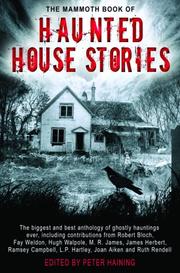
The Mammoth Book of Haunted House Stories
Complements interest in haunted places across Shropshire.
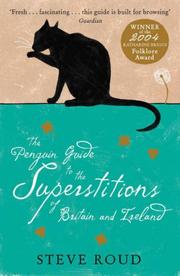
The Penguin Guide to the Superstitions of Britain and Ireland
Explains the folklore traditions behind county ghost stories including border regions.
eBay marketplace picks
Marketplace Samples
Live-tested eBay searches with available results related to this page.
Endnotes
1.
Source: archive.org
Link:https://archive.org/details/shropshirefolkl00burngoog
2.
Source: cdn.centerforinquiry.org
Link:https://cdn.centerforinquiry.org/wp-content/uploads/sites/29/2010/11/22164346/p48.pdf
3.
Source: Wikipedia
Title: Telford and Wrekin
Link:https://en.wikipedia.org/wiki/Telford_and_Wrekin
4.
Source: catalog.hathitrust.org
Link:https://catalog.hathitrust.org/Record/005776684
5.
Source: Wikipedia
Title: Wem Town Hall
Link:https://en.wikipedia.org/wiki/Wem_Town_Hall
6.
Source: Wikipedia
Title: Wenlock Edge
Link:https://en.wikipedia.org/wiki/Wenlock_Edge
7.
Source: historic-uk.com
Title: Eadric The Wild
Link:https://www.historic-uk.com/HistoryUK/HistoryofEngland/Eadric-The-Wild/
8.
Source: mythstories.com
Link:https://mythstories.com/edric-and-the-stiperstones/index-1.htm
9.
Source: Wikipedia
Title: Madam Pigott
Link:https://en.wikipedia.org/wiki/Madam_Pigott
10.
Source: battlefieldstrust.com
Title: Shrewsbury Resources
Link:https://www.battlefieldstrust.com/Shrewsbury-Resources/
11.
Source: nearlyknowledgeablehistory.blogspot.com
Title: Armies of The Dead- Shropshire’s ghostly soldiers
Link:https://nearlyknowledgeablehistory.blogspot.com/2024/07/armies-of-dead-shropshires-ghostly.html
12.
Source: battlefieldstrust.com
Title: Battle of Blore Heath
Link:https://www.battlefieldstrust.com/resource-centre/warsoftheroses/battleview.asp?BattleFieldId=6
13.
Source: Wikipedia
Title: Acton Burnell Castle
Link:https://en.wikipedia.org/wiki/Acton_Burnell_Castle
14.
Source: Wikipedia
Title: Battle of Shrewsbury
Link:https://en.wikipedia.org/wiki/Battle_of_Shrewsbury
15.
Source: Wikipedia
Title: Battle of Blore Heath
Link:https://en.wikipedia.org/wiki/Battle_of_Blore_Heath
16.
Source: Wikipedia
Title: Historic counties of England
Link:https://en.wikipedia.org/wiki/Historic_counties_of_England
17.
Source: Wikipedia
Title: Detached parts of Shropshire
Link:https://en.wikipedia.org/wiki/Detached_parts_of_Shropshire
18.
Source: Wikipedia
Title: Counties (Detached Parts) Act 1844
Link:https://en.wikipedia.org/wiki/Counties_%28Detached_Parts%29_Act_1844
19.
Source: nearlyknowledgeablehistory.blogspot.com
Title: the forgotten ghosts of shropshire
Link:https://nearlyknowledgeablehistory.blogspot.com/2023/07/the-forgotten-ghosts-of-shropshire.html
20.
Source: nearlyknowledgeablehistory.blogspot.com
Link:https://nearlyknowledgeablehistory.blogspot.com/2021/10/onwards-we-go-lesser-known-ghosts-of.html
21.
Source: archive.org
Link:https://archive.org/details/shropshirefolkl01jackgoog
22.
Source: archive.org
Link:https://archive.org/stream/shropshirefolkl01jackgoog/shropshirefolkl01jackgoog_djvu.txt
23.
Source: archive.org
Link:https://archive.org/stream/shropshirefolkl00burngoog/shropshirefolkl00burngoog_djvu.txt
24.
Source: steelthistles.blogspot.com
Title: women who lead wild hunt
Link:https://steelthistles.blogspot.com/2017/03/women-who-lead-wild-hunt.html
25.
Source: shrewsburyprison.com
Link:https://www.shrewsburyprison.com/
26.
Source: wikishire.co.uk
Link:https://wikishire.co.uk/wiki/Shropshire
27.
Source: historicengland.org.uk
Title: list entry
Link:https://historicengland.org.uk/listing/the-list/list-entry/1004778
28.
Source: english-heritage.org.uk
Title: acton burnell castle
Link:https://www.english-heritage.org.uk/visit/places/acton-burnell-castle/
29.
Source: originalshrewsbury.co.uk
Link:https://originalshrewsbury.co.uk/myths-legends-and-folktales-of-shropshire/ippikin-ippikin-an-outlaw-entombed
30.
Source: chetwynddeerpark.co.uk
Link:https://chetwynddeerpark.co.uk/1099-2/
31.
Source: historicengland.org.uk
Title: list entry
Link:https://historicengland.org.uk/listing/the-list/list-entry/1291698
32.
Source: morris-leisure.co.uk
Title: Morris Leisure Is Shropshire the UK’s Most Haunted County?
Link:https://www.morris-leisure.co.uk/is-shropshire-the-uks-most-haunted-county/
33.
Source: bradtguides.com
Title: Bradt Guides A short history of Shropshire’s Wem ghost
Link:https://www.bradtguides.com/the-wem-ghost/
34.
Source: shrewsburyprison.com
Link:https://www.shrewsburyprison.com/blogs/shrewsbury-prison-ghost-tours-an-in-depth-look/
35.
Source: shrewsburyprison.com
Link:https://www.shrewsburyprison.com/blogs/shrewsbury-prison-ghost-tour-a-haunting-journey-through-history/
36.
Source: shrewsburyprison.com
Link:https://www.shrewsburyprison.com/blogs/key-ghost-stories-of-shrewsbury-prison/
37.
Source: paranormaldatabase.com
Link:https://www.paranormaldatabase.com/reports/battlefields.php?pageNum_paradata=1
38.
Source: english-heritage.org.uk
Link:https://www.english-heritage.org.uk/visit/places/acton-burnell-castle/history/
39.
Source: paranormaldatabase.com
Link:https://www.paranormaldatabase.com/shropshire/shrodata.php
40.
Source: originalshrewsbury.co.uk
Link:https://originalshrewsbury.co.uk/myths-legends-and-folktales-of-shropshire
41.
Source: originalshrewsbury.co.uk
Link:https://originalshrewsbury.co.uk/myths-legends-and-folktales-of-shropshire/wild-edric-and-lady-godda-a-promise-broken
42.
Source: facebook.com
Link:https://www.facebook.com/originalshrewsbury/posts/one-year-since-we-captured-real-ghosts-on-film-in-shrewsbury-one-of-britains-mos/1232547408906963/
43.
Source: facebook.com
Link:https://www.facebook.com/groups/685935921572431/posts/3083287191837280/
44.
Source: facebook.com
Link:https://www.facebook.com/ShrewsburyPrison/posts/dont-miss-out-on-shrewsbury-prison-by-night-your-chance-to-explore-one-of-the-wo/1302294595255907/
45.
Source: historyhit.com
Title: Acton Burnell Castle
Link:https://www.historyhit.com/locations/acton-burnell-castle/
46.
Source: historicengland.org.uk
Link:https://historicengland.org.uk/images-books/photos/item/UXC01/01/01/0066/39
47.
Source: historicengland.org.uk
Title: 12 Castle Street (Former George Hotel), Ludlow
Link:https://historicengland.org.uk/listing/the-list/list-entry/1202791
48.
Source: historicengland.org.uk
Title: 10, CASTLE STREET, Ludlow
Link:https://historicengland.org.uk/listing/the-list/list-entry/1220020
49.
Source: historicengland.org.uk
Link:https://historicengland.org.uk/research/results/reports/7316/HoptonCastleShropshire_asurveyoftheearthworks
50.
Source: historicengland.org.uk
Link:https://historicengland.org.uk/images-books/photos/item/OP26354
51.
Source: historicengland.org.uk
Title: Stokesay Castle, Craven Arms
Link:https://historicengland.org.uk/listing/the-list/list-entry/1003011
52.
Source: historicengland.org.uk
Title: Castle Lodge and Attached Railings, Ludlow
Link:https://historicengland.org.uk/listing/the-list/list-entry/1282027
53.
Source: historicengland.org.uk
Title: Searching LMS01
Link:https://historicengland.org.uk/images-books/photos/results/?current=n_21_n&filters%5B0%5D%5Btype%5D=all&filters%5B0%5D%5Bvalues%5D%5B0%5D=Hertfordshire&filters%5B1%5D%5Bfield%5D=image&filters%5B1%5D%5Btype%5D=all&filters%5B1%5D%5Bvalues%5D%5B0%5D=true&q=LMS01&size=n_24_n
54.
Source: wikishire.co.uk
Title: Historic Counties Standard
Link:https://wikishire.co.uk/wiki/Historic_Counties_Standard
55.
Source: wikishire.co.uk
Title: Association of British Counties
Link:https://wikishire.co.uk/wiki/Association_of_British_Counties
56.
Source: ludchurchmyblog.wordpress.com
Title: madam piggott
Link:https://ludchurchmyblog.wordpress.com/places-further-afield/madam-piggott/
57.
Source: haunted-houses.co.uk
Link:https://www.haunted-houses.co.uk/ghost-hunt/shrewsbury-prison/
58.
Source: centerforinquiry.s3.amazonaws.com
Link:https://centerforinquiry.s3.amazonaws.com/wp-content/uploads/sites/29/2010/11/22164346/p48.pdf
59.
Source: throughthebookshelf.com
Title: the battle of shrewsbury
Link:https://www.throughthebookshelf.com/wonderingsandwonderings/the-battle-of-shrewsbury
60.
Source: baseview.uk
Link:https://www.baseview.uk/county/shropshire
61.
Source: lovetovisit.com
Title: Shrewsbury Prison Ghost Tour
Link:https://www.lovetovisit.com/uk-attractions/shrewsbury-prison/shrewsbury-prison-shrewsbury-ghost-tour
Additional References
62.
Source: youtube.com
Link:https://www.youtube.com/watch?v=J_GuElEL5pU
Source snippet
Exploring Haunted HMP Shrewsbury - Real Ghost Footsteps Caught on Camera...
63.
Source: youtube.com
Title: The Haunted Ruins of Haughmond Abbey; Ghosts and Ley Lines
Link:https://www.youtube.com/watch?v=6-nYZsujr-E
Source snippet
Locked Inside the Execution Room: Paranormal Activity In Britain's Deadliest Prison...
64.
Source: abcnews.com
Link:https://abcnews.com/International/ghost-woman-baby-photo-shows-mysterious-figure-window/story?id=32782532
65.
Source: facebook.com
Link:https://www.facebook.com/groups/822728021915511/posts/1031781971010114/
66.
Source: instagram.com
Link:https://www.instagram.com/reel/DOZUZzDioz6/
67.
Source: facebook.com
Link:https://www.facebook.com/groups/anglosaxonsociety/posts/24330534679872847/
68.
Source: abcounties.com
Link:https://abcounties.com/
69.
Source: facebook.com
Link:https://www.facebook.com/lucy.worsley/videos/even-on-a-summer-afternoon-ludlow-castle-seems-to-me-to-be-haunted-by-the-ghosts/218448916832666/
70.
Source: facebook.com
Link:https://www.facebook.com/groups/newportidlechitchat/posts/1487221238841944/
71.
Source: mythosjourney.com
Link:https://www.mythosjourney.com/encyclopedia/pages/madam_pigott/
Topic Tree
Follow this branch
Related pages 91
- Haunted Clackmannanshire
- Haunted Antrim
- Haunted Armagh
- Haunted Durham
- Haunted Londonderry
- +86 more in sidebar