Where Does Leicestershire Feel Most Haunted?
Leicestershire’s haunted reputation rests less on one single “most haunted” site than on a dense cluster of stories: a white figure by the ruins of Grace Dieu Priory, camera-caught shapes at Belgrave Hall, the five reported ghosts of Leicester Guildhall, the battlefield memory of Bosworth, and older folklore figures such as Black Annis in the Dane Hills.
Page outline Jump by section
Introduction
For this page, Leicestershire is treated as the historic county centred on Leicester, while recognising that modern visitor routes and administrative bodies sometimes use different boundaries. Wikishire describes historic Leicestershire as a landlocked Midlands county bordering Derbyshire, Nottinghamshire, Lincolnshire, Rutland, Northamptonshire, Warwickshire and Staffordshire, with the Warwickshire boundary following Watling Street, now broadly the A5.[Wikishire]wikishire.co.ukOpen source on wikishire.co.uk.
Where Leicestershire’s ghost stories are concentrated
The county’s best-known haunted places fall into three overlapping landscapes. The first is old Leicester itself: Guildhall, Leicester Castle, the Newarke, Greyfriars, Belgrave Hall and the streets around the cathedral. These stories are urban and civic. They attach themselves to courts, cells, museums, religious foundations and the public rediscovery of Richard III.
The second is north-west Leicestershire, especially around Coalville, Thringstone and Donington le Heath. Here the mood changes: ruined religious houses, old manor houses, recusant Catholic families, woodland paths and roadside apparitions. Grace Dieu Priory is the clearest example, because its “White Lady” is both a ghost story and a classic ruin legend.
The third is battlefield and road folklore. Bosworth carries a national historical charge because Richard III was killed there on 22 August 1485, while the county’s older ghost-lore indexes preserve scattered tales of figures on roads, haunted inns, plague children, phantom women and localised “white lady” traditions. A modern reader should treat many of these as folklore rather than verified witness history, but that does not make them worthless. Their value lies in showing what local communities remembered, feared, repeated and adapted.
Grace Dieu Priory: why the White Lady became Leicestershire’s signature ruin ghost
Grace Dieu Priory, near Thringstone and Belton, is probably the county’s most atmospheric haunted ruin. Historic England records it as an Augustinian nunnery founded between 1236 and 1242 by Roesia de Verdun, later converted into a Tudor mansion after the Dissolution. The surviving complex includes ruined priory buildings, ponds, a fishpond, earthworks, a boundary ditch and wall beside Grace Dieu Brook.[Historic England]historicengland.org.ukOpen source on historicengland.org.uk.
That real monastic history matters because the haunting is not simply “a ghost in an old building”. The White Lady story depends on the visual drama of a former religious house reduced to roofless stone, beside a road and woodland. Modern summaries of the legend usually describe a white or grey female apparition gliding near the ruins or across the A512, sometimes near a bus shelter opposite the priory. A local Grace Dieu account says the site has been associated with sightings for roughly eighty years, with most witnesses describing a woman in white.[Geocities]geocities.wsOpen source on geocities.ws.
The most repeated version tells of a bus driver who stopped for a woman by the roadside, only for her to vanish. A retelling in Leicestershire Legends places that bus incident in the 1960s and says both the driver and conductor saw her.[Hoap]hoap.co.ukHoap Leicestershire Legends retold by Black AnnisHoap Leicestershire Legends retold by Black Annis The detail is important because it turns the story from a generic ruin apparition into a roadside encounter: modern transport meets medieval ruin, and the ghost appears exactly where everyday life passes the uncanny without stopping.
There are several competing explanations for the White Lady. One folkloric version links her to a disgraced prioress and a drowned child; another associates her with the nuns more generally; some local discussions identify her with Roesia de Verdun, the founder. Britain Express summarises the darker prioress version, including the claim that the woman wanders the ruins searching for a lost baby, while also noting reports of both white and grey female figures.[Britain Express]britainexpress.comOpen source on britainexpress.com.
The sober reading is that Grace Dieu’s haunting is a classic example of how monastic ruins attract “white lady” traditions. The historical record supports the site’s medieval and post-Dissolution importance; it does not verify the apparition. What makes the legend durable is the fit between place and story: a secluded nunnery, a ruined Tudor afterlife, a road cutting past the remains, and a figure whose silence lets each generation attach its own explanation.

Belgrave Hall: the CCTV ghost that made Leicester briefly famous
Belgrave Hall, in the old village of Belgrave on the northern edge of Leicester, is Leicestershire’s most media-famous haunting. The house itself has a strong historical pedigree: it was built between 1709 and 1713 as a substantial family home and later became a museum and heritage venue.[Wikipedia]WikipediaBelgrave HallBelgrave Hall
Its ghost story entered a different category in 1999, when staff reported that security cameras had recorded two ghostly figures outside the hall. Haunted Happenings, which runs ghost events at the site, says the 1999 footage made Belgrave Hall famous worldwide and kept it of interest to ghost hunters.[Haunted Happenings]hauntedhappenings.co.ukbelgrave hallbelgrave hall But this is also one of Leicestershire’s best examples of why haunting evidence needs careful handling. Later summaries note that the International Society for Paranormal Research considered the image environmental rather than paranormal, with one explanation being a falling leaf; another television investigation suggested reflective-jacketed people as a likely cause.[Wikipedia]WikipediaBelgrave HallBelgrave Hall
That does not mean Belgrave Hall should be dismissed from a haunted-history page. It is precisely the ambiguity that makes it useful. The story shows the late twentieth-century shift from oral ghost lore to camera-era haunting: a museum garden, a security system, national attention, paranormal investigators and subsequent sceptical reinterpretation. Older ghost stories often depend on memory and repetition; Belgrave Hall depends on a recorded image that people argue over.
The reported apparition has sometimes been linked to Charlotte Ellis, daughter of a former owner, though that identification is a later interpretive layer rather than a secure historical conclusion. The safer way to describe Belgrave Hall is that it became famous for alleged ghostly CCTV footage, and that the footage has attracted both paranormal interest and plausible non-paranormal explanations.
Leicester Guildhall: the city’s theatrical haunted house
Leicester Guildhall is often promoted as the city’s most haunted building, and unlike many ghost-story venues, it has an official heritage and tourism presence behind that reputation. Leicester Museums’ ghost-night page says Leicester is reputed to be one of the UK’s most haunted cities, with over 100 reported sightings, and lists Guildhall figures including a powerfully built surgeon, a child named Sarah accused of stealing apples, a dog, a man in the library and a Victorian prostitute named Lucy.[Leicester Museums]leicestermuseums.orgOpen source on leicestermuseums.org.
Visit Leicester similarly presents the Guildhall as Leicester’s most haunted building and says five ghosts are “known” in local tradition, including a mysterious White Lady in the library, sometimes reinterpreted as a grey monk because the Grey Friars monastery once stood nearby. It also mentions a phantom dog in the courtyard and a black cat in the Great Hall.[Visit Leicester]visitleicester.infoOpen source on visitleicester.info.
The building’s history explains why it attracts these stories. The Guildhall was a major civic building for centuries, used for performance, administration, policing and public life. It is the kind of place where many kinds of memory can settle: municipal authority, punishment, theatre, religion and social marginality. Ghostly figures such as the accused child, the prostitute and the surgeon are not random. They place the haunting in old systems of justice, medicine, poverty and public discipline.
The Guildhall is also a good example of hauntings as public performance. It has appeared on paranormal television and now forms part of Leicester’s ghost-tour economy. That does not make the stories false or true; it means they are actively curated. Visitors come not only to ask “is it haunted?” but to experience the building after dark as a stage on which Leicester’s past can be felt rather than simply read.
Leicester Castle, the Newarke and Greyfriars: where history almost becomes a haunting
Leicester Castle’s Great Hall gives the city one of its strongest historical backdrops for ghost stories. Historic England describes the Great Hall as Grade I listed and scheduled, while Leicester’s own heritage account calls it the oldest surviving aisled and bay-divided timber hall in Britain, with some original twelfth-century timber posts.[Historic England]historicengland.org.ukOpen source on historicengland.org.uk.
The castle’s later use as a courtroom matters for haunted interpretation. Courtrooms, cells and execution-linked buildings often generate ghost stories because they concentrate fear, judgement and punishment. Leicester Castle is promoted in modern ghost events alongside Trinity House and Trinity Hospital Chapel, with organisers referring to ghostly stories from visitors and staff.[Haunted Heritage]hauntedheritage.co.ukHaunted Heritage Ghost TalkHaunted Heritage Ghost Talk The evidential quality here is weaker than at Belgrave Hall or Guildhall because the accounts are mostly event-led and promotional, but the historical setting is unusually strong.
Nearby Greyfriars adds a different kind of unease. It is not primarily a ghost site, but it is one of the most powerful “restless dead” landscapes in England. The University of Leicester records that the Grey Friars excavation uncovered both the friary and a battle-scarred skeleton with spinal curvature; on 4 February 2013 the university announced that the remains were those of King Richard III.[University of Leicester]le.ac.ukOpen source on le.ac.uk. Scientific analysis later reported a mitochondrial DNA match between the remains and living relatives, alongside archaeological, osteological and radiocarbon evidence consistent with Richard III.[Nature]nature.comOpen source on nature.com.
This discovery reshaped Leicester’s haunted imagination even when no ghost is claimed. Richard’s body had been displayed in Leicester after Bosworth and buried at Greyfriars; the later loss and rediscovery of the grave gave the city a rare modern example of historical absence becoming physical presence again. Historic England now protects Greyfriars as the early thirteenth-century Franciscan friary that became Richard III’s burial place.[Historic England]historicengland.org.ukHistoric England Greyfriars, Leicester, Non Civil ParishHistoric England Greyfriars, Leicester, Non Civil Parish
For haunted-history readers, Greyfriars is a reminder that the most powerful eerie places are not always those with the loudest ghost stories. Sometimes the unease comes from confirmed history: a dead king under a car park, a ruined friary, and a city suddenly confronted with the literal body beneath its streets.
Bosworth Battlefield: ghosts, kingship and the memory of violent change
The Battle of Bosworth is Leicestershire’s greatest historical rupture. The official Bosworth Battlefield site states that on 22 August 1485 Henry Tudor brought a smaller rebel army against the larger royal army of Richard III, and that the battle ended with Richard’s death and Henry’s victory.[Bosworth Battlefield Heritage Centre]bosworthbattlefield.org.ukOpen source on bosworthbattlefield.org.uk. The Heritage Fund records that archaeological work funded through the Heritage Lottery Fund helped pinpoint the true battlefield location after long debate.[The National Lottery Heritage Fund]heritagefund.org.ukOpen source on heritagefund.org.uk.
Battlefields often acquire ghost stories because they are landscapes of sudden death, unresolved loyalty and national myth. Bosworth has all three. It is the place where the last Plantagenet king died, where Tudor rule began, and where Shakespearean memory later recast Richard’s last moments into some of the most famous lines in English drama.
Modern ghost walks at Bosworth present the battlefield as a haunted landscape, but the core value of the site is historical rather than evidentially paranormal. The haunting is a mood produced by known violence, political consequence and memorialisation. A visitor standing near Ambion Hill or the interpreted battlefield is not just hearing a ghost story; they are entering a place where national history has been repeatedly rewritten, relocated and re-explained.
Bosworth also connects directly back into Leicester. Richard’s body was taken to the city, displayed, buried at Greyfriars, lost after the Dissolution, and rediscovered in 2012. That chain of events gives Leicestershire a rare haunted-history arc: battlefield death, urban burial, disappearance, archaeological return and ceremonial reburial.

Donington le Heath: manor-house ghosts and Gunpowder Plot memory
The 1620s House and Garden at Donington le Heath, formerly Donington le Heath Manor House, is one of Leicestershire’s most interesting haunted-house settings because its ghost lore is tied to religious secrecy and early Stuart politics. The official site describes it as a rare thirteenth-century building, furnished in early seventeenth-century style to tell the story of its former owners and residents.[1620s House and Garden]1620shouse.org.ukOpen source on 1620shouse.org.uk.
The Digby family link gives the house its darker interpretive charge. The 1620s House history explains that Sir Everard Digby’s uncle, John Digby of Seaton, owned the house at the time of Everard’s execution, and that the Digbys were recusant Catholics who would not worship in the Protestant way.[1620s House and Garden]1620shouse.org.ukOpen source on 1620shouse.org.uk. The site’s visitor material also notes that the Digbys lived there for more than two centuries and that their best-known relative was Sir Everard Digby, the Gunpowder Plotter.[1620s House and Garden]1620shouse.org.ukthe 1620s housethe 1620s house
Modern ghost-event accounts report sightings of housemaids, children and a tall man in a brimmed hat, sometimes interpreted as Sir Everard Digby.[Haunted Heritage]hauntedheritage.co.ukOpen source on hauntedheritage.co.uk. As evidence, these are event-operator claims rather than independent historical documentation. As folklore, however, they show how the house’s political and religious story is being transformed into haunting: hidden Catholic worship, plots, imprisonment, execution and a family home that now stages the tension of the 1620s for visitors.
The credible way to handle Donington le Heath is to separate the firm from the speculative. The building’s age, Digby association and Gunpowder Plot context are well supported. The apparition reports are modern haunting traditions attached to that history.
Black Annis: Leicestershire’s darker folklore spirit
Not all Leicestershire hauntings are ghosts of the dead. Black Annis is a folklore figure rather than a conventional apparition, but she belongs on any serious haunted Leicestershire page because she is one of the county’s most distinctive supernatural traditions.
The Story of Leicester describes Black Annis as a witch-like figure said to live in a cave in the Dane Hills, also known as Black Anna or Cat Anna. It notes that her name was often used as a threat to naughty children, and that in 1764 legal documents mention land called “Black Anny’s Bower Close”.[Story of Leicester]storyofleicester.infoOpen source on storyofleicester.info.
The details are grim: later folklore gives her blue features, talons, a cave, an underground connection to Leicester Castle, and a habit of lurking near Rupert’s Gateway. The exact origin is uncertain. She may preserve memories of a local woman, a distorted religious figure, a child-warning bogey, a theatrical tradition, or a much older supernatural motif. What matters for Leicestershire’s haunted map is that she belongs specifically to the west side of Leicester and to the boundary between town, hill, cave and childhood fear.
Black Annis also shows why the county’s eerie history should not be reduced to “ghost sightings”. Haunted folklore includes witches, bogeys, revenants, phantom animals, white ladies, battlefield dead and unexplained lights. Some are reported as experiences; others are inherited as warnings. Black Annis sits at the warning end of the spectrum: less a witness report than a story designed to keep children away from dangerous places after dark.
How credible are Leicestershire’s hauntings?
The evidence varies sharply from place to place. A careful reader should rank the stories by source type rather than by spookiness.
Strong historical setting, weak paranormal proof: Bosworth, Leicester Castle, Greyfriars, Grace Dieu Priory and Donington le Heath all have well-documented histories. Their supernatural traditions are meaningful because the places themselves are historically charged, not because the apparitions are proven.
Documented modern media event: Belgrave Hall is unusually useful because the famous claim involved CCTV and national attention. But it is also a cautionary case, since later explanations included environmental effects and reflective clothing.[Wikipedia]WikipediaBelgrave HallBelgrave Hall
Officially curated ghost tradition: Leicester Guildhall’s ghosts are actively presented by museums and tourism bodies. That gives the stories visibility and continuity, though not proof.[Leicester Museums]leicestermuseums.orgOpen source on leicestermuseums.org.
Folklore collection and local-memory evidence: Black Annis, Grace Dieu’s White Lady and scattered inn or road ghosts are strongest as folklore. Bob Trubshaw’s Index of Leicestershire Lore is valuable because it points to the printed and local-history ecosystem behind these stories, including David Bell’s Leicestershire and Rutland Ghosts and Legends and newspaper references.[Hoap]hoap.co.ukHoap An Index of Leicestershire Lore Bob TrubshawHoap An Index of Leicestershire Lore Bob Trubshaw
Sceptical explanations do not ruin the stories. In fact, they often make them more interesting. A falling leaf at Belgrave Hall, a roadside misperception at Grace Dieu, or a child-warning figure like Black Annis all show how environment, expectation and memory can create durable supernatural traditions. The county’s haunted history is strongest when read as a conversation between place, witness, performance and explanation.

Visiting Leicestershire’s haunted places without losing the history
For a visitor, the best haunted Leicestershire route starts in Leicester city centre. Guildhall, Leicester Castle, the Newarke and Greyfriars sit close enough to be understood as one historic cluster: civic power, medieval religion, justice, royal death and rediscovery. Belgrave Hall adds an eighteenth-century domestic and museum haunting just north of the centre.
A second route runs north-west towards Coalville and Thringstone, where Grace Dieu Priory and Donington le Heath offer a more rural, ruin-and-manor atmosphere. Grace Dieu is especially effective because the legend is inseparable from the road, brook, woodland and broken masonry. Donington le Heath is better read through the lens of recusant Catholic history and the Gunpowder Plot than as a simple ghost-hunt venue.
Bosworth deserves separate treatment. It is not merely a spooky battlefield stop; it is a national memory site. Its haunting lies in the fact that a political world ended there, and that Richard III’s story continued through Leicester for more than five centuries before archaeology changed what people thought they knew.
Leicestershire’s ghosts are therefore best approached as haunted history rather than paranormal certainty. The county offers apparitions, legends and ghost-tour atmosphere, but its real power comes from the way stories cling to verifiable places: a nunnery beside a road, a guildhall library, a CCTV camera in a museum garden, a battlefield marsh, a manor house shaped by religious fear, and a lost king found beneath modern Leicester.
Amazon book picks
Further Reading
Books and field guides related to Where Does Leicestershire Feel Most Haunted?. Use these as the next step if you want deeper reading beyond the article.
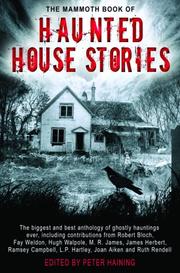
The Mammoth Book of Haunted House Stories
Complements readers interested in haunted heritage.
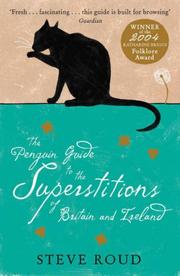
The Penguin Guide to the Superstitions of Britain and Ireland
Explains the traditions behind Leicestershire ghost lore.
eBay marketplace picks
Marketplace Samples
Live-tested eBay searches with available results related to this page.
Endnotes
1.
Source: geocities.ws
Link:https://www.geocities.ws/oliveshark53/whitelady.htm
2.
Source: Wikipedia
Title: Belgrave Hall
Link:https://en.wikipedia.org/wiki/Belgrave_Hall
3.
Source: nature.com
Link:https://www.nature.com/articles/ncomms6631
4.
Source: Wikipedia
Title: Grace Dieu Priory
Link:https://en.wikipedia.org/wiki/Grace_Dieu_Priory
5.
Source: Wikipedia
Title: Battle of Bosworth Field
Link:https://en.wikipedia.org/wiki/Battle_of_Bosworth_Field
6.
Source: Wikipedia
Title: Greyfriars, Leicester
Link:https://en.wikipedia.org/wiki/Greyfriars%2C_Leicester
7.
Source: Wikipedia
Title: Exhumation and reburial of Richard III of England
Link:https://en.wikipedia.org/wiki/Exhumation_and_reburial_of_Richard_III_of_England
8.
Source: Wikipedia
Title: King Richard III Visitor Centre
Link:https://en.wikipedia.org/wiki/King_Richard_III_Visitor_Centre
9.
Source: Wikipedia
Link:https://en.wikipedia.org/wiki/Rutland
10.
Source: Wikipedia
Link:https://sco.wikipedia.org/wiki/File%3ABritish_Isles_map_showing_UK%2C_Republic_of_Ireland%2C_and_historic_counties.svg
11.
Source: Wikipedia
Title: Historic counties of England
Link:https://en.wikipedia.org/wiki/Historic_counties_of_England
12.
Source: Wikipedia
Title: List of reportedly haunted locations in the United Kingdom
Link:https://en.wikipedia.org/wiki/List_of_reportedly_haunted_locations_in_the_United_Kingdom
13.
Source: Wikipedia
Title: White Lady
Link:https://en.wikipedia.org/wiki/White_Lady
14.
Source: Wikipedia
Title: Black Annis
Link:https://en.wikipedia.org/wiki/Black_Annis
15.
Source: Wikipedia
Title: Donington le Heath Manor House Museum
Link:https://en.wikipedia.org/wiki/Donington_le_Heath_Manor_House_Museum
16.
Source: Wikipedia
Title: Leicester Castle
Link:https://en.wikipedia.org/wiki/Leicester_Castle
17.
Source: wikishire.co.uk
Link:https://wikishire.co.uk/wiki/Leicestershire
18.
Source: historicengland.org.uk
Link:https://historicengland.org.uk/listing/the-list/list-entry/1012001
19.
Source: hoap.co.uk
Title: Hoap Leicestershire Legends retold by Black Annis
Link:https://www.hoap.co.uk/leics_legends.pdf
20.
Source: britainexpress.com
Link:https://www.britainexpress.com/counties/leicestershire/abbeys/grace-dieu.htm
21.
Source: hauntedhappenings.co.uk
Title: belgrave hall
Link:https://www.hauntedhappenings.co.uk/belgrave-hall/
22.
Source: leicestermuseums.org
Link:https://www.leicestermuseums.org/weddings-venue-hire/venue-hire/ghost-nights/
23.
Source: visitleicester.info
Link:https://visitleicester.info/point-of-interest/leicester-guildhall/
24.
Source: historicengland.org.uk
Link:https://historicengland.org.uk/research/results/reports/19-2009
25.
Source: storyofleicester.info
Link:https://www.storyofleicester.info/civic-affairs/leicester-castle/
26.
Source: hauntedheritage.co.uk
Title: Haunted Heritage Ghost Talk
Link:https://hauntedheritage.co.uk/venues/ghost-hunt-leicester-castle/
27.
Source: le.ac.uk
Link:https://le.ac.uk/richard-iii
28.
Source: historicengland.org.uk
Title: Historic England Greyfriars, Leicester, Non Civil Parish
Link:https://historicengland.org.uk/listing/the-list/list-entry/1442955
29.
Source: bosworthbattlefield.org.uk
Link:https://www.bosworthbattlefield.org.uk/history/
30.
Source: heritagefund.org.uk
Link:https://www.heritagefund.org.uk/news/true-location-bosworth-battlefield-pinpointed
31.
Source: 1620shouse.org.uk
Link:https://1620shouse.org.uk/
32.
Source: 1620shouse.org.uk
Link:https://1620shouse.org.uk/history/
33.
Source: 1620shouse.org.uk
Title: the 1620s house
Link:https://1620shouse.org.uk/visit/explore/the-1620s-house/
34.
Source: hauntedheritage.co.uk
Link:https://hauntedheritage.co.uk/product/ghost-hunt-donington-le-heath-manor/
35.
Source: storyofleicester.info
Link:https://www.storyofleicester.info/faith-belief/black-annis-and-dane-hills/
36.
Source: hoap.co.uk
Title: Hoap An Index of Leicestershire Lore Bob Trubshaw
Link:https://www.hoap.co.uk/an_index_of%20_leicestershire_lore.pdf
37.
Source: facebook.com
Link:https://www.facebook.com/haunted.heritage.co.uk/posts/probablythe-most-haunted-ghost-walk-in-leicestershirebosworth-battlefield-ghost-/1444447097719408/
38.
Source: facebook.com
Link:https://www.facebook.com/RealCounties/photos/the-county-of-rutland-is-a-small-landlocked-shire-of-the-midlandsrutland-is-the-/902082232075345/
39.
Source: hauntedheritage.co.uk
Link:https://hauntedheritage.co.uk/product/ghost-hunt-donington-le-heath-manor-house/
40.
Source: hauntedheritage.co.uk
Link:https://hauntedheritage.co.uk/ghost-walks-hh/
41.
Source: hauntedheritage.co.uk
Link:https://hauntedheritage.co.uk/product/ghost-hunt-leicester-guild-hall/
42.
Source: hauntedheritage.co.uk
Link:https://hauntedheritage.co.uk/product/ghost-walk-bosworth-battlefield/
43.
Source: hauntedheritage.co.uk
Link:https://hauntedheritage.co.uk/venues/ghost-hunt-donington-le-heath-manor/
44.
Source: hauntedheritage.co.uk
Link:https://hauntedheritage.co.uk/product/ghost-hunt-leicester-castle-and-trinity-hospital/
45.
Source: historicengland.org.uk
Title: ruins of grace dieu priory ashby road belton leicestershire ioe01 05246 34
Link:https://historicengland.org.uk/education/schools-resources/educational-images/ruins-of-grace-dieu-priory-ashby-road-belton-leicestershire-ioe01-05246-34
46.
Source: historicengland.org.uk
Title: Ruins of Grace Dieu Priory, Belton
Link:https://historicengland.org.uk/listing/the-list/list-entry/1074118
47.
Source: historicengland.org.uk
Link:https://historicengland.org.uk/content/docs/listing/battlefields/bosworth/
48.
Source: historicengland.org.uk
Title: former burial site of king richard iii granted protection
Link:https://historicengland.org.uk/whats-new/news/former-burial-site-of-king-richard-iii-granted-protection/
49.
Source: historicengland.org.uk
Link:https://historicengland.org.uk/listing/the-list/list-entry/1074361
50.
Source: historicengland.org.uk
Link:https://historicengland.org.uk/listing/the-list/list-entry/1200622
51.
Source: bosworthbattlefield.org.uk
Link:https://www.bosworthbattlefield.org.uk/
52.
Source: vcleicester.co.uk
Link:https://www.vcleicester.co.uk/leisure-breaks/local-attractions/attraction.html?id=8233
53.
Source: hauntedrooms.co.uk
Link:https://www.hauntedrooms.co.uk/haunted-places/leicester
54.
Source: abandonedspaces.com
Title: grace dieu priory
Link:https://www.abandonedspaces.com/public/grace-dieu-priory.html
55.
Source: wikishire.co.uk
Title: Great Britain and Ireland
Link:https://wikishire.co.uk/map/
56.
Source: visitleicester.info
Link:https://visitleicester.info/point-of-interest/bosworth-battlefield/
57.
Source: visitleicester.info
Link:https://visitleicester.info/point-of-interest/king-richard-iii-visitor-centre/
58.
Source: visitleicester.info
Title: 1620s house garden
Link:https://visitleicester.info/point-of-interest/1620s-house-garden/
59.
Source: visitleicester.info
Link:https://visitleicester.info/event/heritage-sundays-guided-tours-leicester-castle-great-hall/
60.
Source: hoap.co.uk
Link:https://www.hoap.co.uk/trubshaw.htm
61.
Source: hoap.co.uk
Link:https://www.hoap.co.uk/
62.
Source: hoap.co.uk
Link:https://www.hoap.co.uk/lkl.pdf
63.
Source: hoap.co.uk
Title: Ruminations from Elsewhere
Link:https://www.hoap.co.uk/ruminations_from_elsewhere.pdf
64.
Source: hoap.co.uk
Link:https://www.hoap.co.uk/people_and_places.pdf
65.
Source: themodernantiquarian.com
Title: grace dieu priory
Link:https://www.themodernantiquarian.com/site/8544/grace-dieu-priory
66.
Source: marketbosworth-pc.gov.uk
Title: richard iii
Link:https://www.marketbosworth-pc.gov.uk/richard-iii
67.
Source: leicestermuseums.org
Link:https://www.leicestermuseums.org/Newarke-Ghost-Walks-2024
68.
Source: exploreforestandbeyond.com
Title: Grace Dieu Priory
Link:https://exploreforestandbeyond.com/directory/grace-dieu-priory/
69.
Source: le.ac.uk
Link:https://le.ac.uk/richard-iii/grey-friars
70.
Source: museumsuk.com
Title: 1620s house and garden
Link:https://museumsuk.com/museums/coalville/1620s-house-and-garden.html
Additional References
71.
Source: youtube.com
Title: Exploring the Ruins of Grace Dieu Priory
Link:https://www.youtube.com/watch?v=JJ4bnn2UdEE
Source snippet
10 Most Haunted Places in Leicestershire provides a detailed overview of the historical legends and spectral folklore associated with key...
72.
Source: academia.edu
Link:https://www.academia.edu/89239324/Leicester_Castle_The_Great_Hall
73.
Source: rutland.gov.uk
Link:https://www.rutland.gov.uk/council-councillors/about-us
74.
Source: kriii.com
Link:https://kriii.com/about-kriii/an-incredible-discovery/
75.
Source: paranormaleyeuk.co.uk
Link:https://www.paranormaleyeuk.co.uk/peuk1/belgrave-hall-ghost-hunt-
76.
Source: hauntedrooms.co.uk
Link:https://www.hauntedrooms.co.uk/ghost-hunts/belgrave-hall-leicester
77.
Source: scribd.com
Link:https://www.scribd.com/document/165326693/Black-Annis
78.
Source: indigogroup.co.uk
Link:https://www.indigogroup.co.uk/trubshaw/old_articles.htm
79.
Source: gazetteer.org.uk
Link:https://gazetteer.org.uk/place/Bringhurst%2C_Leicestershire_5771
80.
Source: leicestershire.gov.uk
Link:https://www.leicestershire.gov.uk/about-the-council/council-plans/local-government-reorganisation/council-area-options-and-maps
Topic Tree
Follow this branch
Related pages 91
- Haunted Clackmannanshire
- Haunted Antrim
- Haunted Armagh
- Haunted Durham
- Haunted Londonderry
- +86 more in sidebar