Within Haunted Huntingdonshire
Does Katherine Still Haunt Huntingdonshire?
Katherine of Aragon's final months gave Huntingdonshire its most poignant and famous royal ghost tradition.

On this page
- Buckden confinement and Kimbolton death
- How the royal ghost stories developed
- Folklore, tourism and historical evidence
Page outline Jump by section
Introduction
Katherine of Aragon’s ghost tradition is Huntingdonshire’s most poignant royal haunting because it grows from a documented human tragedy rather than from a vague ruin or invented gothic setting. Katherine was held at Buckden Palace, now Buckden Towers, from July 1533 to May 1534, then moved to Kimbolton Castle, where she died on 7 January 1536 after refusing to accept Henry VIII’s annulment or surrender her identity as queen. The ghost stories that followed are usually told as later folklore: at Kimbolton, her apparition is said to walk the gallery near the rooms associated with her final illness; at Buckden, she is said to have been seen at the former palace where her resistance hardened into local memory. The history is secure; the hauntings are traditions, not proven events. Their power lies in the way two Huntingdonshire buildings preserve the last chapter of a Tudor queen’s life.[historicengland.org.uk]historicengland.org.ukheritage at risk 2020Historic EnglandHeritage at Risk in England Revealed in 202015 Oct 2020 — Katherine of Aragon, Henry VIII's first Queen, lived at Buckden…
Why this is Huntingdonshire’s great royal haunting
Kimbolton and Buckden sit in the historic county of Huntingdonshire, although modern administration places the area within Cambridgeshire. That distinction matters for haunted-history writing because the tradition belongs to the older local landscape of villages, estates, roads and parishes through which Katherine was moved during her final exile. Buckden Palace stood near the Great North Road and had long served the Bishops of Lincoln as a residence and stopping place; Kimbolton Castle was a noble house with medieval origins that later became the seat of the Earls and Dukes of Manchester before becoming Kimbolton School.[historic-uk.com]historic-uk.comOpen source on historic-uk.com.
Unlike many county ghost stories, this one does not depend on an obscure name attached to a corridor after the fact. Katherine of Aragon was one of the most famous women in Europe, the first wife of Henry VIII, mother of Mary I, and a queen whose refusal to accept demotion had enormous political and religious consequences. When a place can say that she was confined there, resisted royal pressure there, or died there, it already has the raw material from which legend can grow. The later apparition stories are therefore less important as “evidence of a ghost” than as evidence of how Huntingdonshire has remembered a woman who was treated as a political problem while many continued to regard her as England’s rightful queen. Historic England’s heritage writing still presents Katherine as deeply popular and mourned at her death, while Peterborough Cathedral continues to preserve her burial memory through her tomb and commemorations.[The Historic England Blog]heritagecalling.comOpen source on heritagecalling.com.
Buckden confinement and Kimbolton death
Buckden: the palace before the last prison
Buckden Palace, now generally known as Buckden Towers, was not a romantic ruin when Katherine arrived. It was a substantial episcopal palace, associated for centuries with the Bishops of Lincoln. Historic England lists the Great Tower as a Grade I structure, describing it as a late fifteenth-century red-brick tower with limestone dressings, embattled turrets and surviving medieval fabric. The wider Buckden Palace site is also a scheduled monument, which means its importance rests on recognised historic remains rather than on ghost tourism alone.[Historic England]historicengland.org.ukHistoric England The Great Tower, BuckdenHistoric England The Great Tower, Buckden
Katherine was sent there after Archbishop Cranmer’s annulment of her marriage to Henry VIII. Heritage Gateway’s record for Buckden Palace identifies her as probably the site’s most important royal visitor and states that she was sent there by Henry’s order after the annulment. Historic England gives the key chronology: she lived at Buckden Palace from July 1533 to May 1534 before being transferred to nearby Kimbolton Castle, where she died in 1536.[Heritage Gateway]heritagegateway.org.ukOpen source on heritagegateway.org.uk.
The haunting tradition at Buckden is quieter than the Kimbolton story, but it gains force from the emotional shape of Katherine’s stay. This was the period when the king’s servants attempted to impose the title “Dowager Princess of Wales” on her, a title she rejected because it defined her only as the widow of Prince Arthur rather than as Henry’s lawful wife. Tudor-history accounts of the Buckden episode often focus on the December 1533 confrontation with Charles Brandon, Duke of Suffolk, who had been sent to enforce the king’s will. The Tudor Travel Guide, drawing on contemporary correspondence, describes Buckden as the scene of one of the most dramatic episodes in Katherine’s exile, including Chapuys’s report of the house as unhealthy and surrounded by water and marshes.[The Tudor Travel Guide]thetudortravelguide.comThe Tudor Travel Guide Buckden Palace & the Most Obstinate Woman That May BeThe Tudor Travel Guide Buckden Palace & the Most Obstinate Woman That May Be
That confrontation helps explain why a ghost tradition could attach itself to Buckden even though Katherine did not die there. The story is not simply “a queen stayed here”. It is “a queen was pressured here, resisted here, and was then removed to her final confinement”. In folklore terms, Buckden becomes the place of refusal: the last major threshold before Kimbolton.

Kimbolton: the final room, the gallery and the deathbed memory
Kimbolton Castle is the stronger centre of the ghost tradition because it is the place of Katherine’s death. The castle’s own history states that Katharine of Aragon arrived in May 1534 and spent her last months as a semi-prisoner in rooms in the south-west corner of the castle, attended by a few loyal servants. The same account cautions that the present appearance of those rooms dates from the eighteenth century, so visitors should not imagine that every visible detail is exactly as Katherine knew it.[Kimbolton Castle]kimboltoncastle.comhistory of the castleKimbolton CastleHistory of Kimbolton Castle… Katharine of Aragon arrived at Kimbolton in May 1534…. She spent the last months of her…
Historic England’s list entry for Kimbolton School, the present use of the castle, records that Queen Katherine of Aragon resided there from 1534 until her death in 1536. It also notes surviving early fabric, including early sixteenth-century rubblestone walling and original openings in the south range, alongside later architectural work. This is important for a haunting tradition because it shows why the site feels layered: the Tudor story is real, but the building that frames it has been heavily altered, rebuilt and repurposed.[Historic England]historicengland.org.ukOpen source on historicengland.org.uk.
The castle’s official history says Katherine probably died of cancer and that her body was carried in procession to Peterborough Abbey, now Peterborough Cathedral, for burial. Peterborough Cathedral’s own Katherine of Aragon material states that her funeral took place on 29 January 1536 and describes the formal black-clad funeral procession ordered after her death. The historical route from Kimbolton to Peterborough adds another layer to the folklore: Huntingdonshire holds the death-place, while neighbouring Peterborough holds the grave.[Kimbolton Castle]kimboltoncastle.comhistory of the castleKimbolton CastleHistory of Kimbolton Castle… Katharine of Aragon arrived at Kimbolton in May 1534…. She spent the last months of her…
How the royal ghost stories developed
The best-known Kimbolton tradition says that Katherine’s ghost walks the castle gallery near the room where she died. This detail appears in several modern ghost indexes and Tudor-history retellings, but they generally present it as legend rather than as a traceable sixteenth-century witness report. The Paranormal Database records the Kimbolton apparition under “Catherine of Aragon”, saying the legend has her ghost walking the gallery after her death in one of the castle rooms in 1536. Castles and Manor Houses repeats the same basic motif: Katherine’s ghost is said to walk the gallery at Kimbolton Castle.[Paranormal Database]paranormaldatabase.comParanormal Database The Paranormal DatabaseParanormal Database The Paranormal Database
One especially memorable version claims that Katherine appears strangely divided by the building’s altered floor levels: her lower body is seen from one storey while her upper body appears on another, as though the apparition is walking on the Tudor floor level rather than the modern one. Alison Weir’s author site summarises this as a tradition in which Katherine walks according to the original levels, now changed, making the sighting appear physically impossible to modern eyes. A 2013 Tudor blog gives a similar account, saying that her ghost seems unaware of changes in the building’s levelling.[Alison Weir]alisonweir.org.ukOpen source on alisonweir.org.uk.
That “wrong floor level” motif is significant because it is more than a generic lady-in-the-corridor sighting. It ties the apparition to architectural change. Kimbolton’s official history stresses that the south-west rooms associated with Katherine no longer look as they did in her lifetime, and Historic England records substantial later rebuilding and adaptation. The folklore therefore does something clever: it turns the building’s altered fabric into part of the haunting. The ghost is not merely a figure in Tudor dress; she is imagined as moving through the vanished Kimbolton that existed before later owners reshaped the castle.[kimboltoncastle.com]kimboltoncastle.comhistory of the castleKimbolton CastleHistory of Kimbolton Castle… Katharine of Aragon arrived at Kimbolton in May 1534…. She spent the last months of her…
Buckden’s version is less standardised. Weir notes that Katherine is also said to have been sighted many times at Buckden Towers, where she was imprisoned in 1533–34. Modern local-history and heritage tourism pages tend to emphasise her confinement and the surviving Great Tower rather than offering a detailed catalogue of named apparitions. That imbalance is telling. Kimbolton has the dramatic death scene and the gallery legend; Buckden has the atmosphere of pressure, refusal and removal. Together they form a two-site tradition: Buckden as the place of living resistance, Kimbolton as the place of death and return.[alisonweir.org.uk]alisonweir.org.ukOpen source on alisonweir.org.uk.

Why the story became locally famous
Katherine’s Huntingdonshire haunting is famous because it condenses a national crisis into two walkable places. The “King’s Great Matter” can feel abstract when described as a constitutional and religious upheaval; at Buckden and Kimbolton it becomes a story of rooms, gates, towers, letters, servants and a dying woman denied reunion with her daughter. Historic Royal Palaces notes that after Katherine moved to Kimbolton in May 1534, her health deteriorated and Henry still forbade Princess Mary from visiting her mother. That human detail is one reason the ghost tradition feels mournful rather than merely macabre.[Historic Royal Palaces]hrp.org.ukkatherine of aragonkatherine of aragon
The story also remained famous because Katherine’s status was contested in life and memory. Henry’s regime treated her as Dowager Princess of Wales, but many supporters continued to regard her as queen. Peterborough Cathedral’s Katherine material explains that Henry ordered burial at Peterborough Abbey, the nearest great religious house suitable for her rank, while avoiding a politically awkward London burial. The same document records the funeral’s formal dignity, even though it did not publicly concede the title she claimed.[Peterborough Cathedral]peterborough-cathedral.org.ukKatherine Of AragonKatherine Of Aragon
Modern commemoration keeps that tension alive. Kimbolton School marked the anniversary of Katherine’s death in January 2026 with a commemorative service, describing her as having lived her last months as a semi-prisoner in the south-west corner rooms of the castle. Historic England’s heritage writing also notes that Katherine was still popular and greatly mourned. These are not ghost reports, but they explain why the ghost reports endure: the haunting attaches itself to an unresolved emotional question — not whether Katherine died, but whether she was ever properly heard.[Kimbolton School]kimboltonschool.comOpen source on kimboltonschool.com.
Folklore, tourism and historical evidence
The strongest evidence is for Katherine’s presence, confinement and death, not for a supernatural apparition. Buckden Palace’s protected historic status, Kimbolton Castle’s official history, Historic England’s list entries and cathedral records all support the basic geography of the story: Buckden, then Kimbolton, then burial at Peterborough. Those facts give the tradition unusual solidity compared with many haunted-house tales whose historical figure cannot be securely connected to the site.[historicengland.org.uk]historicengland.org.ukHistoric England The Great Tower, BuckdenHistoric England The Great Tower, Buckden
The ghost evidence is much thinner. Modern paranormal listings tend to repeat the same core motifs: Katherine walking the gallery at Kimbolton, appearing in relation to the room where she died, and sometimes manifesting oddly because of changed floor levels. These are valuable as folklore records, but they are not the same as dated witness statements, contemporary Tudor reports, parish depositions or psychical-research case files. Haunted Hosts, for example, presents the Kimbolton story as a legend of a melancholy presence roaming the castle gallery, while the Paranormal Database classifies it as a haunting manifestation with “1536 onwards” as the era — a folkloric framing rather than a documented chain of sightings from the sixteenth century.[Haunted Hosts]hauntedhosts.comOpen source on hauntedhosts.com.
There is also a practical reason why the story is well suited to heritage tourism. Kimbolton Castle is now a school, not a permanently open haunted attraction, and its public access is limited; the castle website lists public opening dates and presents the building chiefly through its architectural and historical significance. Buckden Towers, by contrast, has grounds that are more readily associated with heritage visits, while its buildings and protected remains reinforce the sense of a real Tudor setting. The haunting therefore lives partly through occasional access, local retelling, books, talks, web pages and commemorations rather than through a continuous commercial ghost-tour economy.[kimboltoncastle.com]kimboltoncastle.comOpen source on kimboltoncastle.com.

What a careful reader should make of the haunting
The fairest reading is that Katherine of Aragon’s Huntingdonshire ghost tradition is historically grounded but paranormally unproven. It is grounded because Katherine really was confined at Buckden, really was moved to Kimbolton, really did die there in January 1536, and really was carried to Peterborough for burial. It is unproven because the apparition stories appear mainly as later tradition, popular history and paranormal indexing, not as a strong body of early, independent, dated testimony.[historicengland.org.uk]historicengland.org.ukheritage at risk 2020Historic EnglandHeritage at Risk in England Revealed in 202015 Oct 2020 — Katherine of Aragon, Henry VIII's first Queen, lived at Buckden…
That does not make the story worthless. In haunted folklore, a ghost often marks the place where a community feels history has not settled. Katherine’s alleged apparition at Kimbolton is not frightening in the usual sense. It is a figure of sorrow, dignity and displacement: a queen walking through a house that has changed around her, still tied to rooms where she was watched, weakened and politically silenced. The Buckden tradition adds the sharper memory of resistance: the palace where she refused to accept the identity imposed on her by the king.
For Huntingdonshire, the importance of the story is that it gives the county a haunting of national scale without losing local texture. The places are specific: Buckden’s brick tower and former episcopal palace, Kimbolton’s south-west rooms and gallery, the road onward to Peterborough. The emotion is specific too: exile, loyalty, illness, refusal and remembrance. Whether or not one believes in ghosts, Katherine’s tradition remains one of the clearest examples of how a historic county can turn political history into spectral folklore without entirely separating the two.
Amazon book picks
Further Reading
Books and field guides related to Does Katherine Still Haunt Huntingdonshire?. Use these as the next step if you want deeper reading beyond the article.
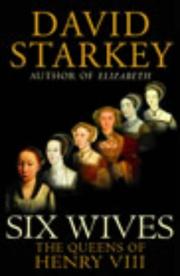
Six wives : the queens of Henry VIII
Provides essential historical background to the haunting tradition.


Katherine of Aragon, the true queen
First published 2016. Subjects: Fiction, Court and courtiers, History, Great britain, fiction, Fiction, historical, general.
eBay marketplace picks
Marketplace Samples
Live-tested eBay searches with available results related to this page.



Endnotes
1.
Source: historic-uk.com
Link:https://www.historic-uk.com/HistoryMagazine/DestinationsUK/Buckden-Palace/
2.
Source: Wikipedia
Title: Buckden Towers
Link:https://en.wikipedia.org/wiki/Buckden_Towers
3.
Source: Wikipedia
Title: Catherine the Great
Link:https://en.wikipedia.org/wiki/Catherine_the_Great
4.
Source: Wikipedia
Title: Catherine of Aragon
Link:https://en.wikipedia.org/wiki/Catherine_of_Aragon
5.
Source: Wikipedia
Title: Kimbolton Castle
Link:https://en.wikipedia.org/wiki/Kimbolton_Castle
6.
Source: youtube.com
Title: Most Haunted Places in Cambridgeshire
Link:https://www.youtube.com/watch?v=zQagAb4eElg
Source snippet
Peterborough Cathedral and the Final Resting Place of Katherine of Aragon...
7.
Source: youtube.com
Title: Peterborough Cathedral and the Final Resting Place of Katherine of Aragon
Link:https://www.youtube.com/watch?v=Vt3CfKxLu5c
Source snippet
The Tomb of Katherine of Aragon Smashed by Conflict, Restored by Pennies...
8.
Source: historicengland.org.uk
Title: heritage at risk 2020
Link:https://historicengland.org.uk/whats-new/news/heritage-at-risk-2020/
Source snippet
Historic EnglandHeritage at Risk in England Revealed in 202015 Oct 2020 — Katherine of Aragon, Henry VIII's first Queen, lived at Buckden...
9.
Source: kimboltoncastle.com
Title: history of the castle
Link:https://kimboltoncastle.com/history-of-the-castle/
Source snippet
Kimbolton CastleHistory of Kimbolton Castle... Katharine of Aragon arrived at Kimbolton in May 1534.... She spent the last months of her...
Published: May 1534
10.
Source: alisonweir.org.uk
Link:https://alisonweir.org.uk/books/bookpages/more-six_tudor_queens.php
11.
Source: heritagegateway.org.uk
Link:https://www.heritagegateway.org.uk/Gateway/Results_Single.aspx?resourceID=1000&uid=MCB845
12.
Source: kimboltoncastle.com
Link:https://kimboltoncastle.com/
13.
Source: heritagecalling.com
Link:https://heritagecalling.com/2023/01/31/10-historic-sites-that-tell-the-story-of-katherine-of-aragon-in-england/
14.
Source: peterborough-cathedral.org.uk
Title: Katherine Of Aragon
Link:https://peterborough-cathedral.org.uk/wp-content/uploads/2024/11/Katherine-Of-Aragon.pdf
15.
Source: historicengland.org.uk
Title: Historic England The Great Tower, Buckden
Link:https://historicengland.org.uk/listing/the-list/list-entry/1130324
16.
Source: historicengland.org.uk
Link:https://historicengland.org.uk/listing/the-list/list-entry/1006855
17.
Source: thetudortravelguide.com
Title: The Tudor Travel Guide Buckden Palace & the Most Obstinate Woman That May Be
Link:https://thetudortravelguide.com/buckden-palace-and-the-most-obstinate-woman-in-the-world/
18.
Source: historicengland.org.uk
Link:https://historicengland.org.uk/listing/the-list/list-entry/1221022
19.
Source: paranormaldatabase.com
Title: Paranormal Database The Paranormal Database
Link:https://www.paranormaldatabase.com/cambridge/campages/cambdata.php?pageNum_paradata=4
20.
Source: hrp.org.uk
Title: katherine of aragon
Link:https://www.hrp.org.uk/hampton-court-palace/history-and-stories/katherine-of-aragon/
21.
Source: kimboltonschool.com
Link:https://kimboltonschool.com/news/commemorative-service-honours-katherine-of-aragon-at-kimbolton-school/
22.
Source: hauntedhosts.com
Link:https://hauntedhosts.com/haunted-places/cambridge/location/7190-catherine-of-aragons-ghost/
23.
Source: facebook.com
Link:https://www.facebook.com/ParanormalFilesuk/posts/kimbolton-castle-the-tragic-silence-of-a-tudor-queenin-the-quiet-cambridgeshire-/1076797914427907/
24.
Source: facebook.com
Link:https://www.facebook.com/groups/346722625356162/posts/27794267000175021/
25.
Source: thetudortravelguide.com
Title: kimbolton castle
Link:https://thetudortravelguide.com/kimbolton-castle/
26.
Source: thetudortravelguide.com
Link:https://thetudortravelguide.com/peterborough-cathedral-and-the-final-resting-place-of-katherine-of-aragon/
27.
Source: historicengland.org.uk
Link:https://historicengland.org.uk/local/locations/cambridgeshire/
28.
Source: historicengland.org.uk
Link:https://historicengland.org.uk/content/docs/advice/building-stones-england/bse-excel-cambridgeshire/
30.
Source: instagram.com
Link:https://www.instagram.com/catherine/?hl=en
31.
Source: wingfieldfamilysociety.org
Title: kimbolton castle
Link:https://wingfieldfamilysociety.org/manors/kimbolton-castle/
32.
Source: getpodcast.com
Link:https://getpodcast.com/se/podcast/the-tudor-travel-show/kimbolton-castle-the-final-days-and-death-of-katherine-of-aragon_d669277b96
33.
Source: thhoh.weebly.com
Link:https://thhoh.weebly.com/gallery.html
34.
Source: ebsco.com
Title: Catherine of Aragon | History | Research Starters
Link:https://www.ebsco.com/research-starters/history/catherine-aragon
35.
Source: greatnorthroad.co.uk
Title: Buckden Palace
Link:https://greatnorthroad.co.uk/buckden-palace
36.
Source: buckdenhistory-shbfo.wordpress.com
Link:https://buckdenhistory-shbfo.wordpress.com/towers/
37.
Source: britainexpress.com
Link:https://www.britainexpress.com/attractions.htm?attraction=2226
38.
Source: paranormaldatabase.com
Link:https://www.paranormaldatabase.com/reports/castledata.php?pageNum_paradata=12
39.
Source: the-tudor-history-travel-show.castos.com
Link:https://the-tudor-history-travel-show.castos.com/episodes/buckden
40.
Source: crazyaboutcastles.com
Link:https://crazyaboutcastles.com/english-castles/kimbolton-castle/
41.
Source: dictionary.cambridge.org
Link:https://dictionary.cambridge.org/vi/pronunciation/english/catherine
42.
Source: youtube.com
Link:https://www.youtube.com/watch?v=Pp8ZhWUGfxE
Additional References
43.
Source: castlesandmanorhouses.com
Link:https://www.castlesandmanorhouses.com/ghosts.php?SelectCountry=England
44.
Source: catherinethegame.com
Link:https://www.catherinethegame.com/
45.
Source: facebook.com
Link:https://www.facebook.com/HRHThePrincessOfWales/
46.
Source: x.com
Link:https://x.com/ENortonHistory/status/1877471252589232355
47.
Source: anglotopia.net
Link:https://anglotopia.net/british-history/great-british-houses-kimbolton-castle/
48.
Source: facebook.com
Link:https://www.facebook.com/hemingforrdbakes/posts/history-lives-at-kimbolton-castle-gates-are-opening-soon/1585879050213625/
49.
Source: facebook.com
Link:https://www.facebook.com/groups/735389799823006/posts/7231319576896630/
50.
Source: facebook.com
Link:https://www.facebook.com/mosthauntedexperienceevents/posts/coming-very-soon-to-most-haunted-experienceexclusive-venue-kimbolton-castle-hunt/1059176452912920/
51.
Source: facebook.com
Link:https://www.facebook.com/mosthauntedexperienceevents/posts/wowwowwowwowkimbolton-castle-is-said-to-be-haunted-by-the-ghost-of-catherine-of-/1059316922898873/
52.
Source: merriam-webster.com
Link:https://www.merriam-webster.com/dictionary/official
Topic Tree