Within Haunted Northamptonshire
Why Do Battlefields Become Ghost Stories?
Naseby's spectral processions turn a decisive Civil War battlefield into one of Northamptonshire's most atmospheric haunted landscapes.
On this page
- The battle and its place in Civil War memory
- Spectral carts, soldiers and field traditions
- Walking the landscape without proving the haunting
Page outline Jump by section
Introduction
Naseby is one of the places where Northamptonshire’s haunted history and national history meet most clearly. The battlefield is not just a vague “spooky field”: it is a registered historic battlefield, the site of the decisive Parliamentarian victory of 14 June 1645, when Sir Thomas Fairfax’s New Model Army broke King Charles I’s main Royalist field army. That documented violence gives the later folklore its power. Stories tell of spectral soldiers, men pushing carts along an old drovers’ road, unexplained cannon fire, and, in some versions, a phantom replay of the battle itself. The strongest evidence is not proof of haunting, but a revealing pattern: Naseby’s ghosts preserve the memory of shock, defeat, bodies, baggage, roads and rural silence long after the military event ended.[historicengland.org.uk]historicengland.org.uklist entryHistoric EnglandBattle of Naseby 1645This battlefield is registered within the Register of Historic Battlefields by Historic England for…
The battle that made the landscape memorable
The Battle of Naseby was fought near the village of Naseby in historic Northamptonshire on 14 June 1645. Historic England lists it on the Register of Historic Battlefields for its special historic interest, while the Battlefields Trust describes it as the morning when Parliament’s New Model Army destroyed the King’s main field army after nearly three years of civil war. That is the essential reason the site lends itself so naturally to ghost tradition: this was not a minor skirmish remembered only by specialists, but a turning point whose consequences reached far beyond the county.[Historic England]historicengland.org.uklist entryHistoric EnglandBattle of Naseby 1645This battlefield is registered within the Register of Historic Battlefields by Historic England for…
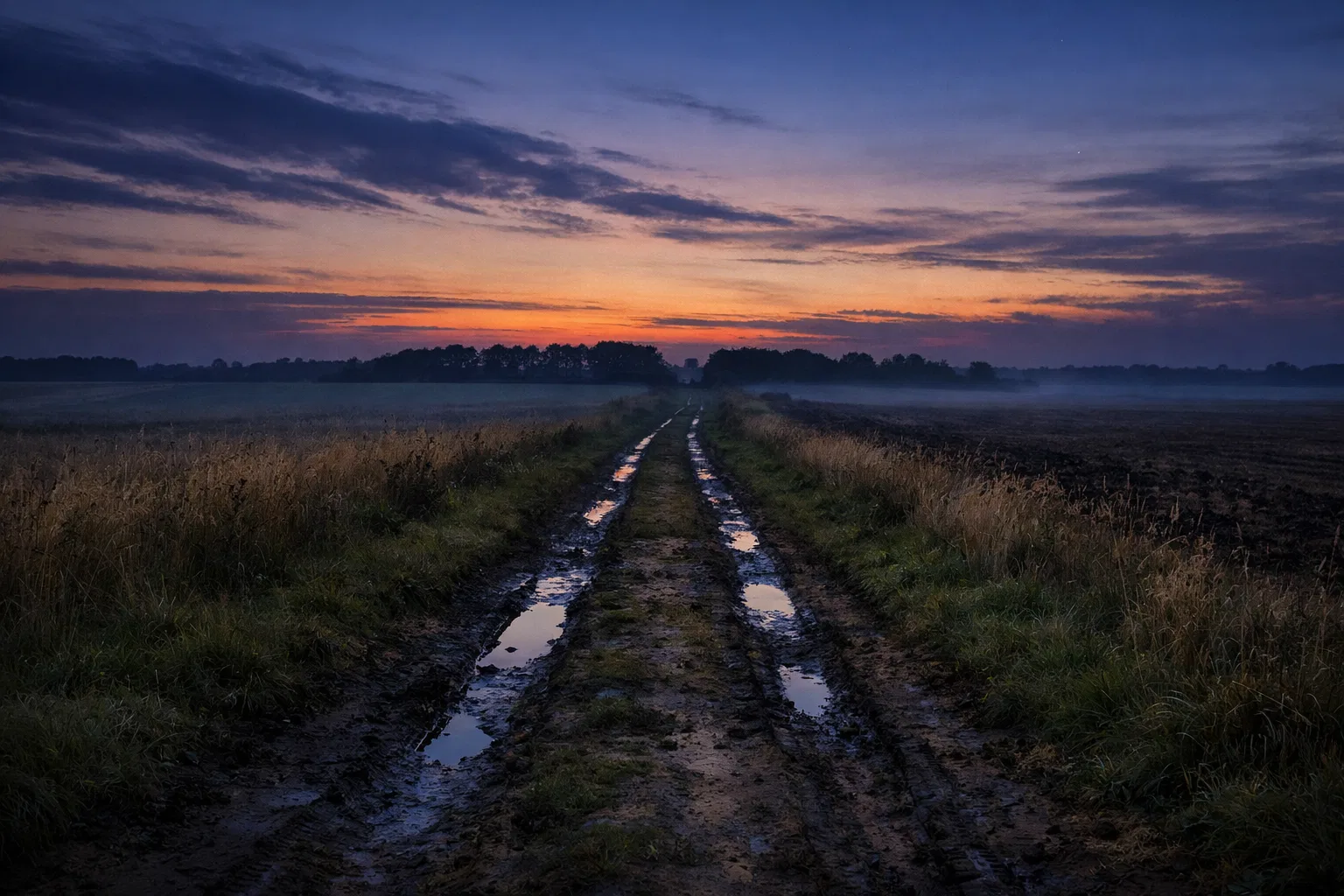
The battlefield’s geography also matters. The English Heritage battlefield report places the New Model Army on a ridge to the south, the Royalists on Dust Hill to the north, with Broad Moor lying between them. Sulby Hedge, ridges, old approaches, viewpoints and lanes make the battle readable as a landscape rather than as a single monument. A visitor does not stand in front of one ruin and imagine the past; they move through open ground where cavalry, infantry, baggage, retreat and pursuit can be mentally reconstructed. That kind of dispersed terrain is especially good at generating “seen at a distance” stories: figures on a road, sounds carried across fields, a procession appearing and vanishing.[Historic England]historicengland.org.ukNew Model Army deployed on a ridge almost 600 feet above sea level to the south and the…Read more…
Naseby also belongs to the wider folklore of Civil War battlefields. Edgehill in Warwickshire is the more famous example of a phantom battle, with seventeenth-century reports of ghostly armies and later retellings of King Charles I sending investigators to hear testimony. Recent scholarship has treated Edgehill and Naseby together as examples of how Civil War spectres changed meaning over time, reflecting anxieties about conflict, memory and national division rather than simply repeating one fixed ghost story.[Taylor & Francis Online]tandfonline.comOpen source on tandfonline.com.
Why do battlefields become ghost stories?
Battlefield ghost stories often begin with a simple emotional logic: where many people died suddenly and violently, the landscape feels unfinished. At Naseby, that logic is sharpened by the battle’s decisive character. The Royalist army was not merely pushed back; it was effectively broken. The National Army Museum summarises the outcome plainly: Charles escaped, but the destruction of his forces meant his ultimate defeat became only a matter of time. Folklore turns that historical rupture into recurring images of men still moving, still carrying, still crossing the field.[National Army Museum]nam.ac.ukOpen source on nam.ac.uk.
The ghost stories also attach to what ordinary history can leave indistinct. Commanders, dates and troop movements are well documented, but the fate of wounded men and the physical aftermath of the battle are harder for most readers to picture. The Civil War Petitions project notes that, although the conduct of the battle and the actions of its leaders are well known, the fate of the wounded at Naseby was much less understood until modern scholarship examined it more closely. Ghost folklore often fills that kind of gap: it gives faces, footsteps and suffering to events that official military history may describe in numbers.[civilwarpetitions.ac.uk]civilwarpetitions.ac.ukthe wounded of nasebythe wounded of naseby
There is also a practical reason. Naseby remains a rural battlefield rather than an enclosed heritage attraction. The Naseby Battlefield Project encourages people to understand the battle by walking the ground, following tours and using viewpoints. That open-air experience is valuable historically, but it also leaves room for atmosphere: wind, fog, field edges, empty lanes, distant farm noise and changing light can all make the past feel unusually close.[Naseby Battlefield]naseby.comOpen source on naseby.com.
Spectral carts, soldiers and field traditions
The best-known Naseby ghost tradition concerns a sombre procession of men, often described as spectral soldiers or Civil War dead, pushing carts down an old drovers’ road on or near the battlefield. Modern Northamptonshire haunting roundups repeat the motif with notable consistency: the figures are not usually grand commanders, but weary, dishevelled men doing grim labour. That detail matters. Carts suggest the aftermath rather than the clash itself — bodies, equipment, wounded men, supplies, or the heavy work of clearing a battlefield.[Rushton Hall]rushtonhall.comRushton Hall Spectral Sightings in NorthamptonshireRushton HallSpectral Sightings in Northamptonshire - Rushton HallIn one sighting from 1949, a young couple taking a rest from a cycle rid…
One widely repeated sighting is dated to 1949. In that version, a young couple resting during a cycle ride reportedly saw a group of shabby men in leather jerkins and high boots who disappeared in front of them. The clothing places the figures in a popular Civil War visual language: boots, jerkins, rough campaigning dress. The story has the shape of a classic rural apparition account — ordinary witnesses, a pause on a journey, figures that seem solid at first, then vanish. It is memorable because the figures are not theatrical; they are workmanlike and tired.[Rushton Hall]rushtonhall.comRushton Hall Spectral Sightings in NorthamptonshireRushton HallSpectral Sightings in Northamptonshire - Rushton HallIn one sighting from 1949, a young couple taking a rest from a cycle rid…
Another strand of the folklore concerns sound rather than sight. Local and paranormal accounts mention cannon fire heard when no visible activity could explain it. Sound-based hauntings are common in battlefield tradition because they can be experienced without a clear visual object: a boom, a clash, a shout, or the impression of movement where the field appears empty. At Naseby, the cannon-fire motif works especially well because the modern landscape is quiet enough for unexplained noise to feel intrusive, yet historically charged enough for the mind to connect it with 1645.[Rushton Hall]rushtonhall.comRushton Hall Spectral Sightings in NorthamptonshireRushton HallSpectral Sightings in Northamptonshire - Rushton HallIn one sighting from 1949, a young couple taking a rest from a cycle rid…
There are also broader claims of a phantom battle seen or heard on the anniversary of Naseby. These are more difficult to pin down than the cart procession, and they appear to be shaped partly by the stronger Edgehill tradition of ghostly armies replaying combat in the sky. That does not make them worthless as folklore, but it does mean they should be read carefully. The “battle replay” is a familiar Civil War ghost motif; the cart procession feels more distinctively attached to Naseby’s roads, rural setting and aftermath.[Historic UK]historic-uk.comPhantom Battle of EdgehillPhantom Battle of Edgehill
The old road matters as much as the soldiers
The drovers’ road detail is one of the most important parts of the Naseby tradition. Roads in ghost stories are rarely neutral. They are places of passage, repetition and encounter: riders, carts, soldiers, prisoners, wounded men, messengers and villagers all leave the field by routes rather than by abstract map arrows. A battlefield ghost seen “on the road” is therefore not just a decorative apparition; it is a memory of movement.
At Naseby, this road-based folklore fits the history better than a simple image of two armies frozen in combat. The battle spread across ridges, hedges and open ground, and its aftermath included pursuit, captured infantry, lost artillery, baggage and the King’s abandoned papers. The Battlefields Trust stresses the scale of the Royalist collapse, with only a limited number escaping the field, while Historic England’s battlefield material underlines how topographical features help identify the battle’s course. The folklore of carts and trudging figures gives that collapse a human form.[Battlefields Trust]battlefieldstrust.comBattlefields Trust Battle of NasebyBattlefields TrustBattle of Naseby - The Civil WarsThe battle of Naseby was fought on the morning of the 14th June 1645. In the open fiel…
It also explains why the haunting is atmospheric rather than showy. Naseby’s ghosts are not famous for a named lady in a room, a cursed object, or a theatrical apparition at a window. They belong to an open landscape. The viewer’s attention is drawn to distance, direction and disappearance: men coming along a road, moving as if on old business, then no longer there. That is exactly the kind of story that can survive in local memory because it is easy to retell while walking the same ground.
Civil War folklore beyond the battlefield
Naseby’s supernatural traditions do not stop with anonymous soldiers. Some modern retellings include the ghost of Thomas Wentworth, Earl of Strafford, appearing to King Charles I before the battle and warning him that defeat was coming. This is a different kind of Civil War folklore: not a battlefield apparition seen by villagers centuries later, but a moral and political ghost story attached to the King’s conscience. Strafford had been executed in 1641 after Charles gave way to pressure, so the supposed visitation casts Naseby as judgement as well as military disaster.[British Histories]britishhistories.com337 the ghosts of naseby337 the ghosts of naseby
Whether or not one treats that story as late legend, it shows how Civil War ghosts often carry blame. Battlefield apparitions usually ask, “What happened to the dead?” Political apparitions ask, “Who caused this?” Strafford’s ghost, in that sense, belongs to the same emotional world as the spectral soldiers: both turn national crisis into a haunting, but one does so through guilt at the top and the other through suffering on the ground.
Naseby also sits naturally beside other Northamptonshire haunted-history subjects. Delapré Abbey is linked with the Battle of Northampton and monastic traditions; Fotheringhay and Oundle carry Mary Queen of Scots associations; Rockingham and Rushton hold country-house legends. Naseby is different because its central haunted object is not a building but a field system, a route network and a memory of national rupture. It gives the county’s ghost map a battlefield voice.
How credible are the haunting accounts?
A careful reading separates three kinds of evidence. First, the battle itself is strongly documented. Historic England, the Battlefields Trust, the National Army Museum and the Naseby Battlefield Project all provide reliable grounding for the date, location, military importance and landscape interpretation of the site. These sources do not prove ghosts, but they confirm why the place became a plausible home for them.[historicengland.org.uk]historicengland.org.uklist entryHistoric EnglandBattle of Naseby 1645This battlefield is registered within the Register of Historic Battlefields by Historic England for…
Second, the ghost traditions are mostly preserved in local-history, paranormal, folklore and heritage-tourism retellings. These sources are useful for understanding what stories circulate, but they often repeat one another and do not always provide original witness statements, archival references or exact locations. The 1949 cycling-couple account, for example, is vivid and widely repeated, but in the accessible online record it usually appears as a retold anecdote rather than as a fully documented contemporary report.[Rushton Hall]rushtonhall.comRushton Hall Spectral Sightings in NorthamptonshireRushton HallSpectral Sightings in Northamptonshire - Rushton HallIn one sighting from 1949, a young couple taking a rest from a cycle rid…
Third, modern academic work helps explain why such stories endure. The 2024 article on Edgehill, Naseby and Civil War ghosts argues that these spectres have shifted in significance from the seventeenth to the twentieth century, expressing changing concerns about war, memory and social trauma. That does not validate a particular apparition; it explains why people keep finding meaning in them.[Taylor & Francis Online]tandfonline.comOpen source on tandfonline.com.
The most balanced conclusion is that Naseby’s ghosts are best treated as folklore rooted in a real and exceptionally important battlefield. The haunting claims are not established facts, but neither are they random inventions detached from place. They draw their force from documented violence, rural topography, anniversary memory, repeated local retelling and the uneasy afterlife of the English Civil War.

Walking the landscape without proving the haunting
The most rewarding way to approach Naseby is not to arrive looking for proof, but to read the landscape with the stories in mind. The Naseby Battlefield Project’s tours and interpretation encourage visitors to understand the battle by walking the ground, while local walking guides and parish material point readers towards viewpoints, paths and battlefield boards. That physical movement matters: the ghost stories make more sense when the visitor has felt the distance between ridges, the exposure of open ground and the quietness of the lanes.[naseby.com]naseby.comOpen source on naseby.com.
A folklore-aware walk asks different questions from a ghost hunt. Where would a cart procession feel believable? Which roads seem old enough to carry a story? Where might sound travel strangely across fields? Where does the modern view help or hinder the imagination of 1645? These questions do not require anyone to accept the supernatural claim. They allow the visitor to see how a documented battlefield becomes a haunted landscape.
There is also a responsibility in the way the site is experienced. Naseby is working countryside as well as heritage ground, and registered battlefields are protected because their topography, archaeology and setting help preserve national memory. Historic England’s wider battlefield work stresses that such landscapes can be vulnerable even when little is visible above ground. The eerie appeal of Naseby should therefore sit alongside respect for paths, farmland, interpretation points and the dead the stories are trying, however imperfectly, to remember.[Historic England]historicengland.org.ukOpen source on historicengland.org.uk.
What makes Naseby one of Northamptonshire’s strongest haunted landscapes?
Naseby stands out because its folklore has a clear mechanism. A decisive battle created a charged landscape; the landscape retained roads, ridges and field names; later memory turned military aftermath into apparitions of movement, labour and sound. The ghosts are powerful precisely because they are not over-explained. A line of men pushing carts along an old road says more about the aftermath of war than a neat legend with a named hero and a tidy ending.
For Northamptonshire’s haunted-history map, Naseby provides the county’s great Civil War haunting. It is less enclosed than an inn, less architectural than a castle, and less personal than a family apparition. Its ghost stories belong to open air, old routes and national defeat. Whether heard as folklore, local legend, psychical claim or atmospheric heritage, they show how battlefields become haunted not only because people died there, but because later generations continue to feel that something unresolved is still crossing the fields.
Amazon book picks
Further Reading
Books and field guides related to Why Do Battlefields Become Ghost Stories?. Use these as the next step if you want deeper reading beyond the article.
ENGLISH CIVIL WAR: A PEOPLE'S HISTORY
Explains the wider conflict that gives Naseby its significance.
eBay marketplace picks
Marketplace Samples
Live-tested eBay searches with available results related to this page.




Endnotes
1.
Source: naseby.com
Link:https://naseby.com/the-battle/the-battle-page-2/
2.
Source: historic-uk.com
Title: Phantom Battle of Edgehill
Link:https://www.historic-uk.com/HistoryUK/HistoryofEngland/Phantom-Battle-of-Edgehill/
3.
Source: naseby.com
Link:https://naseby.com/the-consequences/the-consequences-page-2/
4.
Source: civilwarpetitions.ac.uk
Title: the wounded of naseby
Link:https://www.civilwarpetitions.ac.uk/blog/the-wounded-of-naseby/
5.
Source: naseby.com
Link:https://naseby.com/
6.
Source: military.com
Title: only officially recorded ghosts are centuries old british battle
Link:https://www.military.com/history/only-officially-recorded-ghosts-are-centuries-old-british-battle.html
7.
Source: naseby.com
Link:https://naseby.com/380-anniversary-event/
8.
Source: historic-uk.com
Title: The Battle of Naseby
Link:https://www.historic-uk.com/HistoryMagazine/DestinationsUK/The-Battle-of-Naseby/
9.
Source: youtube.com
Title: Exploring The Naseby Battlefield (The Cromwell Monument)
Link:https://www.youtube.com/watch?v=bhOQInokcLE
Source snippet
The Battle of Naseby - Battlefields of Britain Episode 1...
10.
Source: youtube.com
Title: The Battle of Naseby
Link:https://www.youtube.com/watch?v=9LRUhbT6cyo
Source snippet
Naseby: The Grim Battle That Decided The English Civil War...
11.
Source: historicengland.org.uk
Title: list entry
Link:https://historicengland.org.uk/listing/the-list/list-entry/1000023
Source snippet
Historic EnglandBattle of Naseby 1645This battlefield is registered within the Register of Historic Battlefields by Historic England for...
12.
Source: battlefieldstrust.com
Title: Battlefields Trust Battle of Naseby
Link:https://www.battlefieldstrust.com/resource-centre/battleview.asp?BattleFieldId=51
Source snippet
Battlefields TrustBattle of Naseby - The Civil WarsThe battle of Naseby was fought on the morning of the 14th June 1645. In the open fiel...
Published: June 1645
13.
Source: rushtonhall.com
Title: Rushton Hall Spectral Sightings in Northamptonshire
Link:https://www.rushtonhall.com/spectral-sightings-northamptonshire/
Source snippet
Rushton HallSpectral Sightings in Northamptonshire - Rushton HallIn one sighting from 1949, a young couple taking a rest from a cycle rid...
14.
Source: historicengland.org.uk
Link:https://historicengland.org.uk/content/docs/listing/battlefields/naseby/
Source snippet
New Model Army deployed on a ridge almost 600 feet above sea level to the south and the...Read more...
15.
Source: tandfonline.com
Link:https://www.tandfonline.com/doi/full/10.1080/0047729X.2024.2428450
16.
Source: nam.ac.uk
Link:https://www.nam.ac.uk/explore/battle-naseby
17.
Source: britishhistories.com
Title: 337 the ghosts of naseby
Link:https://britishhistories.com/f/337-the-ghosts-of-naseby
18.
Source: sibbertoftparishcouncil.gov.uk
Link:https://sibbertoftparishcouncil.gov.uk/civil-war-trail
19.
Source: historicengland.org.uk
Link:https://historicengland.org.uk/listing/heritage-at-risk/registered-battlefields-at-risk/
20.
Source: battlefieldstrust.com
Link:https://www.battlefieldstrust.com/resource-centre/battlefieldsuk/periodpageview.asp?pageid=530&parentid=184
21.
Source: tandfonline.com
Link:https://www.tandfonline.com/doi/abs/10.1179/1741612414Z.00000000029?role=tab&scroll=top&tab=permissions
22.
Source: tandfonline.com
Link:https://www.tandfonline.com/doi/abs/10.1080/0047729X.2024.2428450
23.
Source: historicengland.org.uk
Title: list entry
Link:https://historicengland.org.uk/listing/the-list/list-entry/1000017
24.
Source: warlordgames.com
Link:https://www.warlordgames.com/battlefield-naseby/
25.
Source: battlefieldstrust.com
Link:https://www.battlefieldstrust.com/news.asp?NewsArticleID=321
26.
Source: battlefieldstrust.com
Link:https://www.battlefieldstrust.com/media/556.pdf
27.
Source: battlefieldstrust.com
Title: History from the Field
Link:https://www.battlefieldstrust.com/media/559.pdf
28.
Source: keepyourpowderdry.co.uk
Link:https://www.keepyourpowderdry.co.uk/2019/03/naseby-revisited-visitors-guide.html
29.
Source: Wikipedia
Title: Battle of Naseby
Link:https://en.wikipedia.org/wiki/Battle_of_Naseby
Additional References
30.
Source: researchgate.net
Link:https://www.researchgate.net/publication/265481508_BELIEF_IN_GHOSTS_IN_POST-WAR_ENGLAND
31.
Source: instagram.com
Link:https://www.instagram.com/p/DP6sMrTjDyb/
32.
Source: merriam-webster.com
Link:https://www.merriam-webster.com/dictionary/battle
33.
Source: facebook.com
Link:https://www.facebook.com/colchestercivicsociety/posts/onthisday-29-june-1648-during-the-siegeofcolchester-the-house-of-the-mayor-henry/1333382698910482/
34.
Source: archive.org
Link:https://archive.org/download/crosscountry00thor/crosscountry00thor.pdf
35.
Source: gutenberg.org
Link:https://www.gutenberg.org/files/40498/40498-h/40498-h.htm
36.
Source: facebook.com
Link:https://www.facebook.com/bbcsop/posts/did-you-know-that-quakerism-started-in-england-during-the-aftermath-of-the-engli/1088137716312108/
37.
Source: historynewsnetwork.org
Link:https://www.historynewsnetwork.org/article/english-civil-war-ghost-captured-on-film-by-parano
38.
Source: espaisroca.com
Link:https://espaisroca.com/explore-cromwell-monument-just-a-short-drive-from-the-loft/
39.
Source: ourwarwickshire.org.uk
Link:https://www.ourwarwickshire.org.uk/content/article/ghostly-happenings-after-the-battle-of-edgehill
Topic Tree