Where Cromartyshire's Ghost Stories Still Gather
Cromartyshire is one of the most awkward historic counties to write about as a haunted landscape, because it was never a neat block of territory. Its “old shire” lay around Cromarty on the Black Isle, but later Cromartyshire also included scattered detached lands across Ross, including Coigach, Ullapool, Strathpeffer and other fragments.
Page outline Jump by section
Introduction
The most important source is Hugh Miller’s Scenes and Legends of the North of Scotland; or, The Traditional History of Cromarty, first published in the nineteenth century and rooted in oral accounts Miller heard from older local people. Its stories are atmospheric, but they are not modern witness files or proof of hauntings. They are best read as local memory: murder, fear, bereavement, sea danger, old religious belief and the unsettling spaces between town, wood, shore and churchyard.[Reading Rooms]readingroo.msScenes and Legends of the North of Scotland | Project Gutenberg…
What makes Cromartyshire’s ghost lore different?
Cromartyshire’s haunted character is quieter than the tourism-friendly ghost trails of Edinburgh, Stirling or York. There is no single “most haunted castle” brand dominating the county. Instead, the most substantial material survives through a local writer who treated tradition as something fragile: Miller explicitly said he was recording oral knowledge before it disappeared, describing old men and women as his “books” and warning that once tradition had fallen it could not easily be rekindled.[Reading Rooms]readingroo.msScenes and Legends of the North of Scotland | Project Gutenberg…
That gives Cromartyshire’s ghost stories a distinctive feel. They are not usually theatrical tales of clanking armour and named castle phantoms. They belong to everyday landscapes: a cottage room, a postman’s road through dark woods, the edge of a graveyard, a moorland cairn, a shore route and a ruined chapel. The supernatural is often attached to a social anxiety: a promise broken to the dead, a suspicious death, a family wrong, a sailor lost at sea, or the fear that a place remembers what official records did not preserve.[Reading Rooms]readingroo.msScenes and Legends of the North of Scotland | Project Gutenberg…
The county’s geography also complicates the picture. Historic Cromartyshire included Cromarty itself, Coigach and Ullapool on the west coast, and Strathpeffer inland; the Gazetteer of British Place Names describes it as a Highland county of “highly unusual form”, with parts scattered across Ross-shire from east to west. For a haunted-history reader, that means Cromartyshire overlaps naturally with Ross-shire traditions, Black Isle folklore, Mackenzie family history and wider Highland second-sight legends.[Gazetteer]gazetteer.org.ukOpen source on gazetteer.org.uk.
The Cromarty sourcebook: Hugh Miller’s haunted town
Miller’s Scenes and Legends is central because it preserves a named local tradition rather than a vague modern list. The book’s table of contents alone shows the range of material: “The Churchyard Ghost”, “The Broken Promise”, “The Green Lady”, “Munro the Post”, “The Mermaid”, “The Washing of the Mermaid”, “The Dropping Cave”, “The Poor Lost Lad” and other stories rooted in Cromarty and its neighbouring parishes.[Reading Rooms]readingroo.msScenes and Legends of the North of Scotland | Project Gutenberg…
Miller was not simply repeating tales as established fact. He often framed them as beliefs, inherited stories or illustrations of the “wilder beliefs” of earlier generations. In the chapter on the churchyard ghost, he argues that belief in the churchyard spectre had a deep hold on human nature, whether true or false. He treats the ghost story as a moral and imaginative force: something that helped communities speak about guilt, death, promise and unease.[Reading Rooms]readingroo.msScenes and Legends of the North of Scotland | Project Gutenberg…
That approach is useful for Cromartyshire as a whole. The stories are credible as folklore and social memory, not as confirmed paranormal events. Miller gives names, places and narrative detail, but he is still working with oral tradition, family recollection and local storytelling. The strongest reading is not “this proves Cromartyshire is haunted”, but “this shows how people in and around Cromarty imagined the dead as still entangled with roads, rooms, woods and duties left undone.”
The dead miller in Navity woods
The most vivid Cromartyshire ghost story is the apparition of the dead miller of Resolis, encountered by Saunders Munro, a postman, on his way down towards Cromarty through the Navity woods. Miller places the story after a suspicious death on the Maolbuie moor, where a body was found with uncertain signs around the neck but no formal investigation. The corpse was buried, and a small pile of stones marked the place where it had been found.[Reading Rooms]readingroo.msScenes and Legends of the North of Scotland | Project Gutenberg…
A few weeks later, Saunders is said to have seen what he first took for a living acquaintance. The figure then became recognisable as the dead miller, dressed in Highland clothing, with details so precise that Miller notes the tartan, hose garter and brass pin. The apparition reportedly walked beside Saunders to the gate of a burying-ground above Cromarty, returned on later evenings, and finally tried to speak near the boundary between Cromarty House grounds and the old parish churchyard.[Reading Rooms]readingroo.msScenes and Legends of the North of Scotland | Project Gutenberg…
The story is powerful because it behaves like a crime-memory tale. The haunting is not random: it follows a death that the community cannot explain and appears to seek speech or recognition. Just as important is Miller’s inclusion of scepticism inside the story. The parish minister reportedly asked about Saunders’s nerves and stomach and gave advice resembling medical treatment; an elder took the matter more seriously and accompanied him. After that, Saunders did not see the apparition again.[Reading Rooms]readingroo.msScenes and Legends of the North of Scotland | Project Gutenberg…
For a modern reader, that built-in tension is the point. The tale preserves both possibilities that haunted rural communities often held at once: perhaps the witness was ill, frightened and suggestible; perhaps the dead had unfinished business. Either way, Navity woods became memorable because the story binds a named route, a named witness, a troubling death and an unresolved silence.
Cromarty House, the old castle and the haunted tunnel
Cromarty House is one of the county’s strongest haunted-place candidates, not because official records certify a ghost, but because the site layers castle, mansion, graveyard, tunnel, family history and local rumour in one compact landscape. Historic Environment Scotland records that Cromarty Castle stood on high ground near Cromarty, belonged to the Urquhart family, served as the administrative centre of the small sheriffdom of Cromarty, and included a substantial fifteenth-century L-plan tower with later domestic additions.[Historic Environment Scotland]portal.historicenvironment.scotOpen source on historicenvironment.scot.
The later house and its designed landscape sit among features that naturally attract ghost stories: the castle site, Chapel Burn, the graveyard of St Regulus, woodland paths, the old family vault, an ice house, a walled garden and a late eighteenth-century vaulted servants’ tunnel leading underground towards the public road. Historic Environment Scotland describes the designed landscape as archaeologically and scenically outstanding, with the castle site lying near the house above the Chapel Burn.[Historic Environment Scotland]portal.historicenvironment.scotOpen source on historicenvironment.scot.
Local and travel writing now often singles out the servants’ tunnel as an eerie place. Subterranea Britannica identifies the Cromarty House servants’ tunnel as a nineteenth-century passage used by servants and tradesmen to reach the house without disturbing the owners, while local travel accounts note that the disused tunnel is rumoured to be haunted.[Subterranea Britannica]subbrit.org.ukcromarty house servants tunnelcromarty house servants tunnel
The difference between evidence and atmosphere is important here. The tunnel is a real historic feature; the haunting is a rumour. Yet the rumour makes cultural sense. Underground service passages often gather stories because they mark hidden labour, class separation and restricted movement. At Cromarty House, that feeling is intensified by the vanished castle, the nearby graveyard and Miller’s own placement of ghostly encounters around the Ladies’ Walk and the boundary between policies and burial ground.[Reading Rooms]readingroo.msScenes and Legends of the North of Scotland | Project Gutenberg…
The churchyard ghost and the haunted cottage room
One of Miller’s most revealing passages is not a grand public haunting but a domestic one. In “The Churchyard Ghost”, he describes the old room in which he is writing as a place that had seen generations pass through births, marriages, wakes, joys and griefs. He then lists the family stories attached to it: a sheeted figure seen at a door, distressing sea sounds heard at a window, strange voices, footsteps, and a shadowy severed hand.[Reading Rooms]readingroo.msScenes and Legends of the North of Scotland | Project Gutenberg…
This is Cromartyshire haunting at its most intimate. The ghost is not simply “in the house”; it is in the memory of the house. Miller’s details turn the room into a vessel of family history, where every threshold has accumulated meaning. For readers interested in haunted travel, this also explains why Hugh Miller’s Birthplace is more than a literary site. The Friends of Hugh Miller note that the Cromarty cottage where Miller was born in 1802 dates from around 1698 and that the site’s interpretation includes some of Miller’s folk tales.[thefriendsofhughmiller.org.uk]thefriendsofhughmiller.org.ukThe Friends of Hugh Miller | Museum and GardensThe Friends of Hugh Miller | Museum and Gardens
The modern visitor should not expect a commercial ghost attraction. The value is subtler: Miller’s birthplace connects the physical Cromarty streetscape with the source tradition that preserved much of the area’s supernatural lore. The cottage helps locate the stories in the kind of low-ceilinged domestic world where wakes, sea anxieties and family apparitions could become part of ordinary memory.[thefriendsofhughmiller.org.uk]thefriendsofhughmiller.org.ukThe Friends of Hugh Miller | Museum and GardensThe Friends of Hugh Miller | Museum and Gardens
The mermaid of Loch Slin and disaster folklore
Not every eerie Cromartyshire-related tradition is a ghost in human form. Miller’s “Washing of the Mermaid” is a disaster omen tale set near Loch Slin, around the neighbouring Tarbat and Fearn area rather than the core town of Cromarty. A young woman returning from harvest work sees a female figure in the water washing bloodied garments; soon afterwards, the roof of the old Abbey of Fearn collapses during worship, burying part of the congregation.[Reading Rooms]readingroo.msScenes and Legends of the North of Scotland | Project Gutenberg…
The story works like many older omen traditions: the supernatural figure is not the cause of the disaster but its warning sign. The bloodied washing gives visible form to an event that has not yet happened. The setting matters too: reeds, still water, Sabbath quiet, a ruined-looking old building and a vulnerable young witness combine to make the place feel suspended between daily life and catastrophe.[Reading Rooms]readingroo.msScenes and Legends of the North of Scotland | Project Gutenberg…
For Cromartyshire’s page, this kind of story is worth including because it shows the broader folklore world around Cromarty. The region’s supernatural imagination was not limited to dead people returning. It also included second sight, omens, sea-beings, uncanny sounds, premonitions and warning apparitions. That wider context helps explain why a postman’s ghost, a mermaid omen and a haunted tunnel can sit naturally in the same local tradition.
Hugh Rose, thrown papers and the colonial shadow
A later ghost story preserved by Tain & District Museum brings a different kind of haunting into the Cromarty orbit. The article reproduces a short story from the North Star and Farmers’ Chronicle of November 1899 concerning Hugh Rose, grandfather of the then laird of Cromarty. Rose is described as having amassed a fortune in the West Indies through slavery, bought estates in his native county, quarrelled, litigated and died amid his legal papers.[tainmuseum.org.uk]tainmuseum.org.ukA Ghost Story | Articles | Tain & District MuseumA Ghost Story | Articles | Tain & District Museum
After his death, the story says, people avoided his room because bundles of legal papers were thrown about by an invisible hand, as though an angry man were searching for something. It later emerged, according to the account, that an important deed on which Rose relied could not be found.[tainmuseum.org.uk]tainmuseum.org.ukA Ghost Story | Articles | Tain & District MuseumA Ghost Story | Articles | Tain & District Museum
This is a strikingly modern-feeling haunting because it is not just about a restless individual. It attaches the supernatural to property, documents, litigation, colonial money and moral unease. The ghostly action is almost bureaucratic: papers fly, a deed is missing, and the dead man’s power seems trapped in legal disorder. The story should be handled carefully, because it is a newspaper ghost tale reproduced much later, but it shows how Cromarty’s haunted memory can include wealth and exploitation as well as lonely woods and old graveyards.
Castle Leod, Strathpeffer and the Mackenzie fringe
Castle Leod, near Strathpeffer, sits within the wider historic Cromartyshire-and-Ross landscape rather than the core Cromarty town tradition. The castle’s own website describes it as the seat of Clan Mackenzie, a family home for more than 500 years, near the Victorian spa town of Strathpeffer, and closely associated with Highland political history, Jacobitism and later heritage tourism.[Castle Leod]castleleod.org.ukCastle Leod Welcome to Castle Leod. Seat of Clan MackenzieCastle Leod Welcome to Castle Leod. Seat of Clan Mackenzie
It is tempting to treat every old Highland castle as haunted, but the evidence for a specific, well-sourced Castle Leod ghost tradition is thinner than for Miller’s Cromarty stories. Its importance here is contextual. Castle Leod connects Cromartyshire’s scattered geography with the Mackenzie family, Strathpeffer, Jacobite memory and the broader Highland appetite for ancestral tales. It also sits near the orbit of the Brahan Seer tradition, one of the most famous Highland second-sight legends, though that tradition properly belongs to the wider Ross-shire and Easter Ross world rather than to Cromarty alone.[Gazetteer]gazetteer.org.ukOpen source on gazetteer.org.uk.
The Brahan Seer is a useful comparison because it shows the same evidential problem in sharper form. Later sources present him as a great Highland prophet, but scholarship has questioned how much can be securely known about the historical Coinneach Odhar and how much was shaped by later folklore-making. That is the right caution to bring back to Cromartyshire: these stories are culturally important even when their factual foundations are uncertain.[Wikipedia]WikipediaBrahan SeerBrahan Seer
How credible are Cromartyshire’s hauntings?
The fairest answer is that Cromartyshire has strong folklore evidence, moderate place-based tradition, and weak proof of literal hauntings. Miller’s accounts are valuable because they are early, local and detailed. They preserve named places and social settings rather than generic “haunted Scotland” material. But they are still literary versions of oral tales, shaped by memory, moral reflection and nineteenth-century taste.[Reading Rooms]readingroo.msScenes and Legends of the North of Scotland | Project Gutenberg…
Some stories contain their own sceptical explanations. In the Navity woods case, the minister’s response points towards nerves, health and fear; the elder’s response preserves the older supernatural seriousness of the community. That split is exactly what makes the tale useful. It records not only what was seen, but how people argued about what seeing meant.[Reading Rooms]readingroo.msScenes and Legends of the North of Scotland | Project Gutenberg…
The built environment also matters. Cromarty House, St Regulus’ graveyard, the servants’ tunnel, Chapel Burn and the vanished castle are all real features in a documented historic landscape. Their haunted reputation is less securely documented than their history, but the physical setting explains why stories settled there. Old boundaries, buried buildings, service passages and graveyards are natural magnets for folklore because they make the past feel close, hidden and unfinished.[Historic Environment Scotland]portal.historicenvironment.scotOpen source on historicenvironment.scot.
Visiting Cromartyshire with its ghost stories in mind
A haunted Cromartyshire route is best approached as eerie local history rather than paranormal tourism. Cromarty itself is the anchor: Hugh Miller’s Birthplace, Cromarty House’s surrounding landscape, the old castle site, the St Regulus graveyard area, the servants’ tunnel and the roads towards Navity woods all connect to the strongest source tradition.[thefriendsofhughmiller.org.uk]thefriendsofhughmiller.org.ukThe Friends of Hugh Miller | Museum and GardensThe Friends of Hugh Miller | Museum and Gardens
The wider historic county then opens out in fragments. Strathpeffer and Castle Leod bring in Mackenzie family history and Highland estate culture; Coigach and Ullapool remind readers that Cromartyshire’s old map stretches far beyond the Black Isle; neighbouring Tarbat and Fearn show how Cromarty’s supernatural tradition crossed parish and route boundaries.[Gazetteer]gazetteer.org.ukOpen source on gazetteer.org.uk.
The most rewarding way to read the county is not to hunt for a single headline ghost. Cromartyshire’s haunted history is a web of small, stubborn stories: a dead miller keeping pace with a terrified postman, an old room full of family apparitions, a tunnel whose real purpose has become uncanny, a mermaid washing bloodied clothes before disaster, and legal papers thrown about after a laird’s death. Its ghosts are less about spectacle than memory — the feeling that roads, rooms, woods and documents may keep hold of what ordinary history leaves unresolved.
Amazon book picks
Further Reading
Books and field guides related to Where Cromartyshire's Ghost Stories Still Gather. Use these as the next step if you want deeper reading beyond the article.
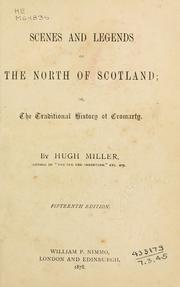
Scenes and legends of the north of Scotland
Foundational source for Cromarty traditions.
The Mammoth Book of Scottish Ghost Stories
Complements Cromartyshire's quieter traditions.
eBay marketplace picks
Marketplace Samples
Live-tested eBay searches with available results related to this page.
Endnotes
1.
Source: readingroo.ms
Title: Reading Rooms
Link:https://readingroo.ms/7/1/3/2/71325/71325-h/71325-h.htm
Source snippet
Scenes and Legends of the North of Scotland | Project Gutenberg...
2.
Source: thefriendsofhughmiller.org.uk
Title: The Friends of Hugh Miller | Museum and Gardens
Link:https://www.thefriendsofhughmiller.org.uk/museum-and-gardens
3.
Source: tainmuseum.org.uk
Title: A Ghost Story | Articles | Tain & District Museum
Link:https://www.tainmuseum.org.uk/article.php?id=313
4.
Source: Wikipedia
Title: Brahan Seer
Link:https://en.wikipedia.org/wiki/Brahan_Seer
5.
Source: thefriendsofhughmiller.org.uk
Title: cromarty house
Link:https://www.thefriendsofhughmiller.org.uk/directory/cromarty-house
6.
Source: Wikipedia
Link:https://en.wikipedia.org/wiki/Cromartyshire
7.
Source: Wikipedia
Title: Cromarty Castle
Link:https://en.wikipedia.org/wiki/Cromarty_Castle
8.
Source: Wikipedia
Title: Castle Leod
Link:https://en.wikipedia.org/wiki/Castle_Leod
9.
Source: Wikipedia
Title: Castle Leod
Link:https://de.wikipedia.org/wiki/Castle_Leod
10.
Source: clan.com
Title: Folklore Thursday: The Brahan Seer
Link:https://clan.com/blog/folklore-thursday-the-brahan-seer?srsltid=AfmBOoo8z-6WXsykwYu-HDia57ONSzJGABgWvmhCND1tMc3AvSenXLVH
11.
Source: youtube.com
Title: Walk around Cromary, Black Isle, Highlands
Link:https://www.youtube.com/watch?v=ZowHMGRgyQ0
Source snippet
CROMARTY - Picturesque Town In The HIGHLANDS - Scotland Walking Tour | 4K | 60FPS...
12.
Source: youtube.com
Link:https://www.youtube.com/watch?v=F233IiDM-PI
13.
Source: gazetteer.org.uk
Link:https://gazetteer.org.uk/search?place=Cromartyshire&type=em
14.
Source: portal.historicenvironment.scot
Link:https://portal.historicenvironment.scot/apex/f?p=1505%3A300%3A%3A%3A%3A%3AVIEWTYPE%2CVIEWREF%3Adesignation%2CGDL00120
15.
Source: subbrit.org.uk
Title: cromarty house servants tunnel
Link:https://www.subbrit.org.uk/sites/cromarty-house-servants-tunnel/
16.
Source: castleleod.org.uk
Title: Castle Leod Welcome to Castle Leod. Seat of Clan Mackenzie
Link:https://www.castleleod.org.uk/
17.
Source: wikishire.co.uk
Link:https://wikishire.co.uk/wiki/Cromartyshire
18.
Source: blog.historicenvironment.scot
Title: the wraith at fort george a ghost story for christmas
Link:https://blog.historicenvironment.scot/2022/12/the-wraith-at-fort-george-a-ghost-story-for-christmas/
19.
Source: historicenvironment.scot
Link:https://www.historicenvironment.scot/
20.
Source: portal.historicenvironment.scot
Link:https://portal.historicenvironment.scot/apex/f?p=1505%3A300%3A%3A%3A%3A%3AVIEWTYPE%2CVIEWREF%3Adesignation%2CLB1820
21.
Source: facebook.com
Link:https://www.facebook.com/highlandpara/photos/the-ghost-of-the-cromarty-millernavity-wood-near-cromarty-used-to-be-haunted-by-/800005068832119/
22.
Source: facebook.com
Link:https://www.facebook.com/highlandpara/photos/the-cromarty-mermaidaccording-to-hugh-millers-scenes-and-legends-of-the-north-of/899813458851279/
23.
Source: facebook.com
Link:https://www.facebook.com/groups/scotlandsscenery/posts/25688830544042976/
24.
Source: gutenberg.org
Title: 71325 h
Link:https://www.gutenberg.org/files/71325/71325-h/71325-h.htm
25.
Source: trove.scot
Link:https://www.trove.scot/place/14433
26.
Source: historichouses.org
Link:https://www.historichouses.org/house/castle-leod/
27.
Source: gazetteer.org.uk
Link:https://gazetteer.org.uk/place/Cromarty_House%2C_Cromartyshire_320450
28.
Source: tripadvisor.com
Title: Castle Leod
Link:https://www.tripadvisor.com/Attraction_Review-g551820-d7927568-Reviews-Castle_Leod-Strathpeffer_Ross_and_Cromarty_Scottish_Highlands_Scotland.html
29.
Source: spookyscotland.net
Title: brahan seer
Link:https://spookyscotland.net/brahan-seer/
30.
Source: clan-mackenzie.jimdoweb.com
Title: castle leod
Link:https://clan-mackenzie.jimdoweb.com/english/castles/castle-leod/
Additional References
31.
Source: youtube.com
Title: The Life and Times of Hugh Miller | Scotland’s History
Link:https://www.youtube.com/watch?v=wGWXzPM7dlQ
Source snippet
The Historic Black Isle Village of Cromarty...
32.
Source: facebook.com
Link:https://www.facebook.com/LegendsofRuneterra/posts/aye-old-gaffs-seen-his-share-o-strange-first-time-was-the-caretaker-imself-i-rec/1073633303359386/
33.
Source: facebook.com
Link:https://www.facebook.com/HauntedScotlandInvestigates/posts/a-different-type-of-story-today-from-the-airinis-moor-on-the-isle-of-lewisin-the/705051891654542/
34.
Source: facebook.com
Link:https://www.facebook.com/PublicDomainReview/posts/alexander-mackenzies-the-prophecies-of-the-brahan-seer-1877-a-lively-account-of-/1417040890453278/
35.
Source: archive.org
Link:https://archive.org/download/encyclopaediaofo1920spen/encyclopaediaofo1920spen.pdf
36.
Source: facebook.com
Link:https://www.facebook.com/groups/398876754339166/posts/1830969381129889/
37.
Source: rossandcromartyheritage.org
Link:https://rossandcromartyheritage.org/wp-content/uploads/2021/01/Cromarty-History-Guide.pdf
38.
Source: bighouseexperience.com
Link:https://bighouseexperience.com/large-houses-to-rent/cromarty-house
39.
Source: abcounties.com
Link:https://abcounties.com/counties/county-profiles/cromartyshire/
40.
Source: dokumen.pub
Link:https://dokumen.pub/download/fairies-ghosts-king-arthur-and-hounds-from-hell.html
Topic Tree
Follow this branch
Related pages 91
- Haunted Clackmannanshire
- Haunted Antrim
- Haunted Armagh
- Haunted Durham
- Haunted Londonderry
- +86 more in sidebar