Why Does Norfolk Feel So Haunted?
Norfolk’s haunted reputation rests on two different kinds of story. The first is the famous set-piece haunting: a grand house, a named historical figure, a repeated anniversary, and a tale polished by guidebooks, newspapers and tourist boards.
Page outline Jump by section
Introduction
For this UK historic-county project, Norfolk is treated as the historic county shown in the Wikishire/Wikimedia historic-counties mapping tradition, rather than only as a modern administrative label. That matters because Norfolk’s ghost stories do not always follow council boundaries: they follow estates, roads, river crossings, market towns, coast paths, old parishes and the East Anglian folklore zone shared with Suffolk and Cambridgeshire. The result is one of England’s richest county-level haunted landscapes: atmospheric, well touristed, often well preserved, and frequently much more interesting when read as folklore than as evidence.[wikimedia.org]commons.wikimedia.orgOpen source on wikimedia.org.
Where Norfolk’s hauntings cluster
Norfolk’s best-known haunted places fall into a few recognisable landscapes. The north and west of the county are dominated by country-house legends: Blickling, Raynham and Castle Rising all attach ghostly figures to aristocratic women, inheritance, imprisonment or execution. Norwich gives the county an urban ghost tradition, built around the castle, Elm Hill, Tombland, Cow Tower and the River Wensum. King’s Lynn contributes a sharper early-modern strand: witchcraft, public punishment and the visible “Witch’s Heart” in Tuesday Market Place. Along the coast and in the Broads, stories become less architectural and more folkloric: Black Shuck, smugglers, marshland sounds, drowned tunnels and warning apparitions.[nationaltrust.org.uk]nationaltrust.org.ukmost haunted places to visitmost haunted places to visit
This spread is important because Norfolk’s haunted history is not just a list of spooky buildings. It is a map of where memory settles. Great houses preserve family scandal and royal association; castles preserve imprisonment and rebellion; inns preserve travel, drinking and sudden death; churches and market squares preserve punishment and moral fear; lanes and marshes preserve danger, isolation and the difficulty of moving through a flat, wet, wind-scoured county after dark.
Raynham Hall and the Brown Lady
Raynham Hall, near Fakenham, is Norfolk’s most internationally famous haunted site because of the “Brown Lady” photograph, first published by Country Life in December 1936. The hall itself is historically substantial: Historic England lists Raynham Hall and its service wing at Grade I, and its registered park entry describes a large red-brick country house built for Sir Roger Townshend between 1619 and 1637, with later work associated with William Kent and Thomas Ripley. This is not a vague “old house” backdrop; it is a major Norfolk country-house setting in which family history, architecture and ghost narrative have become inseparable.[Historic England]historicengland.org.uklist entrylist entry
The ghost is usually identified in legend as Lady Dorothy Walpole, sister of Robert Walpole and wife of Charles Townshend, 2nd Viscount Townshend. The story commonly claims that she was confined at Raynham and appeared after death wearing a brown brocade dress. Reported sightings are said to include an 1835 Christmas-party encounter and later accounts connected with the staircase and portrait tradition. The 1936 photograph transformed the tale from a country-house legend into one of the most reproduced “ghost photographs” in Britain. Country Life’s own retrospective describes the image as taken by photographers at Raynham Hall on 19 September 1936 and published that December.[Country Life]countrylife.co.ukOpen source on countrylife.co.uk.
The credibility question is the heart of the Raynham story. Believers have treated the image as unusually strong spirit evidence because it was made by professional photographers before digital editing. Sceptics have offered more ordinary explanations: double exposure, movement during exposure, optical artefact, deliberate staging, or misreading of staircase detail. That uncertainty is not a flaw in the story’s public appeal; it is exactly why the Brown Lady endures. Raynham Hall sits at the meeting point of aristocratic tragedy, early photographic technology, psychical-research culture and mass-media spectacle. It is less useful to ask whether the image “proves” a ghost than to ask why this particular photograph became the county’s most exportable haunting.[Wikipedia]WikipediaBrown Lady of Raynham HallBrown Lady of Raynham Hall

Blickling and Anne Boleyn’s anniversary return
Blickling Estate, north of Aylsham, gives Norfolk its most famous royal ghost story. The National Trust describes Blickling Hall as a Jacobean mansion in a historic park, thought to be the birthplace of Anne Boleyn. Its haunted tradition says that Anne, executed on 19 May 1536, returns to Blickling on the anniversary of her death, sometimes headless and sometimes arriving by spectral coach. The National Trust’s own haunted-places page includes Blickling among its ghostly properties and notes the annual 19 May tradition.[National Trust]nationaltrust.org.ukOpen source on nationaltrust.org.uk.
The story works because it fuses a precise date with a nationally recognisable figure. Anne Boleyn does not need much introduction for a British reader: her execution under Henry VIII is one of the best-known Tudor deaths. Blickling’s claim is more delicate. The present hall was built in the seventeenth century on the site of an earlier house, so the ghost story attaches Anne to the place through family and site memory rather than through the visible Jacobean building itself. The National Trust also preserves a related woodland version, in which Sir Thomas Boleyn, Anne’s father, is said to haunt the grounds and Great Wood, with the Mausoleum route adding a deliberately eerie visitor path.[National Trust]nationaltrust.org.ukOpen source on nationaltrust.org.uk.
As folklore, Blickling’s haunting is unusually tidy: a named woman, a famous execution, an anniversary, a carriage, a grand house and a repeatable visitor narrative. Its weakness as evidence is equally clear. The story is built around tradition rather than a chain of contemporary Tudor witness reports. Its strength is symbolic. It turns the national trauma of Tudor court politics into a local Norfolk haunting, making Blickling feel like a place where English history does not stay safely in books.
Norwich: rebellion, castle walls and ghost walks
Norwich gives Norfolk’s haunted landscape a civic centre. The city’s ghost walks now make a visitor route from places such as Elm Hill, Tombland, Norwich Castle, Norwich Cathedral, Cow Tower and the River Wensum. That modern tourism matters because it shows which stories remain publicly usable: medieval streets, river edges, old religious precincts and the castle all give a guide enough atmosphere to connect history with supernatural tradition.[ghostwalksnorwich.co.uk]ghostwalksnorwich.co.ukOpen source on ghostwalksnorwich.co.uk.
The most historically weighty Norwich haunting is attached to Robert Kett, leader of the 1549 Norfolk rising against enclosure and local abuses of power. Museum and educational material from Norfolk Museums places Norwich at the heart of the rebellion and describes Kett’s progress from Mousehold Heath to the final battle at Dussindale. A Norwich Castle teaching resource states that Robert Kett was hanged in chains from Norwich Castle on 7 December 1549 and that his body was left there as a warning. The same historical event also surfaces in popular haunted-Norwich accounts, where Kett’s ghost is said to be seen at or near the castle walls.[norfolk.gov.uk]museumofnorwich.norfolk.gov.ukKetts Rebellion VR Experience at the Museum of NorwichKetts Rebellion VR Experience at the Museum of Norwich
Here the ghost story is doing obvious social work. Kett was once punished as a traitor, but later civic memory recast him as a figure connected with ordinary people’s struggle over land, justice and enclosure. The ghost of Kett is not just a castle apparition; it is a way of keeping a contested political memory visible in the city’s most prominent fortress. The castle’s broader history as a prison and execution site also makes it a natural magnet for ghost stories, even when individual apparitions are thinly sourced or repeated mainly in tourism writing.[Wikipedia]WikipediaKett's RebellionKett's Rebellion
King’s Lynn and the Witch’s Heart
King’s Lynn’s most memorable supernatural landmark is not a ghostly figure but a mark in brick. Norfolk County Council’s “Weird walk in King’s Lynn” identifies the Witch’s Heart in Tuesday Market Place, above a window at numbers 15 and 16, as marking the death of Margaret Read, a woman said to have been burned at the stake in the square in 1590. The Norfolk Record Office blog gives the fuller legend: at the moment of death, Read’s heart burst from her body, struck the wall, left the mark still shown today, and then made its way towards the river.[Norfolk County Council]norfolk.gov.ukOpen source on norfolk.gov.uk.
This is a classic example of how early-modern punishment becomes material folklore. The carved heart gives the story a fixed point that visitors can stand beneath; the market square supplies the public-execution setting; the river adds the uncanny final movement. The source trail is mixed. Local history pages and county heritage material preserve the legend, but the miraculous bursting heart belongs to folklore rather than verifiable legal record. Some retellings also vary the name, date or details, which is a warning sign against treating the story as a clean factual account.[Icy Sedgwick]icysedgwick.comIcy Sedgwick Shady Meg: The Burning Witch of King's LynnIcy Sedgwick Shady Meg: The Burning Witch of King's Lynn
What makes the Witch’s Heart valuable for a haunted Norfolk page is not that it proves anything supernatural. It shows how witchcraft memory survives in the built environment. The heart in the wall turns a broad historical subject — fear of witches, public punishment, women’s bodies, market-square justice — into a small, unsettling object that can still be found in the townscape.
Black Shuck and the haunted coast
Black Shuck is Norfolk’s great folkloric monster: a huge spectral black dog associated with East Anglian coasts, lanes, churchyards and marshes. The tradition is wider than Norfolk, reaching Suffolk, Cambridgeshire and Essex, but Norfolk is central to its modern identity. Older folklore references describe Shuck as a black shaggy dog with fiery eyes, sometimes a death omen and sometimes a more ambiguous traveller’s companion. The National Parks folklore guide to the Broads notes Norfolk sightings around places such as Reedham, Coltishall and Potter Heigham, while also recognising that the most famous 1577 church story belongs to Suffolk’s Bungay and Blythburgh tradition.[Wikipedia]WikipediaBlack ShuckBlack Shuck
That cross-border quality matters. Black Shuck should not be forced into Norfolk alone, but Norfolk gives the legend some of its strongest landscapes: exposed beaches, reedbeds, lonely roads, sea fog, churchyards and ruins. Local Norfolk retellings often describe Shuck as a huge black dog with burning eyes, and some modern accounts stress that the creature changes from town to town, appearing under variant names and with different temperaments.[The Shoebox Enterprises]theshoebox.org.ukThe Shoebox Enterprises The Black Shuck and The Black Dogs of NorfolkThe Shoebox Enterprises The Black Shuck and The Black Dogs of Norfolk
A grounded reading sees Black Shuck as a folklore container for real anxieties. On the coast, the dog can stand for storms, smuggling routes, drowning, night travel and sudden death. In churchyards and lanes, it turns isolation into a warning. In modern tourism and branding, it becomes less terrifying and more emblematic: a recognisable East Anglian creature that can be used in trails, storytelling, festivals and local identity. The same figure can be omen, guardian, monster and mascot, depending on who is telling the tale.
Castles, ruins and imprisoned women
Norfolk’s castle hauntings often attach themselves to women who were confined, displaced or politically dangerous. Castle Rising, near King’s Lynn, is the most obvious example. Historic England describes Castle Rising as a monument of major status, built to express the power of William de Albini II after his marriage to Alice of Louvain, and later held by Queen Isabella from 1331 until 1358 as one of her principal residences. Isabella, widow of Edward II, is exactly the kind of historical figure who attracts ghost stories: royal, controversial, confined in memory, and linked to a dramatic fall from power.[Historic England]historicengland.org.uklist entrylist entry
Popular haunted-place accounts often name Castle Rising as haunted by Isabella, sometimes imagining her restless within the keep. The historical record supports her connection to the castle; it does not prove an apparition. That distinction is important. The haunting grows from a real medieval association, but the ghost itself belongs to later tradition and visitor imagination. The ruined keep, earthworks and empty spaces make the story feel plausible because the physical setting is so strong.[Wikipedia]WikipediaCastle Rising CastleCastle Rising Castle
This pattern recurs across Norfolk. Raynham’s Brown Lady, Blickling’s Anne Boleyn and Castle Rising’s Isabella all show how women from elite history become spectral figures. The stories are not identical, but they share a structure: a grand building, a woman remembered through marriage or punishment, and a later audience that reads emotional residue into architecture.
Inns, roads and everyday hauntings
Not every Norfolk haunting belongs to a stately home. Inns and roads carry a different kind of ghost story: less dynastic, more social, often linked to travellers, drinkers, servants, coaching routes and sudden deaths. The Bell Hotel in Thetford is a good example. The building is described in public-house history as having an inn on the site from at least 1493 and later serving the London to Norwich mail-coach route; it is also reputedly haunted by the eighteenth-century landlady Betty Radcliffe.[Wikipedia]WikipediaBell Hotel, ThetfordBell Hotel, Thetford
These inn stories are usually harder to verify than the major house legends, but they tell us something important about the county’s haunted geography. A coaching inn is a place of arrivals and departures, strangers and gossip, fatigue and alcohol, overheard stories and accidental deaths. It is almost designed to collect rumours. The same applies to roadside phantoms and phantom coaches in Norfolk folklore: headless horses, night roads towards Mousehold Heath, and coach legends around Blickling all transform travel into a supernatural threshold.[norfolk-tours.co.uk]norfolk-tours.co.ukOpen source on norfolk-tours.co.uk.
The credibility standard for these stories should be modest. They are rarely supported by contemporary witness statements of high evidential quality. Their value lies in repeated local telling, attachment to a named place, and survival in tourism, oral tradition or local-history writing.
Tunnels, fiddlers and buried routes
One of Norfolk’s most atmospheric non-house legends is the Fiddler of Binham. The story says that an underground tunnel once ran from Binham towards Little Walsingham. A fiddler entered the tunnel playing music so that people above ground could follow his route by sound. At Fiddler’s Hill, the music stopped; his dog emerged in terror, but the fiddler was never seen again.[norfolk-tours.co.uk]norfolk-tours.co.ukOpen source on norfolk-tours.co.uk.
This is a widespread British folklore type, not a unique piece of documentary history. Many counties have “lost tunnel” stories linking abbeys, priories, castles or manor houses, often with a musician, dog or child used to test the passage. In Norfolk, the Binham version gains force from the religious landscape of ruined priory, pilgrimage route and Walsingham association. It turns the hidden infrastructure of medieval religion into an uncanny underground world.
Such stories are best read as legends of absence. They explain lumps in fields, old earthworks, inaccessible ruins or half-remembered monastic connections. They also dramatise a fear that suits Norfolk’s landscape well: the idea that beneath a flat, open surface there are older routes, sealed chambers and things that do not return.
How credible are Norfolk’s ghost stories?
Norfolk’s haunted traditions range from strongly place-based folklore to media-amplified paranormal claims. The most credible parts are usually the historical anchors: Raynham Hall is a major listed country house; Blickling is a National Trust estate associated with the Boleyn story; Robert Kett really was executed after the 1549 rebellion; Castle Rising really was associated with Queen Isabella; King’s Lynn really has a visible Witch’s Heart tradition in Tuesday Market Place. These points can be supported by official heritage bodies, museum material and local record-office writing.[historicengland.org.uk]historicengland.org.uklist entrylist entry
The least secure parts are the supernatural mechanisms: the apparition on the staircase, the headless coach, the bursting heart, the spectral dog as death omen, the fiddler lost in the tunnel. These survive because they are memorable, not because they meet historical standards of proof. In several cases, the story is also strengthened by repetition in tourism material, which is useful evidence of local fame but not the same as independent verification.[nationaltrust.org.uk]nationaltrust.org.ukmost haunted places to visitmost haunted places to visit
A fair reading does not flatten the stories into either “true” or “fake”. Norfolk’s hauntings are better understood in layers:
- Documented place: the building, road, market square, castle or estate can be identified.
- Historical association: a real person or event is linked to the site.
- Folkloric development: later storytellers add apparitions, omens, anniversary returns or dramatic details.
- Tourism and media: ghost walks, heritage pages, newspapers and paranormal sites make the story repeatable for modern audiences.
- Sceptical explanation: photography, misremembered history, moral legend, smuggling lore, weather, darkness or architectural atmosphere may explain why the story took shape.
That layered approach lets the stories remain eerie without asking the reader to accept them as proven fact.
Why Norfolk became such a strong haunted county
Norfolk’s haunted reputation is not accidental. The county has the right ingredients: a long coastline, isolated churches, medieval ruins, wealthy estates, old market towns, Tudor violence, rebellion, witchcraft memory, smuggling traditions and a modern visitor economy that knows how to tell atmospheric stories. Its geography helps too. Flat land, big skies, reedbeds, sea frets and long rural lanes make small sights and sounds feel enlarged.
The county’s ghost stories also preserve uncomfortable history in a form people can approach. Anne Boleyn’s execution becomes an anniversary coach at Blickling. Dorothy Walpole’s unhappy marriage becomes the Brown Lady at Raynham. Robert Kett’s punishment becomes a castle-wall apparition. Margaret Read’s alleged execution becomes a heart in brick. Black Shuck turns coastal danger into a moving shape with eyes.
That is why Norfolk works so well as a haunted-history page. Its stories are vivid enough for visitors, old enough to feel rooted, and varied enough to show the full range of English ghost tradition: aristocratic apparitions, civic ghosts, witch legends, spectral animals, tunnel folklore, inn hauntings and roadside warnings. The strongest way to read them is not as a catalogue of supernatural claims, but as a county map of memory — where fear, guilt, tragedy and local pride have learned to speak in ghost stories.
Amazon book picks
Further Reading
Books and field guides related to Why Does Norfolk Feel So Haunted?. Use these as the next step if you want deeper reading beyond the article.
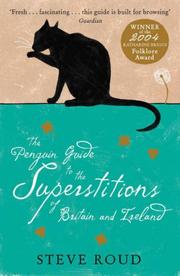
The Penguin Guide to the Superstitions of Britain and Ireland
Explains traditions behind East Anglian supernatural beliefs.

eBay marketplace picks
Marketplace Samples
Live-tested eBay searches with available results related to this page.



Endnotes
1.
Source: commons.wikimedia.org
Link:https://commons.wikimedia.org/wiki/File%3ABritish_Isles_map_showing_UK%2C_Republic_of_Ireland%2C_and_historic_counties.svg
2.
Source: norfolk.gov.uk
Link:https://www.norfolk.gov.uk/article/42981/Weird-walk-in-Kings-Lynn
3.
Source: Wikipedia
Title: Brown Lady of Raynham Hall
Link:https://en.wikipedia.org/wiki/Brown_Lady_of_Raynham_Hall
4.
Source: ghostwalksnorwich.co.uk
Link:https://www.ghostwalksnorwich.co.uk/
5.
Source: museumofnorwich.norfolk.gov.uk
Title: Ketts Rebellion VR Experience at the Museum of Norwich
Link:https://www.museumofnorwich.norfolk.gov.uk/article/30535/Ketts-Rebellion-VR-Experience-at-the-Museum-of-Norwich
6.
Source: norwichcastle.norfolk.gov.uk
Title: p9ks2 ketts rebellion resource
Link:https://www.norwichcastle.norfolk.gov.uk/media/14193/Ks2-Ketts-Rebellion-Resource/pdf/p9ks2-ketts-rebellion-resource.pdf?m=1701427818977
7.
Source: Wikipedia
Title: Kett’s Rebellion
Link:https://en.wikipedia.org/wiki/Kett%27s_Rebellion
8.
Source: Wikipedia
Title: Norwich Castle
Link:https://en.wikipedia.org/wiki/Norwich_Castle
9.
Source: Wikipedia
Title: King’s Lynn
Link:https://en.wikipedia.org/wiki/King%27s_Lynn
10.
Source: Wikipedia
Title: Black Shuck
Link:https://en.wikipedia.org/wiki/Black_Shuck
11.
Source: Wikipedia
Title: Castle Rising Castle
Link:https://en.wikipedia.org/wiki/Castle_Rising_Castle
12.
Source: Wikipedia
Title: Bell Hotel, Thetford
Link:https://en.wikipedia.org/wiki/Bell_Hotel%2C_Thetford
13.
Source: norfolk-tours.co.uk
Link:https://norfolk-tours.co.uk/ghost-stories-of-norfolk/
14.
Source: historic-maps.norfolk.gov.uk
Title: norfolk.gov.uk Historic Maps Of Norfolk
Link:https://www.historic-maps.norfolk.gov.uk/
15.
Source: Wikipedia
Title: Historic counties of England
Link:https://en.wikipedia.org/wiki/Historic_counties_of_England
16.
Source: Wikipedia
Link:https://en.wikipedia.org/wiki/Norfolk
17.
Source: commons.wikimedia.org
Title: File:Northern England Historic counties.svg
Link:https://commons.wikimedia.org/wiki/File%3ANorthern_England-Historic_counties.svg
18.
Source: commons.wikimedia.org
Title: Category:Maps of counties of England
Link:https://commons.wikimedia.org/wiki/Category%3AMaps_of_counties_of_England
19.
Source: commons.wikimedia.org
Title: File:Historic counties of the United Kingdom.svg
Link:https://commons.wikimedia.org/wiki/File%3AHistoric_counties_of_the_United_Kingdom.svg
20.
Source: wikishire.co.uk
Title: unties of the United Kingdom
Link:https://wikishire.co.uk/wiki/Counties_of_the_United_Kingdom
21.
Source: wikishire.co.uk
Title: Wikishire Great Britain and Ireland
Link:https://wikishire.co.uk/map/
22.
Source: nationaltrust.org.uk
Title: most haunted places to visit
Link:https://www.nationaltrust.org.uk/visit/houses-buildings/most-haunted-places-to-visit
23.
Source: visitnorwich.co.uk
Link:https://www.visitnorwich.co.uk/service/norwich-ghost-walks/
24.
Source: nationalparks.uk
Title: National Parks Discover: Folklore of the Broads
Link:https://www.nationalparks.uk/2024/09/30/discover-folklore-of-the-broads/
25.
Source: historicengland.org.uk
Title: list entry
Link:https://historicengland.org.uk/listing/the-list/list-entry/1049270
26.
Source: historicengland.org.uk
Link:https://historicengland.org.uk/listing/the-list/list-entry/1001015
27.
Source: countrylife.co.uk
Link:https://www.countrylife.co.uk/nature/the-day-a-country-life-photographer-captured-an-image-of-a-ghost-234642
28.
Source: nationaltrust.org.uk
Link:https://www.nationaltrust.org.uk/visit/norfolk/blickling-estate
29.
Source: nationaltrust.org.uk
Link:https://www.nationaltrust.org.uk/visit/countryside-woodland/haunted-forests-and-scary-woods
30.
Source: nationaltrust.org.uk
Link:https://www.nationaltrust.org.uk/visit/walking/walking-trails-inspired-by-myths-and-legends
31.
Source: norfolkrecordofficeblog.org
Title: the witches of lynn
Link:https://norfolkrecordofficeblog.org/2018/10/31/the-witches-of-lynn/
32.
Source: icysedgwick.com
Title: Icy Sedgwick Shady Meg: The Burning Witch of King’s Lynn
Link:https://www.icysedgwick.com/shady-meg-kings-lynn/
33.
Source: theshoebox.org.uk
Title: The Shoebox Enterprises The Black Shuck and The Black Dogs of Norfolk
Link:https://www.theshoebox.org.uk/the-shoebox-experiences/the-black-shuck-and-the-black-dogs-of-norfolk/
34.
Source: historicengland.org.uk
Title: list entry
Link:https://historicengland.org.uk/listing/the-list/list-entry/1008356
35.
Source: historicengland.org.uk
Link:https://historicengland.org.uk/research/results/reports/4664/WALLPAINTINGCONDITIONAUDITCASTLERISINGCASTLENORFOLK
36.
Source: wikishire.co.uk
Title: Association of British Counties
Link:https://wikishire.co.uk/wiki/Association_of_British_Counties
37.
Source: visitnorwich.co.uk
Title: robert kett
Link:https://www.visitnorwich.co.uk/service/robert-kett/
38.
Source: historicengland.org.uk
Title: list entry
Link:https://historicengland.org.uk/listing/the-list/list-entry/1001021
39.
Source: historicengland.org.uk
Title: The Octagon, Old Hunstanton
Link:https://historicengland.org.uk/listing/the-list/list-entry/1171881
40.
Source: historicengland.org.uk
Title: Godolphin, Breage
Link:https://historicengland.org.uk/listing/the-list/list-entry/1001443
41.
Source: historicengland.org.uk
Title: Balls Park, Hertford
Link:https://historicengland.org.uk/listing/the-list/list-entry/1269013
42.
Source: historicengland.org.uk
Link:https://historicengland.org.uk/images-books/publications/sustaining-englands-industrial-heritage/sustaining-englands-ind-heritage/
43.
Source: historicengland.org.uk
Title: slavery british country house web
Link:https://historicengland.org.uk/images-books/publications/slavery-and-british-country-house/slavery-british-country-house-web/
44.
Source: historicengland.org.uk
Link:https://historicengland.org.uk/content/docs/har/har-2019-entries-additions-removals/
45.
Source: historicengland.org.uk
Title: har 2016 entries additions removals
Link:https://historicengland.org.uk/content/docs/har/har-2016-entries-additions-removals/
46.
Source: historicengland.org.uk
Title: heag133 ships and boats 1840 1950 iha
Link:https://historicengland.org.uk/images-books/publications/iha-ships-boats-1840-1950/heag133-ships-and-boats-1840-1950-iha/
47.
Source: norfolkrecordofficeblog.org
Title: the brown lady of raynham hall the worlds most infamous ghost continued
Link:https://norfolkrecordofficeblog.org/2024/08/14/the-brown-lady-of-raynham-hall-the-worlds-most-infamous-ghost-continued/
48.
Source: nationaltrust.org.uk
Link:https://www.nationaltrust.org.uk/visit/houses-buildings
49.
Source: nationaltrust.org.uk
Link:https://www.nationaltrust.org.uk/holidays/cottages/film-locations
50.
Source: thelittlehouseofhorrors.com
Title: raynham hall
Link:https://thelittlehouseofhorrors.com/raynham-hall/
51.
Source: monarchies.fandom.com
Link:https://monarchies.fandom.com/wiki/Norfolk
Additional References
52.
Source: youtube.com
Link:https://www.youtube.com/watch?v=QWTw3xoGhg4
Source snippet
England's Most Famous Ghost? The Brown Lady of Raynham Hall...
53.
Source: youtube.com
Title: England’s Most Famous Ghost? The Brown Lady of Raynham Hall
Link:https://www.youtube.com/watch?v=mlX5D2warOY
Source snippet
Norfolk Ghost Stories | King's Lynn Witches, Hauntings & The Devil...
54.
Source: youtube.com
Title: Norfolk Ghost Stories | King’s Lynn Witches, Hauntings & The Devil
Link:https://www.youtube.com/watch?v=oxQF1rPzBBE
Source snippet
Weird Norfolk -The Witch's Heart of Kings Lynn...
55.
Source: academia.edu
Link:https://www.academia.edu/33522992/The_Brown_Lady_of_Raynham_Hall_Re_examination_of_a_Classic_Ghost_Photograph_and_a_Possible_Explanation
56.
Source: visitwestnorfolk.com
Link:https://www.visitwestnorfolk.com/news/13-haunted-locations-in-and-around-kings-lynn/
57.
Source: hauntedrooms.co.uk
Link:https://www.hauntedrooms.co.uk/haunted-places/norwich
58.
Source: culturaobscura.com
Link:https://www.culturaobscura.com/things-to-do-in-norwich/
59.
Source: facebook.com
Link:https://www.facebook.com/visitnorthnorfolk/posts/at-only-384-square-miles-north-norfolk-is-one-of-the-most-haunted-places-in-the-/6496822827011036/
60.
Source: facebook.com
Link:https://www.facebook.com/groups/norfolk.history.tales.myths/posts/25347819451473755/
61.
Source: invisibleworks.co.uk
Link:https://www.invisibleworks.co.uk/fenland-dogs/
Topic Tree
Follow this branch
Related pages 91
- Haunted Clackmannanshire
- Haunted Antrim
- Haunted Armagh
- Haunted Durham
- Haunted Londonderry
- +86 more in sidebar