Within Haunted Warwickshire
Why Did Edgehill Become a Phantom Battlefield?
Edgehill's ghostly armies stand out because the story was printed within months of the Civil War battle itself.
On this page
- The 1642 battle and its aftermath
- The January 1643 pamphlet reports
- Omen, grief, propaganda and later retellings
Page outline Jump by section
Introduction
Edgehill became a phantom battlefield because its ghost story was not a vague Victorian legend added centuries later. It was printed in London in January 1643, only a few months after the first major battle of the English Civil War had been fought between Kineton and Radway in south Warwickshire. The pamphlet tradition claimed that local shepherds, travellers, clergy, magistrates and later royal investigators saw and heard spectral armies re-enacting the battle in the night sky. That does not make the haunting factual, but it does make Edgehill one of Britain’s most important battlefield ghost stories: its supernatural reputation is tied unusually closely to contemporary Civil War print culture, grief, propaganda, burial anxiety and local memory.[LingPhil]llds.ling-phil.ox.ac.ukCertified under the hands of William Wood Esquire, and iustice for the peace in the said countie, Samuel Marshall preacher of Gods Word i…
The result is a story that sits between history and folklore. Edgehill is a real registered battlefield; the Civil War trauma was real; the early pamphlets are real; the apparitions remain claims, shaped by the religious and political imagination of a country newly at war.[Historic England]historicengland.org.uklist entryHistoric EnglandBattle of Edgehill 1642, Kineton - 1000009 | Historic England…
The 1642 battle and its aftermath
The Battle of Edgehill was fought on Sunday 23 October 1642, in the open Warwickshire landscape between Kineton and Radway. It was the first major set-piece battle of the English Civil War, with King Charles I’s Royalist army facing the Parliamentarian army commanded by the Earl of Essex. Historic England summarises the encounter as confused and indecisive: the Royalists occupied the ridge of Edgehill, the Parliamentarians deployed south-east of Kineton, and dusk ended the fighting before either side could claim a clean battlefield victory.[Historic England]historicengland.org.uklist entryHistoric EnglandBattle of Edgehill 1642, Kineton - 1000009 | Historic England…
That indecision matters for the ghost story. Edgehill was not remembered as a tidy victory with a settled meaning. It was a blood-soaked beginning. The Battlefields Trust gives the losses as roughly 1,000 dead and 2,000–3,000 wounded, and describes the battle as a bloody draw that still left the King with an opportunity to continue towards London. The armies survived, the war continued, and the field became a place where the country’s new civil violence could be imagined as unfinished business.[Battlefields Trust]battlefieldstrust.comOpen source on battlefieldstrust.com.
The landscape also helped the legend endure. Edgehill is not a ruin or a castle chamber but a broad battlefield, with the ridge, open fields and surrounding villages giving the story a wide visual stage. Modern visitors cannot simply wander across the whole historic battlefield: the Battlefields Trust notes that much of the area has been affected by later military use and remains in Ministry of Defence ownership, making the terrain hard to experience fully on foot. That restricted, half-visible quality can strengthen the atmosphere of the tale, even while complicating any attempt to match folklore precisely to ground.[Battlefields Trust]battlefieldstrust.comOpen source on battlefieldstrust.com.

The January 1643 pamphlet reports
The key source is the pamphlet A Great Wonder in Heaven, printed in London for Thomas Jackson on 23 January 1643. Its title announces “apparitions” and “prodigious noyses of war and battels” seen on Edgehill near Kineton, and says the account was certified under the names of William Wood, a justice of the peace, Samuel Marshall, minister at Kineton, and other persons of local credit.[LingPhil]llds.ling-phil.ox.ac.ukCertified under the hands of William Wood Esquire, and iustice for the peace in the said countie, Samuel Marshall preacher of Gods Word i…
The pamphlet’s story begins at Christmas time. It says that between midnight and one in the morning, shepherds, countrymen and travellers heard distant drums, soldiers’ groans and the sounds of an approaching army. Then, according to the account, they saw two armies in the air, with ensigns, drums, muskets, cannon and horses. One side bore the King’s colours and the other Parliament’s. The spectral fight followed a recognisable Civil War pattern: the King’s side seemed to gain the first advantage, then appeared to be driven back before both armies vanished.[LingPhil]llds.ling-phil.ox.ac.ukCertified under the hands of William Wood Esquire, and iustice for the peace in the said countie, Samuel Marshall preacher of Gods Word i…
The account then widens its witness circle. The frightened observers reportedly went to William Wood and Samuel Marshall, who at first suspected madness or drunkenness. They then gathered with “substantial” inhabitants from the neighbouring parishes and, according to the pamphlet, saw the spectacle repeated on Christmas night. The apparitions were said to recur on later Saturday and Sunday nights, sometimes for nearly four hours.[LingPhil]llds.ling-phil.ox.ac.ukCertified under the hands of William Wood Esquire, and iustice for the peace in the said countie, Samuel Marshall preacher of Gods Word i…
The most striking claim is the royal investigation. The pamphlet says that word reached Charles I at Oxford and that he sent Colonel Lewis Kirke, Captain Dudley, Captain Wainman and three other gentlemen to observe the matter. These men supposedly heard the local testimony, waited for the next appearance, and then saw and heard the phantom battle themselves. The text even claims that they recognised the likeness of Sir Edmund Verney, the King’s standard-bearer killed at Edgehill, among the apparitions.[LingPhil]llds.ling-phil.ox.ac.ukCertified under the hands of William Wood Esquire, and iustice for the peace in the said countie, Samuel Marshall preacher of Gods Word i…
This is why Edgehill stands out in Warwickshire’s haunted history. Many ghost stories become visible in the record only after long oral transmission. Edgehill’s phantom battle appears in print almost immediately, using named local witnesses, a minister, a justice of the peace and alleged royal observers to give the story the shape of evidence.
A second pamphlet and the unburied dead
Edgehill’s phantom story did not rest on one pamphlet alone. A similar London publication, The New Yeares Wonder, gave a broadly comparable account, though with altered details and a more dramatic tone. In that version, the spectacle began on 1 January, later appearances took place mainly at night, and the groans of wounded and dying soldiers were said to terrify nearby inhabitants.[The World Turned Upside Down]worldturnedupsidedown.co.ukthe battle of edgehill 23rd october 1642the battle of edgehill 23rd october 1642
The second pamphlet is especially important because it links the apparition to burial anxiety. It reports that some people thought the disturbances might be caused by dead soldiers still lying unburied on the battlefield. A search was then made, bodies were found, and burial was carried out. Later discussion of battlefield burial has treated this as a revealing early modern detail: not proof of ghosts, but evidence that contemporaries saw unburied war dead as morally and spiritually troubling.[The World Turned Upside Down]worldturnedupsidedown.co.ukthe battle of edgehill 23rd october 1642the battle of edgehill 23rd october 1642
This gives the Edgehill legend a human weight that pure “phantom army” retellings often miss. The story is not only about armies appearing in the clouds. It is also about villagers living beside a killing ground, rumours of overlooked corpses, the fear that the dead had not been properly treated, and the need to restore order after a battle no one had truly won. In that sense, the haunting can be read as a local memory of shock before it is read as a supernatural claim.

Omen, grief and propaganda
The language of A Great Wonder in Heaven is not neutral witness-reporting in the modern sense. It opens with a religious argument about apparitions, demons, divine judgement and warnings to sinful nations. The pamphlet frames the phantom battle as a sign of God’s anger at civil war and ends by hoping for peace between King and Parliament.[LingPhil]llds.ling-phil.ox.ac.ukCertified under the hands of William Wood Esquire, and iustice for the peace in the said countie, Samuel Marshall preacher of Gods Word i…
That framing matters. In 1642–43, printed news, providential signs and political persuasion overlapped. A strange noise, a light in the sky or a battlefield rumour could be turned into a moral message. Edgehill’s pamphlets therefore need to be read as Civil War texts, not simply as folklore transcripts. They preserve a ghost story, but they also interpret it for readers who believed that public disasters might be accompanied by heavenly or diabolical warnings.
The political colouring is visible in the first pamphlet’s description of the battle. It presents the Parliamentarian side as ultimately victorious in the apparition, and its account of the spectral combat appears to mirror a pro-Parliament reading of the real engagement. At the same time, the alleged involvement of the King’s observers gives the story a wider dramatic reach, allowing the pamphlet to claim that even royal officers had to confront the portent.[LingPhil]llds.ling-phil.ox.ac.ukCertified under the hands of William Wood Esquire, and iustice for the peace in the said countie, Samuel Marshall preacher of Gods Word i…
For a modern reader, this does not mean the pamphlet should be dismissed. It means its value lies in what it can and cannot prove. It can prove that the phantom battle story was circulating within months of the real battle. It can show how local testimony, religious fear and political messaging were combined in print. It cannot prove that spectral armies appeared over Warwickshire.
How strong is the evidence?
Edgehill’s evidence is unusually early, but it is not straightforward. The strongest point in favour of the story’s historical importance is chronology: the reports appeared in print very soon after the battle, when the field, casualties and military memories were still fresh. The named local figures also matter, because the pamphlet tries to present the report as socially credible rather than anonymous tavern gossip.[LingPhil]llds.ling-phil.ox.ac.ukCertified under the hands of William Wood Esquire, and iustice for the peace in the said countie, Samuel Marshall preacher of Gods Word i…
The weaknesses are just as important. The surviving evidence is mediated through pamphlets, a highly charged Civil War medium designed to persuade, moralise and sell. The reported witnesses do not speak to us in independent depositions here; they are shaped by a printed narrative. The pamphlets also contain providential interpretation from the start, so the reader is never given a plain modern-style witness statement separated from religious meaning.[LingPhil]llds.ling-phil.ox.ac.ukCertified under the hands of William Wood Esquire, and iustice for the peace in the said countie, Samuel Marshall preacher of Gods Word i…
There is also a common modern claim that Edgehill is the only haunting “officially recognised” in British records because of a royal commission or Public Record Office connection. That claim is repeated in some popular accounts, but it should be treated cautiously. The early pamphlet does allege that royal gentlemen investigated and swore testimony to the King; that is not the same thing as proving that the haunting was officially accepted as fact by the state. The safer statement is that Edgehill has an unusually early printed report claiming official-style investigation, not that ghosts were formally verified.[LingPhil]llds.ling-phil.ox.ac.ukCertified under the hands of William Wood Esquire, and iustice for the peace in the said countie, Samuel Marshall preacher of Gods Word i…
The best reading is therefore balanced: Edgehill is not strong evidence for ghosts, but it is strong evidence for a ghost story with deep roots in Civil War experience. Its credibility as folklore is high; its credibility as a literal apparition remains unprovable.
Why the legend lasted in Warwickshire
Edgehill’s phantom armies endured because the story has everything a battlefield haunting needs: a real mass-casualty event, a dramatic landscape, named early sources, political tension, religious dread, unburied-dead anxiety and later local retelling. It also belongs unmistakably to Warwickshire’s haunted geography. Kineton, Radway, the Edgehill escarpment and the surrounding roads give the legend a firm local setting, while the national importance of the Civil War gives it wider resonance.[Historic England]historicengland.org.uklist entryHistoric EnglandBattle of Edgehill 1642, Kineton - 1000009 | Historic England…
Later heritage and folklore have kept the story alive in a different form. The old pamphlet apparitions were said to happen around Christmas and New Year, but modern local legend often shifts attention to the battle anniversary in October. Our Warwickshire records a late twentieth-century memory of people driving near the battlefield at night hoping to see a re-enactment, though without witnessing anything supernatural. That kind of account shows how the legend moved from early modern portent to local ghost-hunting tradition.[Our Warwickshire]ourwarwickshire.org.ukOpen source on ourwarwickshire.org.uk.
Edgehill’s power lies in that continuity of unease. The earliest writers saw the phantom battle as a divine warning against civil war. Later readers have tended to see it as a haunting: a replay of trauma, tied to a field where the war began in earnest and where the dead may not all have rested easily. Both readings keep returning to the same idea: Edgehill was remembered as a place where the battle did not quite end when the armies withdrew.
Amazon book picks
Further Reading
Books and field guides related to Why Did Edgehill Become a Phantom Battlefield?. Use these as the next step if you want deeper reading beyond the article.
ENGLISH CIVIL WAR: A PEOPLE'S HISTORY
Provides the historical background behind the Edgehill legend.
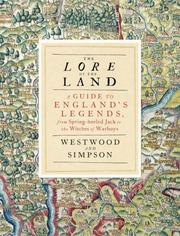
The Mammoth Book of Haunted House Stories
Appeals to readers interested in classic British ghost traditions.
eBay marketplace picks
Marketplace Samples
Live-tested eBay searches with available results related to this page.
Endnotes
1.
Source: llds.ling-phil.ox.ac.uk
Link:https://llds.ling-phil.ox.ac.uk/llds/xmlui/bitstream/handle/20.500.14106/A85647/A85647.html?isAllowed=y&sequence=5
Source snippet
Certified under the hands of William Wood Esquire, and iustice for the peace in the said countie, Samuel Marshall preacher of Gods Word i...
2.
Source: historicengland.org.uk
Title: list entry
Link:https://historicengland.org.uk/listing/the-list/list-entry/1000009
Source snippet
Historic EnglandBattle of Edgehill 1642, Kineton - 1000009 | Historic England...
3.
Source: battlefieldstrust.com
Link:https://www.battlefieldstrust.com/resource-centre/battleview.asp?BattleFieldId=3
4.
Source: worldturnedupsidedown.co.uk
Title: the battle of edgehill 23rd october 1642
Link:https://www.worldturnedupsidedown.co.uk/transcripts/the-battle-of-edgehill-23rd-october-1642/?print=print
Published: october 1642
5.
Source: ourwarwickshire.org.uk
Link:https://www.ourwarwickshire.org.uk/content/article/ghostly-happenings-after-the-battle-of-edgehill
6.
Source: worldturnedupsidedown.co.uk
Title: the battle of edgehill 23rd october 1642
Link:https://www.worldturnedupsidedown.co.uk/transcripts/the-battle-of-edgehill-23rd-october-1642/?print=pdf
Published: october 1642
7.
Source: battlefieldstrust.com
Link:https://www.battlefieldstrust.com/media/558.pdf
8.
Source: battlefieldstrust.com
Title: Outcome of the Survey Edgehill Battlefield Survey – Results
Link:https://www.battlefieldstrust.com/resource-centre/battlepageview.asp?pageid=865&parentid=500
9.
Source: battlefieldstrust.com
Link:https://www.battlefieldstrust.com/media/371.pdf
10.
Source: ourwarwickshire.org.uk
Link:https://www.ourwarwickshire.org.uk/content/article/warmington-battle-edgehill
11.
Source: ourwarwickshire.org.uk
Title: site of battle of edge hill
Link:https://www.ourwarwickshire.org.uk/content/catalogue_her/site-of-battle-of-edge-hill
12.
Source: Wikipedia
Title: Battle of Edgehill
Link:https://en.wikipedia.org/wiki/Battle_of_Edgehill
13.
Source: keepyourpowderdry.co.uk
Title: edgehill 23rd october 1642
Link:https://www.keepyourpowderdry.co.uk/2018/06/edgehill-23rd-october-1642.html
Published: october 1642
Additional References
14.
Source: youtube.com
Title: Edgehill’s Haunted Battlefield: Ghostly Soldiers & The Battle in the Sky
Link:https://www.youtube.com/watch?v=GDwQDtWt4j4
Source snippet
Edgehill: The Most Haunted Battlefield in Britain?...
15.
Source: youtube.com
Link:https://www.youtube.com/watch?v=3PiGT2t_lGo
Source snippet
Battle of Edgehill 1642 DOCUMENTARY (English Civil War)...
16.
Source: radwayparishcouncil.org.uk
Link:https://radwayparishcouncil.org.uk/st-peters-church/battle-of-edgehill-exhibition/
17.
Source: facebook.com
Link:https://www.facebook.com/discoverhistPH/posts/did-you-know-that-after-the-battle-of-edgehill-380-years-ago-today-ghostly-soldi/481100940724652/
18.
Source: facebook.com
Link:https://www.facebook.com/groups/815883248934810/posts/1194395437750254/
19.
Source: facebook.com
Link:https://www.facebook.com/theclinkprison/posts/one-of-our-guides-otherwise-a-rampant-sceptic-on-matters-supernatural-swears-bli/1123260316467620/
20.
Source: historyhit.com
Link:https://www.historyhit.com/the-battle-of-edgehill-ghosts-englands-most-haunted-battlefield/
21.
Source: facebook.com
Link:https://www.facebook.com/groups/grewupinabington/posts/8191774104250696/
22.
Source: catalogue.nla.gov.au
Link:https://catalogue.nla.gov.au/catalog/1182688
23.
Source: facebook.com
Title: today in 1642 the first major battle of the english civil war takes place at edg
Link:https://www.facebook.com/HistoricUK/posts/today-in-1642-the-first-major-battle-of-the-english-civil-war-takes-place-at-edg/1652345388150075/
Topic Tree