Within Haunted East Lothian
What Is the Goblin Ha' Legend?
Yester Castle's underground Goblin Ha' gives East Lothian its strangest medieval legend of hidden chambers, noble magic and dark folklore.
On this page
- The hidden chamber near Gifford
- Hugo de Giffard and the magician tradition
- Why underground places attract supernatural stories
Page outline Jump by section
Introduction
Yester Castle’s Goblin Ha’ is the most distinctive medieval supernatural legend in East Lothian: a real underground vaulted chamber near Gifford, attached to a centuries-old story that Sir Hugo de Giffard, the “Wizard of Yester”, built or used it by demonic magic. The haunting claim is not a modern ghost sighting with named witnesses; it is older, stranger folklore, preserved through medieval chronicle, antiquarian description, Sir Walter Scott’s poetry and local retelling. That makes it less like a conventional apparition story and more like a place where architecture, noble reputation and fear of hidden underground spaces have fused into one enduring legend. The strongest evidence is not that goblins ever worked beneath Yester, but that people have been saying uncanny things about the Goblin Ha’ for a very long time. Historic Environment Scotland records the castle and Hobgoblin Ha’ as a scheduled monument in East Lothian, while local and archaeological records identify the chamber as part of the surviving medieval castle complex near Gifford.[Historic Environment Scotland]portal.historicenvironment.scotOpen source on historicenvironment.scot.
The hidden chamber near Gifford
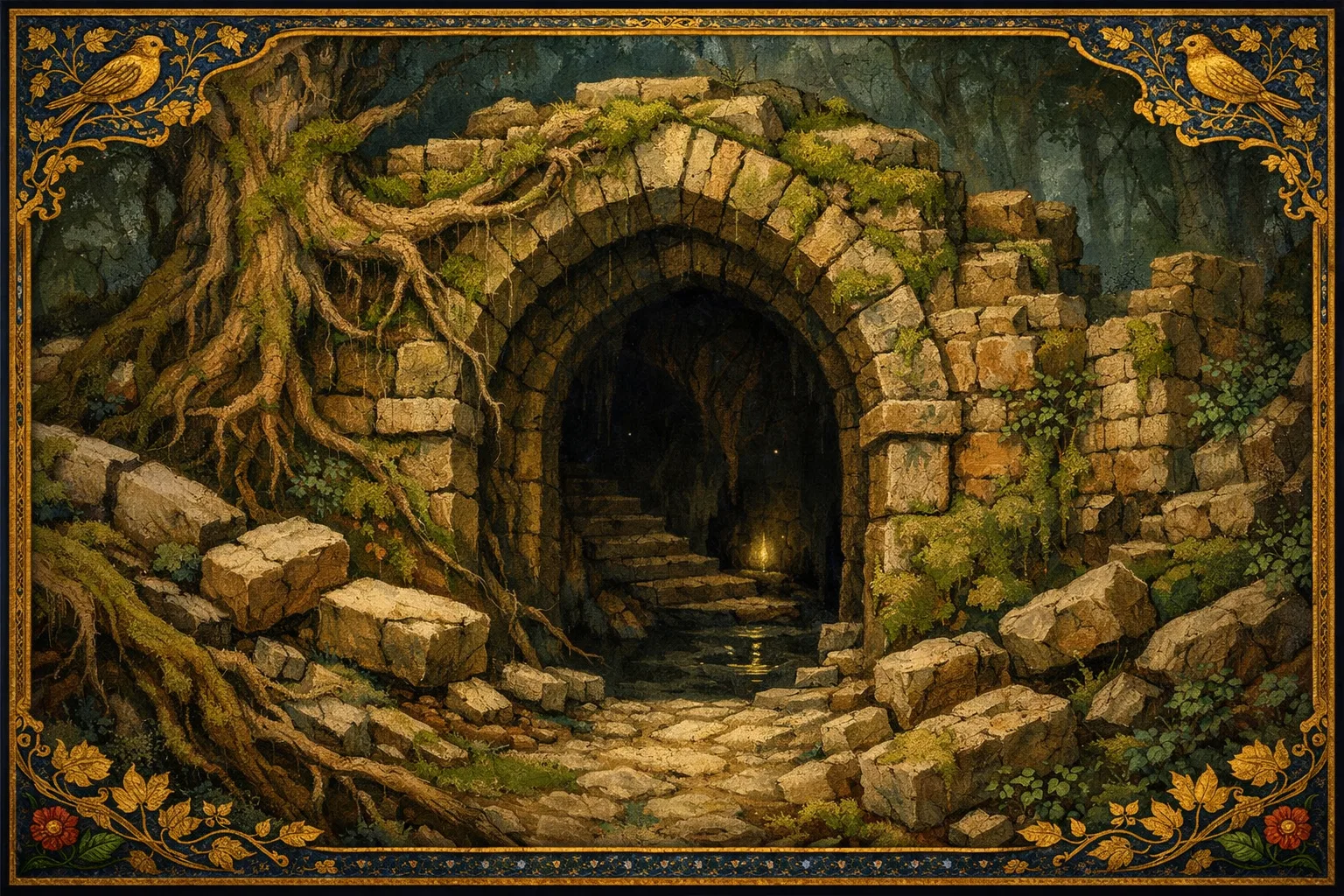
Yester Castle stands, or now mostly survives as ruins, in woodland south-east of Gifford in East Lothian. The Goblin Ha’ is the name given to the underground or partly subterranean vaulted chamber associated with the castle. The official designation is not coy about the folklore: Historic Environment Scotland lists the site as “Yester Castle & Hobgoblin Ha’ vaulted chamber”, a scheduled monument recorded in the parish of Yester, East Lothian, with its designation added in 1920 and amended in 1969.[Historic Environment Scotland]portal.historicenvironment.scotOpen source on historicenvironment.scot.
The physical setting matters. This is not a ghost story floating free of place. The chamber belongs to a ruined castle landscape of slopes, watercourses, masonry and woodland approaches. The Scottish Cave and Mine Database gives the Goblin Ha’ as a man-made tunnel site at Yester Castle, south-east of Gifford, and describes it as the undercroft of a thirteenth-century tower, partly dug into a mound and later covered over after changes to the castle layout. It records a vaulted entrance passage of about 20 metres, a steep curving stair, and alternative names including Bo’ Hall, Bogey Hall, Goblin’s Hall and Hobgoblin’s Hall.[registry.gsg.org.uk]registry.gsg.org.ukGoblin HaGoblin Ha
That physical oddness helps explain the legend’s force. A visitor is not simply looking at another roofless wall in a field. The story centres on a chamber below the ordinary level of the castle, reached by stairs or passage, enclosed by stone and associated with darkness, echo, water and concealment. Even without believing in goblins, it is easy to see why local memory would mark such a place as uncanny.
The older antiquarian description preserved through East Lothian walking and local-history writing gives the Ha’ a notably precise shape: a spacious arched hall reached by twenty-four steps, with another stair descending towards a pit said to communicate with Hopes Water. The same account describes the chamber as astonishingly sound despite great age and exposure.[Walking East Lothian]walkingeastlothian.comWalking East Lothian Yester’s Goblin Ha’ | Walking East LothianWalking East Lothian Yester’s Goblin Ha’ | Walking East Lothian In folklore terms, this is important: the story is not merely “there was a wizard here”, but “there is a specific underground work so impressive that ordinary building seemed insufficient to explain it”.
Hugo de Giffard and the magician tradition
The central figure is Hugo, or Hugh, de Giffard of Yester, a thirteenth-century nobleman whose reputation became entangled with magic. The University of Edinburgh Archives traces the castle to the mid-thirteenth century and identifies Hugo de Giffard as the laird of Yester, descended from a Norman immigrant granted land in East Lothian during the reign of David I. It also notes the respectable side of his record: he was one of the Guardians of the young Alexander III and one of the regents appointed by the Treaty of Roxburgh in 1255.[Library & University Collections]libraryblogs.is.ed.ac.ukOpen source on ed.ac.uk.
That respectable status makes the legend more interesting, not less. Hugo is not remembered as a marginal village sorcerer or a nameless bogeyman. He was a landholder close enough to power to be remembered in political history, yet local tradition also recast him as a warlock or necromancer who used supernatural help to make or command the Goblin Ha’. The legend’s tension lies in that double identity: a feudal lord with real authority, imagined as possessing a darker form of hidden power beneath his castle.
The crucial medieval source is the Scotichronicon, the great Scottish chronicle associated with John of Fordun and continued by Walter Bower. The University of Edinburgh Archives explains that a commonly repeated attribution to Fordun is misleading, because Fordun’s original chronicle ended too early to cover Hugo de Giffard’s thirteenth-century story. The relevant continuation is Bower’s work, and Bower was born around 1385 at Haddington, only a few miles from Yester.[Library & University Collections]libraryblogs.is.ed.ac.ukOpen source on ed.ac.uk.
The famous Latin notice, checked by the Edinburgh archivist against manuscript evidence, says in translation that Hugo Gifford of Yester died and that his castle, or at least his cave and dungeon, was said to have been formed by demonic artifice. The value of this source is not that it proves supernatural building; medieval chronicles often mixed report, moral interpretation and marvel. Its value is that it shows the uncanny reputation was already attached to Yester in a medieval historical tradition, not simply invented by modern ghost tourism.[Library & University Collections]libraryblogs.is.ed.ac.ukOpen source on ed.ac.uk.
Why the Goblin Ha’ became locally famous
The Goblin Ha’ legend survived because it had three things folklore needs: a memorable place, a named powerful figure, and a story that later writers could retell. The underground hall gave the tale a visible anchor. Hugo de Giffard gave it a human centre. Walter Bower gave it medieval textual weight. Sir Walter Scott then helped carry it into the literary imagination.
Scott’s Marmion, published in 1808, refers to Sir Hugo and the “Goblin-Hall”, helping turn a local East Lothian tradition into something readers beyond Gifford could recognise. The University of Edinburgh Archives notes that Scott’s poem complicated later source-tracing because people had to ask whether the demonic-building story was merely a nineteenth-century literary flourish; the manuscript trail back through Bower shows that the tradition is older than Scott, even if Scott powerfully popularised it.[Library & University Collections]libraryblogs.is.ed.ac.ukOpen source on ed.ac.uk.
The legend also fits a broader Scottish and British pattern in which unusually difficult, ancient or hidden structures are explained by otherworldly labour. Bridges, castles, earthworks, caves and underground chambers often attract stories of devils, fairies, giants or goblins because they seem to exceed ordinary explanation or because their original purpose has become obscure. At Yester, the impressive stone vault, descending stair and concealed position made “hobgoblin builders” a compelling story long before modern archaeology offered more sober architectural explanations.
In East Lothian’s haunted geography, this gives Yester a different role from Tantallon, Dirleton or North Berwick. It is not chiefly a tale of a photographed apparition, a witch-trial landscape or a white lady in a castle corridor. It is a medieval magical-place legend: a claim that the fabric of the building itself was once thought to have been made, or at least marked, by forbidden powers.
What is said to haunt the Goblin Ha’?
The Goblin Ha’ is often described in modern retellings as haunted, but its older core is not a simple recurring ghost. The tradition is more about demonic construction, hobgoblin labour, necromancy and ritual use. Hugo is said in legend to have summoned spirits or hobgoblins to build the underground hall, and sometimes to have used the chamber for magical practices. The Scottish Cave and Mine Database summarises the folklore as a pact with the devil and goblins constructing a large underground chamber, while also giving a practical architectural reading of the Ha’ as an undercroft within a changing castle plan.[registry.gsg.org.uk]registry.gsg.org.ukGoblin HaGoblin Ha
Later popular accounts sometimes add atmospheric details such as strange noises, lights or revelry in the hall, but these are harder to pin to early named witnesses. They should be treated as local and modern haunted-place motifs rather than firm evidence of a stable apparition tradition. The most reliable statement is that the Goblin Ha’ has a longstanding supernatural reputation, not that a particular ghost has been repeatedly and independently reported there.
That distinction helps avoid overclaiming. Yester’s importance is not weakened by the absence of a neat “lady in grey” narrative. In fact, it makes the site more unusual. Many haunted castles are built around death, betrayal or a repeated figure seen at a window. Yester’s story is darker and more architectural: the haunted object is the chamber itself, imagined as a work of occult power.
Why underground places attract supernatural stories
Underground spaces are natural engines of folklore because they disturb ordinary expectations. They hide sound, distort distance, keep cold air, preserve darkness and suggest secrecy. A chamber under a castle is especially suggestive because it sits below a place already associated with lordship, violence, imprisonment, storage and defence. The Goblin Ha’ gathers all of these associations into one story.
At Yester, the underground setting also creates a contrast between public authority and hidden knowledge. Above ground, Hugo de Giffard belongs to the world of charters, guardianship and feudal power. Below ground, folklore imagines him speaking words of power at midnight, commanding spirits and using a chamber ordinary people could not fully understand. That split between the visible nobleman and the hidden magician is one reason the legend has remained memorable.
The architecture encouraged the supernatural reading because it was impressive and hard to contextualise. The database description of a thirteenth-century undercroft, vaulted passage, steep stair and blocked or flooding lower feature gives modern readers a structural explanation, but it also shows why earlier observers might have reached for enchantment.[registry.gsg.org.uk]registry.gsg.org.ukGoblin HaGoblin Ha A stone chamber buried into a mound, reached by shadowed passages and surviving when much of the castle vanished, is exactly the sort of place where “ordinary building” can feel emotionally inadequate.
How credible is the legend?
The Goblin Ha’ legend is credible as medieval and later folklore attached to a real East Lothian monument. It is not credible as evidence that goblins, demons or necromancy physically built the chamber. The best reading is layered: Yester Castle and its underground chamber are historical; Hugo de Giffard was a real medieval lord; the magical reputation is old enough to appear in the Scotichronicon tradition; the details of goblins, pacts and occult practice belong to folklore and literary elaboration.
The University of Edinburgh Archives work is especially useful because it separates a genuine medieval textual basis from sloppy modern repetition. It shows that the often-cited passage was not simply a modern internet invention, while also correcting the careless claim that John of Fordun himself was the source. The more precise attribution to Walter Bower’s continuation matters because it places the tale within a fifteenth-century Scottish chronicle tradition, written by someone with East Lothian connections and access to older report.[Library & University Collections]libraryblogs.is.ed.ac.ukOpen source on ed.ac.uk.
Archaeology and heritage records pull the story back to earth. Historic Environment Scotland’s scheduled-monument record confirms the national heritage status of “Yester Castle & Hobgoblin Ha’ vaulted chamber”, but it does not treat the supernatural legend as fact.[Historic Environment Scotland]portal.historicenvironment.scotOpen source on historicenvironment.scot. The Scottish Cave and Mine Database gives practical physical details and identifies the Ha’ as a man-made archaeological feature, while still recording the folklore attached to it.[registry.gsg.org.uk]registry.gsg.org.ukGoblin HaGoblin Ha
The result is a good example of how haunted history should be read. The question is not “did goblins build it?” but “why did generations find that explanation meaningful?” At Yester, the answer lies in the combination of a difficult underground structure, a powerful medieval lord, a local chronicler’s report of old tales, and later romantic literature that kept the Goblin Ha’ alive in the public imagination.
Visiting the legend today
Yester is also a reminder that haunted places are vulnerable heritage sites, not just atmospheric backdrops. In 2021, STV News reported that Yester Castle had been closed to the public after a substantial theft of stone from the subterranean Goblin Ha’, with Police Scotland saying the damage affected a wall supporting the vault and created safety concerns. The report also noted the site’s legal protection as a nationally important monument under the Ancient Monuments and Archaeological Areas Act 1979.[STV News]news.stv.tvOpen source on stv.tv.
That modern episode has an odd resonance with the legend. The chamber that folklore imagined as supernaturally made is, in reality, fragile masonry requiring legal protection and careful conservation. Its survival depends not on goblins, but on restraint: respecting closures, avoiding damage, and recognising that the mystery is strongest when the place itself is not harmed.
For East Lothian’s haunted-history map, the Goblin Ha’ remains one of the county’s most valuable stories because it is both eerie and historically deep. It links Gifford’s wooded landscape to medieval lordship, chronicle writing, romantic poetry and the long habit of explaining strange underground architecture through supernatural power. The legend is not a proven haunting, but it is a genuine piece of East Lothian’s folklore: a dark chamber where stone, story and suspicion have kept company for centuries.
Amazon book picks
Further Reading
Books and field guides related to What Is the Goblin Ha' Legend?. Use these as the next step if you want deeper reading beyond the article.
The world's most haunted places
Expands interest from one famous legend to other haunted locations.
The Folklore of Scotland
Explains beliefs surrounding supernatural places and traditions.
eBay marketplace picks
Marketplace Samples
Live-tested eBay searches with available results related to this page.
Endnotes
1.
Source: registry.gsg.org.uk
Title: Goblin Ha’
Link:https://registry.gsg.org.uk/sr/sitedetails.php?id=3433
2.
Source: news.stv.tv
Link:https://news.stv.tv/east-central/medieval-castle-closed-to-public-after-substantial-theft-of-stone
3.
Source: app.yester.eu
Link:https://app.yester.eu/
4.
Source: portal.historicenvironment.scot
Link:https://portal.historicenvironment.scot/apex/f?p=1505%3A300%3A%3A%3A%3A%3AVIEWTYPE%2CVIEWREF%3Adesignation%2CSM780
5.
Source: walkingeastlothian.com
Title: Walking East Lothian Yester’s Goblin Ha’ | Walking East Lothian
Link:https://walkingeastlothian.com/2018/11/14/yesters-goblin-ha/
6.
Source: libraryblogs.is.ed.ac.uk
Link:https://libraryblogs.is.ed.ac.uk/edinburghuniversityarchives/2020/10/30/the-scotichronicon-and-the-goblin-ha-witchcraft-and-hobgoblins-in-our-manuscripts/
7.
Source: Wikipedia
Title: Yester Castle
Link:https://en.wikipedia.org/wiki/Yester_Castle
8.
Source: canmore.org.uk
Link:https://canmore.org.uk/site/56117
9.
Source: evil.fandom.com
Title: Yester Castle
Link:https://evil.fandom.com/wiki/Yester_Castle
10.
Source: libraryblogs.is.ed.ac.uk
Link:https://libraryblogs.is.ed.ac.uk/edinburghuniversityarchives/tag/archives/
11.
Source: welliesandbrellies.blogspot.com
Title: goblin ha
Link:https://welliesandbrellies.blogspot.com/2013/06/goblin-ha.html
12.
Source: books.google.com
Link:https://books.google.com/books/about/Scotichronicon.html?id=E3MKAQAAMAAJ
13.
Source: spookyedinburgh.com
Title: goblin ha
Link:https://www.spookyedinburgh.com/goblin-ha/
Additional References
14.
Source: youtube.com
Title: Yester Castle Goblin Ha’: The invisible castle
Link:https://www.youtube.com/watch?v=GnAukDZHKIM
Source snippet
Visiting The Gates of Hell and a Castle Built By GOBLINS in Scotland 4K...
15.
Source: youtube.com
Title: Goblin Ha: Unveiling Scotland’s Cursed Castle (The Occult)
Link:https://www.youtube.com/watch?v=2ghXVHjZJMo
Source snippet
Exploring the CREEPY Yester Castle & Goblin Ha'...
16.
Source: instagram.com
Link:https://www.instagram.com/reel/DBpDZ9IsPEj/?hl=en
17.
Source: facebook.com
Link:https://www.facebook.com/TheTartanViking/posts/a-few-more-shots-from-yester-castle-yester-apparently-coming-from-the-brythonic-/178029526944053/
18.
Source: facebook.com
Link:https://www.facebook.com/groups/scotlandfromtheroadside/posts/10164017270582280/
19.
Source: facebook.com
Link:https://www.facebook.com/100081124262387/videos/yester-castle/1138603418005248/
20.
Source: merriam-webster.com
Link:https://www.merriam-webster.com/dictionary/historic
21.
Source: facebook.com
Link:https://www.facebook.com/discoverscottishborders/posts/hugo-de-gifford-landowner-of-east-lothian-was-remembered-as-a-wizard-and-necroma/1439672308159129/
22.
Source: johngraycentre.org
Link:https://www.johngraycentre.org/collections/getrecord/ELLOH_BOOKS_A45/
23.
Source: goodreads.com
Link:https://www.goodreads.com/work/quotes/1964985-marmion
Topic Tree