Within Cromartyshire Hauntings
Who Haunted the Road Through Navity Woods?
The dead miller story turns a postman's road through Navity woods into Cromartyshire's strongest tale of unease and unfinished business.
On this page
- The suspicious death on Maolbuie moor
- Saunders Munro and the repeated apparition
- Illness, fear and unfinished business
Page outline Jump by section
Introduction
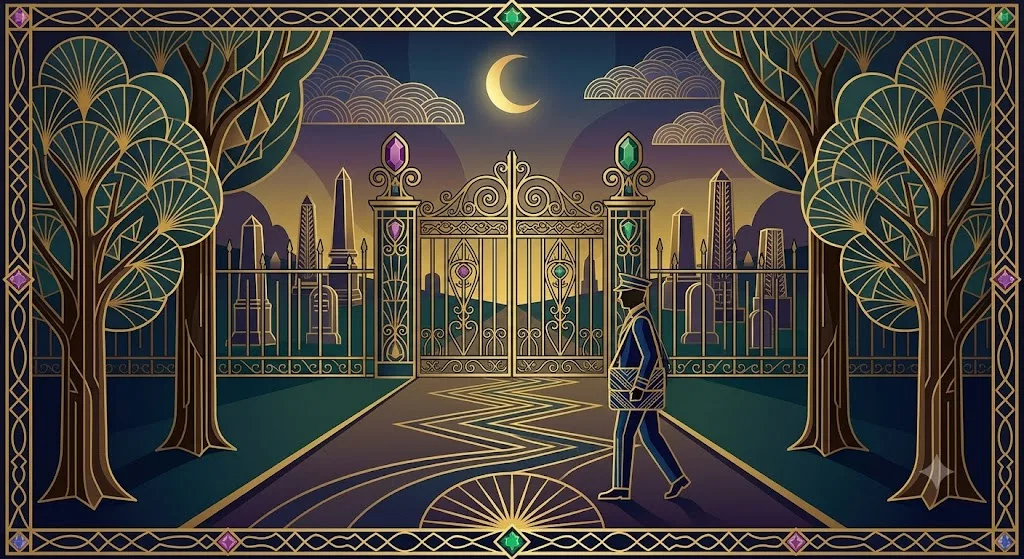
The road through Navity woods near Cromarty is remembered in local folklore for the apparition of a dead miller said to have followed Saunders Munro, an elderly postman, night after night. The story was preserved by Hugh Miller in Scenes and Legends of the North of Scotland; or, The Traditional History of Cromarty, where Miller presents it as one of Cromartyshire’s most disturbing ghost traditions: not a castle spectre or theatrical haunting, but a tale of drink, a suspicious death, a lonely postal route, and a community troubled by what had not been investigated.[Project Gutenberg]gutenberg.orgScenes and Legends of the North of Scotland | Project Gutenberg…
Its power lies in the details. A miller of Resolis vanished after leaving a Fortrose fair with a Cromarty tacksman. His body was later found on Maolbuie moor, near the Grey Cairn, with ambiguous signs around the neck but no formal inquiry. Weeks later, Saunders Munro claimed that the dead man appeared beside him in Navity woods and followed him towards Cromarty until vanishing by the burying-ground above the town.[Project Gutenberg]gutenberg.orgScenes and Legends of the North of Scotland | Project Gutenberg…
Where the Navity apparition belongs in Cromartyshire
Navity sits in the Black Isle landscape around Cromarty, the historic county town of Cromartyshire. That matters because Cromartyshire was never a tidy modern county: the Gazetteer of British Place Names describes it as a Highland county of “highly unusual form”, with the old shire around Cromarty later joined by detached lands scattered across Ross-shire.[Gazetteer]gazetteer.org.ukOpen source on gazetteer.org.uk. For this particular story, however, the centre of gravity is firmly local: Fortrose, Rosemarkie, Resolis, Maolbuie, Eathie, Cromarty House, Navity woods, and the old approaches into Cromarty.
Hugh Miller’s account begins with a practical route rather than a supernatural setting. Cromarty’s post office, he says, lay out of the main mail line because of the town’s peninsular position, so two pedestrian postmen connected it with Inverness by dividing the road into stages; the Cromarty stage began at Fortrose. Saunders Munro, the postman in the story, travelled that final stage six times a week.[Project Gutenberg]gutenberg.orgScenes and Legends of the North of Scotland | Project Gutenberg…
That everyday frame is important. The haunting is not attached to a ruin that had already been set aside as a romantic attraction. It is attached to work: the repeated, lonely labour of carrying letters along roads, burns, woods and moorland. Navity woods become frightening because they are part of Saunders Munro’s necessary route home.

The suspicious death on Maolbuie moor
The story begins after a Fortrose fair, when Saunders Munro was overtaken by two drunken acquaintances: a miller from Resolis and a tacksman from Cromarty parish. They had quarrelled over a bargain and were still arguing as the party reached the Burn of Rosemarkie, where the White-bog and Scarfs-craig roads divided. Miller stresses that Saunders tried to calm them and was anxious when the two men chose the road across Maolbuie moor.[Project Gutenberg]gutenberg.orgScenes and Legends of the North of Scotland | Project Gutenberg…
The tacksman later returned home, but the miller did not. Two days passed before the miller’s sisters traced his last known company and questioned the tacksman. His answers, as Miller reports them, were confused: he remembered leaving Rosemarkie with the miller, perhaps passing the Grey Cairn with him, but could not clearly say where they parted.[Project Gutenberg]gutenberg.orgScenes and Legends of the North of Scotland | Project Gutenberg…
The sisters then went out towards the cairn at dusk. Miller’s description makes Maolbuie more than a backdrop: it is a bleak moor of blind paths, tumuli and old stones, with the Grey Cairn believed locally to cover the grave of a Pictish monarch. The women found no answer at the cairn itself, but heard the howling of the miller’s dog and followed the sound to the body.[Project Gutenberg]gutenberg.orgScenes and Legends of the North of Scotland | Project Gutenberg…
The death was troubling because it hovered between accident, violence and uncertainty. The body showed no decisive signs, but the neckcloth seemed tightened and compressed “as if it had been grasped by the hand”; at the same time, Miller says the throat and neck were scarcely discoloured, the features were not more distorted than in a natural death, and the surrounding moss and heath were unbroken. No magistrate intervened, no parties were examined, and the body was buried.[Project Gutenberg]gutenberg.orgScenes and Legends of the North of Scotland | Project Gutenberg…
That absence of official resolution is the emotional hinge of the legend. The ghost story grows out of a gap where a legal inquiry might have been expected. What frightened Cromarty was not simply that a spectre appeared, but that the dead man’s end had never been fully explained.
Saunders Munro and the repeated apparition
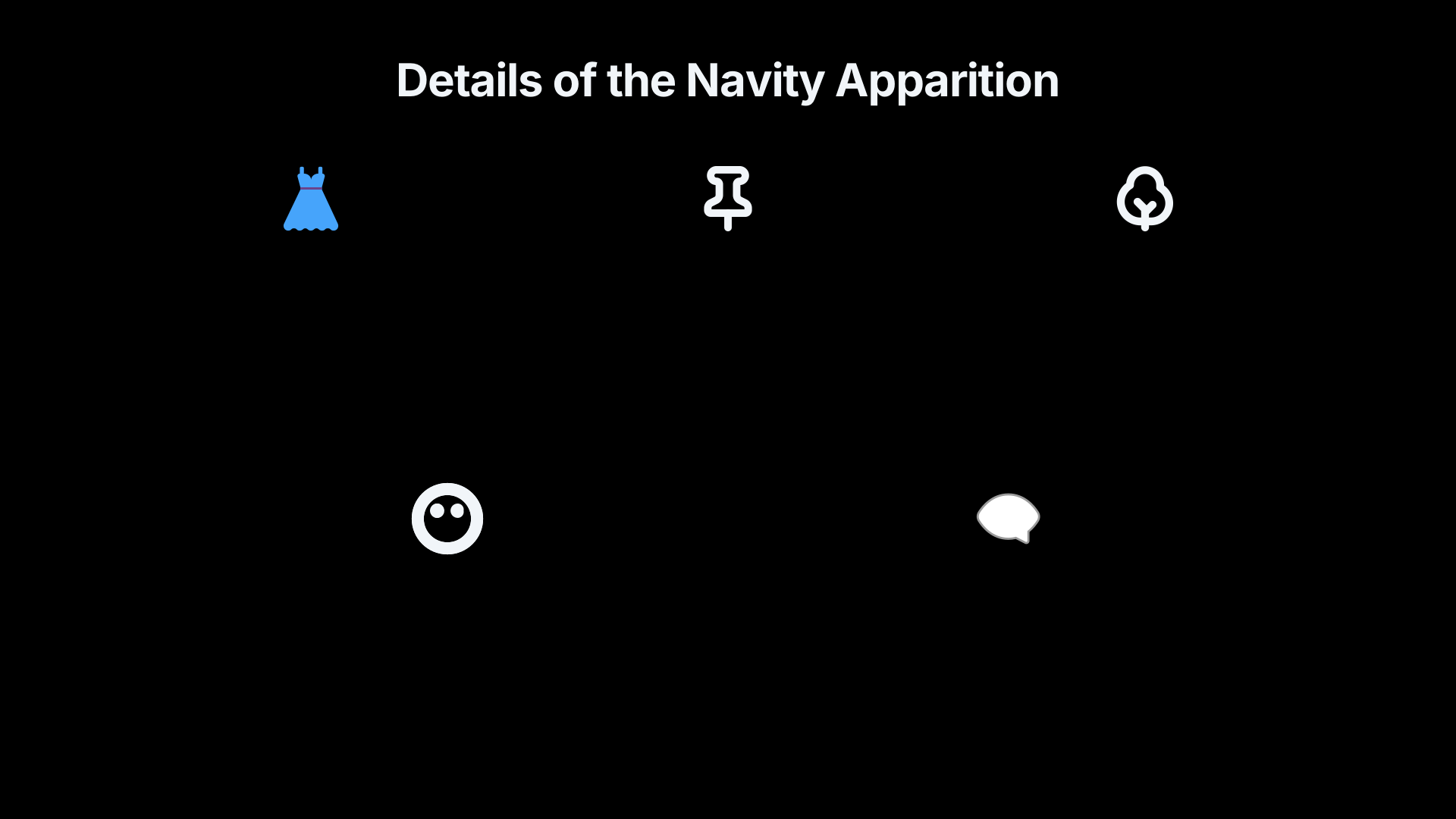
A few weeks after the burial, Saunders Munro was coming down towards Cromarty through the dark Navity woods when he saw a tall figure behind him. At first he mistook it for a living acquaintance and paused by the roadside. Then he recognised the dead miller of Resolis, dressed as he had been when alive in holiday Highland dress. Miller gives the apparition strikingly concrete details: tartan, scarlet hose garter, and the gleam of a large brass pin fastening the kilt at the waist.[Project Gutenberg]gutenberg.orgScenes and Legends of the North of Scotland | Project Gutenberg…
The apparition did not merely appear and vanish. It walked with Saunders, step for step, all the way to the gate of a burying-ground immediately above Cromarty, where it disappeared. The next evening, in Navity woods again, Saunders saw it a second time: a shadowy figure came out from the bushes into the road and accompanied him to the same boundary.[Project Gutenberg]gutenberg.orgScenes and Legends of the North of Scotland | Project Gutenberg…
Saunders tried to escape the pattern by changing the timing of his journey. On the third day he left Fortrose early enough to reach Cromarty’s outskirts by sunset, but the apparition appeared beside him in the clear twilight as he crossed the street to his own house. This time it looked at him with what Miller calls “grieved anxiety” before disappearing at the door.[Project Gutenberg]gutenberg.orgScenes and Legends of the North of Scotland | Project Gutenberg…
The most unsettling part of the account comes when Saunders changed the route itself. Instead of taking his usual road, he returned by the Ladies’ Walk, a wooded ravine within the pleasure-grounds of Cromarty House. The apparition still appeared beside him, even where the path narrowed between a steep bank and flowering shrubs; Miller says it glided through the bushes like smoke without stirring a leaf. At the old parish churchyard wall, it spoke for the first time: “Stop, Saunders, I must speak to you.” Saunders refused, saying he had neither faith nor strength to speak with such a being.[Project Gutenberg]gutenberg.orgScenes and Legends of the North of Scotland | Project Gutenberg…
Illness, fear and unfinished business
Miller does not present Saunders as a calm ghost-hunter. He presents him as a frightened older man whose nerves and health were visibly affected. On the evening when the spectre followed him to his own door, Miller’s aunt visited the house and found Saunders in bed in the corner of the sitting-room; his wife explained the cause of his illness.[Project Gutenberg]gutenberg.orgScenes and Legends of the North of Scotland | Project Gutenberg…
The local minister responded sceptically, or at least medically. Miller describes him as a man of strong good sense and liberal mind who asked Saunders about his nerves and stomach, then gave advice resembling a doctor’s prescription. This is one of the reasons the story is more interesting than a simple supernatural anecdote: even inside Miller’s telling, the minister is allowed a natural explanation.[Project Gutenberg]gutenberg.orgScenes and Legends of the North of Scotland | Project Gutenberg…
Saunders, however, was not satisfied. He went instead to an elder of the parish, an Udoll farmer belonging to the respected class known in the north as “the Men”. The elder did not treat the matter as indigestion or nerves. He arranged to meet Saunders at the hill of Eathie, a few miles from Cromarty, and the two walked back through Navity woods together. Whatever happened that evening was never publicly described, but Saunders did not see the apparition again, despite travelling for years afterwards at all hours.[Project Gutenberg]gutenberg.orgScenes and Legends of the North of Scotland | Project Gutenberg…
This silence is central to the legend’s hold. The ghost apparently wanted to speak; Saunders refused; the elder intervened; then the haunting stopped. The community never received a full confession or revealed secret. That makes the story feel less like a solved mystery than a ritual containment of fear.
Why the dead miller story became locally famous
Miller himself comments on the oddity of the tale. If someone were inventing a ghost story, he says, it would be easy to make a more satisfying one: the miller’s ghost appears “to less purpose” than most spectres and fails to secure a clear public revelation of its secret. Yet Miller also says he knew no ghost story more firmly believed in its immediate neighbourhood, more minutely narrated, or less suspicious in relation to the honesty of the people whose testimony supported it.[Project Gutenberg]gutenberg.orgScenes and Legends of the North of Scotland | Project Gutenberg…
That combination explains its local fame. The story is memorable because it refuses neat closure. It contains:
- A named witness: Saunders Munro is not an anonymous traveller but a known postman with a regular route.
- A recognisable landscape: Fortrose, Rosemarkie, Maolbuie, Eathie, Navity woods and Cromarty form a real local circuit.
- A suspicious death: the miller’s body carried ambiguous marks, yet no official investigation followed.
- A repeated apparition: the figure returned across several evenings and followed Saunders even when he changed route.
- A social consequence: the suspected tacksman was not legally condemned, but he lived afterwards in visible dejection and died after a lingering illness.[Project Gutenberg]gutenberg.orgScenes and Legends of the North of Scotland | Project Gutenberg…
The tale also belongs to a wider Cromartyshire pattern in Miller’s work, where ghosts often expose moral strain rather than simply frighten passers-by. In the immediately preceding “Green Lady” story, for example, a supernatural figure is linked to hidden wrongdoing and disturbed burial; in “Munro the Post”, the possible wrong is never proved, but the moral pressure remains.[Project Gutenberg]gutenberg.orgScenes and Legends of the North of Scotland | Project Gutenberg…
How credible is the Navity Woods haunting?
The strongest evidence for the Navity Woods apparition is Hugh Miller’s record of a detailed local tradition. Miller’s Scenes and Legends was first published in 1835 and later reissued; Project Gutenberg’s edition identifies it as Scenes and Legends of the North of Scotland; or, The Traditional History of Cromarty, by Hugh Miller, author of The Old Red Sandstone.[Internet Archive]archive.orgOpen source on archive.org. Cromarty Museum also presents Miller as a Cromarty-born writer who recorded social and folklore material as well as geology and religious reform.[Cromarty Museum]cromartymuseum.org.ukOpen source on cromartymuseum.org.uk.
As evidence for a confirmed haunting, the account is much weaker. Miller gives no court record, inquest file, dated newspaper report or written statement from Saunders Munro. The death itself, by Miller’s own account, was not examined by a magistrate. The story rests on oral testimony, family memory and local belief.[Project Gutenberg]gutenberg.orgScenes and Legends of the North of Scotland | Project Gutenberg…
That does not make it worthless. It means it should be read as folklore with unusually strong local texture. Miller is careful enough to include a sceptical minister, ambiguous physical evidence, and his own admission that the ghost story is “not at all inexplicable on natural principles”.[Project Gutenberg]gutenberg.orgScenes and Legends of the North of Scotland | Project Gutenberg… In modern terms, the apparition could be approached in several ways:
- Folkloric reading: the dead miller represents unfinished business after a death that the community felt had not been properly answered.
- Psychological reading: Saunders had already felt intense anxiety after seeing the two quarrelling men take the dangerous road together, which may have shaped later experiences.
- Social reading: the story placed moral pressure on the suspected tacksman even without legal proof.
- Landscape reading: dark woods, moorland cairns, lonely roads and burial-ground boundaries all helped the tale become memorable and repeatable.
The most responsible conclusion is that Navity Woods preserves one of Cromartyshire’s most vivid ghost traditions, not a proven paranormal case. Its value lies in what it reveals about fear, conscience, rural travel, informal justice and the way a small community remembered a death it could not settle.
What remains at Navity for a modern reader
A visitor looking for a signposted “haunted Navity Woods” attraction may be disappointed. The surviving story is literary and folkloric rather than packaged as a modern ghost-tour stop. Navity remains a place-name in the Cromarty area, and modern descriptions still place Navity close to Cromarty on the Black Isle.[Ruth's Coastal Walk (UK)]coastalwalker.co.ukRuth's Coastal Walk (UK)541am Cromarty to RosemarkieRuth's Coastal Walk (UK)541am Cromarty to Rosemarkie The broader Black Isle landscape continues to be defined by farmed slopes, woodland, coastal roads and views towards the Cromarty Firth, rather than by an obvious single haunted monument.[NatureScot]nature.scotScotfarmed and forested slopes – ross & cromartyScotfarmed and forested slopes – ross & cromarty
Yet that is exactly why the tale works. The haunting is not attached to a grand ruin but to movement through ordinary country: the postman descending towards Cromarty, the sound of bushes beside the road, the edge of a burying-ground, the thought of a body once found on the moor. It is a ghost story of routes and thresholds.
Within Cromartyshire’s haunted history, Navity Woods is therefore best understood as the county’s clearest tale of unfinished business. The dead miller does not deliver a dramatic confession. He does not lead Saunders to hidden treasure or expose a murderer in court. He walks beside him, keeps pace, tries once to speak, and then disappears from the record after the elder’s intervention. The unease survives because the silence survives with it.
Amazon book picks
Further Reading
Books and field guides related to Who Haunted the Road Through Navity Woods?. Use these as the next step if you want deeper reading beyond the article.
Scenes and legends of the north of Scotland, or The tradition...
Contains the Navity Woods and dead miller tradition.
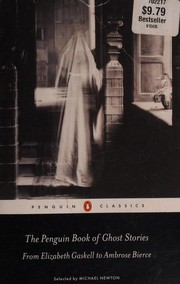
The Penguin Book of Ghost Stories
Offers literary context for classic apparition narratives.
eBay marketplace picks
Marketplace Samples
Live-tested eBay searches with available results related to this page.

Endnotes
1.
Source: gutenberg.org
Title: Project Gutenberg
Link:https://www.gutenberg.org/files/71325/71325-h/71325-h.htm
Source snippet
Scenes and Legends of the North of Scotland | Project Gutenberg...
2.
Source: archive.org
Link:https://archive.org/details/sceneslegendsofn00mill
3.
Source: gutenberg.org
Link:https://www.gutenberg.org/ebooks/71325
4.
Source: gutenberg.org
Title: pg71325 images
Link:https://www.gutenberg.org/cache/epub/71325/pg71325-images.html
5.
Source: archive.org
Link:https://archive.org/details/sceneslegendsofn00milluoft
6.
Source: gazetteer.org.uk
Link:https://gazetteer.org.uk/search?place=Cromartyshire&type=em
7.
Source: cromartymuseum.org.uk
Link:https://www.cromartymuseum.org.uk/learning/
8.
Source: coastalwalker.co.uk
Title: Ruth’s Coastal Walk (UK)541am Cromarty to Rosemarkie
Link:https://coastalwalker.co.uk/2025/09/10/541am-cromarty-to-rosemarkie/
9.
Source: nature.scot
Title: Scotfarmed and forested slopes – ross & cromarty
Link:https://www.nature.scot/sites/default/files/LCA/LCT%20345%20-%20Farmed%20and%20Forested%20Slopes%20-%20Ross%20%26%20Cromarty%20-%20final%20pdf.pdf
10.
Source: wikishire.co.uk
Link:https://wikishire.co.uk/wiki/Cromartyshire
11.
Source: facebook.com
Link:https://www.facebook.com/RealCounties/photos/the-county-of-cromarty-is-a-shire-of-the-highlands-and-certainly-the-most-unusua/629139812702923/
12.
Source: Wikipedia
Link:https://en.wikipedia.org/wiki/Cromartyshire
13.
Source: gazetteer.org.uk
Link:https://gazetteer.org.uk/place/Cromartyshire
14.
Source: rightmove.co.uk
Link:https://www.rightmove.co.uk/property-for-sale/Black-Isle-94460/detached.html
15.
Source: trove.scot
Link:https://www.trove.scot/place/288277
Additional References
16.
Source: youtube.com
Title: Cromarty Old Graveyard. Folk Story Grave Part3 of 3
Link:https://www.youtube.com/watch?v=N24-sNLG6Ec
Source snippet
Cromarty ghost history folklore Cromarty Old Graveyard. Folk Story Grave Part3 of 3 gotz777...
17.
Source: upload.wikimedia.org
Link:https://upload.wikimedia.org/wikipedia/commons/1/1c/A_history_of_Cuyahoga_County_and_the_City_of_Cleveland%2C_%28Vol.1%29%28IA_historyofcuyahog01coat_0%29.pdf
18.
Source: facebook.com
Link:https://www.facebook.com/BanffandMacduff/posts/this-1949-banffshire-journal-report-captures-something-of-the-feeling-of-a-rural/1330589439114165/
19.
Source: wikishire.co.uk
Link:https://wikishire.co.uk/wiki/Black_Isle
20.
Source: transitionblackisle.org
Link:https://www.transitionblackisle.org/travel-tourism/black-isle-cycle-routes/
21.
Source: ancient-scotland.co.uk
Link:https://www.ancient-scotland.co.uk/site/camster-stone-row
22.
Source: abcounties.com
Link:https://abcounties.com/counties/county-profiles/cromartyshire/
23.
Source: undiscoveredscotland.co.uk
Link:https://www.undiscoveredscotland.co.uk/usfeatures/areas/cromartyshire.html
24.
Source: explore-inverness.com
Link:https://www.explore-inverness.com/regions/north-of-inverness/cromarty/
25.
Source: facebook.com
Link:https://www.facebook.com/groups/2003881253140331/posts/2858120041049777/
Topic Tree