Within Haunted Hertfordshire
Was Hertfordshire's Wicked Lady Ever Real?
Katherine Ferrers' Wicked Lady legend turns Hertfordshire's old roads into a story of disguise, danger and disputed memory.
On this page
- Katherine Ferrers and the highwaywoman tale
- Markyate, Wheathampstead and the old road landscape
- Legend, film and the problems with the evidence
Page outline Jump by section
Introduction
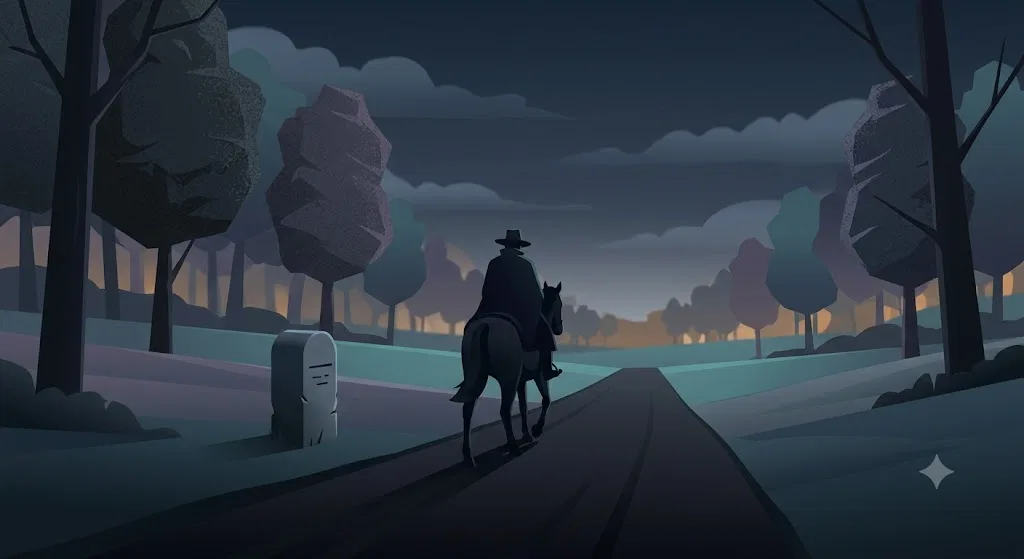
Katherine Ferrers, better known in Hertfordshire folklore as the Wicked Lady, is remembered less as a proved criminal than as a road legend: a young gentlewoman said to have dressed as a man, ridden out from Markyate, robbed travellers on the old roads around Nomansland Common, and died after being shot during a hold-up. The story matters because it gives Hertfordshire one of its most vivid haunted-road traditions: a ghostly rider, a secret stair, a ruined reputation, and a landscape of commons, coaching routes and country houses where local memory still feels close to the road.
The historical problem is just as important as the atmosphere. Hertfordshire local-history sources and later historians have repeatedly warned that there is no contemporary proof that Ferrers was a highwaywoman, and that the “Wicked Lady” identity appears to be a later accretion rather than a secure seventeenth-century fact. Hertfordshire Archives’ public local-history material states plainly that there is no evidence from Katherine’s lifetime that she was a highwaywoman, while later summaries still preserve the legend because it became part of the county’s folklore.[Herts Memories]hertsmemories.org.ukHerts Memories Katherine Ferrers: The Wicked LadyHerts MemoriesKatherine Ferrers: The Wicked Lady - or was she?5 Dec 2016 — Nor is there any indication in contemporary textual records th…
Katherine Ferrers and the Highwaywoman Tale
The traditional story usually begins with a dramatic contrast. Katherine Ferrers is presented as an heiress of good family, born in 1634 and drawn into the financial and political turbulence of the Civil War period. Her family and marriage links connect her with the Ferrers and Fanshawe estates, and modern retellings often stress that, as a young woman, she had property but little control over it. HeritageDaily summarises the historical outline: Katherine was an heiress; her widowed mother married into the Royalist Fanshawe family; the Civil War and sequestration of Royalist estates created financial pressure; and Thomas Fanshawe disposed of much of the Ferrers property before Katherine’s death in 1660.[HeritageDaily - Archaeology News]heritagedaily.comHeritage DailyHeritage Daily
Folklore turns that uncomfortable inheritance story into something far more theatrical. In the legend, Katherine responds to loss, boredom, neglect or injustice by becoming a masked rider. She is said to put on breeches, cloak, hat and mask, ride a black horse, and prey on travellers on the roads around Markyate, Wheathampstead and Nomansland Common. The Chilterns National Landscape page preserves this familiar version, naming Ralph Chaplin as her supposed highwayman accomplice and describing Nomansland Common as her favourite haunt.[Chilterns National Landscape]chilterns.org.ukChilterns National Landscape Katherine Ferrers | Chilterns National LandscapeChilterns National Landscape Katherine Ferrers | Chilterns National Landscape
The most persistent ending is the one that made the tale a ghost story. Katherine, mortally wounded during a robbery, is said to ride back towards Markyate Cell, only to die before she can properly return to her hidden entrance. Some versions have servants finding her body in men’s clothing and secretly carrying her for burial. Dunstable local-history material gives the sober counterpoint: Katherine was buried at St Mary’s, Ware, on 13 June 1660 as “Mistress Catherine Fanshawe”, and the dramatic choice between “shot on Nomansland” and “died while with her husband in London” remains unresolved by hard evidence.[Dunstable History Society]dunstablehistory.co.ukDunstable History Society Wicked_lady2Dunstable History Society Wicked_lady2
That uncertainty is why the Wicked Lady is best understood as folklore attached to a real woman, not as a confirmed biography. The true Katherine Ferrers died young, at about 26, and the Ferrers line died with her. The legend then uses that early death as an opening: a short life becomes a secret life; a burial record becomes a concealed scandal; a family property dispute becomes a night ride.
Markyate, Wheathampstead and the Old Road Landscape
The Wicked Lady belongs to a very specific Hertfordshire geography. The key places are Markyate and Cell Park, formerly Markyate Cell; Nomansland Common near Wheathampstead; Gustardwood and the commons north of St Albans; and the old road world of Watling Street and the later A5 corridor. This matters because the story is not merely about a woman with a pistol. It is about movement through a county that sat on routes out of London, where coaches, packhorses, drovers, soldiers and footpads were part of the imaginative scenery.
Cell Park gives the legend its mansion-house setting. Historic England lists Cell Park on Dunstable Road, Markyate, as a Grade II* country house, formerly listed as Markyate Cell. The official listing places the house on or beside the site of a suppressed Benedictine nunnery founded in the twelfth century and dissolved in 1537, with substantial Tudor, seventeenth-century, nineteenth-century and early twentieth-century remodelling.[Historic England]historicengland.org.ukHistoric England Cell Park, MarkyateHistoric England Cell Park, Markyate Historic England’s registered park entry likewise describes Cell Park house as standing in the park near the A5, with medieval and Tudor remains incorporated into later remodelling.[Historic England]historicengland.org.ukHistoric England Markyatecell Park, MarkyateHistoric England Markyatecell Park, Markyate
That architectural layering is exactly the sort of material that helps a ghost story survive. A former religious site, a Tudor house, a private park, a road outside the gates and stories of hidden chambers create a place that feels ready-made for legend. Dunstable History notes that there really was a secret chamber discovered in the nineteenth century behind a false wall near a chimney stack, and that this discovery “undoubtedly added fuel” to the Wicked Lady stories.[Dunstable History Society]dunstablehistory.co.ukDunstable History Society Wicked_lady2Dunstable History Society Wicked_lady2
Nomansland Common supplies the more dangerous stage. In local tradition, this was where Katherine hunted travellers and where she was finally shot. The Chilterns National Landscape account says the common’s name came from a dispute between the abbeys of St Albans and Westminster, and places Katherine’s supposed robberies there.[Chilterns National Landscape]chilterns.org.ukChilterns National Landscape Katherine Ferrers | Chilterns National LandscapeChilterns National Landscape Katherine Ferrers | Chilterns National Landscape Even without accepting the highwaywoman claim, the common works powerfully as folklore terrain: open land, old boundaries, contested jurisdiction and roads passing through exposed country.
The difficulty is practical as well as evidential. The legend often imagines Katherine riding between Markyate Cell and Nomansland Common with cinematic ease, but sceptical accounts point out that Markyate Cell is not especially close to Nomansland and that the property had been sold before Katherine’s death. Dunstable History states that Thomas Fanshawe had sold Markyate Cell in 1655, five years before Katherine died, and that it is not certain the couple ever lived there at all.[Dunstable History Society]dunstablehistory.co.ukDunstable History Society Wicked_lady2Dunstable History Society Wicked_lady2
Why the Wicked Lady Became Hertfordshire’s Road Ghost
The Wicked Lady became famous because the tale sits at the crossing point of several powerful traditions: the romantic highwayman, the wronged heiress, the woman in male disguise, the haunted house, the old road and the shameful burial. Remove any one of those elements and the story weakens. Together, they make it unusually memorable.
The highwayman element gave the legend a ready-made shape. Seventeenth- and eighteenth-century road crime was later romanticised in ballads, chapbooks, novels and stage melodrama, especially when the robber was imagined as bold, well-dressed and socially superior. Katherine Ferrers was an ideal candidate for this kind of story because she was young, aristocratic, politically entangled and dead before middle age. Her life left enough gaps for invention.
The gender disguise is equally important. The Wicked Lady is not remembered simply as a robber but as a woman crossing the boundary between domestic gentility and violent public space. She moves from manor house to highway, from gown to breeches, from heiress to outlaw. That transformation gives the legend its charge. It can be read as scandal, wish-fulfilment, misogynistic warning, proto-feminist fantasy, or local melodrama, depending on the teller.
The ghost tradition then turns the road legend into a haunting. Haunted Palace Blog, drawing together literary and local retellings, records reported motifs including footsteps and lights at the house, a female figure in male attire, a ghost associated with Markyate Cell, hoofbeats on Nomansland Common, and later roadside sightings interpreted as the Wicked Lady. These are not verified paranormal facts, but they show how the story shifted from crime legend into recurring apparition lore.[The Haunted Palace Blog]hauntedpalaceblog.comThe Haunted Palace Blog The Wicked Lady: Folklore, FictionThe Haunted Palace Blog The Wicked Lady: Folklore, Fiction
The place-name afterlife matters too. The legend is now fixed in local memory through Ferrers Lane, Markyate Cell stories, the Wicked Lady pub near Nomansland Common, walking routes and county folklore writing. The Chilterns National Landscape page describes Nomansland Common as an open-access area and notes the Wicked Lady Inn as a place visitors can associate with the story.[Chilterns National Landscape]chilterns.org.ukChilterns National Landscape Katherine Ferrers | Chilterns National LandscapeChilterns National Landscape Katherine Ferrers | Chilterns National Landscape Folklore survives best when it can be pointed to from a road, a lane, a pub sign or a gate.
Legend, Film and the Problems with the Evidence
The strongest historical reading is that Katherine Ferrers was real, the Wicked Lady legend is real as folklore, but the identification of Ferrers as a practising highwaywoman is unproven and probably late. That distinction is central. A legend can be culturally important without being factually reliable.
Several problems recur. First, the contemporary record is thin where it should be loud. A gentlewoman committing armed robbery, murder and arson across Hertfordshire would be expected to leave some trace in legal, parish, estate or pamphlet records. Hertfordshire local-history material explicitly says no contemporary textual record shows Hertfordshire being terrorised by a highwaywoman at the time.[Herts Memories]hertsmemories.org.ukHerts Memories Katherine Ferrers: The Wicked LadyHerts MemoriesKatherine Ferrers: The Wicked Lady - or was she?5 Dec 2016 — Nor is there any indication in contemporary textual records th…
Second, the Markyate Cell setting does not fit neatly. The story depends on Katherine secretly leaving and returning to the house, sometimes by hidden stair or chamber, yet local historical accounts note that Markyate Cell had been sold before her death and may have been tenanted rather than occupied by her. Dunstable History makes this one of the major dating flaws in the fatal-ride tradition.[Dunstable History Society]dunstablehistory.co.ukDunstable History Society Wicked_lady2Dunstable History Society Wicked_lady2
Third, the name “Wicked Lady” may itself be a later confusion. HeritageDaily summarises the argument associated with J. E. Cussans: no contemporary records attribute the crimes to Katherine, and the “wicked” label may have been influenced by Laurence Shirley, the “Wicked” Lord Ferrers, who was hanged in 1760 for murdering his steward.[HeritageDaily - Archaeology News]heritagedaily.comHeritage DailyHeritage Daily The Chilterns National Landscape account also notes the possible confusion with the fourth Earl Ferrers, while still preserving the local legend.[Chilterns National Landscape]chilterns.org.ukChilterns National Landscape Katherine Ferrers | Chilterns National LandscapeChilterns National Landscape Katherine Ferrers | Chilterns National Landscape
Fourth, the supposed accomplice Ralph Chaplin is elusive. He gives the story romance and danger, but sceptical retellings repeatedly observe that he is hard to pin down in local records. In folklore terms, this is not surprising: the lover-accomplice is a useful narrative device, giving Katherine a partner, a betrayal, a loss and a reason to continue riding towards doom.
The twentieth century then did what folklore often does: it polished the story until many people met the fiction before they met the evidence. Magdalen King-Hall’s 1944 novel helped reshape the legend for modern readers, and the 1945 Gainsborough film The Wicked Lady, starring Margaret Lockwood and James Mason, turned the figure into a national screen image. Later film listings and BFI-related cinema material describe the plot as a seventeenth-century noblewoman turning to highway robbery, a melodramatic version that helped detach the “Wicked Lady” from the cautious archive and attach her to popular entertainment.[Derby QUAD]derbyquad.co.ukOpen source on derbyquad.co.uk.
How to Read the Wicked Lady Today
For readers interested in Hertfordshire’s haunted history, the Wicked Lady is most rewarding when read on two levels at once. On the surface, it is an atmospheric roadside ghost story: a masked rider, a fatal wound, hoofbeats in the dark and a figure glimpsed near old roads. Beneath that, it is a case study in how local folklore builds a legend from fragments: a young heiress, a sold estate, a hidden chamber, a night burial, a violent century and a later appetite for romantic highwaymen.
The story should not be presented as a solved criminal biography. Katherine Ferrers was a documented seventeenth-century gentlewoman who died young and was buried at Ware. The Wicked Lady was a later and much more dramatic figure said to haunt roads, commons and Markyate Cell. Those two figures overlap in local memory, but the join is rough.
That rough join is precisely why the legend lasts. If Katherine had been clearly convicted, the story would belong mainly to crime history. If she had been entirely fictional, it would lose the magnetism of a real name and real places. Instead, she stands in the uncertain middle ground where county folklore thrives: not proved, not easily dismissed, and still able to make a Hertfordshire road feel older, darker and more watchful after dusk.
Amazon book picks
Further Reading
Books and field guides related to Was Hertfordshire's Wicked Lady Ever Real?. Use these as the next step if you want deeper reading beyond the article.


eBay marketplace picks
Marketplace Samples
Live-tested eBay searches with available results related to this page.
Endnotes
1.
Source: heritagedaily.com
Title: Heritage Daily
Link:https://www.heritagedaily.com/2023/12/katherine-ferrers-the-unfairly-named-wicked-lady/150063
2.
Source: derbyquad.co.uk
Link:https://www.derbyquad.co.uk/events/wickedlady/
3.
Source: cinema.nl
Title: 471287 the wicked lady
Link:https://www.cinema.nl/db/471287-the-wicked-lady
4.
Source: hertsmemories.org.uk
Title: Herts Memories Katherine Ferrers: The Wicked Lady
Link:https://www.hertsmemories.org.uk/content/herts-history/people/katherine-ferrers-wicked-lady
Source snippet
Herts MemoriesKatherine Ferrers: The Wicked Lady - or was she?5 Dec 2016 — Nor is there any indication in contemporary textual records th...
5.
Source: chilterns.org.uk
Title: Chilterns National Landscape Katherine Ferrers | Chilterns National Landscape
Link:https://www.chilterns.org.uk/map_marker/katherine-ferrers/
6.
Source: dunstablehistory.co.uk
Title: Dunstable History Society Wicked_lady2
Link:https://www.dunstablehistory.co.uk/Articles/Wicked_lady2.htm
7.
Source: historicengland.org.uk
Title: Historic England Cell Park, Markyate
Link:https://historicengland.org.uk/listing/the-list/list-entry/1173939
8.
Source: historicengland.org.uk
Title: Historic England Markyatecell Park, Markyate
Link:https://historicengland.org.uk/listing/the-list/list-entry/1000915
9.
Source: hauntedpalaceblog.com
Title: The Haunted Palace Blog The Wicked Lady: Folklore, Fiction
Link:https://hauntedpalaceblog.com/2013/04/15/the-wicked-lady-folklore-fiction-fact/
10.
Source: Wikipedia
Title: Katherine Ferrers
Link:https://en.wikipedia.org/wiki/Katherine_Ferrers
11.
Source: Wikipedia
Title: Cell Park
Link:https://en.wikipedia.org/wiki/Cell_Park
12.
Source: Wikipedia
Title: The Wicked Lady
Link:https://en.wikipedia.org/wiki/The_Wicked_Lady
13.
Source: historicengland.org.uk
Title: The Garden Walls at Cell Park, Markyate
Link:https://historicengland.org.uk/listing/the-list/list-entry/1101242
14.
Source: historicengland.org.uk
Title: Milestone Opposite Cell Park, Markyate
Link:https://historicengland.org.uk/listing/the-list/list-entry/1173958
15.
Source: historicengland.org.uk
Title: list entry
Link:https://historicengland.org.uk/listing/the-list/list-entry/1173916
16.
Source: occult-world.com
Title: markyate cell
Link:https://occult-world.com/markyate-cell/
17.
Source: youtube.com
Title: “The Wicked Lady”
Link:https://www.youtube.com/watch?v=lrj0kbbF3ns
18.
Source: aroundus.com
Title: Cell Park
Link:https://aroundus.com/p/164196597-cell-park
19.
Source: catalog.hathitrust.org
Link:https://catalog.hathitrust.org/Record/011800753
Additional References
20.
Source: youtube.com
Title: The History Of London’s Horrifying Highwaymen
Link:https://www.youtube.com/watch?v=3wH9rDyA-xo
Source snippet
The Female Highwayman - Sophie Crawford and George Sansome - Queer Folk...
21.
Source: allsop.co.uk
Link:https://www.allsop.co.uk/lot-overview/lot/r140529-275
22.
Source: britishlistedbuildings.co.uk
Link:https://britishlistedbuildings.co.uk/101173939-cell-park-markyate
23.
Source: hertfordshire-genealogy.co.uk
Link:https://www.hertfordshire-genealogy.co.uk/data/answers/answers-2001/ans-0021-wickedlady.htm
24.
Source: facebook.com
Link:https://www.facebook.com/HistoryRoadshow/posts/by-the-time-katherine-ferrers-was-fourteen-she-had-lost-her-father-her-grandfath/1597083805758537/
25.
Source: brethertonlaw.co.uk
Link:https://brethertonlaw.co.uk/news/lady-katherine-ferrers-wicked-lady-wronged-woman/
26.
Source: hertfordshire-genealogy.co.uk
Link:https://www.hertfordshire-genealogy.co.uk/data/places/places-m/markyate/markyate-cell.htm
27.
Source: hertfordshire-genealogy.co.uk
Link:https://www.hertfordshire-genealogy.co.uk/data/places/places-h/hatfield/hatfield-ponsbourne.htm
28.
Source: justhistoryposts.com
Link:https://justhistoryposts.com/2017/03/09/stand-and-deliver-your-money-or-your-life-female-highwaymen-of-the-seventeenth-century/
29.
Source: facebook.com
Link:https://www.facebook.com/tvchoicemagazine/posts/classic-film-choicethe-wicked-lady-easter-monday-talking-pictures-tv-325pm-is-a-/2436396199717769/
Topic Tree