Within Haunted Inverness shire
Where Does Inverness Remember Its Restless Dead?
Inverness's haunted places often point to imprisonment, executions and civic unease after Culloden.
On this page
- Old High Church and execution traditions
- Tolbooth confinement and civic punishment
- How local ghost walks shape the story
Page outline Jump by section
Introduction
Inverness remembers its restless dead through places where worship, punishment and post-Culloden memory overlap. The city is the county town of historic Inverness-shire, standing where the River Ness meets the Moray Firth, and its haunted reputation is less about one spectacular apparition than about a tight urban cluster: the Old High Church and kirkyard, the old tolbooth and steeple, prison rooms, execution stories, and modern ghost walks that turn civic trauma into a walkable route.[Wikishire]wikishire.co.ukOpen source on wikishire.co.uk.
The strongest stories are attached to the aftermath of the Battle of Culloden on 16 April 1746, when Jacobite defeat just outside Inverness was followed by imprisonment, trials, executions and transportations. The National Trust for Scotland describes Culloden as the last pitched battle on British soil, with around 1,600 men killed in less than an hour, about 1,500 of them Jacobites; that scale of loss gives Inverness’s churchyard and prison traditions their emotional force.[National Trust for Scotland]nts.org.ukOpen source on nts.org.uk.
Why Inverness’s Ghost Stories Gather Around Authority
Inverness is not just a scenic Highland city in this branch of haunted Inverness-shire. It is the place where battlefield violence entered the machinery of town life. Culloden Moor supplies the national trauma, but Inverness supplies the doors, cells, bells, church walls and graveyard stones through which that trauma becomes local folklore.
That matters because many Inverness ghost stories are really stories about authority: who was locked up, who was punished, who watched, who remembered, and who later retold the tale. In haunted-place writing, prisons and churches often work differently from castles or lonely roads. A castle haunting may turn on a family curse or dramatic apparition; a prison or kirkyard story tends to ask a sharper civic question: what did the town do with the defeated, the condemned and the unwanted?
The city’s old core makes that question unusually visible. The Old High Church stands on Church Street above the River Ness, while the Town Steeple and former tolbooth site stand close by on Bridge Street and High Street. Historic Environment Scotland records the Old High Church as an A-listed building with a late sixteenth-century tower and a church body rebuilt in 1769–72; Canmore records the Town Steeple as a 1789–91 structure built on the site of an earlier steeple and adjacent court-house and jail begun on the site of the tolbooth.[Historic Environment Scotland]portal.historicenvironment.scotOpen source on historicenvironment.scot.
The result is a compact haunted geography. A visitor can walk from churchyard to steeple in minutes, but the stories open out into the wider county: Culloden to the east, the River Ness below, and the historic county’s long Highland and island memory behind it. Inverness’s haunted centre is therefore not a rival to Culloden in the county’s ghost map. It is the aftermath zone.
Old High Church and Execution Traditions
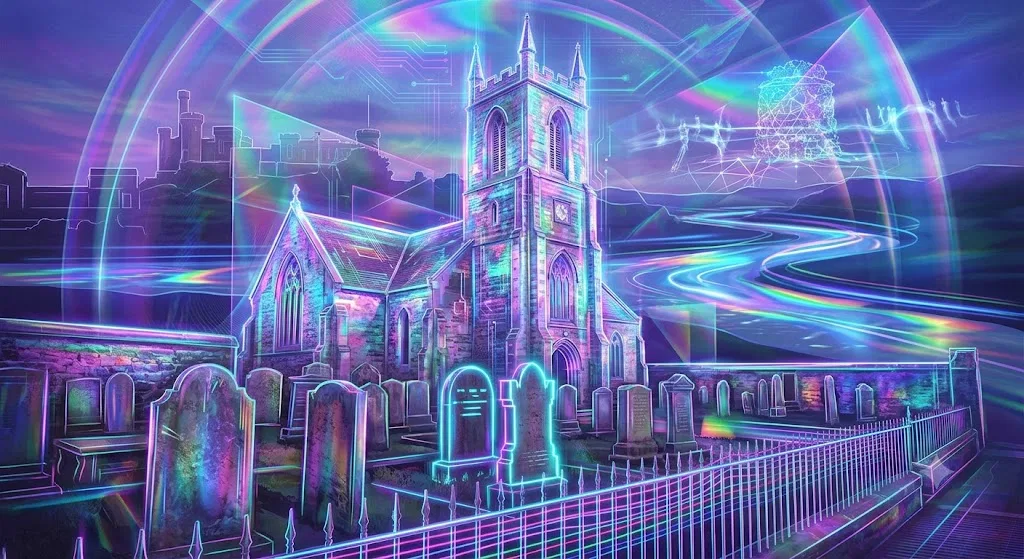
The Old High Church is the key Inverness site for post-Culloden ghost lore. It is often presented as the city’s oldest or most historically charged church site, with traditions connecting St Michael’s Mount to early Christian worship and St Columba, though the present building is later. Scotland’s Churches Trust says the present church was completed in 1772 on the site of a medieval church, with the lower part of the west bell tower dating to the fifteenth or sixteenth century; Historic Environment Scotland gives the tower as late sixteenth century and the church as 1769–72.[Scotland's Churches Trust]scotlandschurchestrust.org.ukScotland's Churches Trust Old High Church, InvernessScotland's Churches Trust Old High Church, Inverness
The haunting tradition is not built only on the age of the church. It is built on the claim that Jacobite prisoners were held there after Culloden and executed in the churchyard. Local-history and visitor sources repeatedly describe captured Jacobites being confined in the church or tower, led outside, blindfolded, and shot, with musket-ball marks said to remain on the tower wall. Britain Express gives a detailed version in which government soldiers imprisoned in the tower by Jacobite forces were released after Culloden, then replaced by captured Jacobites, who were executed outside in the churchyard.[Britain Express]britainexpress.comOpen source on britainexpress.com.
The most concrete part of the tradition concerns the gravestones. Several visitor accounts point to particular stones in the kirkyard: one with hollows or notches where a prisoner may have been positioned, and another with a heart-shaped or V-shaped groove where the executioner is said to have rested a musket. Atlas Obscura and VoiceMap both preserve this physical interpretation of the stones, while also acknowledging the story as a local belief rather than a courtroom record.[atlasobscura.com]atlasobscura.comAtlas Obscura Old High Church Kirkyard in InvernessAtlas Obscura Old High Church Kirkyard in Inverness
This is exactly the kind of material that makes a place powerful in ghost folklore: a reader or visitor is not just told that “something happened here”. They are invited to look for marks in stone. The bullet scars, notched grave markers and sightline to the river turn a violent tradition into a visible route through the churchyard.
The difficulty is that the story is stronger as local memory than as fully documented event-by-event evidence. We can securely say that Culloden produced mass death and a large body of prisoners, and that Inverness was central to the immediate aftermath. The National Archives holds records relating to rebel prisoners after Culloden, including a July 1746 list of prisoners with rank and witnesses; Undiscovered Scotland summarises the wider aftermath as 3,470 Jacobites, supporters and others taken prisoner, with 120 executed, 88 dying in prison, 936 transported and many later released.[The National Archives]nationalarchives.gov.ukOpen source on nationalarchives.gov.uk.
What is harder to pin down is the exact number executed at the Old High Church itself, and the exact chain of custody for every prisoner associated with the site. Some popular sources repeat the figure of 120 in a way that can blur the distinction between all post-Culloden executions and executions specifically in Inverness. A careful reading should treat the Old High Church execution tradition as locally famous, physically anchored and historically plausible in its broad setting, but not as a complete official ledger of named deaths at that one spot.
What Is Said to Haunt the Old High?
The Old High haunting is usually presented in two overlapping ways. The first is residual: a sense that the churchyard retains the fear, shots and grief of post-Culloden executions. The second is more conventional ghost lore, with reports of a “Grey Lady” or shadowy presence in and around the church.
Recent popular haunted-Inverness accounts describe the Grey Lady as a figure said to move through the pews, corridors or graveyard, while paranormal listings repeat visitor claims of apparitions, unease and unexplained sensations. These accounts are useful for understanding the modern ghost reputation, but they are thinner than the execution tradition because they rarely provide named witnesses, dates, signed statements or independent corroboration.[Inverness Taxi]old-inverness.wtshappening.co.ukInverness Taxi The Spookiest Sites in Inverness This HalloweenInverness Taxi The Spookiest Sites in Inverness This Halloween
The better reading is that the Grey Lady motif has attached itself to an already charged site. Across Britain, “grey lady” stories often gather around old religious buildings, castles and houses without a stable identity for the apparition. In Inverness, the figure’s power comes less from a documented biography than from the place she inhabits: a church that local tradition already links to prisoners, death and bodies buried or disposed of in uncertain ways.
That does not make the story worthless. Folklore does not need to be a police report to matter. It shows how visitors and locals have translated a difficult historical memory into a familiar ghost form. Where the execution stones ask the viewer to imagine specific human bodies, the Grey Lady gives the place a moving presence: sorrow made visible.
The most interesting modern example of that social life came in 1964, when the Press and Journal later reported that around 100 children tried to exorcise an alleged ghost at the Old High Church. This kind of episode is revealing because it shows the story circulating beyond guidebooks and tourist copy. A haunting had become local play, local fear and local performance.[Press and Journal]pressandjournal.co.uk100 children attempted to exorcise inverness ghost100 children attempted to exorcise inverness ghost
Tolbooth Confinement and Civic Punishment
The tolbooth side of Inverness’s haunted geography matters because it shifts the story from sacred ground to civic punishment. A Scottish tolbooth was not merely a prison in the modern sense. It was commonly a town’s municipal heart: a place for council business, courts, tolls, records and cells. The Institutional History Society describes tolbooths as Scottish structures that combined customs, judiciary and imprisonment, sometimes with execution grounds attached.[The Institutional History Society]institutionalhistory.comThe Institutional History Society Lockups and TolboothsThe Institutional History Society Lockups and Tolbooths
Inverness’s former tolbooth and steeple fit that pattern. Canmore records that the present Town Steeple, 43 metres high, was built in 1789–91 at Bridge Street and Church Street on the site of an earlier steeple, with an adjacent court-house and jail begun in 1788 on the site of the tolbooth. It also notes older prison arrangements around the River Ness bridge, including a prison-cell incorporated into a spandrel of the bridge built in 1683–85.[Canmore]canmore.org.ukinverness 2 bridge street town steepleinverness 2 bridge street town steeple
The detail that matters for haunted history is the condition of confinement. Canmore records that in 1786 the court-house in the tolbooth was described as “very antient”, with a jail made up of “only two small cells for criminals, and one miserable room for civil debtors”; by the following year the buildings were considered very old and incapable of repair.[Canmore]canmore.org.ukinverness 2 bridge street town steepleinverness 2 bridge street town steeple
That phrase “one miserable room” is more useful than any exaggerated ghost claim. It gives the reader the atmosphere without invention: cramped civic imprisonment, debtors and criminals held in a decaying building at the heart of the town, beside the everyday life of markets, shops and burgh government.
Haunted Inverness articles sometimes link the tolbooth with later Highland unrest, including the Clearances, and with a general sense of prisoners, punishments and lingering unease. Ness Walk’s haunted-places guide describes the tolbooth as an infamous location close to the Old High Church and says prisoners were held in the area from 1436, while local walking-history material associates the tolbooth with the 1792 sheep protests and the imprisonment of men sentenced to deportation.[Ness Walk]nesswalk.comNess Walk Haunted Places in Inverness to VisitNess Walk Haunted Places in Inverness to Visit
Those later traditions should not be folded carelessly into Culloden. They belong to a broader Inverness pattern: the town as a place where Highland conflict was processed by courts, cells and public punishment. For ghost-story purposes, that means the tolbooth is less a single apparition site than a memory machine. It concentrates fear of authority, resentment against landlords and officials, and the vulnerability of people caught in legal power.
Why the Post-Culloden Aftermath Feels More Haunted Than the Battle Alone
Culloden’s battlefield ghosts are usually imagined across open ground: cries on the moor, anniversary impressions, soldiers glimpsed at a distance. Inverness’s post-Culloden ghosts feel different because they move the story indoors and into civic space. A battlefield death may be sudden, chaotic and collective; imprisonment and execution are slower, more bureaucratic and more intimate.
That distinction is why the Old High Church is so important to Inverness-shire’s haunted map. It suggests that Culloden did not end when the firing stopped. The aftermath entered the town, filled makeshift prisons, and produced stories of men waiting inside a sacred building while shots sounded outside. Douglas Skelton’s account of the Old High tradition captures this remembered cruelty by describing prisoners held in the building while hearing others being shot in the kirkyard.[Douglas Skelton]douglasskelton.comDouglas Skelton Slaughter in InvernessDouglas Skelton Slaughter in Inverness
This is also where sceptical interpretation and haunted interpretation can meet. A sceptical reader does not need to accept apparitions to understand why a place like this generates ghost stories. It has the essential ingredients: a known national trauma, visible historic fabric, repeated local retelling, uncertain burial traditions, and moral discomfort about what happened to prisoners after defeat.
The uncertainty around bodies is particularly potent. Atlas Obscura records the belief that some executed prisoners were buried in a pit beneath what is now a paved walkway beside the church, while other accounts say bodies may have been disposed of down the bank towards the river. These claims should be handled as tradition rather than confirmed archaeological fact, but their emotional role is clear: they turn the churchyard into a place of unresolved burial.[Atlas Obscura]atlasobscura.comAtlas Obscura Old High Church Kirkyard in InvernessAtlas Obscura Old High Church Kirkyard in Inverness
In ghost folklore, unresolved burial often matters as much as apparition. A named ghost may be absent, but the place feels restless because the dead are imagined as improperly mourned, hidden, hurried away or denied dignity. Inverness’s post-Culloden stories are built on that unease.

How Ghost Walks Shape the Story
Modern Inverness ghost walks and dark-history tours do not merely repeat old stories. They choose routes, emphasise details, and decide which fragments of history become memorable for visitors. That is especially important in a city where the haunted sites are close together and can be experienced as a sequence.
Walking tours commonly use the Old High Church as a dramatic stop. WOW Scotland’s Inverness walking tour says it finishes at the Old High Church with stories of body snatchers and Jacobite executions, and describes the church as a beautiful building whose later history includes imprisonment and execution after Culloden. Walking Tours in Scotland’s “Dark Side” tour advertises Old High Cemetery, Blackfriars Graveyard, the bell tower, Inverness Castle and other sites as part of a 90-minute exploration of the city’s darker past.[WOW Scotland Tours]wowscotlandtours.comOpen source on wowscotlandtours.com.
This does two things for the legend. First, it keeps the stories public. A churchyard execution tradition that might otherwise sit in local books or family memory becomes something a visitor can hear on the pavement, at dusk, within sight of the river. Secondly, it blends categories that archives keep separate: military aftermath, civic punishment, body-snatching, graveyard lore, church history and ghostly atmosphere become one narrated experience.
That blending is useful but risky. It can make the city feel coherent, but it can also flatten distinctions. A ghost walk may move quickly from Jacobite prisoners to later crime, from graveyard architecture to apparitions, from documented building history to dramatic speculation. The reader should enjoy the atmosphere while asking which parts are supported by records, which are long-standing local tradition, and which are modern storytelling flourishes.
The strongest tours tend to work best when they let the physical city carry the drama: the tower, the gravestones, the riverbank, the steeple, the old court-and-jail footprint. The weakest versions overclaim the supernatural. Inverness does not need exaggeration. Its documented history is already grim enough.

How Credible Are the Inverness Haunting Claims?
The credibility of Inverness’s church and prison hauntings depends on which layer of the story is being assessed.
The historical frame is strong. Culloden’s date, scale and aftermath are well documented by heritage bodies and archives, and the city’s old church, steeple and tolbooth sites are supported by listed-building and architectural records. The Old High Church’s fabric and the Town Steeple’s civic-prison context are not paranormal claims; they are part of the built history of Inverness.[nts.org.uk]nts.org.ukOpen source on nts.org.uk.
The execution tradition is moderately strong as local history, but uneven in detail. Many independent visitor, local-history and heritage-style sources repeat the Old High Church account, and the tradition is tied to visible features such as the tower wall and marked gravestones. However, repeated retelling is not the same as a full primary-source execution register for that exact spot. The safe conclusion is that the Old High Church is a major local memory site for post-Culloden executions, while precise numbers and individual identifications should be treated cautiously.[Atlas Obscura]atlasobscura.comAtlas Obscura Old High Church Kirkyard in InvernessAtlas Obscura Old High Church Kirkyard in Inverness
The ghost claims are folkloric rather than evidential. Reports of a Grey Lady, eerie sensations or lingering presences are part of the site’s modern haunted reputation, but they are not documented with the same strength as the building history or the Culloden aftermath. They are best understood as stories generated by a place where historical violence, sacred space and uncertain burial have overlapped for generations.[Inverness Taxi]old-inverness.wtshappening.co.ukInverness Taxi The Spookiest Sites in Inverness This HalloweenInverness Taxi The Spookiest Sites in Inverness This Halloween
This does not diminish the page’s value for haunted Inverness-shire. It sharpens it. The most honest reading is also the most atmospheric: Inverness is haunted not because a single ghost has been proved, but because its old centre contains unusually dense reminders of captivity, execution and social rupture.
What to Notice on the Ground
For readers visiting Inverness, the most meaningful approach is to treat the city centre as a layered memory walk rather than a checklist of “confirmed” ghosts.
At the Old High Church, the key things to notice are the relationship between church, tower, kirkyard and river. The building’s age matters, but so does its position: a sacred site above the Ness, close to civic authority, later folded into stories of prisoners and gunfire. The gravestones associated with executions are often sought out by visitors, but they should be read as part of a tradition, not as props in a certainty theatre.[Scotland's Churches Trust]scotlandschurchestrust.org.ukScotland's Churches Trust Old High Church, InvernessScotland's Churches Trust Old High Church, Inverness
At the Town Steeple and former tolbooth site, the interest lies in what has disappeared as much as what remains. Canmore’s account shows that prison functions moved around the old burgh landscape, from bridge-cell arrangements to tolbooth, court-house and jail. The modern passer-by sees a surviving steeple and urban frontage; the haunted-history reader sees the former machinery of local confinement.[Canmore]canmore.org.ukinverness 2 bridge street town steepleinverness 2 bridge street town steeple
On a ghost walk, listen for how the guide handles uncertainty. Good storytelling can be vivid without pretending that every apparition is verified. The most reliable versions will distinguish between recorded history, local tradition, tourist lore and paranormal claim. In Inverness, that distinction matters because the human history behind the haunting is already serious.
Why This Inverness Page Belongs in Haunted Inverness-shire
Inverness gives historic Inverness-shire’s haunted landscape its urban conscience. Culloden Moor explains the wound, but the Old High Church, the tolbooth and the city’s ghost walks show how that wound was carried into streets, cells, churchyards and public memory.
The stories are not all equally provable. The battle and its aftermath are historically grounded; the Old High execution tradition is widely preserved and physically localised; the Grey Lady and other apparitional claims belong more clearly to folklore and modern haunted tourism. Taken together, they form a distinctive case family within the county: not a remote ruin, not a loch monster, not a fairy hill, but a city asking what remains after punishment has been normalised and the dead have not quite been put to rest.
That is why Inverness’s churches and prisons matter to the county’s ghost map. They make the haunting civic. They turn the aftermath of Culloden from a battlefield story into a town story, and from a town story into a set of places where visitors still pause, look at stone, and wonder who was made to wait there.
Amazon book picks
Further Reading
Books and field guides related to Where Does Inverness Remember Its Restless Dead?. Use these as the next step if you want deeper reading beyond the article.


eBay marketplace picks
Marketplace Samples
Live-tested eBay searches with available results related to this page.


Endnotes
1.
Source: voicemap.me
Title: Voice Map Old High Churchyard
Link:https://voicemap.me/tour/inverness/gateway-to-the-highlands/sites/old-high-churchyard
2.
Source: voicemap.me
Link:https://voicemap.me/tour/inverness/the-capital-of-the-highlands-a-sightseeing-tour-of-inverness/sites/tales-of-jacobites-and-redcoats
3.
Source: wikishire.co.uk
Link:https://wikishire.co.uk/wiki/Inverness
4.
Source: canmore.org.uk
Title: inverness 2 bridge street town steeple
Link:https://canmore.org.uk/site/75318/inverness-2-bridge-street-town-steeple
5.
Source: nts.org.uk
Link:https://www.nts.org.uk/visit/places/culloden/the-battle-of-culloden
6.
Source: portal.historicenvironment.scot
Link:https://portal.historicenvironment.scot/apex/f?p=1505%3A300%3A%3A%3A%3A%3AVIEWTYPE%2CVIEWREF%3Adesignation%2CLB35179
7.
Source: scotlandschurchestrust.org.uk
Title: Scotland’s Churches Trust Old High Church, Inverness
Link:https://www.scotlandschurchestrust.org.uk/church/old-high-church-inverness/
8.
Source: britainexpress.com
Link:https://www.britainexpress.com/scotland/Highlands/churches/old-high-church-inverness.htm
9.
Source: atlasobscura.com
Title: Atlas Obscura Old High Church Kirkyard in Inverness
Link:https://www.atlasobscura.com/places/old-high-church-kirkyard
10.
Source: nationalarchives.gov.uk
Link:https://www.nationalarchives.gov.uk/education/resources/jacobite-1745/prisoners-after-culloden/
11.
Source: old-inverness.wtshappening.co.uk
Title: Inverness Taxi The Spookiest Sites in Inverness This Halloween
Link:https://old-inverness.wtshappening.co.uk/the-spookiest-sites-in-inverness-this-halloween/
12.
Source: pressandjournal.co.uk
Title: 100 children attempted to exorcise inverness ghost
Link:https://www.pressandjournal.co.uk/fp/news/inverness/6612704/100-children-attempted-to-exorcise-inverness-ghost/
13.
Source: institutionalhistory.com
Title: The Institutional History Society Lockups and Tolbooths
Link:https://institutionalhistory.com/homepage/prisons/lockups-and-tolbooths/
14.
Source: nesswalk.com
Title: Ness Walk Haunted Places in Inverness to Visit
Link:https://www.nesswalk.com/blog/haunted-places-in-inverness/
15.
Source: douglasskelton.com
Title: Douglas Skelton Slaughter in Inverness
Link:https://www.douglasskelton.com/slaughter-in-inverness/
16.
Source: wowscotlandtours.com
Link:https://www.wowscotlandtours.com/tours-from-inverness/inverness-walking-tour/
17.
Source: wikishire.co.uk
Title: Inverness shire
Link:https://wikishire.co.uk/wiki/Inverness-shire
18.
Source: wikishire.co.uk
Title: Category:Towns and villages in Inverness shire
Link:https://wikishire.co.uk/wiki/Category%3ATowns_and_villages_in_Inverness-shire
19.
Source: Wikipedia
Title: Battle of Culloden
Link:https://en.wikipedia.org/wiki/Battle_of_Culloden
20.
Source: facebook.com
Link:https://www.facebook.com/RealCounties/photos/the-county-of-inverness-is-a-shire-in-the-heart-of-the-highlandsit-stretches-fro/882193130730922/
21.
Source: nts.org.uk
Link:https://www.nts.org.uk/visit/places/culloden
22.
Source: nts.org.uk
Link:https://www.nts.org.uk/visit/places/culloden/highlights/battlefield
23.
Source: portal.historicenvironment.scot
Link:https://portal.historicenvironment.scot/apex/f?p=1505%3A300%3A%3A%3A%3A%3AVIEWTYPE%2CVIEWREF%3Adesignation%2CLB41867
24.
Source: portal.historicenvironment.scot
Link:https://portal.historicenvironment.scot/apex/f?p=1505%3A300%3A%3A%3A%3A%3AVIEWTYPE%2CVIEWREF%3Adesignation%2CLB35173
25.
Source: invernessthingstodo.com
Title: Old High Church
Link:https://invernessthingstodo.com/things-to-do/activity/old-high-church/
26.
Source: scotlandspeople.gov.uk
Link:https://www.scotlandspeople.gov.uk/content/inverness-county
27.
Source: pressandjournal.co.uk
Link:https://www.pressandjournal.co.uk/fp/news/inverness/4749019/ancient-highland-church-where-soldiers-were-kept-after-culloden-put-on-the-market-for-150000/
28.
Source: pressandjournal.co.uk
Title: outlander jacobite walking by campers set up home in old high church inverness
Link:https://www.pressandjournal.co.uk/fp/news/inverness/4910533/outlander-jacobite-walking-by-campers-set-up-home-in-old-high-church-inverness/
29.
Source: pressandjournal.co.uk
Title: old high church invrness plans exclusive interview
Link:https://www.pressandjournal.co.uk/fp/news/inverness/7021211/old-high-church-invrness-plans-exclusive-interview/
30.
Source: scotlandstartshere.com
Title: the tolbooth
Link:https://scotlandstartshere.com/point-of-interest/the-tolbooth/
Additional References
31.
Source: youtube.com
Title: Inverness City (Part 2)
Link:https://www.youtube.com/watch?v=WL8H7AjzbXc
Source snippet
The Number of Scottish Jacobite Executions Will Shock You...
32.
Source: youtube.com
Title: The Number of Scottish Jacobite Executions Will Shock You!
Link:https://www.youtube.com/watch?v=BlYOgGlM0JU
Source snippet
The Ghosts of Culloden Moor: Lost Soldiers on the Battlefield...
33.
Source: facebook.com
Link:https://www.facebook.com/NationalTrustforScotland/videos/280-years-ago-today-was-the-battle-of-culloden-one-of-the-most-harrowing-events-/1514299093821286/
34.
Source: facebook.com
Link:https://www.facebook.com/invernesscourier/videos/invernesss-old-high-church-under-new-ownership-after-community-buy-out-of-the-ic/1491880482483178/
35.
Source: ambaile.org.uk
Link:https://www.ambaile.org.uk/
36.
Source: highlifehighland.com
Link:https://www.highlifehighland.com/archives/highland-archive-service/am-baile
37.
Source: tripadvisor.co.uk
Link:https://www.tripadvisor.co.uk/Attraction_Review-g186543-d7212946-Reviews-Old_High_St_Stephen_s_Church-Inverness_Scottish_Highlands_Scotland.html
38.
Source: tfn.scot
Link:https://tfn.scot/news/church-dating-back-to-565-saved-by-local-inverness-charity
39.
Source: facebook.com
Link:https://www.facebook.com/whatshappeninginverness/posts/congratulations-to-the-save-the-old-high-inverness-sohi-group-of-volunteers-who-/1418946006940673/
40.
Source: undiscoveredscotland.co.uk
Link:https://www.undiscoveredscotland.co.uk/inverness/culloden/index.html
Topic Tree