Within Haunted Somerset
Is Glastonbury Haunted or Myth Made?
Glastonbury's ghost lore blends monks, Arthurian myth and sacred geography into a famously layered haunted landscape.
On this page
- Abbey ruins and monastic ghosts
- Arthur, Avalon and later legend
- Why sacred places become haunted places
Page outline Jump by section
Introduction
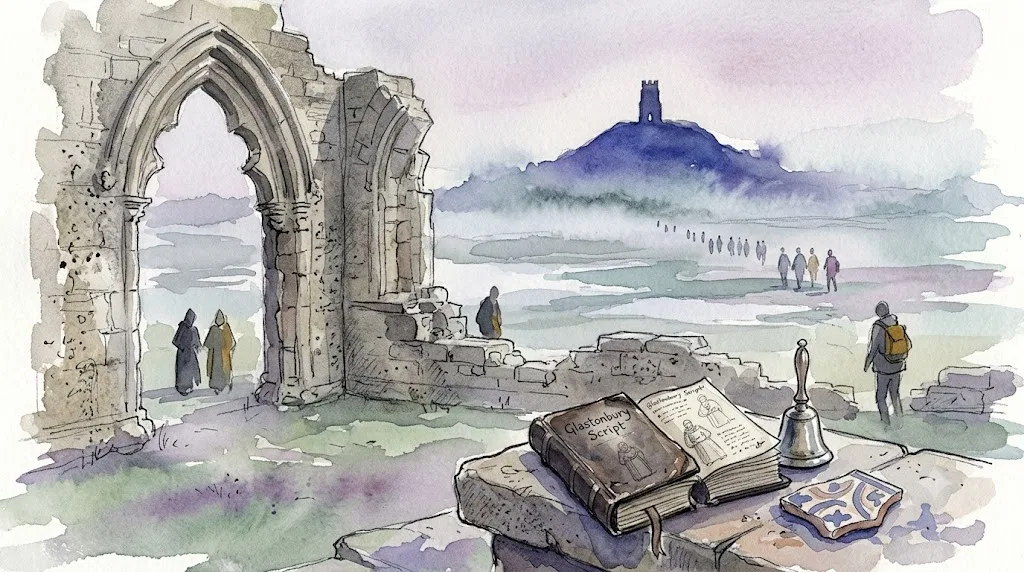
Glastonbury is not simply one haunted site in Somerset. It is a whole sacred landscape in which ruins, hill, water, pilgrimage, Arthurian myth and monastic memory have been layered together until the boundary between history and haunting feels unusually thin. The strongest answer is therefore careful rather than sensational: Glastonbury Abbey and Glastonbury Tor are said to be haunted by monks, holy presences, spectral impressions and older otherworldly figures, but their fame rests less on a single well-documented ghost sighting than on the way a sacred place becomes haunted through repeated storytelling. Visit Somerset’s paranormal trail presents the abbey ruins as a place associated with King Arthur and Queen Guinevere and “said to be haunted” by monks and former inhabitants, while the National Trust describes the Tor as a spiritual magnet for pagans and Christians, dense with legends of Avalon, fairy realms and the Holy Grail.[visitsomerset.co.uk]visitsomerset.co.ukParanormal TrailKnown as the resting place of King Arthur and Queen Guinevere, the abbey ruins are said to be haunted by the spirits of m…
That makes Glastonbury one of Somerset’s most revealing haunted places. At Shepton Mallet Prison or Dunster Castle, ghost lore often gathers around confinement, violence or elite domestic history. At Glastonbury, the haunting mechanism is different. The abbey and Tor are remembered as sacred, ruined and mythic; the “ghosts” are often expressions of loss, pilgrimage, old religion, contested legend and the strange authority of a landscape that has been treated as meaningful for centuries.
What is said to haunt Glastonbury?
The most familiar Glastonbury haunting is the monk: cowled figures in or near the abbey ruins, presences associated with the vanished medieval community, and stories of former inhabitants who have not quite left the precinct. The appeal is obvious. Glastonbury Abbey was not a minor religious house but a huge Benedictine monastery, rebuilt after the fire of 1184, enriched by pilgrimage and legendary claims, and finally suppressed under Henry VIII. The site’s surviving ruins make absence visible: broken walls, open sky where roofs once stood, and a visitor route that moves through spaces once organised around prayer, burial, hospitality and authority.[Glastonbury Abbey]glastonburyabbey.comGlastonbury Abbey Consultant Archaeologistdestroyed in a great fire of 1184 which levelled most of the buildings of the abbey.Read more…
There are also more unusual ghost traditions. One strand concerns not a visible apparition but a “phantom fragrance” or inexplicable sacred scent, reported in older ghost-story writing as a Glastonbury peculiarity. This belongs to a long religious and folkloric pattern in which smell, especially incense or sweetness, suggests sanctity, memory or invisible presence rather than a classic white-sheet apparition. Such accounts should be treated as folklore and anecdote, not evidence of a haunting, but they show how Glastonbury’s ghost lore often borrows the language of church ritual rather than only that of fear.[hauntedohiobooks.com]hauntedohiobooks.comthe odor of sanctity phantom fragrance at glastonbury abbeythe odor of sanctity phantom fragrance at glastonbury abbey
A second, stranger strand is the case of Frederick Bligh Bond, the architect and archaeologist appointed to investigate Glastonbury Abbey after the ruins were acquired by the Bath and Wells Diocesan Trust in the early twentieth century. Bond later claimed that automatic writing, produced with the medium John Allan Bartlett, had helped guide discoveries at the abbey by communicating with deceased monks. The Society for Psychical Research’s Psi Encyclopedia summarises the “Glastonbury Scripts” as automatic-writing texts obtained between 1907 and 1917, apparently from former monks, while sceptical accounts note that Bond’s architectural knowledge, access to earlier material and lack of controlled method make a supernatural explanation unnecessary.[psi-encyclopedia.spr.ac.uk]psi-encyclopedia.spr.ac.ukThe Glastonbury ScriptsThe Glastonbury Scripts
For a haunted-history reader, Bond matters because he turns Glastonbury from a place with ghost stories into a place where “ghostly” communication was folded into archaeological controversy. Whether one reads the episode as psychic archaeology, self-deception, imaginative reconstruction or a remarkable cultural performance, it helped fix the idea that the abbey’s lost monastic past might still be speaking.
Abbey ruins and monastic ghosts
The abbey’s haunted atmosphere is inseparable from its real history of destruction and reinvention. A devastating fire on 24 May 1184 destroyed much of the church, cloisters, books and relics, including the revered Old Church believed by medieval tradition to reach back to the earliest Christian age in Britain. The rebuilding that followed created much of the visible medieval abbey whose ruins survive today.[Reading Research]research.reading.ac.ukReading Research King Arthur at GlastonburyReading Research King Arthur at Glastonbury
That fire matters because it gave Glastonbury one of its most powerful haunted-place ingredients: a before-and-after memory. Medieval writers and later visitors could imagine a lost holy building beneath or behind the visible ruins. The site was not merely old; it had already suffered a catastrophic break before the greater break of the Dissolution. When ghost stories attach monks to the precinct, they are not usually tied to one securely recorded sighting. They draw on the emotional logic of a community erased twice: first by fire, then by Reformation destruction.
The Dissolution gives the abbey’s ghost lore its sharpest historical wound. In 1539, Abbot Richard Whiting was taken to Glastonbury Tor and executed on its summit; the abbey was then torn down, with stone reused in the town and local construction. A recent abbey archaeological brief describes Dissolution deposits of broken stone, glass, mortar and debris more than a metre deep near the core buildings. That is a strikingly physical reminder that Glastonbury’s “haunting” is not only a mood. It is built into the archaeology of wreckage.[Glastonbury Abbey]glastonburyabbey.comGlastonbury Abbey Consultant Archaeologistdestroyed in a great fire of 1184 which levelled most of the buildings of the abbey.Read more…
This is why monk stories work so well here. They are simple, recognisable figures who carry the whole vanished institution with them. A cowled apparition in the ruins does not need an elaborate plot to be meaningful. It stands for prayer interrupted, buildings emptied, relics lost, bones moved, wealth stripped and a sacred geography turned into a picturesque ruin.
Arthur, Avalon and later legend
Glastonbury’s haunted identity cannot be separated from Arthur. The abbey presents itself today as a place connected with legend to a degree “unparalleled by any other abbey in England”, especially through Joseph of Arimathea and the legendary burial of King Arthur. The key medieval claim came in 1191, when the monks announced that they had found a grave containing Arthur and Guinevere, reportedly marked by a lead cross identifying the burial as lying in the Isle of Avalon.[Glastonbury Abbey]glastonburyabbey.comOpen source on glastonburyabbey.com.
The timing is crucial. The discovery came after the fire of 1184, when the abbey needed to rebuild materially and reputationally. Glastonbury Abbey’s own history page states that the announcement of Arthur and Guinevere’s bodies helped draw much-needed funding, and the University of Reading’s Glastonbury Abbey Archaeology project places the 1191 discovery in a political and royal context involving Henry II, Richard I and the young Arthur of Brittany.[Glastonbury Abbey]glastonburyabbey.comOpen source on glastonburyabbey.com.
In 1278, the supposed remains were reburied in a prominent tomb before the high altar during a ceremony attended by Edward I and Queen Eleanor. The tomb was later described by the antiquary John Leland in the 1530s, shortly before the abbey’s destruction. The bones themselves disappeared after the Dissolution, leaving behind a marked place, a written tradition and an unresolved question rather than verifiable remains.[Reading Research]research.reading.ac.ukReading Research Arthur's TombReading Research Arthur's Tomb
For haunted history, the important point is not whether Arthur was really buried at Glastonbury. Most modern scholarship treats the claim with caution or outright scepticism. The important point is that Glastonbury made myth spatial. Avalon was no longer only a literary island where Arthur was taken after his last battle; it was localised in Somerset, walked by pilgrims, pointed out by guides and eventually absorbed into modern tourism, occult writing and ghost lore. Once a legendary death-place is fixed to an actual ruin, haunting becomes almost inevitable.

The Tor as a sacred and otherworldly hill
Glastonbury Tor gives the abbey’s stories a landscape large enough to hold them. It rises from the Somerset Levels, once a much wetter environment, so that the hill could be imagined as island-like even when not literally isolated. NASA’s Earth Observatory notes that before large-scale drainage, the Levels were a flooded swamp and the Tor stood out as an island-like sacred landmark for pagans and Christians.[NASA Science]science.nasa.govthe history and mystery of glastonbury 153139the history and mystery of glastonbury 153139
Today the Tor is managed by the National Trust and crowned by the roofless tower of St Michael’s Church. Historic England lists St Michael’s Church Tower as Grade I and describes it as a dominant feature of the Somerset landscape, while the wider Tor site is a scheduled monument containing St Michael’s Church, monastic remains and other settlement remains.[Historic England]historicengland.org.ukHistoric England St Michaels Church Tower, GlastonburyHistoric England St Michaels Church Tower, Glastonbury
Its legends are not only Christian. The National Trust records traditions that beneath the hill lies a hidden cave or route into Annwn, the otherworldly realm associated here with Gwyn ap Nudd, lord of the underworld, as well as later traditions linking the Tor with the Holy Grail, Joseph of Arimathea, Arthur and his knights.[National Trust]nationaltrust.org.ukNational Trust History and legends of Glastonbury TorNational TrustHistory and legends of Glastonbury Tor - SomersetUncover the history and legends of Glastonbury Tor, Somerset, which has be…
This mixture makes the Tor a different kind of haunted place from a ruined room or locked corridor. It is not only “haunted” by a reported figure; it is haunted by meanings. St Michael’s tower suggests Christian conquest, protection and pilgrimage. Gwyn ap Nudd suggests the otherworld beneath the hill. Avalon suggests Arthur’s suspended death and possible return. The Levels suggest water, islands and liminality. A person climbing the Tor is therefore walking through a compressed map of Somerset’s sacred imagination.
Why sacred places become haunted places
Glastonbury shows how sacred geography can become haunted geography without needing a single definitive ghost case. Three mechanisms matter most.
First, sacred places are already designed to make absence present. Abbeys preserve the dead in burial, prayer, relics and memorial routine. When the buildings are ruined, the missing community becomes more imaginable, not less. At Glastonbury, the visible absence of monks is precisely what makes monk apparitions feel plausible as folklore.
Second, sacred places attract repeated interpretation. Medieval monks, royal visitors, antiquaries, archaeologists, psychical researchers, pilgrims, tourists, occult writers and local storytellers have all read Glastonbury differently. The University of Reading project emphasises that the abbey’s myths were central to its medieval importance and wealth, while modern archaeology has had to reassess earlier excavation records that were sometimes lost, unpublished or misinterpreted.[Archaeology Magazine]archaeology.orgMagazine Digs & DiscoveriesMagazine Digs & Discoveries
Third, sacred places often sit at thresholds. Glastonbury’s threshold quality is geographical as well as symbolic: dry ground above wet Levels, abbey below hill, Christian ruins beside older and later otherworldly associations. Wikishire describes Glastonbury as a Somerset town on the low-lying Levels, with the Tor dominating the landscape nearby; that setting helps explain why the place has so often been imagined as an island, a gateway or a meeting-point.[Wikishire]wikishire.co.ukOpen source on wikishire.co.uk.
This does not prove that Glastonbury is haunted. It explains why it has been so easy to haunt in the imagination. A prison ghost usually asks, “Who suffered here?” A battlefield ghost asks, “Who died here?” Glastonbury asks a more complicated question: “What happens when a place is believed to be holy, destroyed, rebuilt, mythologised and revisited for a thousand years?”
How credible are the ghost stories?
The evidence is mixed, and the most honest reading is layered.
The historical setting is very strong. The abbey, the Tor, the fire of 1184, the rebuilding, the Arthur claim, the 1278 royal reburial ceremony, the Dissolution and the execution of Abbot Whiting are all grounded in historical or archaeological discussion, even where medieval claims are disputed. These facts explain why Glastonbury became a powerful setting for ghost lore.[reading.ac.uk]research.reading.ac.ukReading Research Arthur's TombReading Research Arthur's Tomb
The Arthurian and Avalon material is culturally strong but historically uncertain. It is central to Glastonbury’s fame, but the 1191 “discovery” is best treated as a medieval claim shaped by religious, financial and political pressures rather than as secure evidence of Arthur’s grave. That uncertainty does not weaken the story’s importance. It is precisely because the claim sits between belief, propaganda, pilgrimage and romance that it has remained so potent.[Reading Research]research.reading.ac.ukReading Research Arthurian MythReading Research Arthurian Myth
The ghost reports are folkloric and uneven. Monk apparitions, phantom scents and psychic communications belong to the realm of local legend, psychical history and tourism rather than verified record. Frederick Bligh Bond’s automatic-writing claims are historically important because they were made by a real excavator at a real site, but they remain highly contestable. Sceptical summaries point to normal explanations: professional knowledge, earlier plans and drawings, suggestibility, the ideomotor effect and the lack of scientific controls.[Wikipedia]WikipediaFrederick Bligh BondFrederick Bligh Bond
That makes Glastonbury more “myth-made” than evidentially haunted, but not in a dismissive sense. Its ghost lore is part of how people have tried to understand a landscape where Christianity, Arthurian romance, ruins, folk otherworlds and modern spiritual tourism all overlap.
Why Glastonbury matters in Somerset’s haunted map
Glastonbury gives Somerset’s haunted history a sacred centre of gravity. Other county stories may be more like classic ghost cases: a haunted inn, a phantom rider, a prison cell, a battlefield apparition. Glastonbury is broader and older in feel. It is a haunted landscape because it turns memory into geography.
The abbey contributes the ruined religious house, the lost monks, the claimed royal tomb and the trauma of Dissolution. The Tor contributes the solitary hill, the St Michael tower, the execution of the last abbot and older otherworldly legends beneath the Christian surface. Together they create a place where haunting is less about one apparition than about repeated returns: Arthur returning in legend, monks returning in ghost stories, pilgrims returning to sacred ground, archaeologists returning to buried plans, and visitors returning to the same question.
Is Glastonbury haunted or myth-made? The most grounded answer is that it is myth-made in the strongest possible sense: made by medieval monks, royal politics, ruined architecture, sacred tourism, psychical experiment, local folklore and the unforgettable shape of the Tor above the Levels. Its ghosts are not confirmed facts. They are the shadows cast by one of Somerset’s most powerful sacred landscapes.
Amazon book picks
Further Reading
Books and field guides related to Is Glastonbury Haunted or Myth-Made?. Use these as the next step if you want deeper reading beyond the article.

Ghostland: In Search of a Haunted Country
Examines Britain's enduring haunted landscapes.

Glastonbury: Avalon of the Heart
Explores the myths that shape Glastonbury's haunted reputation.
eBay marketplace picks
Marketplace Samples
Live-tested eBay searches with available results related to this page.


Endnotes
1.
Source: visitsomerset.co.uk
Link:https://www.visitsomerset.co.uk/discover-somerset/inspiration/paranormal-somerset/paranormal-trail/paranormal-trail
Source snippet
Paranormal TrailKnown as the resting place of King Arthur and Queen Guinevere, the abbey ruins are said to be haunted by the spirits of m...
2.
Source: hauntedohiobooks.com
Title: the odor of sanctity phantom fragrance at glastonbury abbey
Link:https://hauntedohiobooks.com/news/the-odor-of-sanctity-phantom-fragrance-at-glastonbury-abbey/
3.
Source: psi-encyclopedia.spr.ac.uk
Title: The Glastonbury Scripts
Link:https://psi-encyclopedia.spr.ac.uk/articles/glastonbury-scripts/
4.
Source: Wikipedia
Title: Frederick Bligh Bond
Link:https://en.wikipedia.org/wiki/Frederick_Bligh_Bond
5.
Source: science.nasa.gov
Title: the history and mystery of glastonbury 153139
Link:https://science.nasa.gov/earth/earth-observatory/the-history-and-mystery-of-glastonbury-153139/
6.
Source: archaeology.org
Title: Magazine Digs & Discoveries
Link:https://archaeology.org/issues/march-april-2016/digs-discoveries/trenches-england-glastonbury-abbey/
7.
Source: medium.com
Link:https://medium.com/%40candywrites/my-encounters-with-gwyn-ap-nudd-on-glastonbury-tor-323893e1cb61
8.
Source: Wikipedia
Title: Glastonbury Tor
Link:https://en.wikipedia.org/wiki/Glastonbury_Tor
9.
Source: Wikipedia
Title: Glastonbury Abbey
Link:https://en.wikipedia.org/wiki/Glastonbury_Abbey
10.
Source: Wikipedia
Title: Gwyn ap Nudd
Link:https://en.wikipedia.org/wiki/Gwyn_ap_Nudd
11.
Source: Wikipedia
Link:https://en.wikipedia.org/wiki/Glastonbury
12.
Source: glastonbury.uk
Link:https://glastonbury.uk/visit/history-myth/avalon-mysteries/avalon-avalon-ghosts
13.
Source: glastonbury.uk
Link:https://glastonbury.uk/visit/history-myth/avalon-mysteries/avalon-avalon-ghosts1
14.
Source: glastonbury.uk
Link:https://glastonbury.uk/visit/history-myth/avalon-mysteries/avalon-avalon-mysteries2
15.
Source: glastonbury.uk
Title: avalon tor tor intro
Link:https://glastonbury.uk/visit/history-myth/avalon-landmarks/avalon-tor-tor-intro
16.
Source: glastonbury.uk
Link:https://glastonbury.uk/visit/history-myth/avalon-landmarks
17.
Source: encyclopedia.com
Link:https://www.encyclopedia.com/science/encyclopedias-almanacs-transcripts-and-maps/glastonbury-scripts
18.
Source: visitsomerset.co.uk
Link:https://www.visitsomerset.co.uk/discover-somerset/inspiration/paranormal-somerset/ghostly-attractions/national-trust-glastonbury-tor
19.
Source: nationaltrust.org.uk
Title: National Trust History and legends of Glastonbury Tor
Link:https://www.nationaltrust.org.uk/visit/somerset/glastonbury-tor/history-of-glastonbury-tor
Source snippet
National TrustHistory and legends of Glastonbury Tor - SomersetUncover the history and legends of Glastonbury Tor, Somerset, which has be...
20.
Source: glastonburyabbey.com
Title: Glastonbury Abbey Consultant Archaeologist
Link:https://www.glastonburyabbey.com/documents/brief-for-glastonbury-abbey-consultant-archaeologist-glab1151.pdf
Source snippet
destroyed in a great fire of 1184 which levelled most of the buildings of the abbey.Read more...
21.
Source: glastonburyabbey.com
Link:https://www.glastonburyabbey.com/history.php
22.
Source: research.reading.ac.uk
Title: Reading Research King Arthur at Glastonbury
Link:https://research.reading.ac.uk/glastonburyabbeyarchaeology/digital/arthurs-tomb-c-1331/king-arthur-at-glastonbury/
23.
Source: glastonburyabbey.com
Link:https://www.glastonburyabbey.com/
24.
Source: research.reading.ac.uk
Title: Reading Research Arthurian Myth
Link:https://research.reading.ac.uk/glastonburyabbeyarchaeology/digital/arthurs-tomb-c-1331/arthurian-myth/
25.
Source: research.reading.ac.uk
Title: Reading Research Arthur’s Tomb
Link:https://research.reading.ac.uk/glastonburyabbeyarchaeology/digital/arthurs-tomb-c-1331/arthurs-tomb/
26.
Source: historicengland.org.uk
Title: Historic England St Michaels Church Tower, Glastonbury
Link:https://historicengland.org.uk/listing/the-list/list-entry/1345475
27.
Source: historicengland.org.uk
Link:https://historicengland.org.uk/listing/the-list/list-entry/1019390
28.
Source: wikishire.co.uk
Link:https://wikishire.co.uk/wiki/Glastonbury
29.
Source: wikishire.co.uk
Title: Glastonbury Tor
Link:https://wikishire.co.uk/wiki/Glastonbury_Tor
30.
Source: youtube.com
Title: Glastonbury Abbey The Final Resting Place of Arthur and Guinevere?
Link:https://www.youtube.com/watch?v=iQ-3miWTO5Q
31.
Source: historicengland.org.uk
Title: Buildings of Central Somerset mural, Street
Link:https://historicengland.org.uk/listing/the-list/list-entry/1442062
32.
Source: historicengland.org.uk
Title: research reports roundup august 2023
Link:https://historicengland.org.uk/whats-new/research/back-issues/research-reports-roundup-august-2023/
Published: august 2023
33.
Source: historicengland.org.uk
Link:https://historicengland.org.uk/images-books/publications/conservation-bulletin-56/cb-56/
34.
Source: wikishire.co.uk
Title: Glastonbury Abbey
Link:https://wikishire.co.uk/wiki/Glastonbury_Abbey
35.
Source: en.wikivoyage.org
Link:https://en.wikivoyage.org/wiki/Glastonbury
36.
Source: alondoninheritance.com
Title: glastonbury tor
Link:https://alondoninheritance.com/tag/glastonbury-tor/
37.
Source: alondoninheritance.com
Link:https://alondoninheritance.com/cycling-around-britain/glastonbury/
38.
Source: wikitravel.org
Link:https://wikitravel.org/en/Glastonbury
39.
Source: roman-britain.co.uk
Title: Gwyn ap Nudd
Link:https://www.roman-britain.co.uk/the-celts-and-celtic-life/celtic-religion/celtic-deities-and-heroes/gwyn-ap-nudd/
40.
Source: glastonburyabbey.com
Link:https://www.glastonburyabbey.com/anime-and-the-abbey.php
41.
Source: glastonburyabbey.com
Link:https://www.glastonburyabbey.com/myths-and-legends.php
42.
Source: icysedgwick.com
Title: glastonbury tor
Link:https://www.icysedgwick.com/glastonbury-tor/
43.
Source: reddit.com
Link:https://www.reddit.com/r/fatestaynight/comments/1mr1rhf/glastonbury_abbey_also_known_as_the_location_of/
44.
Source: nationaltrust.org.uk
Link:https://www.nationaltrust.org.uk/visit/somerset/glastonbury-tor
45.
Source: nationaltrust.org.uk
Link:https://www.nationaltrust.org.uk/visit/somerset/glastonbury-tor/things-to-do-at-glastonbury-tor
46.
Source: research.reading.ac.uk
Title: reading.ac.uk Myths
Link:https://research.reading.ac.uk/glastonburyabbeyarchaeology/myths/
47.
Source: research.reading.ac.uk
Title: reconstructing king arthurs tomb the stuff of legends
Link:https://research.reading.ac.uk/glastonburyabbeyarchaeology/2018/01/12/reconstructing-king-arthurs-tomb-the-stuff-of-legends/
48.
Source: haunted-britain.com
Link:https://www.haunted-britain.com/glastonbury.htm
Additional References
49.
Source: youtube.com
Title: Glastonbury Revealed: Examining myths and legends through #archaeology
Link:https://www.youtube.com/watch?v=dbKOPHV7cDs
Source snippet
Glastonbury Tor & Town, Myths. Legends, and Bohemian Vibes. Visitor Guide...
50.
Source: youtube.com
Title: The gods, goddesses and brutal history of Glastonbury Tor
Link:https://www.youtube.com/watch?v=71E0mBuoXZc
Source snippet
Glastonbury Revealed: Examining myths and legends through #archaeology...
51.
Source: facebook.com
Link:https://www.facebook.com/ExtoursBobbie/posts/-a-ghost-of-glastonbury-abbey-real-ghost-or-trick-of-the-camera-you-decide-one-f/750127234530491/
52.
Source: tripadvisor.com
Link:https://www.tripadvisor.com/AttractionProductReview-g186373-d33417027-Martyrs_and_Phantoms_A_Self_Guided_Glastonbury_Ghost_Audio_Tour-Glastonbury_Somers.html
53.
Source: expedia.co.uk
Link:https://www.expedia.co.uk/things-to-do/martyrs-and-phantoms-a-self-guided-glastonbury-ghost-audio-tour.a50672492.activity-details
54.
Source: facebook.com
Link:https://www.facebook.com/NormalForGlastonbury/posts/anyone-had-a-ghostly-encounter-in-glastonbury/840285390883488/
55.
Source: instagram.com
Link:https://www.instagram.com/reel/DYDMXEeivxn/
56.
Source: visit-burystedmunds.co.uk
Link:https://visit-burystedmunds.co.uk/blog/ghosts-of-the-abbey
57.
Source: mapy.com
Link:https://mapy.com/en/?id=126142&source=osm
58.
Source: hauntedhosts.com
Link:https://hauntedhosts.com/haunted-places/somerset/location/5795-glastonbury-holy-well-haunting
Topic Tree