Within Haunted Cambridgeshire
Why Do Cambridge Colleges Feel So Haunted?
Cambridge's college hauntings turn enclosed courts, old lodges and plague history into some of the county's best-known ghost traditions.
On this page
- Henry Butts and the Corpus plague story
- Jesus College and the Grey Lady tradition
- Ghost walks, student folklore and documented history
Page outline Jump by section
Introduction
Cambridge’s college ghosts feel unusually persistent because they belong to buildings that are still lived in, walked through and ritualised every day. In historic Cambridgeshire, the city’s haunted reputation is not mainly a matter of ruined castles or remote lanes. It gathers around courts, lodges, chapels, staircases and kitchens: places where institutional memory is unusually strong and where deaths, scandals and epidemics can be attached to precise rooms. The two most useful examples are Corpus Christi College, where the story of Henry Butts turns a documented plague crisis and suicide into a college haunting, and Jesus College, where the Grey Lady tradition draws on the memory of St Radegund’s nunnery beneath the later college. Cambridge is firmly within historic Cambridgeshire, and the city’s dense cluster of college legends gives the county one of its richest bodies of urban ghost folklore.[gazetteer.org.uk]gazetteer.org.ukGazetteer Cambridge, CambridgeshireGazetteer Cambridge, Cambridgeshire
These stories should not be treated as proof that Cambridge colleges are haunted. They are better read as layered traditions: some parts rest on well-documented history, some on student and guide retelling, and some on literary or folkloric motifs that have attached themselves to old buildings. That mixture is exactly what makes them memorable.
Why Cambridge Colleges Make Such Good Ghost Settings
Cambridge colleges are almost designed to preserve ghost stories. They have enclosed courts, old lodges, chapels, kitchens, staircases, locked rooms, porter’s tales, student gossip and generations of residents who inherit stories from those before them. A haunting in such a setting does not need a wild landscape or a ruined abbey. A particular staircase, window, cupboard or kitchen passage can do the work.
The college system also gives stories a social life. A rumour can be repeated by students, dramatised by ghost walks, noted in local histories, and then folded back into college identity. Corpus Christi is a strong example: Capturing Cambridge, a Museum of Cambridge local-history project, records several ghost traditions connected with the college, including a little girl, a sad Cavalier and an elderly Puritan-like figure, alongside the better-known stories of Henry Butts and Elizabeth Spencer.[Capturing Cambridge]capturingcambridge.orgCapturing Cambridge Corpus Christi College (St Benet’s) | Capturing CambridgeCapturing Cambridge Corpus Christi College (St Benet’s) | Capturing Cambridge
That does not mean all the stories have equal credibility. A college archive or official history may confirm that a person lived, held office or died in a particular way. A local-history page may preserve how a story is told. A ghost walk or student article shows how the legend circulates in modern Cambridge. The haunting itself remains a claim, but the tradition can still be historically useful because it shows which parts of the city’s past became emotionally charged.
Henry Butts and the Corpus Plague Story
The most historically grounded Cambridge college ghost tradition is the story of Henry Butts, Master of Corpus Christi College from 1626 to 1632 and Vice-Chancellor of the University of Cambridge during the plague crisis of 1630. Corpus’s own article on Butts describes him as Master in those years and frames his life around the turmoil of plague. Searchable summaries of the same college source state that bubonic plague reached Cambridge in April 1630 and that Butts had to manage a major crisis for the University.[Corpus Cambridge]corpus.cam.ac.ukOpen source on cam.ac.uk.
The historical outline is bleak enough without adding a ghost. During outbreaks of plague, those with the means to leave often did so. Butts is remembered as one of those who stayed, working with civic and university authorities while Cambridge was disrupted by sickness, fear and practical hardship. A recent academic article on Cambridge plague governance identifies Butts as a central figure in the public-health problems faced by the town and university during the 1625 and 1630 outbreaks.[Taylor & Francis Online]tandfonline.comOpen source on tandfonline.com.
Butts died in 1632. The modern ghost story usually says he hanged himself with his garters in the Master’s Lodge or in a room later associated with the college kitchens. The death was not an obscure local whisper. A 2026 Cambridge University Press chapter on Butts notes that news of the Vice-Chancellor’s suicide spread through early modern correspondence and commentary; John Pory called it a “prodigious act”, while other observers recorded shock that a Cambridge vice-chancellor had hanged himself.[Cambridge University Press & Assessment]cambridge.orgOpen source on cambridge.org.
This is where plague memory and ghost tradition join. The Butts haunting is not just a story about a figure seen in an old room. It is a story about a college officer who remained during epidemic crisis, endured heavy administrative pressure, and then became the subject of national astonishment after his death. Later Cambridge tradition made that pressure spatial: footsteps, bangs, angry presences, kitchen fears and the idea that the old Master had not quite left Corpus behind.
Capturing Cambridge records that the Old Lodge area, once associated with 17th-century Masters, was later converted to kitchens, after which strange bangs, footsteps and apparitions were reported. It also preserves the tradition that Walter Moule and his uncle Charles Moule were deeply disturbed by encounters in 1883, that Llewellyn Powys saw an apparition in 1903, and that students attempted an exorcism in 1904.[Capturing Cambridge]capturingcambridge.orgCapturing Cambridge Corpus Christi College (St Benet’s) | Capturing CambridgeCapturing Cambridge Corpus Christi College (St Benet’s) | Capturing Cambridge Varsity’s student account, written in a more playful tone, repeats the idea that Corpus was reputedly among the most haunted Oxbridge colleges and locates Butts’s ghost around the kitchens and the frightening experiences of the Moules.[Varsity Online]varsity.co.ukVarsity Online Cambridge: A Paranormal History | VarsityVarsity Online Cambridge: A Paranormal History | Varsity
The evidential lesson is clear. The plague, Butts’s offices, his death and the shock it caused are historically grounded. The ghostly noises, apparitions and exorcism belong to later tradition. The story became famous because those two layers fit together so powerfully: a real plague crisis, a real death, and a college building where later residents could imagine the strain still echoing.
Jesus College and the Grey Lady Tradition
Jesus College gives Cambridge a different kind of haunting. Its most important ghostly association is not plague administration but the memory of a religious house that came before the college. Jesus College was founded in 1496 on the site of the Priory of St Mary and St Radegund. The college’s own history says the nuns had established themselves on the site in the mid-1140s, and that by the mid-14th century the priory was weakened by declining popularity and the long-term economic effects of the Black Death before its dissolution in 1496.[Jesus College]jesus.cam.ac.ukOpen source on cam.ac.uk.
That matters because the Grey Lady tradition draws its atmosphere from continuity and replacement. The modern college did not simply sit near a vanished nunnery; it took over a religious landscape whose chapel, precinct and institutional memory shaped the later site. Jesus College’s own historical pages state that Bishop Alcock received royal authorisation in June 1496 for a new college that would take over the buildings and land of St Radegund’s priory.[Jesus College]jesus.cam.ac.ukOpen source on cam.ac.uk.
The Grey Lady is often described as a nun or woman in grey connected with the old nunnery. One version places her at Jesus College itself; another important nearby strand attaches her to Abbey House in Barnwell, with a legendary underground passage linking Barnwell and St Radegund’s. British Folklore’s account of Abbey House records a local belief that a bricked-up arch in the cellars led to a passage towards Jesus College, formerly St Radegund’s nunnery, and that a robed young woman was repeatedly seen in the house in the early 20th century.[British Folklore]britishfolklore.comBritish Folklore Cambridge, Abbey House British FolkloreBritish Folklore Cambridge, Abbey House British Folklore
That Abbey House version gives the Grey Lady a familiar folkloric plot: a nun who used a secret passage to meet a lover, sometimes identified as a canon of Barnwell. The same account says she was known locally as the Grey Lady, that children in the house were said to have seen her, and that Enid Porter, writing in 1969, reported she had not been heard or seen since 1959.[British Folklore]britishfolklore.comBritish Folklore Cambridge, Abbey House British FolkloreBritish Folklore Cambridge, Abbey House British Folklore
For a reader interested in haunted Cambridge, the important point is not whether there really was a tunnel or a spectral nun. It is how the legend works. Jesus College’s actual medieval past supplies the setting: a dissolved nunnery absorbed into a later college. The Grey Lady story supplies the emotional shape: enclosure, forbidden love, secrecy and a woman moving through buildings whose original community has disappeared. Compared with the Butts story, it is less anchored to a single documented death, but more deeply tied to Cambridge’s habit of building new institutions over older sacred spaces.
Ghost Walks, Student Folklore and Documented History
Modern Cambridge keeps these stories alive through tours, student journalism and local-history collecting. Professional guiding pages present Cambridge as a city of ghosts, psychic enquiry and macabre stories, while also connecting the city to Victorian and Edwardian interest in spiritualism. The British Guild of Tourist Guides notes that Cambridge was associated with questions about ghosts and psychic phenomena, and that fellows of Trinity College began meeting in the 1850s to discuss such matters, a group later linked to the Ghost Club tradition.[British Guild of Tourist Guides]britainsbestguides.orgGhosts & the Macabre in Cambridge - British Guild of Tourist Guides…
That setting matters because Cambridge ghost stories are not only medieval survivals. They have repeatedly been reshaped by later fashions: Victorian psychical research, Edwardian ghost stories, student magazines, tourist walks and Halloween culture. Arthur Gray, Master of Jesus College from 1912 to 1940, is a key figure in this borderland between college history and literary haunting. Capturing Cambridge notes that Gray wrote ghost stories with Cambridge settings, many around Jesus College, including “The Everlasting Club”, a tale used to explain an empty study on G Staircase and possibly inspired by the Ghost Club founded at Trinity in 1851.[Capturing Cambridge]capturingcambridge.orgOpen source on capturingcambridge.org.
This creates a useful caution. Some Cambridge “traditions” may be older oral lore; others may be literary inventions that readers later half-believed; others may be tour versions assembled from several strands. The same mechanism is visible at Corpus. The Butts story begins with a documented crisis and death, but the later apparitions, kitchen disturbances and exorcism reports come through retelling. At Jesus, the medieval priory is historical, but the Grey Lady moves through a much more folkloric landscape of secret passages, nuns and forbidden meetings.
The strongest way to read Cambridge college ghosts is therefore comparative:[Wikipedia]WikipediaCorpus Christi College, CambridgeCorpus Christi College, Cambridge
- Documented core: Henry Butts’s role at Corpus, the 1630 plague crisis, his death in 1632, and the shock recorded by contemporaries.
- Architectural memory: Old courts, lodges, kitchens, chapels and staircases give stories fixed places where they can be retold.
- Folkloric overlay: Grey Ladies, secret tunnels, locked cupboards and spectral footsteps are common ghost-story motifs that adapt well to Cambridge.
- Modern circulation: Ghost walks, local-history projects and student writing keep the stories visible, even when the evidence is mixed.
The result is not a simple split between “true history” and “made-up ghost story”. It is a layered tradition in which real buildings and real crises make the folklore more durable.
Why Plague Memory Haunts Cambridge So Strongly
Plague memory has a particular force in Cambridge because epidemic disease repeatedly disrupted both town and university life. The University of Cambridge’s “After the Plague” archaeology project focuses on medieval Cambridge and the cemetery of St John’s Hospital, using bioarchaeology to study health, poverty and the long-term effects of the Black Death on the city’s population. It notes that the Black Death of 1348–49 killed between a third and a half of Europe’s population and asks how epidemic disease shaped social history and human lives.[University of Cambridge Architecture]arch.cam.ac.ukOpen source on cam.ac.uk.
That broader medieval background helps explain why plague stories attach so readily to Cambridge colleges. Corpus Christi itself has a foundation story connected with the Black Death: summaries of college history describe the Guild of Corpus Christi as founded in Cambridge in 1349 in response to the plague, before the later college emerged from guild property and patronage.[Wikipedia]WikipediaCorpus Christi College, CambridgeCorpus Christi College, Cambridge Even before Henry Butts, then, Corpus had a deep institutional association with plague, death, commemoration and religious response.
Butts’s 1630 crisis belongs to a later outbreak, not the Black Death. That distinction matters. The folklore sometimes compresses Cambridge plague memory into one general atmosphere of pestilence, but the historical layers are separate: the 14th-century Black Death shaped medieval Cambridge and the origins of Corpus’s founding guild; the 1630 outbreak shaped Butts’s vice-chancellorship and the later ghost story attached to him. Keeping those layers apart makes the haunting more interesting, not less. It shows how one college could accumulate plague associations across centuries.
The emotional pattern is also different from many country-house hauntings. The Butts story is not primarily about aristocratic romance, murder or hidden treasure. It is about duty under epidemic pressure, institutional abandonment, mental strain and public shame. That is why it still feels legible to modern readers. The ghost story gives a supernatural shape to a very human fear: what happens to the person left behind to manage disaster when everyone else has gone.
How Credible Are the College Ghost Stories?
The most credible claims in these traditions are historical, not paranormal. Henry Butts existed, held high office, faced the 1630 plague crisis, and died by suicide in 1632. The shock around his death is documented in early modern correspondence and has received modern scholarly attention.[Cambridge University Press & Assessment]cambridge.orgOpen source on cambridge.org. Jesus College really did grow out of St Radegund’s priory, and the memory of that nunnery is central to the Grey Lady tradition.[Jesus College]jesus.cam.ac.ukOpen source on cam.ac.uk.
The ghostly details are weaker as evidence but strong as folklore. Reports of footsteps, apparitions, exorcisms and Grey Ladies usually reach us through retold accounts, local-history summaries, student journalism or specialist ghost books rather than through contemporary, independently verifiable witness records. Capturing Cambridge is valuable because it records how the traditions are attached to places and earlier publications, but it does not turn the apparitions into established facts.[Capturing Cambridge]capturingcambridge.orgCapturing Cambridge Corpus Christi College (St Benet’s) | Capturing CambridgeCapturing Cambridge Corpus Christi College (St Benet’s) | Capturing Cambridge
A sceptical reading does not flatten the stories. Old buildings make noises; kitchens, roof spaces and converted lodges can be unsettling; students are primed by inherited tales; and a city with strong literary and tourist traditions will naturally dramatise its past. Yet those explanations do not make the stories meaningless. They show why particular memories survive. Corpus remembers plague, pressure and a dead Master. Jesus remembers a vanished nunnery beneath a living college. Cambridge ghost walks remember that the city is not only a place of scholarship, but also a place where scholarship, fear, faith and storytelling have long shared the same courts.
What These Hauntings Add to Cambridgeshire’s Ghost Map
Within Cambridgeshire’s wider haunted landscape, Cambridge college ghosts form the county’s most concentrated urban cluster. Fenland legends often depend on distance, darkness, water and lonely roads. Village ghosts often cling to inns, churches, bridges or family stories. The Cambridge college tradition is different: it turns institutional continuity into atmosphere.
Corpus Christi gives the county a plague-haunted college story with a unusually strong historical core. Jesus College gives it a Grey Lady tradition rooted in the transformation of a medieval nunnery into a university college. Together they show why Cambridge feels haunted in a distinctive way. The ghosts are not just figures glimpsed in old corridors. They are memories of epidemic fear, enclosed religious life, academic pressure, student retelling and buildings that have outlasted almost everyone who gave them meaning.
Amazon book picks
Further Reading
Books and field guides related to Why Do Cambridge Colleges Feel So Haunted?. Use these as the next step if you want deeper reading beyond the article.
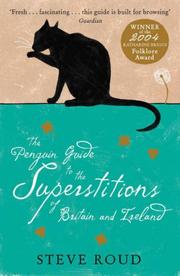
The Penguin Guide to the Superstitions of Britain and Ireland
Explains enduring beliefs reflected in college legends.

eBay marketplace picks
Marketplace Samples
Live-tested eBay searches with available results related to this page.


Endnotes
1.
Source: cambridge.org
Link:https://www.cambridge.org/core/books/careers-and-crises-in-the-age-of-charles-i/henry-butts-and-the-frown-of-a-king-the-death-of-a-vicechancellor/FC7AE8CE042A1C0BDC7BE04F942766C3
2.
Source: britainsbestguides.org
Title: British Guild of Tourist Guides
Link:https://britainsbestguides.org/blogs/haunted-cambridge-ghosts-and-the-macabre/
Source snippet
Ghosts & the Macabre in Cambridge - British Guild of Tourist Guides...
3.
Source: Wikipedia
Title: Corpus Christi College, Cambridge
Link:https://en.wikipedia.org/wiki/Corpus_Christi_College%2C_Cambridge
4.
Source: Wikipedia
Title: Henry Butts
Link:https://en.wikipedia.org/wiki/Henry_Butts
5.
Source: Wikipedia
Title: Jesus College, Cambridge
Link:https://en.wikipedia.org/wiki/Jesus_College%2C_Cambridge
6.
Source: Wikipedia
Title: St Radegund’s Priory, Cambridge
Link:https://en.wikipedia.org/wiki/St_Radegund%27s_Priory%2C_Cambridge
7.
Source: Wikipedia
Title: List of vice chancellors of the University of Cambridge
Link:https://en.wikipedia.org/wiki/List_of_vice-chancellors_of_the_University_of_Cambridge
8.
Source: Wikipedia
Title: 1629–1631 Italian plague
Link:https://en.wikipedia.org/wiki/1629%E2%80%931631_Italian_plague
9.
Source: Wikipedia
Title: Walter (name)
Link:https://en.wikipedia.org/wiki/Walter_%28name%29
10.
Source: Wikipedia
Title: Historic counties of England
Link:https://en.wikipedia.org/wiki/Historic_counties_of_England
11.
Source: Wikipedia
Link:https://en.wikipedia.org/wiki/Cambridgeshire
12.
Source: Wikipedia
Title: History of Cambridgeshire
Link:https://en.wikipedia.org/wiki/History_of_Cambridgeshire
13.
Source: assets.cambridge.org
Link:https://assets.cambridge.org/97805218/18803/sample/9780521818803ws.pdf
14.
Source: cambridge.org
Title: Service Magic in Popular Society (Part I)
Link:https://www.cambridge.org/core/books/love-spells-and-lost-treasure/service-magic-in-popular-society/64CD992C8B102BDA4E0F7F684A8AAFC3
15.
Source: archive.org
Title: Fortean Times 09.2019 djvu.txt
Link:https://archive.org/stream/fortean-times-11.2019/Fortean%20Times%2009.2019_djvu.txt
16.
Source: walter.one
Title: Document Work Automation Walter
Link:https://www.walter.one/
17.
Source: gazetteer.org.uk
Title: Gazetteer Cambridge, Cambridgeshire
Link:https://gazetteer.org.uk/place/Cambridge%2C_Cambridgeshire_7642
18.
Source: capturingcambridge.org
Title: Capturing Cambridge Corpus Christi College (St Benet’s) | Capturing Cambridge
Link:https://capturingcambridge.org/centre/trumpington-street/corpus-christi-college/
19.
Source: jesus.cam.ac.uk
Link:https://www.jesus.cam.ac.uk/college/about-us/history/women-jesus-college/founders
20.
Source: corpus.cam.ac.uk
Link:https://www.corpus.cam.ac.uk/articles/henry-butts-and-turmoil-during-time-plague
21.
Source: tandfonline.com
Link:https://www.tandfonline.com/doi/full/10.1080/03071022.2024.2431387
22.
Source: varsity.co.uk
Title: Varsity Online Cambridge: A Paranormal History | Varsity
Link:https://www.varsity.co.uk/features/1418
23.
Source: jesus.cam.ac.uk
Link:https://www.jesus.cam.ac.uk/college/about-us/history/1496-1559
24.
Source: britishfolklore.com
Title: British Folklore Cambridge, Abbey House British Folklore
Link:https://britishfolklore.com/cambridge-abbey-house/
25.
Source: capturingcambridge.org
Link:https://capturingcambridge.org/centre/jesus-lane/jesus-college/
26.
Source: arch.cam.ac.uk
Link:https://www.arch.cam.ac.uk/research/projects/recently-completed-projects/after-plague
27.
Source: corpus.cam.ac.uk
Title: cam.ac.uk[PDF] The Record
Link:https://www.corpus.cam.ac.uk/sites/default/files/2026-06/The%20Record%20No.104%20for%20web.pdf
28.
Source: facebook.com
Title: British Guild of Tourist Guides
Link:https://www.facebook.com/britainsbestguides/posts/corpus-christi-college-is-considered-one-of-the-most-paranormally-active-buildin/1688287322602475/
29.
Source: jesus.cam.ac.uk
Title: cam.ac.uk Celebrating our most significant benefactors
Link:https://www.jesus.cam.ac.uk/articles/celebrating-our-most-significant-benefactors
30.
Source: tandfonline.com
Link:https://www.tandfonline.com/doi/abs/10.1080/03071022.2024.2431387
31.
Source: varsity.co.uk
Title: Ghost Cam: Your guide to the supernatural in Cambridge
Link:https://www.varsity.co.uk/lifestyle/25412
32.
Source: facebook.com
Title: Jesus College Cambridge chapel history
Link:https://www.facebook.com/groups/churchcrawling/posts/1522308751624314/
33.
Source: corpus.cam.ac.uk
Title: cam.ac.uk[PDF] Editorial
Link:https://www.corpus.cam.ac.uk/sites/default/files/pelican_in_brief_issue_no_7_final.pdf
34.
Source: corpus.cam.ac.uk
Title: cam.ac.uk[PDF] PELICAN in BRIEF
Link:https://www.corpus.cam.ac.uk/sites/default/files/Pelican_in_Brief_website.pdf
35.
Source: varsity.co.uk
Title: The ghosts of Cambridge…past?
Link:https://www.varsity.co.uk/features/5238
36.
Source: currybet.net
Title: Haunted Cambridge
Link:https://www.currybet.net/cbet_blog/2007/11/haunted-cambridge—part-2.php
37.
Source: currybet.net
Title: haunted cambridge
Link:https://www.currybet.net/cbet_blog/2007/11/haunted-cambridge.php
38.
Source: corpus.cam.ac.uk
Link:https://www.corpus.cam.ac.uk/about/college-history
39.
Source: corpus.cam.ac.uk
Title: cam.ac.ukhenry Butts
Link:https://www.corpus.cam.ac.uk/taxonomy/tags/henry-butts
40.
Source: corpus.cam.ac.uk
Title: cam.ac.uk Parker Library Blog
Link:https://www.corpus.cam.ac.uk/parker-library/parker-library-blog?page=3
41.
Source: corpus.cam.ac.uk
Title: a short history of corpus christi web complete 0
Link:https://www.corpus.cam.ac.uk/sites/default/files/downloads/a-short-history-of-corpus-christi-web-complete_0.pdf
42.
Source: corpus.cam.ac.uk
Title: chapter book 2
Link:https://www.corpus.cam.ac.uk/sites/default/files/downloads/chapter-book-2.pdf
43.
Source: jesus.cam.ac.uk
Title: st radegund
Link:https://www.jesus.cam.ac.uk/st-radegund
44.
Source: jesus.cam.ac.uk
Link:https://www.jesus.cam.ac.uk/college/about-us/history
45.
Source: capturingcambridge.org
Link:https://capturingcambridge.org/centre/jesus-lane/manor-house-of-st-radegund-jesus-lane/
46.
Source: capturingcambridge.org
Title: 30 st andrews street 2
Link:https://capturingcambridge.org/centre/st-andrews-street/30-st-andrews-street-2/
47.
Source: capturingcambridge.org
Title: abbey house
Link:https://capturingcambridge.org/barnwell/abbey-road/abbey-house/
48.
Source: capturingcambridge.org
Title: free library reading room
Link:https://capturingcambridge.org/centre/wheeler-street/free-library-reading-room/
49.
Source: capturingcambridge.org
Title: cambridge castle
Link:https://capturingcambridge.org/museum-of-cambridge/museum-exhibit-stories/cambridge-castle/
50.
Source: hiddenea.com
Link:https://www.hiddenea.com/cambsc.htm
51.
Source: tandfonline.com
Link:https://www.tandfonline.com/doi/pdf/10.1080/03071022.2024.2431387
52.
Source: local-government-history.fandom.com
Link:https://local-government-history.fandom.com/wiki/Cambridgeshire
53.
Source: britainexpress.com
Title: Jesus College, Cambridge
Link:https://www.britainexpress.com/counties/cambridgeshire/az/cambridge/jesus-college.htm
54.
Source: occult-world.com
Title: corpus christi college
Link:https://occult-world.com/corpus-christi-college/
Additional References
55.
Source: youtube.com
Title: Devil’s gate and the Ghosts of Haunted Cambridge, Paranormal England
Link:https://www.youtube.com/watch?v=sP6HbY8RptE
Source snippet
Ghost Stories from Haunted Cambridge Call of the Dark Ghost Stories from Haunted Cambridge Call Of The Dark...
56.
Source: youtube.com
Title: Meet Cambridge Ghost Stories: Corpus Christi College, Cambridge, Part i
Link:https://www.youtube.com/watch?v=s1AegWNJud0
Source snippet
Meet Cambridge Ghost Stories: Corpus Christi College, Cambridge Part ii...
57.
Source: youtube.com
Title: 10 Extremely Haunted Places in Cambridgeshire
Link:https://www.youtube.com/watch?v=8_3GFb8yqg8
Source snippet
Devil's gate and the Ghosts of Haunted Cambridge, Paranormal England...
58.
Source: dokumen.pub
Link:https://dokumen.pub/a-companion-to-death-burial-and-remembrance-in-late-medieval-and-early-modern-europe-c1300-1700-9789004443433-9004443436.html
59.
Source: idcrawl.com
Link:https://www.idcrawl.com/henry-butts
60.
Source: cambridgeshirelieutenancy.org.uk
Link:https://www.cambridgeshirelieutenancy.org.uk/the-county-of-cambridgeshire/
61.
Source: walter-tools.com
Link:https://www.walter-tools.com/en-us
62.
Source: wearewalter.com
Link:https://wearewalter.com/
63.
Source: homerton.cam.ac.uk
Link:https://www.homerton.cam.ac.uk/sites/default/files/2025-09/Whole-Newsletter-revised-23-Sep-25-compressed.pdf
64.
Source: openresearch.surrey.ac.uk
Link:https://openresearch.surrey.ac.uk/view/pdfCoverPage?download=true&filePid=13219720230002346&instCode=44SUR_INST
Topic Tree