Within Haunted Lincolnshire
The Grey Lady and the Marks Against Evil
Gainsborough Old Hall links a Grey Lady legend with real protective marks carved into a late medieval house.
On this page
- The Burgh house and its later lives
- The Grey Lady legend and secret spaces
- Witch marks, curses and household fear
Page outline Jump by section
Introduction
Gainsborough Old Hall is one of Lincolnshire’s most intriguing haunted houses because its ghost story is not the only eerie thing attached to the building. The familiar legend is the Grey Lady, usually identified as Elizabeth Burgh, said to wander near the tower after being shut away for loving beneath her rank. The stronger historical evidence, however, lies in the fabric of the house itself: English Heritage announced in 2024 that volunteer research had mapped around 20 carved ritual protection marks, plus rare curse inscriptions and about 100 burn marks, at the Old Hall.[English Heritage]english-heritage.org.ukOpen source on english-heritage.org.uk.
That combination makes the site especially valuable for readers of Lincolnshire folklore. The Grey Lady belongs to the world of romantic family legend; the protective marks belong to the everyday fear of evil, misfortune, witchcraft and fire in earlier households. Gainsborough Old Hall therefore offers a domestic counterpoint to Lincolnshire’s castle and prison hauntings: not a place built mainly for punishment, but a late medieval home where status, anxiety, memory and local storytelling all became part of the building’s afterlife.
The Burgh house and its later lives
Gainsborough Old Hall stands in the historic town of Gainsborough in Lincolnshire, now within West Lindsey. Historic England lists The Old Hall as a Grade I building, first listed in 1964, and places it at Cobden Street, Gainsborough, with the official county recorded as Lincolnshire.[Historic England]historicengland.org.ukHistoric England The Old Hall, GainsboroughHistoric EnglandThe Old Hall, Gainsborough - 1359773 | Historic England… English Heritage’s own collections policy describes the hall as lying on the north side of the historic core of Gainsborough, within grounds bordered by Morley, Parnell, Gladstone and Cobham Streets.[English Heritage]english-heritage.org.ukEnglish Heritage EH Continuation SheetEnglish Heritage EH Continuation Sheet
The house’s setting matters because the haunting is not attached to a ruined abbey or isolated battlefield, but to a powerful household in a working town near the River Trent. Historic England dates the main late medieval dwelling to between 1471 and 1484 for Sir Thomas Burgh, describing it as a half-H plan with a central great hall. Later changes included brick facing to the east wing and early seventeenth-century work associated with William Hickman.[Historic England]historicengland.org.ukHistoric England The Old Hall, GainsboroughHistoric EnglandThe Old Hall, Gainsborough - 1359773 | Historic England…
English Heritage’s history of the site shows why the Old Hall gathered so many layers of memory. The Burgh family were prominent but not stable forever: Edward Burgh was imprisoned in 1497 and later declared insane, while by 1540 Thomas III appears to have shifted the family centre of gravity away from Gainsborough. Henry VIII stayed at the hall in 1541 with Catherine Howard, but by then Gainsborough was no longer the main focus of Burgh power.[English Heritage]english-heritage.org.ukEnglish Heritage History of Gainsborough Old Hall | English HeritageEnglish Heritage History of Gainsborough Old Hall | English Heritage
The next major chapter began in 1596, when Gainsborough was sold to William Hickman, a London merchant. English Heritage notes that Hickman moved in with his first wife, Agnes, and his mother, Rose, and that his changes focused especially on the east range.[English Heritage]english-heritage.org.ukEnglish Heritage History of Gainsborough Old Hall | English HeritageEnglish Heritage History of Gainsborough Old Hall | English Heritage Historic England’s list entry also records the Hickman period and notes that John Wesley later preached in the great hall in 1759, 1761 and 1764 by invitation of Sir Neville Hickman.[Historic England]historicengland.org.ukHistoric England The Old Hall, GainsboroughHistoric EnglandThe Old Hall, Gainsborough - 1359773 | Historic England…
The building’s post-gentry life adds another reason for its haunted atmosphere. English Heritage says the hall later “fell on hard times”: parts became a theatre, tenements and even a pub.[English Heritage]english-heritage.org.ukOpen source on english-heritage.org.uk. Its collections policy says that after the Hickman family ceased to live there around 1730, the building was leased and sub-let for about 200 years, serving as residence, workshop, civic amenity, theatre and Masonic temple.[English Heritage]english-heritage.org.ukEnglish Heritage EH Continuation SheetEnglish Heritage EH Continuation Sheet In folklore terms, that is fertile ground: a grand house becomes a public, subdivided, reused building, and stories begin to cling to corridors, rooms and half-remembered family names.
The Grey Lady legend and secret spaces
The best-known ghost story at Gainsborough Old Hall is the Grey Lady. Modern versions usually identify her as Elizabeth Burgh, daughter of Sir Thomas Burgh II, and place her haunting around the tower or Tower Room. The core tale is simple and memorable: Elizabeth falls in love with a poor soldier or servant, plans to elope, is discovered by her father, and is locked away; she dies soon afterwards, supposedly of a broken heart, and her spirit is said to remain in the hall searching or waiting for her lover.[The Guardian]theguardian.comOpen source on theguardian.com.
This is a classic haunted-house motif: the high-born daughter, the forbidden lover, the controlling father, the locked room and the restless female apparition. Its power lies less in documentary proof than in its emotional fit with the building. Gainsborough Old Hall was a status-conscious aristocratic house, so a story about rank, marriage control and family authority feels plausible as folklore even where the exact event is not securely evidenced.
Sightings are usually reported in general terms rather than as a neat archive of named, dated witnesses. Haunted-location sources say visitors and workers have reported seeing a figure associated with the Tower Room, sometimes described as gliding along and disappearing into a wall.[Haunted Happenings]hauntedhappenings.co.ukOpen source on hauntedhappenings.co.uk. The detail about vanishing into a wall has become especially important because some retellings connect it with a concealed or previously hidden doorway revealed during later work.[Haunted Happenings]hauntedhappenings.co.ukOpen source on hauntedhappenings.co.uk.
That secret-door detail is exactly the kind of feature that helps a ghost story survive. A blank wall, a lost passage or an awkward architectural join gives visitors a physical point on which to hang the legend. It also keeps the story local and site-specific: the Grey Lady is not simply “a lady in grey”, but a figure tied to the tower, corridors and hidden spaces of this particular Lincolnshire house.
There are also reports of a child ghost in some modern accounts, usually linked to the West Range and sometimes said to relate to a Victorian-era death.[Haunted Happenings]hauntedhappenings.co.ukOpen source on hauntedhappenings.co.uk. This secondary story is less central than the Grey Lady and appears more often in ghost-hunt or haunted-venue material than in official architectural history. It should therefore be treated cautiously: useful as part of the hall’s modern haunted reputation, but not as firmly rooted in the site’s documented history as the house itself or the newly mapped protective marks.
The Grey Lady’s credibility is best understood as folkloric rather than evidential. The building is real, the Burgh family are real, and the tower is real; the reported apparition remains a story, preserved in local legend, tourism writing and paranormal retellings. That does not make it meaningless. It shows how visitors interpret an old domestic space: not only as architecture, but as a stage for love, confinement and unfinished business.
Witch marks, curses and household fear
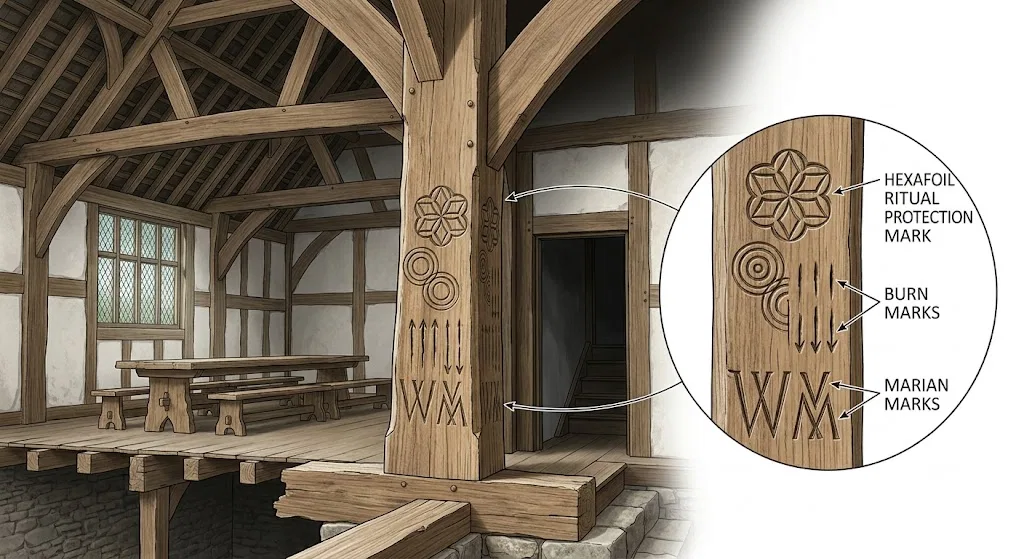
The most important recent evidence at Gainsborough Old Hall is not a ghost sighting but a set of marks scratched into the building. In October 2024, English Heritage announced that long-time volunteer Rick Berry had spent two years discovering and mapping around 20 carvings at the hall. The charity described them as carved ritual protection marks, or apotropaic marks, and said the number identified made Gainsborough Old Hall the most marked of its 400 sites.[English Heritage]english-heritage.org.ukOpen source on english-heritage.org.uk.
“Witch marks” can be a misleading phrase. They were not usually marks made by witches. Historic England explains that witches’ marks, ritual protection symbols or apotropaic marks were scribed into stone or wood, often near vulnerable points such as doorways, windows and fireplaces, to protect buildings and people from witches, evil spirits and other supernatural dangers.[Historic England]historicengland.org.ukHistoric England What Are Witches’ Marks? | Historic EnglandHistoric England What Are Witches’ Marks? | Historic England They belong to a period when supernatural threat was part of ordinary thinking, not merely Halloween decoration.
The Gainsborough discoveries include several different types. English Heritage identified simple circles that seem to lack the internal six-petal form of a full daisy wheel or hexafoil, marks believed to trap demons; overlapping Vs, often called Marian marks and interpreted by some as appeals to the Virgin Mary; and a pentangle, a symbol now often misunderstood because of later associations, but originally also used protectively.[English Heritage]english-heritage.org.ukOpen source on english-heritage.org.uk. Historic England’s wider guidance confirms that hexafoils are among the most recognisable apotropaic marks and that such symbols appear in English buildings from the early medieval period into the nineteenth century.[Historic England]historicengland.org.ukHistoric England What Are Witches’ Marks? | Historic EnglandHistoric England What Are Witches’ Marks? | Historic England
The location of the marks matters. English Heritage reported a particular concentration in the servants’ wing.[English Heritage]english-heritage.org.ukOpen source on english-heritage.org.uk. That detail shifts the emotional centre of the story away from aristocratic romance and towards working household fear. Servants slept, cooked, carried, cleaned and moved through the practical parts of the house; if protective marks clustered there, they may reflect the anxieties of those living and labouring close to fires, thresholds, food preparation and busy service spaces.
Alongside the protective carvings, English Heritage identified rare curse inscriptions. These appear to date from around the time William Hickman owned the property from 1596. In one inscription, Hickman’s name is written upside down; English Heritage says defacing a name in this way was widely believed to curse the named person and that such a curse had not previously been seen at one of its sites.[English Heritage]english-heritage.org.ukOpen source on english-heritage.org.uk.
This is where Gainsborough Old Hall becomes more than a “haunted Tudor house”. The marks show two different kinds of supernatural thinking in the same building. Some carvings seem to defend the household against evil; at least one inscription appears to turn hostility towards a named owner. English Heritage and The Guardian both connect the curse inscriptions with Hickman’s unpopularity, including disputes over common land, market rights, river tolls and local control.[English Heritage]english-heritage.org.ukOpen source on english-heritage.org.uk.
The roughly 100 burn marks add another layer. English Heritage says these were once believed to protect against fire.[English Heritage]english-heritage.org.ukOpen source on english-heritage.org.uk. In a timber-framed late medieval house with kitchens, hearths, candles and later crowded uses, fear of fire was not abstract. Whether every individual burn mark can be neatly explained is a specialist question, but the cluster fits the broader pattern of ritual protection in historic buildings.
Why the hall feels different from Lincolnshire’s castle hauntings
Many Lincolnshire ghost stories draw power from obvious public fear: prisons, castles, battle sites, ruined religious houses or lonely roads. Gainsborough Old Hall works differently. Its strongest supernatural texture is domestic. The Grey Lady legend is about family authority and private grief; the protective marks are about household vulnerability; the curse inscriptions suggest local conflict and resentment; the burn marks point to the practical terror of fire.
That makes the Old Hall a useful companion to Lincolnshire sites such as Lincoln Castle or Thornton Abbey, but not a duplicate of them. At a castle, a visitor expects chains, cells and execution stories. At Gainsborough, the unsettling details are smaller: a mark near a threshold, a symbol scratched into timber or plaster, a tower room associated with a waiting woman, a merchant’s inverted name. The fear is not only of punishment from above, but of unseen forces entering the home.
The marks also complicate the usual ghost-tour reading. A haunted-house article might ask whether the Grey Lady is “real”. The building asks a more interesting question: what did earlier occupants think they needed protection from? Historic England’s account of apotropaic marks shows that such symbols were part of a wider culture of protection in homes, churches, barns and caves, particularly around entrances and fireplaces.[Historic England]historicengland.org.ukHistoric England What Are Witches’ Marks? | Historic EnglandHistoric England What Are Witches’ Marks? | Historic England Gainsborough Old Hall is therefore not an isolated oddity, but an unusually rich Lincolnshire example of a practice found across historic England.
The 2024 discoveries also give the site a firmer evidence base than many haunted locations. Ghost sightings remain anecdotal, but the marks are physical, mapped and tied to the building’s fabric. English Heritage’s Kevin Booth described the Old Hall as having a “tumultuous past” and said it remains a mystery why the building has such a high concentration of protective carvings.[The Guardian]theguardian.comOpen source on theguardian.com. That uncertainty is valuable. It keeps the interpretation honest: the marks prove that people made protective or hostile inscriptions, not that demons, witches or ghosts were present.
How to read the evidence fairly
A careful reading of Gainsborough Old Hall separates three kinds of claim.
First, the house’s historical importance is well supported. It is a Grade I listed late medieval building in Gainsborough, associated with the Burgh and Hickman families, with major late fifteenth-century fabric and later alterations.[Historic England]historicengland.org.ukHistoric England The Old Hall, GainsboroughHistoric EnglandThe Old Hall, Gainsborough - 1359773 | Historic England… Its survival, reuse and preservation are also documented, including its gift to the state in 1969 and subsequent management by the Friends of the Old Hall Association and Lincolnshire County Council.[English Heritage]english-heritage.org.ukEnglish Heritage EH Continuation SheetEnglish Heritage EH Continuation Sheet
Second, the protective marks are material evidence of belief and practice. Their interpretation is still cautious, but they are not just a modern story laid over the site. English Heritage’s mapped carvings, curse inscriptions and burn marks show that people physically altered the building in ways understood as protective, hostile or ritualised.[English Heritage]english-heritage.org.ukOpen source on english-heritage.org.uk.
Third, the Grey Lady is a legend and reported haunting. It is locally famous and strongly attached to the tower, but it does not have the same evidential status as the Grade I listing or the carved marks. The best way to present it is as a story told about the hall, rooted in themes that fit the social world of a high-status medieval and Tudor household, rather than as a verified event.[The Guardian]theguardian.comOpen source on theguardian.com.
That distinction does not weaken the page’s atmosphere. It makes the Old Hall more interesting. The ghost story tells us how later generations imagined love and confinement in an old aristocratic house. The marks tell us that earlier occupants or users of the building may have felt the need to defend themselves from invisible harm. Together, they make Gainsborough Old Hall one of Lincolnshire’s most distinctive haunted places: a house where the supernatural is not only seen in the corner of the eye, but scratched into the walls.
Amazon book picks
Further Reading
Books and field guides related to The Grey Lady and the Marks Against Evil. Use these as the next step if you want deeper reading beyond the article.
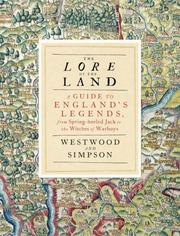
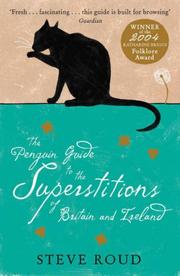
The Penguin Guide to the Superstitions of Britain and Ireland
Excellent background on protective marks and household beliefs.
Folklore of Lincolnshire
Provides context for local legends and protective traditions.
The Witch's Marks
Directly relates to the carved apotropaic marks at Gainsborough Old Hall.
eBay marketplace picks
Marketplace Samples
Live-tested eBay searches with available results related to this page.
Endnotes
1.
Source: english-heritage.org.uk
Link:https://www.english-heritage.org.uk/about/search-news/new-research-reveals-previously-undiscovered-witches-marks-at-gainsborough-old-hall/
2.
Source: historicengland.org.uk
Title: Historic England The Old Hall, Gainsborough
Link:https://historicengland.org.uk/listing/the-list/list-entry/1359773
Source snippet
Historic EnglandThe Old Hall, Gainsborough - 1359773 | Historic England...
3.
Source: english-heritage.org.uk
Title: English Heritage EH Continuation Sheet
Link:https://www.english-heritage.org.uk/siteassets/home/0-about-us-new/01-policies-and-reports/01.17-collections-policies/01.17.1-accordion-items/01.17.1.1-linked-pdfs/01.17.1.1-site-development-policies/gainsborough-old-hall-cds.pdf
4.
Source: english-heritage.org.uk
Title: English Heritage History of Gainsborough Old Hall | English Heritage
Link:https://www.english-heritage.org.uk/visit/places/gainsborough-old-hall/history/
5.
Source: english-heritage.org.uk
Link:https://www.english-heritage.org.uk/visit/places/gainsborough-old-hall/
6.
Source: theguardian.com
Link:https://www.theguardian.com/culture/2024/oct/29/witches-marks-discovered-english-heritage-gainsborough-old-hall
7.
Source: hauntedhappenings.co.uk
Link:https://www.hauntedhappenings.co.uk/gainsborough-old-hall/
8.
Source: historicengland.org.uk
Title: Historic England What Are Witches’ Marks? | Historic England
Link:https://historicengland.org.uk/whats-new/features/discovering-witches-marks/what-are-witches-marks/
9.
Source: english-heritage.org.uk
Link:https://www.english-heritage.org.uk/visit/inspire-me/historical-ways-to-protect-against-evil-spirits/
10.
Source: english-heritage.org.uk
Link:https://www.english-heritage.org.uk/about/search-news/pr-new-english-heritage-research-reveals-previously-undiscovered-witches-marks-at-gainsborough-old-hall/
11.
Source: historicengland.org.uk
Link:https://historicengland.org.uk/whats-new/features/discovering-witches-marks/types-of-marks/
12.
Source: wikishire.co.uk
Title: Gainsborough Old Hall
Link:https://wikishire.co.uk/wiki/Gainsborough_Old_Hall
13.
Source: Wikipedia
Title: Gainsborough Old Hall
Link:https://en.wikipedia.org/wiki/Gainsborough_Old_Hall
14.
Source: Wikipedia
Title: The Grey Lady
Link:https://en.wikipedia.org/wiki/The_Grey_Lady
15.
Source: tripadvisor.com
Title: Gainsborough Old Hall
Link:https://www.tripadvisor.com/Attraction_Review-g1226793-d2357473-Reviews-Gainsborough_Old_Hall-Gainsborough_Lincolnshire_England.html
16.
Source: thetudortravelguide.com
Title: gainsborough old hall
Link:https://thetudortravelguide.com/gainsborough-old-hall/
17.
Source: rosemaryandporkbelly.co.uk
Title: gainsborough old hall
Link:https://rosemaryandporkbelly.co.uk/gainsborough-old-hall/
18.
Source: historyreenactment.org.uk
Title: Gainsborough Old Hall
Link:https://www.historyreenactment.org.uk/gainsborough.html
19.
Source: artuk.org
Title: english heritage gainsborough old hall 3999
Link:https://artuk.org/visit/venues/english-heritage-gainsborough-old-hall-3999
20.
Source: atlasobscura.com
Title: gainsborough old hall
Link:https://www.atlasobscura.com/places/gainsborough-old-hall
21.
Source: reddit.com
Link:https://www.reddit.com/r/history/comments/5ac4fn/historic_england_asks_public_to_seek_ancient/
22.
Source: historyhit.com
Title: gainsborough old hall
Link:https://www.historyhit.com/locations/gainsborough-old-hall/
23.
Source: historytheinterestingbits.com
Title: Gainsborough Old Hall
Link:https://historytheinterestingbits.com/tag/gainsborough-old-hall/
Additional References
24.
Source: youtube.com
Link:https://www.youtube.com/watch?v=KotYG3pOQlY
Source snippet
‘Witches marks’ and curses found carved into the walls of historic England manor...
25.
Source: youtube.com
Title: ‘Witches marks’ and curses found carved into the walls of historic England manor
Link:https://www.youtube.com/watch?v=89T136Yl9-4
Source snippet
Hidden Symbols of Protection Found in England's Historic Gainsborough Hall...
26.
Source: gaudiumsubsole.org
Link:https://gaudiumsubsole.org/miscellany/apotropaic-marks/
27.
Source: facebook.com
Link:https://www.facebook.com/groups/735389799823006/posts/4571682559527025/
28.
Source: lincolnshirelife.co.uk
Link:https://www.lincolnshirelife.co.uk/heritage/gainsborough-old-hall/
29.
Source: visitlincoln.com
Link:https://www.visitlincoln.com/listing/gainsborough-old-hall/96587101/
30.
Source: facebook.com
Link:https://www.facebook.com/groups/735389799823006/posts/26753158080952822/
31.
Source: hauntedrooms.co.uk
Link:https://www.hauntedrooms.co.uk/gainsborough-old-hall-gainsborough-lincolnshire
32.
Source: facebook.com
Link:https://www.facebook.com/groups/272546466241319/posts/1143388012490489/
33.
Source: gutenberg.org
Link:https://www.gutenberg.org/ebooks/44568.txt.utf-8
Topic Tree