Within Haunted Dorset
What Is the Truth Behind Bettiscombe's Skull?
Bettiscombe's famous skull is less a simple ghost sighting than a troubling object legend about burial, displacement and doubt.
On this page
- The skull that was said to scream
- Colonial memory and the denied burial wish
- Anatomical doubt and folklore survival
Page outline Jump by section
Introduction
Bettiscombe’s Screaming Skull is one of Dorset’s most unsettling haunted-object stories, but its “truth” is not a simple choice between ghost and hoax. The core tradition says that a human skull kept at Bettiscombe Manor near Bridport must not be removed or buried: if disturbed, it screams, shakes the house, brings misfortune, or forces its own return. The tale became famous because it joins three uncomfortable things in one object: a real old manor house, the Pinney family’s documented links with slavery and Nevis, and a skull whose later anatomical assessment undermined the popular story that it belonged to an enslaved Black servant. Historic sources show the legend growing in stages, especially through nineteenth- and early twentieth-century folklore writing, while the physical skull itself points away from the most repeated version of the tale.[historicengland.org.uk]historicengland.org.ukOpen source on historicengland.org.uk.
Within Dorset’s haunted geography, Bettiscombe matters because it is not chiefly an apparition story. No woman in white walks the battlements, no spectral coach rattles down a lane. Instead, the haunting is concentrated in a thing: a skull that must stay in the house. That makes it part of a wider English “screaming skull” tradition, but Bettiscombe’s version has a sharper historical aftertaste because the legend is tied to colonial wealth, burial wishes, local embarrassment and the way folklore can preserve a moral problem even when its literal details become doubtful.
The skull that was said to scream
Bettiscombe Manor stands in west Dorset, in the small parish of Bettiscombe, near Bridport and the Marshwood Vale. Historic England lists the house as Grade II*, describing a manor house of about 1694 and the early eighteenth century, with a possible sixteenth-century core, brickwork in Flemish bond, attics, chimneys, panelling, a notable staircase and older interior features. In other words, the legend belongs to the kind of private, layered Dorset house where attics, chimneys and inherited objects can easily become part of family folklore.[Historic England]historicengland.org.ukOpen source on historicengland.org.uk.
The best-known early printed account appears in John H. Ingram’s The Haunted Homes and Family Traditions of Great Britain, published in 1897, though Ingram was drawing on earlier nineteenth-century material. He places “Bettiscombe House” about six miles from Bridport and says it was already celebrated for the so-called Screaming Skull. The superstition he repeats is strikingly physical: if the skull were taken out of the house, the building itself would rock and the person responsible would die within the year.[Internet Archive]archive.orgOpen source on archive.org.
Ingram’s account also preserves the story that made the skull famous. The skull was said to belong to a Black servant connected with a Pinney owner who had lived abroad. In the fuller version, the man asked before death that his body be returned to his native land. Instead, he was buried at Bettiscombe. The haunting then began: screams from the grave, rattling doors and windows, strange sounds through the house, and no peace until the body was dug up. Later attempts to bury the remains supposedly caused the disturbances to return, until only the skull remained in the manor.[Internet Archive]archive.orgOpen source on archive.org.
One reason the story caught the imagination is that it has a memorable investigative scene. Ingram recounts an 1883 visit by Dr Richard Garnett of the British Museum, Garnett’s daughter and a friend while they were staying at Charmouth. They went to Bettiscombe after hearing reports of the skull and hoped to test the tradition by burying it and staying overnight. The woman of the house reluctantly showed them the skull on a stair leading towards the roof; they examined it, found the lower jaw missing, and heard the local account of burial, screams and return. Their request to bury it for an experiment was refused, leaving the legend conveniently intact.[Internet Archive]archive.orgOpen source on archive.org.
The “scream” is therefore less a documented sound than a rule in a story: bury or remove the skull, and disturbance follows. This is typical of haunted-object folklore. The point is not that witnesses repeatedly record a clear auditory event under controlled conditions. The point is that the object has a taboo attached to it. It is allowed to remain, but not to be tidied away, buried, sold, mocked or explained too easily.
Colonial memory and the denied burial wish
The most troubling layer of the Bettiscombe legend is its link with the Pinney family and the Caribbean. Bridport Museum’s account of local slavery connections notes that John Frederick Pinney was a third-generation plantation owner born on Nevis, that he was directly involved in purchasing Africans in 1749, and that enslaved people were sometimes given names connected with the family’s Dorset places, including “Bettiscombe” and “Bridport”. The museum also identifies Bettiscombe as the site of the local Screaming Skull legend, supposedly concerning an enslaved man brought from Nevis whose dying wish to be returned was denied.[Bridport Museum]bridportmuseum.co.ukBridport Museum TestBridport Museum Test
That wider Pinney history is well documented even where the skull story is not. Bristol’s slavery history material traces the family back to Dorset, including the Reverend John Pinney of Broadwindsor and his son Azariah, who became involved in the Monmouth Rebellion of 1685 and was transported to Nevis. Christ’s College, Cambridge’s Legacies of Enslavement project summarises the later family connection: John Frederick Pinney’s grandfather Azariah had been exiled to Nevis, worked as a plantation manager, and the Pinney estates developed into slave-worked sugar property; John Pretor Pinney later made substantial wealth from plantations, sugar, shipping and credit tied to enslavement.[Discovering Bristol]discoveringbristol.org.ukOpen source on discoveringbristol.org.uk.
This matters because the skull legend is often told as if it were simply a Gothic curse. Read more carefully, it is a story about an unfulfilled burial obligation. The dead person’s demand is not random revenge. He wants his body returned home. The haunting begins because that wish is ignored, and peace is restored only when the remains are brought back into the domestic space that caused the wrong. In folklore terms, the skull becomes a witness: a small, portable reminder that the household’s comfort rests on an unresolved human debt.
The risk is that modern retellings can make the enslaved servant into a prop in someone else’s spooky house story. The stronger reading is more uncomfortable. Even if the physical skull is not the skull of the man described, the legend still shows how Dorset households were imaginatively linked to the Caribbean plantation world. Bettiscombe’s ghost story is not only about a rural manor. It is about how colonial wealth, personal service, death and displacement were remembered locally, half as history and half as curse.
J. S. Udal’s 1910 paper, “The Story of the Bettiscombe Skull”, is especially useful because it shows the legend already being questioned from inside Dorset antiquarian culture. Udal accepted the importance of the Pinney-Nevis connection but pushed back against the more sensational “screaming” label, saying he believed that attribute was unearned and had been amplified by publicity. He also noted that an older Dorset informant objected to newer details, including the Roman Catholic priest, murder hints and the idea that a whole skeleton had once been in the house.[Internet Archive]archive.orgInternet Archive Full text of "ProceedingsInternet Archive Full text of "Proceedings
That is a crucial caution. The colonial background is real; the specific skull narrative is unstable. Bettiscombe’s legend seems to have absorbed, rearranged and dramatised fragments of family history until a morally charged story emerged: a servant taken far from home, a denied return, a house that cannot rest, and an object that must not be removed.
Anatomical doubt and folklore survival
The greatest problem for the literal version of the legend is the skull itself. Even before modern assessment, Udal recorded doubts about whether it was “of a negroid character at all”. During one visit, he found the skull near attic stairs and later helped restore it to a niche beside a large chimney breast. He described it as not large, with the lower jaw missing, and he noted that he and others were inclined to doubt the accepted identification.[Internet Archive]archive.orgInternet Archive Full text of "ProceedingsInternet Archive Full text of "Proceedings
Later reports say the contradiction became stronger. Accounts of a 1963 examination at the Royal College of Surgeons attribute to Professor Gilbert Causey the conclusion that the skull was female, young, and very old rather than that of an enslaved Black man from the eighteenth or nineteenth-century Pinney household. Recent summaries of the examination describe it as probably Iron Age, around two thousand years old, while some older popular summaries state more generally that it was a European female aged about twenty-five to thirty. The available online evidence points in the same direction: the anatomy does not support the most famous version of the legend.[The Cottage Almanac]cottagealmanac.co.ukscreaming skull of bettiscombescreaming skull of bettiscombe
That does not make the story worthless. It changes what kind of story it is. If the skull is ancient and female, then the “truth” behind Bettiscombe’s skull cannot be that the object straightforwardly proves the enslaved-servant tale. Instead, the skull becomes a meeting point for several traditions:
- A household guardian object: Udal’s account places the skull near the attic and chimney, and later folklore commentary has noted that protective objects are often associated with chimneys, roof spaces and vulnerable thresholds. This fits the idea of a skull kept in the house not because it is evil, but because it protects or stabilises the home.[Internet Archive]archive.orgInternet Archive Full text of "ProceedingsInternet Archive Full text of "Proceedings
- A screaming-skull motif: English screaming skull stories commonly share the same rule: the skull must remain where it belongs, and disturbance follows if it is removed. Bettiscombe belongs with other English examples such as Burton Agnes Hall in Yorkshire, Wardley Hall in Greater Manchester, Tunstead Farm in Derbyshire and Chilton Cantelo in Somerset.[Wikipedia]WikipediaScreaming skullScreaming skull
- A colonial guilt narrative: The Pinney-Nevis background gave the old object a powerful human explanation. A nameless ancient skull could become, in story, the remains of a wronged servant. That transformation may be historically inaccurate at the level of anatomy, but culturally revealing at the level of memory.[Bridport Museum]bridportmuseum.co.ukBridport Museum TestBridport Museum Test
- A tourism and print legend: Ingram, Andrews, Udal, periodicals and later ghost writers all helped fix the story in public imagination. Udal’s irritation is revealing: once the phrase “Screaming Skull” attached itself to Bettiscombe, it proved hard to remove.[Internet Archive]archive.orgOpen source on archive.org.
The anatomical doubt is therefore not a footnote. It is the heart of the case. Bettiscombe’s skull is famous precisely because the evidence does not line up neatly. A physical relic exists; the house and Pinney connections are real; the legend is old enough to have become part of Dorset folklore; but the identity most often given to the skull appears highly doubtful.

Why Bettiscombe became Dorset’s great haunted object
Bettiscombe’s skull survived in folklore because it offered something more memorable than a single sighting. It gave Dorset an object with rules. A ghost might appear or not appear, depending on the witness. A skull can be pointed to, kept in a box, placed near a chimney, inspected by visitors and folded into household routine. Its power comes from the tension between the ordinary and the forbidden: it is only bone, yet nobody in the story is quite allowed to treat it as only bone.
The setting helps. Historic England’s listing makes clear that Bettiscombe Manor is not a fantasy castle but a substantial historic domestic building with attics, chimneys, staircases, panelling and older structural layers. Udal’s description of dark roof spaces, unsafe floors, bats and an old chimney niche shows how the house itself shaped the story. The skull’s location was not incidental. It belonged to the hidden upper parts of the building, the zone between living rooms and roof, where household storage, secrecy and superstition naturally gather.[Historic England]historicengland.org.ukOpen source on historicengland.org.uk.
It also became famous because it could be retold in several emotional registers. For ghost-story readers, it was eerie: a skull that screams when buried. For antiquarians, it was a puzzle: how old is the object, and where did the story begin? For local historians, it was a doorway into the Pinneys, Nevis, slavery and Dorset’s connections with plantation wealth. For sceptics, it was an example of how print culture can harden a loose household tradition into a named haunting.
The wider “screaming skull” family gives Bettiscombe further context, but it should not flatten the Dorset case. Burton Agnes is usually tied to a woman’s wish to remain in the house; Wardley Hall has Catholic martyr and alternative head legends; Chilton Cantelo has its own Somerset version. Bettiscombe’s distinctiveness lies in the clash between a claimed colonial identity and an object that may be much older. That clash makes it less tidy than many haunted-house stories and more interesting.
What is the most credible reading?
The safest conclusion is that Bettiscombe’s Screaming Skull is a genuine Dorset folklore tradition attached to a real historic house and a real human skull, but the popular identification of that skull as an enslaved Black servant from Nevis is not well supported by the anatomical evidence. The story should be treated as folklore with historical pressure behind it, not as a verified haunting or a reliable biography of the person whose skull is preserved.
Three things can be held together without forcing a false certainty. First, the Pinney family’s links with Nevis, slavery and West India wealth are historically grounded. Second, Bettiscombe had a long-standing skull tradition by the nineteenth century, and printed accounts show how the “screaming” reputation developed and spread. Third, anatomical doubt means the skull’s physical identity probably does not match the story most often told about it.[bridportmuseum.co.uk]bridportmuseum.co.ukBridport Museum TestBridport Museum Test
That makes Bettiscombe unusually valuable within Dorset’s haunted history. It is not merely a tale to be believed or dismissed. It is a case study in how haunted objects work. They gather meanings over time: household luck, fear of burial, colonial unease, local pride, visitor curiosity and sceptical correction. The skull’s silence may be more revealing than its supposed scream. It shows how a community can attach a difficult past to an object, then keep that object close because getting rid of it would feel, in some deeper sense, like refusing to face the story at all.
Amazon book picks
Further Reading
Books and field guides related to What Is the Truth Behind Bettiscombe's Skull?. Use these as the next step if you want deeper reading beyond the article.
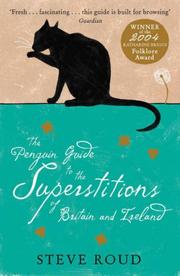
The Penguin Guide to the Superstitions of Britain and Ireland
Useful background for screaming skull traditions.

eBay marketplace picks
Marketplace Samples
Live-tested eBay searches with available results related to this page.
Endnotes
1.
Source: archive.org
Link:https://archive.org/stream/hauntedhomesfami00ingr/hauntedhomesfami00ingr_djvu.txt
2.
Source: archive.org
Link:https://archive.org/details/hauntedhomesfami00ingr
3.
Source: archive.org
Title: Internet Archive Full text of “Proceedings
Link:https://archive.org/stream/proceedingsdorse31dors/proceedingsdorse31dors_djvu.txt
4.
Source: Wikipedia
Title: Screaming skull
Link:https://en.wikipedia.org/wiki/Screaming_skull
5.
Source: archive.org
Title: haunted homes and family traditions of great britain 22 librivox
Link:https://archive.org/details/haunted_homes_and_family_traditions_of_great_britain_22_librivox
6.
Source: archive.org
Link:https://archive.org/details/hauntedhomesfami00iningr
7.
Source: archive.org
Link:https://archive.org/stream/notesqueriesfors02brid/notesqueriesfors02brid_djvu.txt
8.
Source: archive.org
Link:https://archive.org/stream/notesqueriesfor04unkngoog/notesqueriesfor04unkngoog_djvu.txt
9.
Source: Wikipedia
Link:https://en.wikipedia.org/wiki/Bettiscombe
10.
Source: Wikipedia
Title: John Pinney
Link:https://en.wikipedia.org/wiki/John_Pinney
11.
Source: folklore.ee
Link:https://www.folklore.ee/FOAFtale/ftn49.htm
12.
Source: historicengland.org.uk
Link:https://historicengland.org.uk/listing/the-list/list-entry/1118973
13.
Source: bridportmuseum.co.uk
Title: Bridport Museum Test
Link:https://www.bridportmuseum.co.uk/bridport-slavery-2/
14.
Source: cottagealmanac.co.uk
Title: screaming skull of bettiscombe
Link:https://www.cottagealmanac.co.uk/screaming-skull-of-bettiscombe/
15.
Source: discoveringbristol.org.uk
Link:https://discoveringbristol.org.uk/slavery/learning-journeys/john-pinney/
16.
Source: christs.cam.ac.uk
Title: Christ’s College Cambridge Azariah Pinney | Legacies of Enslavement at Christ’s
Link:https://www.christs.cam.ac.uk/legaciesofenslavement-at-christs/azariah-pinney.html
17.
Source: wikishire.co.uk
Link:https://wikishire.co.uk/wiki/Bettiscombe
18.
Source: historicengland.org.uk
Title: Dorset and East Devon Coast, Portland
Link:https://historicengland.org.uk/listing/the-list/list-entry/1000101
19.
Source: historicengland.org.uk
Link:https://historicengland.org.uk/images-books/photos/series/RCH01/088
20.
Source: historicengland.org.uk
Title: Dorset House, Non Civil Parish
Link:https://historicengland.org.uk/listing/the-list/list-entry/1323725
21.
Source: historicengland.org.uk
Title: 23 remarkable places listed in 2018
Link:https://historicengland.org.uk/whats-new/news/23-remarkable-places-listed-in-2018/
22.
Source: historicengland.org.uk
Title: Manor House, Hammoon
Link:https://historicengland.org.uk/listing/the-list/list-entry/1110215
23.
Source: occult-world.com
Title: bettiscombe manor
Link:https://occult-world.com/bettiscombe-manor/
24.
Source: mjwayland.com
Title: screaming skull
Link:https://www.mjwayland.com/ghost-research/screaming-skull/
25.
Source: engole.info
Title: Screaming skull
Link:https://engole.info/screaming-skull/
26.
Source: discoveringbristol.org.uk
Link:https://www.discoveringbristol.org.uk/slavery/learning-journeys/john-pinney/young-pinney/
27.
Source: books.google.com
Title: The Haunted Homes and Family Traditions
Link:https://books.google.com/books/about/The_Haunted_Homes_and_Family_Traditions.html?id=OnAAAAAAMAAJ
28.
Source: bridportmuseum.co.uk
Link:https://www.bridportmuseum.co.uk/bridport-slavery/
29.
Source: real-british-ghosts.com
Title: Screaming Skull
Link:https://www.real-british-ghosts.com/screaming-skull.html
30.
Source: ngs.org.uk
Title: Bettiscombe Manor
Link:https://ngs.org.uk/gardens/bettiscombe-manor-dt6/
31.
Source: openlibrary.org
Title: The haunted homes and family traditions of Great Britain
Link:https://openlibrary.org/books/OL7129435M/The_haunted_homes_and_family_traditions_of_Great_Britain
Additional References
32.
Source: youtube.com
Link:https://www.youtube.com/watch?v=5J8FJmO5nIE
Source snippet
The Screaming Skull of Bettiscombe Manor...
33.
Source: youtube.com
Title: The Screaming Skull of Bettiscombe Manor
Link:https://www.youtube.com/watch?v=pDAyMQZ_eWk
Source snippet
The Devil's Footprints & Other Chilling British Ghost Stories: Real Haunted Tales...
34.
Source: british-history.ac.uk
Link:https://www.british-history.ac.uk/rchme/dorset/vol1
35.
Source: abebooks.co.uk
Link:https://www.abebooks.co.uk/Inventory-Historical-Monuments-Dorset-Vol-West/32465621111/bd
36.
Source: facebook.com
Link:https://www.facebook.com/GULLYGARMS/posts/are-they-haunted-apparently-there-is-a-lot-of-spooky-history-in-bury-st-edmunds-/1275391587942826/
37.
Source: british-history.ac.uk
Link:https://www.british-history.ac.uk/rchme/dorset/vol1/pp28-29
38.
Source: facebook.com
Link:https://www.facebook.com/BBCRadio4/posts/can-we-get-to-the-bottom-of-this-historic-haunting-creeped-out-crew-abandon-thei/1481467624022929/
39.
Source: facebook.com
Link:https://www.facebook.com/groups/GothicHorror/posts/27772560542368888/
40.
Source: facebook.com
Link:https://www.facebook.com/astonishinglegends/posts/englands-screaming-skulls-guard-homes-farms-with-a-grim-warning-move-them-and-di/1435922048536194/
41.
Source: facebook.com
Link:https://www.facebook.com/groups/britishhorrorfilmstv/posts/2158308874929115/
Topic Tree