Within Haunted Yorkshire
What Did Medieval Yorkshire Ghosts Want?
The Byland Abbey tales show how medieval Yorkshire imagined restless dead, purgatory and village roads filled with spirits.

On this page
- The twelve Byland Abbey ghost stories
- Purgatory, prayer and unfinished business
- Why these tales still matter
Page outline Jump by section
Introduction
Byland Abbey’s medieval ghost stories are not just “haunted ruin” folklore. They are one of Yorkshire’s most important written windows into how people around 1400 imagined the restless dead: not as vague white figures, but as troublesome, suffering, bodily spirits who blocked roads, haunted churchyards, demanded absolution, exposed hidden wrongs and needed help from the living. The twelve surviving tales were written in Latin by an anonymous monk of Byland Abbey, on blank pages in a manuscript now known as Royal MS 15 A XX, and many of their settings cluster around the abbey’s own North Yorkshire neighbourhood: Ampleforth, Gilling, Kilburn, Kirby, Byland Bank and nearby roads and becks.[ninazumel.com]ninazumel.comTwelve Medieval Ghost StoriesTwelve Medieval Ghost Stories
That makes the Byland tales especially valuable for haunted Yorkshire. They are not modern tourist inventions attached to a picturesque ruin, nor polished Victorian Gothic stories. They preserve a medieval local storytelling world in which the dead could still need legal repair, religious remedy and neighbourly courage. Byland itself stands near Coxwold beneath the Hambleton Hills, after a wandering monastic community finally settled there in 1177; English Heritage describes it as once among the greatest monasteries in England and an outstanding example of early Gothic architecture.[English Heritage]english-heritage.org.ukEnglish Heritage Byland Abbey | English HeritageEnglish Heritage Byland Abbey | English Heritage
The twelve Byland Abbey ghost stories
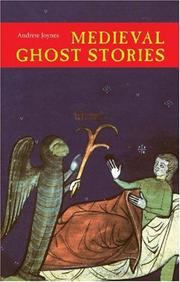
The Byland collection survives because a monk used spare manuscript space. M. R. James, better known to many readers as a writer of literary ghost stories, published the Latin text in 1922 after finding the tales in Royal MS 15 A XX. James noted that the volume contained Cicero and the Elucidarium, belonged to Byland Abbey, and carried ghost stories written on blank pages by a monk whose scenes were laid in his own neighbourhood. He dated the writing to not long after 1400 and stressed its unusually strong local colour.[Wikisource]en.wikisource.orgPage:English Historical Review Volume 37.djvu/422Page:English Historical Review Volume 37.djvu/422
The stories are short, compressed and sometimes puzzling, which is part of their importance. They read less like carefully crafted horror fiction and more like memoranda of spoken accounts: names, roads, errands, odd details and moral outcomes preserved before they could disappear. A later English translation in the Yorkshire Archaeological Journal made them accessible beyond readers of medieval Latin, and modern scholarly summaries still treat the Byland tales as a distinctive collection of local ghost narratives told to, or gathered by, a Cistercian monk.[ninazumel.com]ninazumel.comTwelve Medieval Ghost StoriesTwelve Medieval Ghost Stories
Several tales begin with a traveller meeting something uncanny on a road. In the first, a man carrying beans after his horse is injured meets a figure that changes shape: first like a horse, then like a whirling haycock with a light inside, and then like a man. The spirit helps carry the beans, but cannot cross a beck; after the living man arranges absolution and masses, the ghost is “eased”.[ninazumel.com]ninazumel.comTwelve Medieval Ghost StoriesTwelve Medieval Ghost Stories
The second and longest tale follows a tailor named Snowball, travelling from Gilling to Ampleforth. He first hears strange splashing in a beck, then sees a raven that throws sparks, then a dog with a chain, then a goat, and finally a horrible dead-looking man. The ghost’s problem is not simply that it wants to frighten someone. It needs absolution, masses and secrecy. The tailor protects himself with Christian words, sacred texts and a marked circle, then carries out the errand that allows the spirit to move towards peace.[ninazumel.com]ninazumel.comTwelve Medieval Ghost StoriesTwelve Medieval Ghost Stories
Other stories are even more physical. Robert, son of Robert de Boltby of Kilburn, leaves his grave at night, frightens villagers and is pursued by barking dogs. Young men try to catch him in the churchyard; one, Robert Foxton, holds him at the kirkstile until the parish priest arrives. The ghost then speaks from inside his body “as it were in an empty cask”, confesses offences, receives absolution and rests. This is not the delicate, transparent spectre of later fiction. It is a dead body or dead person imagined as something one might seize, hold and force into speech.[ninazumel.com]ninazumel.comTwelve Medieval Ghost StoriesTwelve Medieval Ghost Stories
The tales also show that medieval haunting could attach to everyday wrongdoing. One Newburgh canon is restless because of hidden silver spoons; another ghost is punished for feeding his master’s corn to the oxen to make them look fat and for ploughing too shallowly. A man of Ayton in Cleveland is excommunicated over a matter of sixpence and follows a living man until he is conjured and helped. The scale of sin varies from murder to bad farm service, but the pattern is consistent: the dead return because something remains spiritually, socially or materially unsettled.[ninazumel.com]ninazumel.comTwelve Medieval Ghost StoriesTwelve Medieval Ghost Stories
Two of the most striking stories widen the emotional range. Richard Rowntree of Cleveland, away on pilgrimage, sees a night procession of the dead and meets what appears to be his own unbaptised child, wrapped in a stocking and unable to walk upright until named in the Holy Trinity. In the final tale, the sister of Adam of Lond wanders after death because charters have been wrongfully transferred, harming her husband and children’s claim to property. These are ghost stories about family, inheritance, childbirth, religious status and the terror of leaving a wrong uncorrected.[ninazumel.com]ninazumel.comTwelve Medieval Ghost StoriesTwelve Medieval Ghost Stories
Purgatory, prayer and unfinished business
The Byland ghosts usually want something specific. They may need absolution from a priest, masses for the soul, restitution of stolen goods, forgiveness from a wronged master, the correction of property documents, or the naming of an unbaptised child. This is why the tales matter for medieval ghost belief: they show a world in which the dead are frightening, but they are also entangled with the living through duties that have not been properly finished.[ninazumel.com]ninazumel.comTwelve Medieval Ghost StoriesTwelve Medieval Ghost Stories
Purgatory is central to this pattern. In medieval Catholic belief, many souls did not pass immediately to heaven or hell; they required purification, and the living could assist them through prayer, masses, confession-related remedies and acts of restitution. The Byland tales dramatise that belief in village terms. A ghost appears because it cannot help itself. A living person, often terrified and reluctant, becomes the messenger who must involve a priest, friars, relatives or neighbours.[Medievalists.net]medievalists.netMedieval Ghost Stories: The Chilling Haunts of Byland AbbeyMedieval Ghost Stories: The Chilling Haunts of Byland Abbey
This does not make the ghosts gentle. The Byland dead can attack, throw people from horses, tear clothes, block roads, lurk at doors, frighten dogs and make witnesses ill. The tailor Snowball is warned that his body may rot if he does not return with the required answer; William of Bradeforth’s dog hides between his legs when a pale horse and shouting voice draw near. The stories therefore sit between two overlapping ideas: the purgatorial soul asking for Christian help, and the revenant or walking dead figure who is physically dangerous until contained.[ninazumel.com]ninazumel.comTwelve Medieval Ghost StoriesTwelve Medieval Ghost Stories
The ritual response is equally revealing. The living do not usually defeat ghosts with bravado. They conjure them in the name of God, the Trinity, Christ’s blood or the holy wounds; they call priests; they use gospels, sacred words, crosses and sometimes circles. Snowball’s circle, marked with a cross and associated with gospels or reliquary-like objects, sits close to the boundary between approved Christian protection and suspect conjuring practice. The translation’s notes even compare it with a York-recorded case involving a magic circle used for treasure-seeking near Halifax.[ninazumel.com]ninazumel.comTwelve Medieval Ghost StoriesTwelve Medieval Ghost Stories
The final story, about Adam of Lond’s sister, shows that “unfinished business” could be legal as well as devotional. Tom Johnson’s 2022 study in the Journal of Medieval History revisits this tale and argues that legal evidence supports the historicity of people involved, allowing the story to be read through medieval inheritance, property and dispute settlement. In that reading, the ghost is not merely a spooky woman in a churchyard; she embodies fear that land, documents and family rights can be corrupted after death.[White Rose Research Online]eprints.whiterose.ac.ukWhite Rose Research Online Byland Revisited, or Spectres of InheritanceWhite Rose Research Online Byland Revisited, or Spectres of Inheritance
This is one reason the Byland stories feel so local. Their ghosts are not abstract symbols of death. They are tied to particular social relationships: a master and servant, a parish priest and dead parishioner, a brother and sister, a husband and wife, a tailor and his absent companion from war, a community frightened by a churchyard walker. The haunting happens because the ordinary moral economy of medieval Yorkshire has broken down, and the dead have become the messengers of that breakage.
Why these tales still matter
The Byland stories matter first because they are early, local and unusually vivid. Medieval ghost writing often appears in sermons, chronicles or miracle collections, where the point is moral instruction. Byland’s monk probably also saw the tales as useful religious examples, but modern scholars note that he preserved grotesque, eerie and fantastic details with unusual interest: the raven throwing sparks, the ghost speaking from its entrails, the rotten “phantom flesh”, the pale horse at the crossroads, the dead riding on animals once given to the church.[cambridge.org]cambridge.orgUniversity Press & Assessment The Fragmentary Tales of the Monk of BylandUniversity Press & Assessment The Fragmentary Tales of the Monk of Byland
They also help explain why Yorkshire has such a deep ghost tradition. Long before modern ghost walks, newspaper hauntings or paranormal investigations, the county already had written accounts in which roads, abbeys, churchyards, becks and village boundaries were places where the living might meet the dead. Byland’s landscape is important here: the abbey was not isolated from lay society. It held estates, used roads, dealt with tenants, priests, labourers and neighbouring settlements, and stood within a dense religious and economic world shaped by Cistercian farming, wool, water management and local patronage.[english-heritage.org.uk]english-heritage.org.ukEnglish Heritage History of Byland Abbey | English HeritageEnglish Heritage History of Byland Abbey | English Heritage
For visitors, the present ruin can be misleading in a productive way. Today Byland is encountered as an English Heritage site, free to enter in daylight, with its great west front, rose-window remains and open monastic plan. The ghost tales, however, belong to the working medieval abbey and its surrounding routes, not simply to the romantic ruin left after suppression in 1538. The stories are therefore best read as hauntings of a living medieval neighbourhood rather than as legends invented to decorate a picturesque ruin.[English Heritage]english-heritage.org.ukEnglish Heritage Byland Abbey | English HeritageEnglish Heritage Byland Abbey | English Heritage
Their credibility should be handled carefully. They are not evidence that ghosts objectively haunted medieval Yorkshire. They are evidence that people told, recorded and understood ghost encounters in ways that made sense within their religious, legal and social world. James himself warned that the stories could be confused and compressed, while still judging that they appeared to preserve narrators’ words with some fidelity. That makes them folklore evidence of high value, not paranormal proof.[Wikisource]en.wikisource.orgPage:English Historical Review Volume 37.djvu/422Page:English Historical Review Volume 37.djvu/422
The Byland tales also resist a simple split between “church teaching” and “folk belief”. A priest may absolve a ghost; friars may say masses; sacred words may protect a traveller. Yet the ghosts also shape-shift, behave like corpses, speak from the belly, haunt roads and resemble Scandinavian-style revenant traditions. James noticed affinities with Danish folklore, and a Cambridge summary of Andrew Joynes’s work similarly notes that scholars have detected Scandinavian revenant overtones in the collection.[ninazumel.com]ninazumel.comTwelve Medieval Ghost StoriesTwelve Medieval Ghost Stories
That mixture is precisely what makes Byland so valuable for haunted Yorkshire. The tales show a medieval county where the supernatural was not confined to castle towers or elite family legends. It could appear in a ploughed field, on the road from Gilling to Ampleforth, by a beck, in Ampleforth churchyard, at Byland Bank, or in a dispute over charters and land. The ghosts wanted peace, but peace required action: confession, restitution, prayer, courage, secrecy and sometimes the hard work of persuading the living to put right what the dead could not.
eBay marketplace picks
Marketplace Samples
Live-tested eBay searches with available results related to this page.
Endnotes
1.
Source: ninazumel.com
Title: Twelve Medieval Ghost Stories
Link:https://ninazumel.com/TwelveMedievalGhostStories/pages/english/
2.
Source: dhi.ac.uk
Link:https://www.dhi.ac.uk/cistercians/byland/location/
3.
Source: en.wikisource.org
Title: Page:English Historical Review Volume 37.djvu/422
Link:https://en.wikisource.org/wiki/Page%3AEnglish_Historical_Review_Volume_37.djvu/422
4.
Source: cambridge.org
Title: University Press & Assessment The Fragmentary Tales of the Monk of Byland
Link:https://www.cambridge.org/core/books/medieval-ghost-stories/fragmentary-tales-of-the-monk-of-byland/3DF15A32F6AA6956D54472535B9F6734
5.
Source: medievalists.net
Title: Medieval Ghost Stories: The Chilling Haunts of Byland Abbey
Link:https://www.medievalists.net/2024/11/medieval-ghost-stories/
6.
Source: dhi.ac.uk
Link:https://www.dhi.ac.uk/cistercians/byland/
7.
Source: ninazumel.com
Link:https://ninazumel.com/TwelveMedievalGhostStories/
8.
Source: medieval.eu
Title: ghost stories from byland abbey
Link:https://www.medieval.eu/ghost-stories-from-byland-abbey/
9.
Source: medieval.eu
Title: byland abbey ghosts
Link:https://www.medieval.eu/byland-abbey-ghosts/
10.
Source: english-heritage.org.uk
Title: English Heritage Byland Abbey | English Heritage
Link:https://www.english-heritage.org.uk/visit/places/byland-abbey/
11.
Source: eprints.whiterose.ac.uk
Title: White Rose Research Online Byland Revisited, or Spectres of Inheritance
Link:https://eprints.whiterose.ac.uk/id/eprint/207223/1/Byland_Revisited_or_Spectres_of_Inheritance.pdf
12.
Source: english-heritage.org.uk
Title: English Heritage History of Byland Abbey | English Heritage
Link:https://www.english-heritage.org.uk/visit/places/byland-abbey/history/
13.
Source: english-heritage.org.uk
Link:https://www.english-heritage.org.uk/members-area/members-magazine/podcast-extras/ghosts-and-ghouls/
14.
Source: english-heritage.org.uk
Link:https://www.english-heritage.org.uk/visit/places/byland-abbey/history/collection/
15.
Source: Wikipedia
Title: Byland Abbey
Link:https://en.wikipedia.org/wiki/Byland_Abbey
16.
Source: thefield.co.uk
Title: Medieval ghost stories
Link:https://www.thefield.co.uk/country-house/medieval-ghost-stories-46653
17.
Source: hmmease.com
Title: Byland Abbey Ghost Stories
Link:https://www.hmmease.com/byland-abbey-ghost-stories
Additional References
18.
Source: youtube.com
Link:https://www.youtube.com/watch?v=giDElNiAitY
Source snippet
Eleanor Janega's Exploring the Medieval Afterlife | Best History Documentaries...
19.
Source: youtube.com
Title: Eleanor Janega’s Exploring the Medieval Afterlife | Best History Documentaries
Link:https://www.youtube.com/watch?v=9mC43j5cgoA
Source snippet
Three Medieval Ghost Stories and My One Encounter with a Ghost...
20.
Source: youtube.com
Title: Three Medieval Ghost Stories and My One Encounter with a Ghost
Link:https://www.youtube.com/watch?v=LV-lsH6FQVk
Source snippet
7 Medieval Ghost Stories & Old Tales of The Paranormal...
21.
Source: bylandmusic.com
Link:https://www.bylandmusic.com/
22.
Source: ancientmonuments.uk
Link:https://ancientmonuments.uk/111618-byland-abbey-cistercian-monastery-monastic-precinct-water-management-earthworks-enclosures-ancillary-buildings-and-quarries-byland-with-wass/photos/2775
23.
Source: aubreyresearch.com
Link:https://www.aubreyresearch.com/monuments/byland-abbey-cistercian-monastery-monastic-precinct-water-ma-1013403
24.
Source: scribd.com
Link:https://www.scribd.com/document/852377605/12-Medieval-Ghost-Stories-JstorBritishMuseum
25.
Source: vimeo.com
Link:https://vimeo.com/819662621
26.
Source: jstor.org
Link:https://www.jstor.org/stable/10.7722/j.ctt169wfv4
27.
Source: jstor.org
Link:https://www.jstor.org/stable/j.ctv2t4d7f.5?seq=2
Topic Tree