Where Old Middlesex Still Feels Haunted
Middlesex is one of Britain’s oddest haunted counties to write about, because much of its old landscape is now mentally filed under “London”. Historically, however, Middlesex was a compact county bounded largely by the Thames, the Lea and the Colne, with its former area now lying mostly inside Greater London, plus small parts in Hertfordshire and Surrey.
Page outline Jump by section
Introduction
The county’s haunted reputation is not built on ruined castles in the northern sense, but on something more urban and psychologically interesting: respectable houses that gained dreadful rumours, theatres where performers treat apparitions almost as colleagues, cemeteries where folklore collided with newspapers, and suburban cases where investigators, sceptics and popular culture still argue over what happened. Middlesex is therefore best understood as a county where haunting traditions sit very close to media, memory and city growth.
Where Historic Middlesex Sits Behind Modern London
Historic Middlesex covered the north and west side of the old metropolitan area: places such as Westminster, Mayfair, Covent Garden, Highgate, Tottenham, Enfield, Richmond, Isleworth, Brentford, Harrow, Uxbridge and much of what is now north-west London. The Thames formed the southern edge, the Lea the eastern edge and the Colne the western edge, while the northern boundary met Hertfordshire. That matters because many “London ghost stories” are, in historic-county terms, Middlesex stories.[Wikipedia]WikipediaOpen source on wikipedia.org.
The modern administrative picture can be misleading. Middlesex County Council disappeared in 1965, and most of its area was absorbed into Greater London. For a haunted-history project, though, the older county frame reveals patterns that modern borough labels blur: riverside aristocratic houses at Ham and Osterley, north London cemetery legends at Highgate, Mayfair gothic gossip at Berkeley Square, theatre ghosts around Covent Garden, and suburban psychical research at Enfield.[Wikipedia]WikipediaOpen source on wikipedia.org.
The result is a county of thresholds. Middlesex hauntings often happen where one kind of place becomes another: village into suburb, mansion into museum, cemetery into tourist landmark, private house into public legend, theatre superstition into heritage tour. That makes its ghost lore especially good at showing how London’s expansion preserved old fears inside modern streets.
What Are the Best-Known Middlesex Hauntings?
Middlesex has several nationally famous ghost traditions, but they differ sharply in source quality. Some are mostly folklore or theatrical tradition; others left archives, newspaper trails or institutional records.
The most useful starting points are:
- The Enfield Poltergeist, centred on a council house at 284 Green Street, Enfield, between 1977 and 1979. It is one of Britain’s most discussed modern haunting claims, preserved in press coverage, recordings, books and Society for Psychical Research material, but also heavily disputed.[ArchiveSearch]archivesearch.lib.cam.ac.ukarchival objectsarchival objects
- 50 Berkeley Square, the Mayfair townhouse often called “London’s most haunted house” in nineteenth- and twentieth-century retellings. Its legend is famous, but sceptical explanations are unusually strong.[Historic England]historicengland.org.ukHistoric England50, BERKELEY SQUARE W1, Non Civil ParishHistoric England50, BERKELEY SQUARE W1, Non Civil Parish
- Highgate Cemetery and the Highgate Vampire, a 1970s media panic in which cemetery atmosphere, vandalism, occult claims and television publicity created one of London’s strangest modern legends.[JSTOR]jstor.orgOpen source on jstor.org.
- The Theatre Royal, Drury Lane, long associated with the “Man in Grey” and other theatre spirits, where ghost stories form part of performance culture as much as paranormal evidence.[The Guardian]theguardian.comThe Guardian Inside the world's most haunted theatreThe Guardian Inside the world's most haunted theatre
- Ham House, the riverside Stuart mansion at Richmond, often described in popular and tour literature as one of England’s most haunted houses, with stories attached to Elizabeth, Duchess of Lauderdale and other figures.[National Trust]nationaltrust.org.ukOpen source on nationaltrust.org.uk.
- Bruce Castle, Tottenham, where the ghost of Lady Constantia Lucy links a local mansion, a disputed family story and a nineteenth-century newspaper tradition.[brucecastle.org]brucecastle.orgOpen source on brucecastle.org.
These stories are not equally credible as evidence for anything supernatural. They are, however, highly credible as folklore: they show what Middlesex communities, visitors, journalists and institutions have found memorable enough to repeat.
Enfield: The Suburban Case That Still Divides Readers
The Enfield Poltergeist is the county’s most important modern haunting claim because it sits at the meeting point of ordinary family life, press attention, psychical investigation and sceptical critique. The case was centred on the Hodgson family home at 284 Green Street in Enfield, then a north London suburb within historic Middlesex. Reports began in 1977 and included knocking sounds, moving furniture, thrown objects, strange voices and claims involving the Hodgson children, especially Janet and Margaret.[Wikipedia]WikipediaEnfield poltergeistEnfield poltergeist
What makes Enfield different from many older ghost stories is the amount of documentation. The Society for Psychical Research archive at Cambridge University Library includes an “Enfield Poltergeist Case Box” covering 1976–1986, while the Psi Encyclopedia article records the involvement of investigators Maurice Grosse and Guy Lyon Playfair, along with a wider set of committee reports and later arguments.[ArchiveSearch]archivesearch.lib.cam.ac.ukarchival objectsarchival objects
The credibility question is exactly why the case remains famous. Believers point to multiple witnesses, audio recordings and the sustained attention of investigators. Sceptics point to inconsistencies, opportunities for trickery, the behaviour of children under pressure, and the difficulty of separating observation from interpretation once journalists and paranormal investigators were involved. Even summaries sympathetic to the case acknowledge that some Society for Psychical Research members were not convinced, while sceptical writers argued that at least some incidents were staged or misread.[Wikipedia]WikipediaEnfield poltergeistEnfield poltergeist
For a Middlesex haunted-history page, Enfield matters less as a solved mystery than as a perfect late-twentieth-century urban haunting. It is not a castle legend or a coaching-inn apparition. It is a council-house haunting in a media age: domestic, photographed, argued over, dramatised and still emotionally charged because it involves children, family stress and the fear that something uncanny might erupt in the most ordinary room.
50 Berkeley Square: The Most Haunted House, or a Victorian Rumour Machine?
Few Middlesex ghost stories are as polished as 50 Berkeley Square. The Mayfair house became famous as a place where an upstairs room was said to terrify, madden or even kill those who slept there. Versions of the story involve a brown mist, a white figure, a traumatised woman, a murdered child, a trapped madman, dead sailors, frightened aristocrats and other gothic embellishments. The building itself is real and protected: Historic England lists 50 Berkeley Square as a Grade II building of special architectural or historic interest.[Historic England]historicengland.org.ukHistoric England50, BERKELEY SQUARE W1, Non Civil ParishHistoric England50, BERKELEY SQUARE W1, Non Civil Parish
The interesting part is how weak the supernatural core becomes when the legend is traced. Later retellings often present the house as if it had a long, stable record of deadly haunting, but nineteenth-century discussion points towards rumour, dereliction and literary imagination. Lady Dorothy Nevill’s 1906 memoir offered a particularly grounded explanation: Thomas Myers, a relative of hers, lived reclusively in the house after personal disappointment, moved about at night, let the property decay and may have been mistaken for something ghostly.[Mental Floss]mentalfloss.comsecret 50 berkeley squaresecret 50 berkeley square
That does not make 50 Berkeley Square unimportant. It makes it a textbook example of how a haunted house is manufactured. A decaying elite property, a hidden occupant, a fashionable Mayfair address, sensational magazine culture and repeated retellings created a legend more durable than the evidence behind it. Modern readers looking for “the truth” may find the sceptical explanation stronger than the apparition; readers interested in folklore may find that even more revealing.
The story also belongs firmly to Middlesex’s urban gothic tradition. Unlike rural haunting traditions tied to ruined abbeys or lonely lanes, Berkeley Square shows the city’s fear of what lies behind respectable doors. Its ghost is partly a spirit, partly a rumour, and partly a social anxiety about secrecy, madness and decline inside a wealthy neighbourhood.
Highgate Cemetery: When a Ghost Story Became a Public Panic
Highgate Cemetery gives Middlesex one of its most dramatic modern legends: the so-called Highgate Vampire. The cemetery itself opened in 1839 as one of the “Magnificent Seven” commercial cemeteries created to relieve overcrowded inner-city burial grounds. Its terraces, monuments, wooded paths and Gothic architecture made it a powerful setting long before any vampire story attached itself to the place. The London Museum describes Highgate as a famous north London cemetery opened to deal with a severe shortage of burial space, with the West side becoming a prestigious Victorian burial ground.[London Museum]londonmuseum.org.ukhighgate cemeteryhighgate cemetery
The vampire story developed around 1970, after reports of a grey figure, cemetery vandalism, occult rumours and rival claims by David Farrant and Sean Manchester. Folklorist Bill Ellis analysed the case in the journal Folklore, treating it as a contemporary legend shaped by satanic-cult lore, media attention and public performance rather than as a simple ghost sighting.[ResearchGate]researchgate.netResearch Gate The Anglo-American Connection in Satanic Cult LoreResearch Gate The Anglo-American Connection in Satanic Cult Lore
The most striking event was the March 1970 vampire hunt, when publicity helped draw people to the cemetery after television coverage and newspaper interest. Later accounts describe crowds climbing walls and searching the grounds, turning rumour into behaviour. This is what folklorists call “ostension”: people acting out a legend in the real world. The Highgate case is therefore not just a story about what someone claimed to see; it is a story about how a place can be physically affected by belief.[Wikipedia]WikipediaHighgate VampireHighgate Vampire
Highgate’s haunted reputation remains powerful because the setting does so much work. Overgrown Victorian cemeteries invite thoughts of secrecy, mourning, decay and return. But the Highgate Vampire is also a warning about sensationalism. The strongest evidence supports a history of rumour, rivalry, trespass, vandalism, press amplification and occult performance. The atmosphere is real; the vampire claim is folklore.
Drury Lane: Why Theatre Ghosts Feel Different
The Theatre Royal, Drury Lane, stands in Covent Garden and is one of the most famous haunted theatres associated with historic Middlesex. The present building dates from 1812, while theatre on the site goes back to the seventeenth century. Recent reporting on the theatre’s ghost tours notes that the site has had theatrical activity since 1663 and that its ghost lore now forms part of the visitor experience.[The Times]thetimes.comThe Times Inside London's haunted theatreFamous for its double royal boxes and rich lineage of dramatic tragedies, Drury Lane's stories include Macklin’s ghost helping actors rec…
The best-known apparition is the Man in Grey, usually described as a figure in eighteenth-century dress, sometimes with a tricorn hat and cloak, seen in or near the Grand Circle before disappearing. Other traditions attach spectral presences to performers such as Joseph Grimaldi, Dan Leno and Charles Macklin. These stories are not usually handled like courtroom evidence. In theatre culture they operate as a blend of superstition, memory, house identity and backstage inheritance.[The Guardian]theguardian.comThe Guardian Inside the world's most haunted theatreThe Guardian Inside the world's most haunted theatre
That makes Drury Lane especially valuable in a county-level haunting guide. Some haunted places frighten visitors by claiming danger. Drury Lane’s ghosts are often treated as part of the building’s working mythology. The Times’ 2025 account of a late-night tour even frames the theatre’s spirits as friendly or lucky presences in performance culture, where an unexplained tap on the shoulder can become a story about help rather than harm.[The Times]thetimes.comThe Times Inside London's haunted theatreFamous for its double royal boxes and rich lineage of dramatic tragedies, Drury Lane's stories include Macklin’s ghost helping actors rec…
The sceptical reading is straightforward: old theatres are full of shadows, nerves, repetition, hidden spaces, technical noises and people primed to interpret odd experiences dramatically. The folkloric reading is richer: theatres are buildings where people practise becoming other people, night after night, and where the dead are kept present through roles, portraits, anecdotes and ritual. In that setting, a ghost is almost an exaggerated form of theatrical memory.

Ham House and the Riverside Mansion Tradition
Ham House, on the Thames at Richmond, supplies Middlesex with a classic country-house haunting. The National Trust describes it as a rare and atmospheric seventeenth-century house on the river, and its reputation for ghosts is widely repeated in travel writing, ghost-tour culture and paranormal discussion.[National Trust]nationaltrust.org.ukOpen source on nationaltrust.org.uk.
The figure most often associated with Ham is Elizabeth Murray, Duchess of Lauderdale, the formidable seventeenth-century owner whose presence seems almost too strong to leave the house in ordinary memory. Popular accounts also mention other apparitions, sounds and presences, including stories of a dog, servants, children or unexplained movement in particular rooms. The Financial Times, in a report on the Ghost Club, notes that Ham House is reputed to be haunted by the Duchess of Lauderdale and by King Charles II, and that the National Trust acknowledges the value of such haunting traditions as part of the site’s public appeal.[Financial Times]ft.comOpen source on ft.com.
Ham’s ghost stories work because the house already feels suspended between courtly grandeur and domestic unease. It is not a ruin. It is a preserved interior, full of textures associated with past lives: staircases, corridors, chambers, portraits, furniture and the river outside. Visitors do not need to believe in apparitions to understand why such a place gathers them.
The careful reading is that Ham’s haunting traditions are strongest as heritage folklore. They help visitors imagine the emotional life of a seventeenth-century household, but they should not be treated as proof that named historical figures have been seen after death. The stories are most useful when they send readers back to the house’s real history: politics, ambition, family, service, status and the long afterlife of aristocratic reputation.
Bruce Castle: Tottenham’s Forgotten Lady at the Window
Bruce Castle in Tottenham offers a more local, quieter form of Middlesex haunting. The building is now a museum, and the site’s own learning material says it is reputedly haunted by Constantia Lucy, who lived there more than 300 years ago as the wife of Henry Hare, 2nd Baron Coleraine.[brucecastle.org]brucecastle.orgOpen source on brucecastle.org.
The traditional story says Constantia was unhappy, possibly because of Hare’s relationship with another woman, and that her ghost appears at a window, especially in November. Local reporting has drawn attention to the absence of a clear burial record for Constantia in the parish registers of All Hallows, Tottenham, despite claims about her burial there. That gap gives the legend its unsettled quality: not enough evidence to confirm the dramatic story, but enough uncertainty to keep it alive.[Haringey Community Press]haringeycommunitypress.co.ukthe overlooked story of the bruce castle ghostthe overlooked story of the bruce castle ghost
The earliest recorded reference to the ghost appears to come not from the seventeenth century but from the nineteenth century, with later summaries pointing to an 1858 mention in the Tottenham & Edmonton Advertiser. That time lag matters. It suggests that the haunting may tell us as much about Victorian local storytelling as about the life of Constantia herself.[Wikipedia]WikipediaBruce CastleBruce Castle
Bruce Castle’s story is a useful reminder that not all hauntings become national brands. Some remain attached to a borough museum, a school visit, a window, a seasonal rumour and a half-remembered family tragedy. In historic Middlesex terms, it connects the aristocratic-house haunting to the suburban museum: the ghost becomes a way of keeping a local past visible in a landscape that has changed almost beyond recognition.
Osterley, Roads and the Western Edge of Haunted Middlesex
Osterley Park and House, in Isleworth, belongs to the western mansion belt of historic Middlesex. The estate began as a Tudor house associated with Sir Thomas Gresham and was later transformed into an elegant Georgian showpiece connected with the Child banking family. Modern visitors reach it through Greater London, but historically it belongs to the Middlesex pattern of wealthy houses set in what was once semi-rural country near the capital.[numberonelondon.net]numberonelondon.netOsterley Park, An Adam JewelOsterley Park, An Adam Jewel
Its ghost lore is less securely sourced than Enfield, Highgate or Berkeley Square, but repeated visitor and local accounts refer to a “Lady in White” seen near the main staircase or moving through the house. Because much of the available material is anecdotal or tourism-adjacent, Osterley should be treated as a lighter entry in the county’s haunted map rather than as a major evidential case.[Mickey Serene]mickeyserene.wordpress.comMickey Serene Haunted London Osterley Park HouseMickey Serene Haunted London Osterley Park House
Even so, Osterley helps fill out the geography of Middlesex haunting. The county’s western side, with its roads towards Hounslow, Brentford, Uxbridge and the Thames crossings, has long been a corridor of movement: coaches, traders, servants, soldiers, commuters and tourists. Haunted traditions in such places often attach not just to one apparition but to the feeling of passage: staircases, entrances, parkland edges, lodges and roads where people appear briefly and vanish.
That may be why Middlesex ghost lore often feels transitional. The county sits between capital and countryside, private house and public attraction, old parish and modern borough. Its spirits are frequently glimpsed in thresholds rather than remote wilderness.
How Credible Are Middlesex Ghost Sources?
The strongest way to read Middlesex hauntings is not to ask whether every apparition is “real”, but to ask what kind of source preserves the story.
Some cases have archival or research trails. Enfield is the clearest example: there are Society for Psychical Research records, named investigators, press coverage, later interviews and sceptical critiques. That does not prove the haunting, but it gives readers material to compare.[ArchiveSearch]archivesearch.lib.cam.ac.ukarchival objectsarchival objects
Some cases have folklore scholarship. Highgate is strongest when read through contemporary legend studies, especially Bill Ellis’s work on the vampire hunt. The key evidence is not a vampire, but the social process: rumour, media, rivalry, public behaviour and the power of a Gothic setting.[ResearchGate]researchgate.netResearch Gate The Anglo-American Connection in Satanic Cult LoreResearch Gate The Anglo-American Connection in Satanic Cult Lore
Some cases have heritage and tourism framing. Ham House and Drury Lane are real historic sites where ghost stories form part of visitor experience and institutional identity. These sources are valuable for understanding what is told today, but they can blur the line between evidence, atmosphere and entertainment.[nationaltrust.org.uk]nationaltrust.org.ukOpen source on nationaltrust.org.uk.
Some cases have strong sceptical explanations. 50 Berkeley Square is the best example: the building is real, the legend is famous, but the likely origin lies in a reclusive occupant, a decaying house and Victorian rumour culture.[Mental Floss]mentalfloss.comsecret 50 berkeley squaresecret 50 berkeley square
This mix is what makes Middlesex unusually rewarding. Its ghost stories are not just old tales; they are case studies in how haunted reputations are made, challenged, marketed and remembered.

Why Middlesex Feels So Haunted Despite Being So Urban
Middlesex’s haunted character comes from density. Few counties compress so many different forms of ghost story into so small a historic area: aristocratic mansions, theatres, cemeteries, suburban houses, Mayfair squares, old villages swallowed by London and riverside estates surviving inside the metropolis.
The county also has an unusually strong relationship with media. Berkeley Square grew through print rumour and gothic retelling. Highgate became a television-and-newspaper panic. Enfield unfolded under the gaze of journalists, photographers and psychical researchers. Drury Lane’s ghosts survive through theatre lore and guided tours. These are not isolated fireside stories; they are urban legends shaped by publicity.
There is also a social-memory pattern. Middlesex hauntings often attach to people or places under pressure: a lonely recluse in a decaying house, a family in a council home, a cemetery neglected and vandalised, a mansion preserving aristocratic power, a theatre repeatedly rebuilt after fire and damage. The ghost becomes a way of saying that the past has not been tidied away, even when the map has changed.
That is why the historic-county frame matters. Modern London can make these stories feel scattered. Middlesex gathers them into a single haunted landscape: north and west of the old City, along the Thames and out towards the suburbs, where the capital’s ghosts are less about medieval walls and more about houses, rumours, performances and memory.
Visiting the Haunted Middlesex Landscape Today
Many Middlesex ghost sites are visitable, though not always as paranormal attractions. Highgate Cemetery runs as a major heritage cemetery; Ham House and Osterley Park are National Trust properties; Bruce Castle is a local museum; Drury Lane offers theatre tours; Berkeley Square is best approached from the street as part of a wider Mayfair walk rather than as a site to enter.[londonmuseum.org.uk]londonmuseum.org.ukhighgate cemeteryhighgate cemetery
A sensible haunted Middlesex route would not try to chase proof. It would follow atmosphere and context:
- For documented modern controversy: Enfield and Highgate.
- For classic haunted-house folklore: 50 Berkeley Square and Ham House.[Wikipedia]Wikipedia50 Berkeley Square50 Berkeley Square
- For theatre superstition: Drury Lane and the West End.
- For local legend: Bruce Castle.[Wikipedia]WikipediaBruce CastleBruce Castle
- For mansion-and-park atmosphere: Osterley and the western Thames-side estates.
The best visits treat ghost stories as a doorway into history. At Highgate, the real story includes Victorian burial reform, neglect, vandalism and legend-making. At Ham, it includes Stuart politics and aristocratic memory. At Drury Lane, it includes performance, superstition and the emotional life of a working theatre. At Enfield, it includes family, class, press ethics, psychical research and scepticism.
Middlesex is therefore not haunted in one simple way. It is haunted as a former county hidden inside London: its ghosts survive in renamed districts, repurposed houses, archived case files, guided tours, old newspapers and stories that keep slipping between history and rumour.
Amazon book picks
Further Reading
Books and field guides related to Where Old Middlesex Still Feels Haunted. Use these as the next step if you want deeper reading beyond the article.

London - The Biography (London a Biography)
First published 2000. Subjects: Social life and customs, Description and travel, Dagelijks leven, History, London (england), biography.
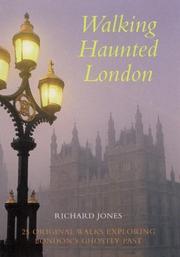
Walking haunted London
First published 1999. Subjects: Guidebooks, Haunted places, Walking.
eBay marketplace picks
Marketplace Samples
Live-tested eBay searches with available results related to this page.

Endnotes
1.
Source: commons.wikimedia.org
Link:https://commons.wikimedia.org/wiki/File%3ABritish_Isles_map_showing_UK%2C_Republic_of_Ireland%2C_and_historic_counties.svg
2.
Source: Wikipedia
Link:https://en.wikipedia.org/wiki/Middlesex
3.
Source: commons.wikimedia.org
Title: File:England Historic Counties Middlesex map.svg
Link:https://commons.wikimedia.org/wiki/File%3AEngland_Historic_Counties_Middlesex_map.svg
4.
Source: jstor.org
Link:https://www.jstor.org/stable/i253881
5.
Source: brucecastle.org
Link:https://brucecastle.org/learning/learning-zone/unlock-castle-secrets/ghostly-goings
6.
Source: Wikipedia
Title: Enfield poltergeist
Link:https://en.wikipedia.org/wiki/Enfield_poltergeist
7.
Source: Wikipedia
Title: 50 Berkeley Square
Link:https://en.wikipedia.org/wiki/50_Berkeley_Square
8.
Source: researchgate.net
Title: Research Gate The Anglo-American Connection in Satanic Cult Lore
Link:https://www.researchgate.net/publication/233323656_The_Highgate_Cemetery_Vampire_Hunt_The_Anglo-American_Connection_in_Satanic_Cult_Lore
9.
Source: Wikipedia
Title: Highgate Vampire
Link:https://en.wikipedia.org/wiki/Highgate_Vampire
10.
Source: Wikipedia
Title: Bruce Castle
Link:https://en.wikipedia.org/wiki/Bruce_Castle
11.
Source: numberonelondon.net
Title: Osterley Park, An Adam Jewel
Link:https://numberonelondon.net/2023/10/osterley-park-an-adam-jewel/
12.
Source: Wikipedia
Link:https://en.wikipedia.org/wiki/Surrey
13.
Source: Wikipedia
Title: Highgate Cemetery
Link:https://en.wikipedia.org/wiki/Highgate_Cemetery
14.
Source: upload.wikimedia.org
Link:https://upload.wikimedia.org/wikipedia/commons/9/98/Passages_of_a_Working_Life%2C_During_half_a_century_Vol.1_%28IA_pli.kerala.rare.4433%29.pdf
15.
Source: researchgate.net
Link:https://www.researchgate.net/publication/406707849_The_Enfield_Poltergeist_Tapes_One_of_the_Most_Disturbing_Cases_in_History_What_really_happened_by_Melwyn_J_Willin
16.
Source: researchgate.net
Title: 347746592 A Top Hat a Mad Murderess a Vampire King
Link:https://www.researchgate.net/publication/347746592_A_Top-Hat_a_Mad_Murderess_a_Vampire_King
17.
Source: wikishire.co.uk
Link:https://wikishire.co.uk/wiki/Middlesex
18.
Source: wikishire.co.uk
Title: Wikishire Great Britain and Ireland
Link:https://wikishire.co.uk/map/
19.
Source: archivesearch.lib.cam.ac.uk
Title: archival objects
Link:https://archivesearch.lib.cam.ac.uk/repositories/2/archival_objects/635607
20.
Source: historicengland.org.uk
Title: Historic England50, BERKELEY SQUARE W1, Non Civil Parish
Link:https://historicengland.org.uk/listing/the-list/list-entry/1066467
21.
Source: mentalfloss.com
Title: secret 50 berkeley square
Link:https://www.mentalfloss.com/history/secret-50-berkeley-square
22.
Source: londonmuseum.org.uk
Title: highgate cemetery
Link:https://www.londonmuseum.org.uk/collections/london-stories/highgate-cemetery/
23.
Source: theguardian.com
Title: The Guardian Inside the world’s most haunted theatre
Link:https://www.theguardian.com/stage/2015/oct/29/most-haunted-theatre-ghosts-superstitions-theatre-royal-drury-lane
24.
Source: thetimes.com
Title: The Times Inside London’s haunted theatre
Link:https://www.thetimes.com/uk/london/article/london-most-haunted-theatre-royal-drury-lane-ghost-tour-fw9hbf9wm
Source snippet
Famous for its double royal boxes and rich lineage of dramatic tragedies, Drury Lane's stories include Macklin’s ghost helping actors rec...
25.
Source: nationaltrust.org.uk
Link:https://www.nationaltrust.org.uk/visit/london/ham-house-and-garden
26.
Source: ft.com
Link:https://www.ft.com/content/8986be33-be1b-4f75-9a79-0b417fecfc5c
27.
Source: haringeycommunitypress.co.uk
Title: the overlooked story of the bruce castle ghost
Link:https://haringeycommunitypress.co.uk/2023/10/31/the-overlooked-story-of-the-bruce-castle-ghost/
28.
Source: mickeyserene.wordpress.com
Title: Mickey Serene Haunted London Osterley Park House
Link:https://mickeyserene.wordpress.com/2009/08/16/haunted-london-osterley-park-house/
29.
Source: london-overlooked.com
Link:https://london-overlooked.com/berkeley/
30.
Source: wikishire.co.uk
Title: Historic Counties Trust
Link:https://wikishire.co.uk/wiki/Historic_Counties_Trust
31.
Source: wikishire.co.uk
Link:https://wikishire.co.uk/wiki/Hertfordshire
32.
Source: wikishire.co.uk
Title: Historic Counties Standard
Link:https://wikishire.co.uk/wiki/Historic_Counties_Standard
33.
Source: freetimewiththekids.com
Title: osterley park
Link:https://freetimewiththekids.com/2019/02/02/osterley-park/
34.
Source: icysedgwick.com
Title: 50 berkeley square
Link:https://www.icysedgwick.com/50-berkeley-square/
35.
Source: citydays.com
Title: 50 Berkeley Square
Link:https://citydays.com/places/50-berkeley-square/
36.
Source: alondoninheritance.com
Link:https://alondoninheritance.com/tag/ghosts/
37.
Source: real-british-ghosts.com
Title: Man in Grey
Link:https://www.real-british-ghosts.com/man-in-grey.html
38.
Source: darktales.blog
Title: 50 Berkeley Square
Link:https://darktales.blog/2020/01/02/50-berkeley-square/
39.
Source: solosophie.com
Title: ham house
Link:https://www.solosophie.com/ham-house/
40.
Source: haunted-london.com
Link:https://www.haunted-london.com/haunted-london-theatres.html
41.
Source: vampires.fandom.com
Title: Highgate Vampire
Link:https://vampires.fandom.com/wiki/Highgate_Vampire
42.
Source: historyhit.com
Title: Highgate Cemetery
Link:https://www.historyhit.com/locations/highgate-cemetery/
Additional References
43.
Source: youtube.com
Link:https://www.youtube.com/watch?v=7N7qXYVHF0w
Source snippet
"50 Berkeley Square: The UK's most dangerous ghost?[https://www.youtube.com/watch?v=zzF6W3HNatg..."](https://www.youtube.com/watch?v=zzF6W3HNatg...")...
44.
Source: youtube.com
Title: Ghosts Of London
Link:https://www.youtube.com/watch?v=zzF6W3HNatg
Source snippet
Inside London's Most Underrated Historic House...
45.
Source: youtube.com
Title: Inside London’s Most Underrated Historic House
Link:https://www.youtube.com/watch?v=QI3C1tnU4Bg
Source snippet
Creepy True Story: Enfield Poltergeist Janet Hodgson (Paranormal Documentary)...
46.
Source: youtube.com
Title: Creating your image
Link:https://www.youtube.com/watch?v=evWLJMRfl1s
Source snippet
"Ghosts Of London - Chilling Tales From The Haunted West End.[https://www.youtube.com/watch?v=7N7qXYVHF0w..."](https://www.youtube.com/watch?v=7N7qXYVHF0w...")...
47.
Source: london-beyond-time-and-place.com
Link:https://london-beyond-time-and-place.com/50-berkeley-square-the-most-haunted-house-in-london/
48.
Source: dannyechase.com
Link:https://dannyechase.com/blog/50berkeleysquare/
49.
Source: reddit.com
Link:https://www.reddit.com/r/london/comments/106jpjz/according_to_wikishire_the_city_of_london_is_in/
50.
Source: culturaobscura.com
Link:https://www.culturaobscura.com/old-operating-theatre-london-dark-tourism/
51.
Source: andrewlloydwebber.com
Link:https://www.andrewlloydwebber.com/news/his-majestys-theatres-most-terrifying-tales
52.
Source: facebook.com
Link:https://www.facebook.com/groups/260827821738102/posts/1470361317451407/
Topic Tree
Follow this branch
Related pages 91
- Haunted Clackmannanshire
- Haunted Antrim
- Haunted Armagh
- Haunted Durham
- Haunted Londonderry
- +86 more in sidebar