Within Haunted Caithness
Who Was the Green Lady of Mey?
The Castle of Mey's Green Lady story blends Sinclair family lore, royal associations and a classic Scottish castle apparition.
On this page
- The forbidden love story and its variants
- What the castle history can verify
- Why Green Lady legends recur in Scotland
Page outline Jump by section
Introduction
The Green Lady of Mey is the best-known ghost story attached to the Castle of Mey, the north-coast Caithness castle once called Barrogill and later beloved as the Queen Mother’s Scottish retreat. The story usually says that a Sinclair daughter fell in love beneath her rank, was confined by an angry father, and died after falling or throwing herself from an upper window. What makes the legend interesting is not that it can be proved as a ghostly event, but that it sits at the crossing-point of three powerful things: a real Sinclair stronghold, a repeated Scottish “Green Lady” folklore pattern, and the castle’s modern royal fame. The details, however, are unstable. Some versions name Elizabeth Sinclair, daughter of the 5th Earl of Caithness; others name Lady Fanny Sinclair, daughter of the 14th Earl. That disagreement is the first clue that the story is better read as family folklore attached to a real place than as a settled historical record.[ambaile.org.uk]ambaile.org.ukCastle of MeyHigh Life HighlandThe Castle of Mey is said to be haunted by a Green Lady. She is Elizabeth Sinclair, daughter of the 5th Earl of Caithne…
Where the Green Lady belongs in Caithness
The Castle of Mey stands near the far north coast of mainland Scotland, east of Thurso and not far from John O’Groats, in the historic county of Caithness. Its position matters. This is not a wooded inland Gothic ruin but a weather-facing tower house close to the Pentland Firth, looking towards Orkney. For visitors, that exposed setting gives the tale much of its force: an upper room, a bricked-up or remembered window, a waiting woman, and the sea-edge isolation of a Caithness estate.[The King's Foundation]kings-foundation.orgOpen source on kings-foundation.org.
Historically, the building is not imaginary scenery for a ghost story. Historic Environment Scotland lists the Castle of Mey and its garden walls as a Category A listed building, probably dating from 1566–72, with later 17th-, 18th-, 19th- and mid-20th-century additions. The official Castle of Mey history says it was built by George Sinclair, 4th Earl of Caithness, for his second son William Sinclair, before passing through the Sinclair line and later becoming known as Barrogill Castle.[Historic Environment Scotland]portal.historicenvironment.scotOpen source on historicenvironment.scot.
That long Sinclair association is one reason the legend has stuck. Historic Environment Scotland’s designed-landscape record gives the site “outstanding” historical value because of its four centuries of association with the Earls of Caithness and its later connection with Queen Elizabeth The Queen Mother. In other words, the Green Lady is attached to a place whose aristocratic and royal history is unusually visible to the public.[Historic Environment Scotland]portal.historicenvironment.scotOpen source on historicenvironment.scot.
The forbidden-love story and its variants
The core tale is simple and memorable. A young Sinclair woman falls in love with a man considered socially unsuitable: a servant, stable hand, farm worker, ploughman or local lad, depending on the version. Her father forbids the match, separates the lovers, and confines her in an upper part of the castle. She waits, despairs, and dies by falling or jumping from a window. Afterwards, her apparition is said to haunt the upper floors as the Green Lady.[britainirelandcastles.com]britainirelandcastles.comOpen source on britainirelandcastles.com.
The most common older-style version names her as Elizabeth Sinclair, daughter of George Sinclair, 5th Earl of Caithness. Am Baile, the Highland history and culture resource, gives the compact form of the story: the Castle of Mey is said to be haunted by a Green Lady, identified as Elizabeth Sinclair, daughter of the 5th Earl, who threw herself from a window. Castles of Scotland gives a similar account, adding that her father imprisoned her in an attic after she fell in love with a ploughman.[ambaile.org.uk]ambaile.org.ukCastle of MeyHigh Life HighlandThe Castle of Mey is said to be haunted by a Green Lady. She is Elizabeth Sinclair, daughter of the 5th Earl of Caithne…
A later and more tourist-facing version names the ghost as Lady Fanny Sinclair, daughter of James Sinclair, 14th Earl of Caithness. Royal Central’s 2015 account, based around the castle’s public-tour storytelling, says Lady Fanny loved a stable hand, that her father banished him, and that she either waited in vain or was forcibly brought back after an attempted elopement before dying from an upper window. The same account reports modern visitor claims of a presence, doors shutting and lights switching off, while noting that the exact story is debated.[Royal Central]royalcentral.co.ukqueen mothers scottish retreat haunted by the green lady 55314Lady Fanny had fallen in love with a young stable hand, and…Read more…
The two names are not a small detail. They shift the story by more than two centuries. The Elizabeth version belongs, if taken literally, to the world of the 17th-century Sinclairs. The Lady Fanny version belongs to the 19th-century Barrogill household. Both versions preserve the same emotional structure: a high-born woman, a lower-status lover, paternal control, confinement, a high window and a restless afterlife. That pattern is strong folklore; the personal identification is much weaker.
What the castle history can verify
The castle’s documented history supports the setting but not the ghost. The building was there early enough to sustain a long family tradition, and the Sinclairs of Caithness were genuinely connected with it for generations. The official history also records violent family conflict close to the castle’s origin story: William Sinclair, for whom the castle was built, was murdered by his older brother John at Girnigoe Castle in 1573, after John had been imprisoned by their father. That grim family background helps explain why later storytelling could plausibly imagine harsh confinement inside a Sinclair stronghold.[Castle of Mey]castleofmey.org.ukCastle of Mey HistoryCastle of Mey History
Historic Environment Scotland’s architectural record confirms a three-storey-and-attic structure with towers and later alterations, so the image of upper rooms and dangerous windows fits the physical character of the building. Country Life’s architectural account similarly describes the 16th-century Barrogill as an ambitious northern castle with a dominant tower and ranges around a courtyard open towards the sea. Those facts do not prove the Green Lady, but they do explain why the story feels architecturally believable.[Historic Environment Scotland]portal.historicenvironment.scotOpen source on historicenvironment.scot.
The named identities are harder to sustain. The Elizabeth Sinclair often linked to the 5th Earl appears in genealogical summaries as having married George Lindsay, 14th Earl of Crawford, rather than dying as a confined girl at Mey. The 5th Earl’s family details are not perfectly served by short web summaries, but the marriage tradition is strong enough to raise a serious caution against treating the ghost legend as straightforward biography.[The Peerage]thepeerage.comThe Peerage Person PageThe Peerage Person Page
The Lady Fanny version also has problems. Genealogical sources identify Lady Fanny Georgiana Elizabeth Sinclair as the daughter of James Sinclair, 14th Earl of Caithness, and record her death in 1883, with one memorial source placing her death at Barrogill Castle. That supports the existence of a real Lady Fanny connected with the place, but it does not by itself support the stable-hand romance, imprisonment, or suicidal fall.[The Peerage]thepeerage.comOpen source on thepeerage.com.
The careful conclusion is therefore that the Castle of Mey provides a real and well-documented stage, while the Green Lady narrative remains a legend with competing names and unverified dramatic details. It may preserve a distorted memory of a real death, a family embarrassment, or a local tale reshaped for castle tours; it may also be a standard romantic ghost motif attached to a famous Caithness house.

Why the royal connection made the ghost famous
The Green Lady would probably be a smaller local tale without the castle’s 20th-century royal story. In 1952, after the death of King George VI, Queen Elizabeth The Queen Mother bought the then semi-derelict Barrogill Castle, restored it, and returned it to the name Castle of Mey. The official castle history says she renovated the castle, gardens and parkland between 1953 and 1955 and spent three weeks there in August, with a further October visit each year.[Castle of Mey]castleofmey.org.ukCastle of Mey HistoryCastle of Mey History
That royal rescue transformed the site’s public identity. The King’s Foundation describes the Castle of Mey as the most northerly inhabited castle on mainland Britain and notes its present visitor facilities, including the gardens, visitor centre, animal centre and accommodation in the former granary. The Queen Mother’s restoration made Mey a heritage destination, and public visiting made the Green Lady easier to circulate through guided tours, travel writing and Halloween-season media.[The King's Foundation]kings-foundation.orgOpen source on kings-foundation.org.
This does not mean the ghost story was invented by modern tourism. It means tourism gave it a stable audience. A haunted room or upper-floor apparition is exactly the kind of story that visitors remember after a guided visit: it is personal, visual, attached to a specific part of the building, and easy to retell on the road between Thurso, Dunnet Head and John O’Groats.
Why Green Lady legends recur in Scotland
The Mey story also belongs to a wider Scottish pattern. “Green Lady” apparitions are attached to several Scottish castles and houses, often as female figures linked with love, childbirth, betrayal, domestic secrecy or a death hidden inside the household. At Crathes Castle in Aberdeenshire, for example, the National Trust for Scotland describes a Green Lady’s Room named after a spirit seen by the fireplace wearing a green dress and cradling an infant; the tradition was later strengthened by a story that a child’s bones were found beneath the hearthstone during renovation.[National Trust for Scotland]nts.org.ukOpen source on nts.org.uk.
That comparison helps explain Mey without flattening it. The Castle of Mey’s Green Lady is not a woodland fairy or an abstract omen. She is specifically a castle woman whose tragedy is tied to class, family authority and a forbidden relationship. Yet the colour, the upper-room haunting and the sorrowful female figure all echo a broader Scottish habit of turning unresolved domestic grief into a named apparition.
Some Green Lady traditions also overlap loosely with older Highland supernatural ideas such as the “Green Maiden” or female spirit of folklore, though Mey’s story is usually told as a human ghost rather than as a fairy being. The practical point for readers is that “Green Lady” is not a unique personal title in Scotland. It is a recurring label that local storytellers attach to different women, different castles and different kinds of loss.[Wikipedia]WikipediaOpen source on wikipedia.org.
How credible is the Green Lady of Mey?
The Green Lady of Mey is credible as a local legend, not as a proven haunting. The strongest evidence supports the castle, the Sinclair connection, the building’s age, the royal restoration and the modern circulation of the story. The weakest evidence concerns the ghost’s exact identity, the lover’s occupation, the father’s actions and the manner of death. Those are precisely the details that vary most between accounts.[Historic Environment Scotland]portal.historicenvironment.scotOpen source on historicenvironment.scot.
A useful way to read the evidence is to separate it into layers:
- Firmly historical: the Castle of Mey is a major Caithness tower house, probably built in the later 16th century, long associated with the Earls of Caithness and later restored by the Queen Mother.[Historic Environment Scotland]portal.historicenvironment.scotOpen source on historicenvironment.scot.
- Locally traditional: the castle is said to be haunted by a Green Lady, and that tradition is preserved in Highland heritage material, castle-guide retellings and Scottish castle folklore sources.[ambaile.org.uk]ambaile.org.ukCastle of MeyHigh Life HighlandThe Castle of Mey is said to be haunted by a Green Lady. She is Elizabeth Sinclair, daughter of the 5th Earl of Caithne…
- Historically unstable: the ghost is identified in different accounts as Elizabeth Sinclair of the 5th Earl’s family or Lady Fanny Sinclair of the 14th Earl’s family.[ambaile.org.uk]ambaile.org.ukCastle of MeyHigh Life HighlandThe Castle of Mey is said to be haunted by a Green Lady. She is Elizabeth Sinclair, daughter of the 5th Earl of Caithne…
- Unverified paranormal claim: reports of presences, doors closing or lights switching off are anecdotal visitor and staff claims, not formal evidence of a supernatural event.[Royal Central]royalcentral.co.ukqueen mothers scottish retreat haunted by the green lady 55314Lady Fanny had fallen in love with a young stable hand, and…Read more…
That mixed picture is common in haunted-house traditions. The story is not worthless because it cannot be proved; it is valuable because it shows how a community and its visitors have made emotional sense of a powerful old building. At Mey, the legend turns aristocratic control, romantic frustration and a stark Caithness setting into a ghost story that feels rooted even when its details slip.
What the Green Lady says about Mey
The Green Lady legend gives the Castle of Mey a second life beyond royal photographs and architectural listings. The official history tells us who built, inherited, restored and opened the castle. The ghost story asks a different question: what kind of pain might such a house remember? Its answer is folkloric rather than archival — a daughter watched, confined or separated; a lover sent away; a fatal window; a woman still moving through the upper floor.
For Caithness haunted history, that makes Mey unusually important. Many local legends are attached to ruins, old roads or places now half-lost. The Castle of Mey is still visible, maintained and visited, so the Green Lady remains easy to place in the mind. She belongs to a real Caithness landmark, but she also belongs to Scotland’s wider stock of sorrowful castle women in green: figures who are less about confirmed apparitions than about the stories old houses invite people to tell.
Amazon book picks
Further Reading
Books and field guides related to Who Was the Green Lady of Mey?. Use these as the next step if you want deeper reading beyond the article.

The secret commonwealth of elves, fauns, and fairies
First published 1893. Subjects: Parapsychology, Fairies, Clairvoyance, Early works to 1800, Folklore.
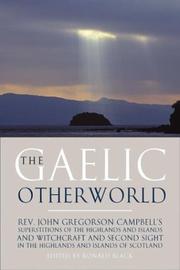
The Gaelic otherworld
First published 2005. Subjects: Folklore, Witchcraft, Mündliche Überlieferung, Aberglaube, Folklore, scotland.
eBay marketplace picks
Marketplace Samples
Live-tested eBay searches with available results related to this page.

Endnotes
1.
Source: ambaile.org.uk
Title: Castle of Mey
Link:https://www.ambaile.org.uk/asset/3825/
Source snippet
High Life HighlandThe Castle of Mey is said to be haunted by a Green Lady. She is Elizabeth Sinclair, daughter of the 5th Earl of Caithne...
2.
Source: castleofmey.org.uk
Title: Castle of Mey History
Link:https://www.castleofmey.org.uk/about/history
3.
Source: easyways.com
Title: Easy Ways Walking Holidays Scotland Scottish Ghosts and Legends
Link:https://easyways.com/walking-trail-ghost-stories/
4.
Source: Wikipedia
Title: George Sinclair, 5th Earl of Caithness
Link:https://en.wikipedia.org/wiki/George_Sinclair%2C_5th_Earl_of_Caithness
5.
Source: Wikipedia
Link:https://en.wikipedia.org/wiki/Glaistig
6.
Source: Wikipedia
Title: Green Lady
Link:https://en.wikipedia.org/wiki/Green_Lady
7.
Source: Wikipedia
Title: Castle of Mey
Link:https://en.wikipedia.org/wiki/Castle_of_Mey
8.
Source: Wikipedia
Title: James Sinclair, 14th Earl of Caithness
Link:https://en.wikipedia.org/wiki/James_Sinclair%2C_14th_Earl_of_Caithness
9.
Source: royalcentral.co.uk
Title: queen mothers scottish retreat haunted by the green lady 55314
Link:https://royalcentral.co.uk/interests/residences/queen-mothers-scottish-retreat-haunted-by-the-green-lady-55314/
Source snippet
Lady Fanny had fallen in love with a young stable hand, and...Read more...
10.
Source: kings-foundation.org
Link:https://kings-foundation.org/visit/the-castle-and-gardens-of-mey/
11.
Source: portal.historicenvironment.scot
Link:https://portal.historicenvironment.scot/apex/f?p=1505%3A300%3A%3A%3A%3A%3AVIEWTYPE%2CVIEWREF%3Adesignation%2CLB1797
12.
Source: portal.historicenvironment.scot
Link:https://portal.historicenvironment.scot/apex/f?p=1505%3A300%3A%3A%3A%3A%3AVIEWTYPE%2CVIEWREF%3Adesignation%2CGDL00096
13.
Source: britainirelandcastles.com
Link:https://www.britainirelandcastles.com/Scotland/Caithness/Castle-of-Mey.html
14.
Source: thepeerage.com
Title: The Peerage Person Page
Link:https://www.thepeerage.com/p2056.htm
15.
Source: thepeerage.com
Link:https://www.thepeerage.com/p19863.htm
16.
Source: nts.org.uk
Link:https://www.nts.org.uk/stories/ghosts-of-the-trust
17.
Source: nts.org.uk
Link:https://www.nts.org.uk/stories/scottish-ghost-stories-witches-murder-and-folklore-part-2
18.
Source: icysedgwick.com
Title: green lady
Link:https://www.icysedgwick.com/green-lady/
19.
Source: thepeerage.com
Title: Person Page
Link:https://www.thepeerage.com/p2052.htm
20.
Source: northlinkferries.co.uk
Title: the castle of mey
Link:https://www.northlinkferries.co.uk/caithness-blog/the-castle-of-mey/
21.
Source: nts.org.uk
Link:https://www.nts.org.uk/gd-gb/visit/places/crathes-castle/events/1421341323159
22.
Source: trove.scot
Link:https://www.trove.scot/place/8864
23.
Source: 1066.co.nz
Link:https://www.1066.co.nz/Mosaic%20DVD/whoswho/text/Castle_of_Mey%5B1%5D.htm
24.
Source: highlifehighland.com
Link:https://www.highlifehighland.com/uploads/documents/Archives/Castle_of_Mey_Storyboard_and_Questions.pdf
25.
Source: houseandgarden.co.uk
Title: castle of mey
Link:https://www.houseandgarden.co.uk/gallery/castle-of-mey
26.
Source: patrickspeople.scot
Link:https://www.patrickspeople.scot/ourfamily/31035.htm
27.
Source: townandcountrymag.com
Title: castle of mey scotland history facts
Link:https://www.townandcountrymag.com/society/tradition/a61764322/castle-of-mey-scotland-history-facts/
28.
Source: geni.com
Title: Elizabeth Sinclair
Link:https://www.geni.com/people/Elizabeth-Sinclair/6000000002187894925
29.
Source: whichcastle.com
Link:https://www.whichcastle.com/scottish-highlands/castleofmey.htm
30.
Source: spookyscotland.net
Link:https://spookyscotland.net/glaistig/
31.
Source: scotlandsfinest.nl
Title: castle of mey
Link:https://www.scotlandsfinest.nl/what-s-to-see/scotland-s-finest-castles/castle-of-mey
32.
Source: wikishire.co.uk
Title: Castle of Mey
Link:https://wikishire.co.uk/wiki/Castle_of_Mey
33.
Source: spookyisles.com
Title: castle of mey ghosts
Link:https://www.spookyisles.com/castle-of-mey-ghosts/
34.
Source: ianjeanneret.com.au
Link:https://ianjeanneret.com.au/Sinclair.html
35.
Source: highlanderimagesphotography.com
Title: Castle of Mey
Link:https://highlanderimagesphotography.com/2018/07/09/castle-of-mey/
36.
Source: sloweurope.com
Title: Castle of Mey, Caithness
Link:https://www.sloweurope.com/community/threads/castle-of-mey-caithness-the-much-loved-home-of-queen-elizabeth-the-queen-mother.8456/
37.
Source: kids.kiddle.co
Title: George Sinclair, 5th Earl of Caithness
Link:https://kids.kiddle.co/George_Sinclair%2C_5th_Earl_of_Caithness
Additional References
38.
Source: youtube.com
Title: The Ghost of the Castle of Mey: An Overlooked Royal Haunting
Link:https://www.youtube.com/watch?v=SGtJaE-KUMg
Source snippet
Inside The Queen Mother's Ancestral Mansions: Glamis Castle and Mey Castle...
39.
Source: reddit.com
Link:https://www.reddit.com/r/Ghosts/comments/18drv7a/a_closer_look_at_the_green_of_crathes_castle/
40.
Source: instagram.com
Link:https://www.instagram.com/p/DQbJyLBjJWO/
41.
Source: facebook.com
Link:https://www.facebook.com/100028847814937/posts/for-centuries-a-whisper-has-clung-to-the-stones-of-crathes-castle-in-scotland-a-/1775661010072142/
42.
Source: fabpedigree.com
Link:https://fabpedigree.com/s066/f250370.htm
43.
Source: x.com
Link:https://x.com/HLHArchives/status/1508368203122102272
44.
Source: facebook.com
Link:https://www.facebook.com/groups/118259336835143/posts/580647780596294/
45.
Source: scottish-country-dancing-dictionary.com
Link:https://www.scottish-country-dancing-dictionary.com/dance-crib/castle-of-mey.html
46.
Source: visitorsguidetoscotland.com
Link:https://www.visitorsguidetoscotland.com/2020/05/castle-of-mey/
47.
Source: thecastlesofscotland.co.uk
Link:https://www.thecastlesofscotland.co.uk/the-best-castles/grand-castles/castle-of-mey/
Topic Tree