Within Cromartyshire Hauntings
Why Cromartyshire's Ghosts Depend on Hugh Miller
Hugh Miller's collected tales show how Cromartyshire's hauntings survive as oral memory rather than modern paranormal case files.
On this page
- Oral tradition as the main source trail
- Churchyards, cottages and everyday haunted spaces
- Reading the stories without treating them as proof
Page outline Jump by section
Introduction
Cromartyshire’s ghost lore depends heavily on Hugh Miller because he preserved a local storytelling world that might otherwise have vanished. His Scenes and Legends of the North of Scotland; or, The Traditional History of Cromarty, first published in 1835, is not a modern paranormal casebook. It is a nineteenth-century gathering of older Cromarty and neighbouring Black Isle traditions: churchyard spectres, uneasy cottages, murdered travellers, strange warnings, family guilt and stories carried by elderly local informants. The value of the book is therefore folkloric rather than evidential. It shows what people in and around Cromartyshire were willing to believe, fear, repeat and moralise about — not what can now be proved to have happened.[Internet Archive]archive.orgOpen source on archive.org.
That distinction matters because Cromartyshire is a difficult county to map as a haunted landscape. Historic Cromartyshire was famously scattered: the old shire centred on Cromarty on the Black Isle, while later county portions were spread across Ross-shire from the east to the west coast. The Gazetteer of British Place Names describes it as a county of “highly unusual form”, and Wikishire counts twenty-three separated portions. For ghost-story purposes, however, Miller’s strongest evidence trail clusters around Cromarty, the Black Isle, Easter Ross parishes and routes that local storytellers knew intimately.[Gazetteer]gazetteer.org.ukOpen source on gazetteer.org.uk.
Why Miller is the main source trail
Hugh Miller was born in Cromarty in 1802 and is remembered today by the National Trust for Scotland as a geologist, folklorist, fossil hunter, writer and social campaigner. The Friends of Hugh Miller note that he was known locally as a storyteller, while his birthplace cottage and museum still anchor his memory in the town itself. That local rootedness is important: Miller was not parachuting into Cromartyshire as an outside ghost hunter, but writing from a place where family memory, parish gossip, old roads, kirkyards and domestic interiors were familiar terrain.[National Trust for Scotland]nts.org.ukhugh millerhugh miller
In the opening of Scenes and Legends, Miller explains his method in language that is unusually valuable for haunted-history readers. He says that old men, and especially old women, became his “books”, because their minds preserved memories and information inherited from people born half a century earlier. He also warns that the “Sibyline tomes of tradition” were disappearing one by one, and that if he did not preserve them, they might perish.[Project Gutenberg]gutenberg.org71325 h71325 h
That makes Miller’s ghost lore a rescue operation. It is not built like a police file, with dated witness statements, cross-examinations and physical exhibits. It is built like oral memory: layered, place-specific, morally charged and shaped by repeated telling. The famous line placed near the beginning of the book — “Tradition is a meteor, which, if once it falls, cannot be rekindled” — tells the reader how Miller wants the work to be understood. He is recording a fading imaginative inheritance before modern habits of reading, travel, education and scepticism erase the old narrative atmosphere.[Project Gutenberg]gutenberg.org71325 h71325 h
For a Cromartyshire hauntings page, this is both a strength and a warning. It is a strength because Miller gives unusually rich local texture: names, routes, rooms, graveyards, ruined houses, shorelines and social relationships. It is a warning because the stories often arrive through remembered speech rather than independently verifiable documentation. The best way to use Miller is not to ask, “Did this ghost objectively exist?”, but “What fear, memory, injustice or local place-knowledge did this story preserve?”
Oral tradition as the main source trail
Miller’s table of contents alone shows how concentrated the ghost material is. Chapter XXV brings together “The Churchyard Ghost”, “My Writing Room”, “The Broken Promise”, “The Polander”, “The One-eyed Stepmother”, “The Pedlar”, “The Green Lady” and “Munro the Post”. Those titles do not read like a random miscellany. They point to the places where Cromartyshire’s supernatural imagination settled: burial grounds, old houses, family households, roads between settlements, ruined farms and stories of unfinished moral business.[Project Gutenberg]gutenberg.org71325 h71325 h
Miller is unusually explicit that these stories belong to “the wilder beliefs” of earlier generations. In “The Churchyard Ghost”, he says the belief in the churchyard spectre has a powerful hold on human nature, whether “true or false”. That phrase is crucial. Miller is not simply asking the reader to accept a haunting. He is asking the reader to notice the social force of a haunting story: the way it could discipline behaviour, dramatise guilt and give emotional shape to death.[Project Gutenberg]gutenberg.org71325 h71325 h
He also classifies tradition in a way that still helps modern readers. Near the beginning of the book, Miller distinguishes between stories rooted in real events, stories of invention, and mixed traditions that combine fact, imagination and credulity. That is almost exactly the problem faced by anyone using his ghost lore today. A tale may preserve a real death, a real family name, a real road or a real abandoned building, while the apparition itself belongs to the world of belief and narrative pattern.[Project Gutenberg]gutenberg.org71325 h71325 h
The University of Glasgow’s Enlighten record for Lizanne Henderson’s chapter “The natural and supernatural worlds of Hugh Miller” confirms that Miller’s work has been treated seriously within scholarship on early nineteenth-century Scotland, ethnography, folklore, geology, natural history, church and society. The full chapter is not freely available there, but the bibliographic record is still useful because it places Miller’s supernatural writing within a recognised scholarly frame rather than only in antiquarian curiosity.[Enlighten Publications]eprints.gla.ac.ukOpen source on gla.ac.uk.
Churchyards, cottages and everyday haunted spaces
Miller’s Cromarty ghost lore is striking because it is not dominated by grand castles or theatrical ruins. Its haunted spaces are often ordinary: a writing room, a cottage, a ruined farmhouse, a post road, a churchyard wall, a nurse’s fireside. That gives Cromartyshire’s stories a different flavour from better-commercialised Scottish ghost tourism. They feel less like attractions and more like local memories attached to the places people had to pass, work in, sleep in or bury their dead beside.
The churchyard is the key example. Miller sets “The Churchyard Ghost” inside a meditation on burial, conscience and belief. He does not merely say that a spectre appeared in a graveyard; he argues that belief in such a spectre has a moral function. In his view, people might deny the belief in daylight, but still feel its force at the edge of death and burial. For a modern reader, that means the churchyard ghost should be read as a cultural pressure point: a story about how communities imagined the dead as still socially present.[Project Gutenberg]gutenberg.org71325 h71325 h
The cottage is just as important. In “The Pedlar”, the supernatural enters a rebuilt farmhouse where a murdered packman is said to have once died. The tale explains that a human skeleton was found in a partly dried loch after a young travelling man had disappeared, and that the farmhouse was later troubled by a restless figure wrapped in a grey plaid. The haunting ends when the spectre explains the old murder and declares that his permitted time of wandering is over.[Project Gutenberg]gutenberg.org71325 h71325 h
This is not evidence of a ghost in the modern investigative sense. It is evidence of a story pattern: hidden violence leaves a place morally unsettled until the dead are acknowledged. The discovery of bones gives the tale a hard, memorable anchor, but the ghost’s speech belongs to the world of folklore, where the dead reveal concealed crimes and then withdraw once the moral account has been balanced.
The Green Lady and the ghost as moral witness
“The Green Lady” is one of Miller’s most vivid examples because it mixes a familiar Scottish ghostly colour tradition with a very local moral plot. Earlier in Scenes and Legends, Miller mentions a green lady as one of the “old Scottish spectres”, and later gives a developed tale in which a pale, miserable-looking female apparition repeatedly appears in and around a household. She is not presented simply as a decorative phantom. She acts, warns, confesses and exposes a crime.[Project Gutenberg]gutenberg.org71325 h71325 h
The story’s turning point is practical rather than merely spooky. The Green Lady warns that children are in danger on a rock by the sea, and the rescue succeeds just before the surf would have overwhelmed them. Only after this does the tale reveal the hidden moral burden: she says a pedlar was killed years earlier, that his body was buried under an ash tree, and that stolen gold should be sent to his widowed mother in Leith. Miller then adds that the hidden gold and remains were found, giving the story the form of a local proof-legend.[Project Gutenberg]gutenberg.org71325 h71325 h
This is a perfect example of how Miller should be used. The tale is not a reliable demonstration that a spectre intervened in Cromartyshire life. It is a record of what counted as a convincing ghost story in Miller’s source community. A good haunting had a place, a wrong, a witness, a discovery, a moral repair and a reason why the dead could not rest. The Green Lady’s “evidence” works inside the story because it converts a vague apparition into a moral witness.
It also shows why Cromartyshire’s ghost lore overlaps with wider Scottish motifs without becoming generic. “Green Lady” apparitions recur in Scottish ghost tradition, but Miller’s version is not just a stock castle phantom. It is tied to household service, foster relationships, shore danger, buried crime and the local fear that respectable domestic life may conceal blood guilt. The result is a story that feels both recognisably Scottish and sharply Cromarty-centred.
Roads, messengers and frightened witnesses
Miller’s most useful ghost stories do not stay indoors. They move along roads, through parish boundaries and across the social map of the Black Isle and Easter Ross. “Munro the Post” is especially revealing because it turns a postal route into a haunted corridor. Miller introduces it as a frightening ghost story that is “not at all inexplicable on natural principles”, yet has many marks of authenticity. That cautious phrasing is one of the reasons he remains valuable: he lets the story retain its atmosphere while admitting that natural explanation is possible.[Project Gutenberg]gutenberg.org71325 h71325 h
The setup is grounded in everyday geography. Cromarty’s post office, because of the town’s peninsular position, was connected with Inverness by pedestrian postmen who divided the road into stages, with the Cromarty stage beginning at Fortrose. The named postman, an elderly Highlander of Clan Munro, is not an abstract Gothic figure but a working man on a repeated route.[Project Gutenberg]gutenberg.org71325 h71325 h
That detail changes the feel of the haunting. A castle ghost may be visited by tourists; a road ghost belongs to people who must travel in darkness, bad weather or uneasy company. In Miller’s hands, the supernatural clings to the vulnerable routines of rural life: the fair, the drink-fuelled quarrel, the lonely road, the cairn, the anxious family waiting for a man who should have returned.
“The Polander” works differently but also depends on repeated local sighting. Miller’s elderly informant says the apparition of the “Rich Polander” walked a road in front of a house almost every evening for years after death, while the question of unpaid legacies remained unresolved. Again, the ghost is not just a fright. It is a narrative device for unsettled property, unclear inheritance and the suspicion that money withheld from the living may disturb the dead.[Project Gutenberg]gutenberg.org71325 h71325 h

Why these stories became locally memorable
Miller’s tales became memorable because they attach supernatural fear to problems ordinary people understood: broken promises, unjust inheritance, murder, poverty, bereavement, dangerous shorelines and the loneliness of travel. The ghost is rarely random. It usually appears because something in the moral order is unfinished.
Several recurring patterns stand out.
The dead return when a wrong has not been named. In “The Pedlar”, the dead traveller identifies his murder and the room where it happened. In “The Green Lady”, the hidden body and stolen goods must be exposed. These are not merely shock tales; they are stories about buried knowledge forcing its way back into community memory.[Project Gutenberg]gutenberg.org71325 h71325 h
Haunting often belongs to marginal spaces. Miller’s ghost lore favours thresholds: the churchyard wall, the road, the ruined cottage, the old garden, the shoreline rock, the clump of wood. These are places where everyday life touches danger, secrecy or death.
Witness credibility is built through social detail. Miller often gives occupations, kinship roles, travel routes and local relationships. A postman, a ploughman, a nurse, a pedlar, a tacksman or an elderly relative can all carry a story. This does not make the apparition factual, but it does make the tradition socially legible.
The supernatural teaches consequences. Miller himself says ghost belief could act as an ally of manners and morals in a rude or lawless age. In other words, a ghost story could perform social work: warning against cruelty, theft, broken obligations or neglect of the dead.[Project Gutenberg]gutenberg.org71325 h71325 h
This is why Miller’s material matters for Cromartyshire more than a modern list of “most haunted” places would. He preserves the inner logic of local fear. The stories show what kinds of events a community felt should not be allowed to disappear without explanation.
Reading Miller without treating him as proof
The safest way to read Miller is as a folklore source, not a paranormal authority. He is valuable because he records what people said, where they placed the stories, and how they interpreted them. He is risky if treated as a direct witness to supernatural fact.
Miller’s own writing supports that careful approach. He repeatedly frames traditions as traditions, beliefs and stories inherited from earlier generations. He can be atmospheric, and at times he gives tales the shape of local confirmation, but he also recognises mixture: truth, invention, misremembering and credulity can all combine.[Project Gutenberg]gutenberg.org71325 h71325 h
A modern reader should therefore separate three layers.
First, there is the place layer: Cromarty, Fortrose roads, Fearn, Tarbat, churchyards, cottages, ruined farm sites and shorelines. These details make the lore useful for haunted geography.
Second, there is the memory layer: old crimes, deaths, vanished households, family wrongs and local reputations. These may preserve historical anxieties even when the exact events cannot be checked.
Third, there is the apparition layer: the ghost, warning, confession, transformation or repeated haunting. This is the folkloric expression of the memory, not proof that the supernatural occurred.
That layered reading keeps the stories alive without flattening them into either credulous ghost claims or dismissive nonsense. It allows Cromartyshire’s hauntings to be understood as cultural evidence: eerie, serious, sometimes morally sharp, but not automatically factual.
What Miller adds to Cromartyshire’s haunted map
Miller gives Cromartyshire a haunted map based less on famous monuments than on remembered experience. The National Trust for Scotland now presents him as one of the great Scots of the nineteenth century, while local heritage groups continue to interpret Cromarty through his life, writings, walks and folklore. That continued attention matters because it keeps the ghost stories attached to a real author, a real town and a traceable body of writing rather than to anonymous internet repetition.[National Trust for Scotland]nts.org.ukOpen source on nts.org.uk.
His work also helps explain why Cromartyshire’s haunted identity cannot be handled as a simple county checklist. The county’s historic geography is scattered, but Miller’s folklore centre of gravity is intimate: Cromarty, the Black Isle and neighbouring Easter Ross routes. The result is a haunted tradition that feels local rather than county-branded. It is less about claiming that Cromartyshire has the most ghosts, and more about showing how one small region preserved unusually textured stories of death, guilt and memory.[Gazetteer]gazetteer.org.ukOpen source on gazetteer.org.uk.
For readers exploring haunted Cromartyshire, Miller is therefore the starting point rather than the final verdict. His stories should be cross-read with local history, churchyard records, old maps, parish material, estate history and later folklore scholarship where available. But without him, many of the county’s most distinctive ghostly scenes — the restless pedlar, the Green Lady, the churchyard spectre, the road-haunting around Munro the postman — would be far harder to locate, interpret or even remember.
Amazon book picks
Further Reading
Books and field guides related to Why Cromartyshire's Ghosts Depend on Hugh Miller. Use these as the next step if you want deeper reading beyond the article.
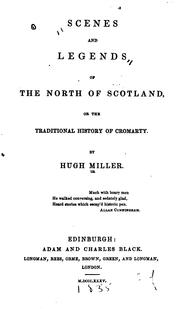
Scenes and legends of the north of Scotland, or The tradition...
The principal source behind Cromartyshire's ghost traditions.

The Oxford companion to Scottish history
Provides historical context for Hugh Miller and nineteenth-century Scotland.
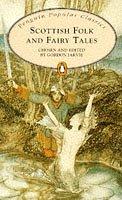
Scottish folk and fairy tales
Demonstrates recurring themes found in Miller's collected traditions.
eBay marketplace picks
Marketplace Samples
Live-tested eBay searches with available results related to this page.
Endnotes
1.
Source: archive.org
Link:https://archive.org/details/sceneslegendsofn00mill
2.
Source: gutenberg.org
Title: 71325 h
Link:https://www.gutenberg.org/files/71325/71325-h/71325-h.htm
3.
Source: gutenberg.org
Link:https://www.gutenberg.org/ebooks/71325
4.
Source: gutenberg.org
Link:https://www.gutenberg.org/files/56034/56034-h/56034-h.htm
5.
Source: archive.org
Link:https://archive.org/details/sceneslegendsofn00milluoft
6.
Source: archive.org
Link:https://archive.org/details/sceneslegendsofn00millrich
7.
Source: archive.org
Link:https://archive.org/details/sceneslegendsof00mill
8.
Source: gazetteer.org.uk
Link:https://gazetteer.org.uk/search?place=Cromartyshire&type=em
9.
Source: wikishire.co.uk
Link:https://wikishire.co.uk/wiki/Cromartyshire
10.
Source: nts.org.uk
Title: hugh miller
Link:https://www.nts.org.uk/visit/places/hugh-millers-birthplace/hugh-miller
11.
Source: nts.org.uk
Link:https://www.nts.org.uk/visit/places/hugh-millers-birthplace
12.
Source: thefriendsofhughmiller.org.uk
Link:https://www.thefriendsofhughmiller.org.uk/hugh-miller-a-brief-history
13.
Source: eprints.gla.ac.uk
Link:https://eprints.gla.ac.uk/64433/
14.
Source: gazetteer.org.uk
Title: Cromarty, Cromartyshire 11680
Link:https://gazetteer.org.uk/place/Cromarty%2C_Cromartyshire_11680
15.
Source: Wikipedia
Title: Hugh Miller
Link:https://en.wikipedia.org/wiki/Hugh_Miller
16.
Source: Wikipedia
Link:https://en.wikipedia.org/wiki/Cromartyshire
17.
Source: cradall.org
Title: lizanne henderson
Link:https://cradall.org/users/lizanne-henderson
18.
Source: gazetteer.org.uk
Link:https://gazetteer.org.uk/place/Cromartyshire
19.
Source: scottishgeologytrust.org
Title: hugh miller
Link:https://www.scottishgeologytrust.org/geology/scotlands-geology/famous-scottish-geologists/hugh-miller/
20.
Source: fossil.fandom.com
Title: Hugh Miller
Link:https://fossil.fandom.com/wiki/Hugh_Miller
21.
Source: catalog.hathitrust.org
Link:https://catalog.hathitrust.org/Record/008221672
22.
Source: eprints.gla.ac.uk
Link:https://eprints.gla.ac.uk/81608/1/81608.pdf
23.
Source: gla.ac.uk
Link:https://www.gla.ac.uk/services/library/view/author/8158.type.include
24.
Source: nts.org.uk
Title: step back in time and discover scotlands pre historic past
Link:https://www.nts.org.uk/stories/step-back-in-time-and-discover-scotlands-pre-historic-past
25.
Source: sabre-roads.org.uk
Link:https://www.sabre-roads.org.uk/wiki/Cromartyshire
26.
Source: scotlandsnature.wordpress.com
Title: hugh miller
Link:https://scotlandsnature.wordpress.com/2014/09/02/hugh-miller/
Additional References
27.
Source: youtube.com
Link:https://www.youtube.com/watch?v=OaYOShKzMtg
Source snippet
The Life and Times of Hugh Miller provides historical context on his work in Cromarty collecting local folklore and ghost traditions...
28.
Source: youtube.com
Title: Why we love Hugh Miller’s Birthplace Cottage & Museum
Link:https://www.youtube.com/watch?v=7U4_b_HmCDs
Source snippet
Birthplace Of Hugh Miller With Music On History Visit To Cromarty Scotland...
29.
Source: youtube.com
Title: Hugh Miller- from Truant to Geologist
Link:https://www.youtube.com/watch?v=Qy0sYshfFto
Source snippet
Mysterious Flooding Prophecy of the Ancient Pictish Eagle Stone in a Scottish Victorian Spa Town...
30.
Source: youtube.com
Title: The Life and Times of Hugh Miller | Scotland’s History
Link:https://www.youtube.com/watch?v=wGWXzPM7dlQ
Source snippet
Why we love Hugh Miller's Birthplace Cottage & Museum...
31.
Source: electricscotland.com
Link:https://electricscotland.com/history/other/CelebratingHughMiller.pdf
32.
Source: abcounties.com
Link:https://abcounties.com/counties/county-profiles/cromartyshire/
33.
Source: undiscoveredscotland.co.uk
Link:https://www.undiscoveredscotland.co.uk/usfeatures/areas/cromartyshire.html
34.
Source: facebook.com
Link:https://www.facebook.com/NationalTrustforScotland/posts/hugh-millers-birthplace-nts-in-partnership-with-cromarty-arts-trust-old-brewery-/1110240107798404/
35.
Source: undiscoveredscotland.co.uk
Link:https://www.undiscoveredscotland.co.uk/usbiography/m/hughmiller.html
36.
Source: web-cdn.org
Link:https://web-cdn.org/s/1252/file/Newsletters/HN29-Autumn-2016.pdf?r=1310897
Topic Tree