Within Haunted Kent
How Did Pluckley Become So Haunted?
Pluckley shows how local storytelling, press attention and tourism turned one Kent village into a national haunted landmark.
On this page
- The famous twelve ghosts claim
- Frederick Sanders and twentieth century storytelling
- Why fame changed the village legend
Page outline Jump by section
Introduction
Pluckley became “so haunted” not because one ancient legend survived unchanged, but because a Kent village gathered a set of local tragedies, family stories, press features, ghost-hunting performances and visitor expectations into one unusually durable folklore brand. Near Ashford, on the northern edge of the Kentish Weald, Pluckley is now widely described as England or Britain’s most haunted village, with its reputation usually organised around a famous tally of twelve ghosts. The village’s own website still repeats the Guinness-linked reputation and lists figures such as the highwayman, phantom coach, miller, hanging schoolmaster, White Lady and Red Lady.[Pluckley]pluckley.netGhosts - Pluckley…
The more interesting story is how that list was made. Recent peer-reviewed research by Dr Simon Moreton argues that Pluckley’s haunted identity was shaped above all by Frederick Sanders, a local writer and ghost-hunter who first called it “the most haunted village in England” in 1950, then helped stabilise the stories through memoir, press writing and repeated retelling.[UWE Bristol]uwe.ac.ukOpen source on uwe.ac.uk. Pluckley is therefore one of Kent’s best examples of folklore in motion: part remembered place, part literary construction, part tourism label, and part argument about who gets to define a village’s past.
Why Pluckley’s fame rests on a numbered ghost list
The headline version of Pluckley is simple: a small Kent village, a Guinness-linked claim, and a dozen or more ghosts said to haunt lanes, woods, churchyard, pub, houses and former industrial sites. That neat number matters. A single ghost story can belong to almost any old house or churchyard; a counted cluster turns the whole settlement into a mapped haunted landscape.
On Pluckley’s own village site, the reputation is framed as a Guinness Book of Records association and as a tally of “twelve (possibly thirteen or fourteen) ghosts”. The listed figures include a highwayman at the Pinnock, a phantom coach and horses, a woman associated with the Pinnock stream, the miller at Mill Hill, the schoolmaster in Dicky Buss’s Lane, a colonel in Park Wood, a man killed at the brickworks, the Lady of Rose Court, the White Lady at St Nicholas’s Church, and the Red Lady of the Dering family in the churchyard.[Pluckley]pluckley.netGhosts - Pluckley…
That list gives Pluckley’s folklore three useful qualities:
- It is walkable. The stories are attached to lanes, woods, churchyard spaces, bridges, houses and pubs, so the village can be experienced as a route rather than a single legend.
- It is countable. The “twelve ghosts” idea makes the claim easy for guidebooks, newspapers, television and tourism pages to repeat.
- It is varied. Pluckley’s ghosts include aristocratic women, a labourer, a highwayman, a schoolmaster, a coach, a miller and pub phenomena, allowing different kinds of eerie history to sit under one village brand.
The number has not always been stable. UWE Bristol’s account of Moreton’s research notes that Pluckley has been rumoured to have anything between ten and seventeen ghosts, and that the village’s reputation was “bolstered by a mention—although not an actual award—in the 1989 Guinness Book of World Records”.[UWE Bristol]uwe.ac.ukOpen source on uwe.ac.uk. That distinction is important: Pluckley’s fame depends less on an official paranormal judgement than on the cultural force of being repeated as a record-breaking haunted place.
The famous twelve ghosts claim
The best-known Pluckley stories are usually presented as if they form an old village inventory. In reality, the list is a mixture of local memory, tragic death, family association, later embellishment and media invention. That does not make the folklore worthless. It makes it more revealing.
The churchyard stories draw on Pluckley’s most atmospheric historic setting: St Nicholas’s Church. Historic England lists the church as Grade I, with chancel, nave and tower from the fourteenth century and the Dering chapel, south aisle and porch from the fifteenth century.[Historic England]historicengland.org.ukHistoric England Church of St Nicholas, PluckleyHistoric EnglandChurch of St Nicholas, Pluckley - 1362688Listed on the National Heritage List for England…. The chancel, nave and towe… The Dering family’s visible memorial presence helped make the church a natural home for legends of the Red Lady and White Lady. Britain Express also notes the Dering brasses and family tombs at St Nicholas, showing why ghost stories could attach so readily to this part of the village’s historic identity.[Britain Express]britainexpress.comBritain Express Pluckley, KentBritain ExpressPluckley, Kent - History, Travel, and accommodation information…
The recurring Pluckley figures are best read as a folklore map rather than a witness list:
- The Red Lady is usually linked to the Dering family and St Nicholas’s churchyard, sometimes with the sorrowful motif of a mother searching for a child.[Pluckley]pluckley.netGhosts - Pluckley…
- The White Lady is associated with St Nicholas’s Church and, in some versions, with Surrenden Dering, the Dering family seat.[Pluckley]pluckley.netGhosts - Pluckley…
- The highwayman belongs to the road-and-tree tradition around the Pinnock, a classic haunted-lane setting.
- The hanging schoolmaster is tied to Dicky Buss’s Lane, although Moreton’s research complicates the identity behind the story.[UWE Bristol]uwe.ac.ukOpen source on uwe.ac.uk.
- The Screaming Man of the Clay Pit turns a local industrial accident into a haunting attached to the former brickworks.[UWE Bristol]uwe.ac.ukOpen source on uwe.ac.uk.
- The Lady of Rose Court connects a named domestic place with a story of despair, poison and remembered tragedy.[Pluckley]pluckley.netGhosts - Pluckley…
- The phantom coach and horses, Monk of Greystones, Black Horse Inn phenomena and Elvey Farm poltergeist show how later additions widened the haunted map beyond the earliest core.[UWE Bristol]uwe.ac.ukOpen source on uwe.ac.uk.
What makes Pluckley distinctive in Kent is not that every tale has equal weight. It is that the village acquired enough separate story-points to be treated as a complete haunted territory. Dover Castle has its drummer boy, Blue Bell Hill has its phantom hitchhiker, and Hever Castle has its Tudor memory; Pluckley’s claim is different because the whole village became the attraction.
Frederick Sanders and twentieth-century storytelling
The central figure in Pluckley’s modern haunted fame is Frederick Sanders, born in 1908 and closely associated with the village’s mid-twentieth-century storytelling. Moreton’s research, summarised by UWE Bristol, finds that ten of Pluckley’s ghost stories were first recorded by Sanders in self-published ghost-hunting books, letters to the local press, newspaper articles, ghost hunts and his memoir Pluckley Was My Playground.[UWE Bristol]uwe.ac.ukOpen source on uwe.ac.uk.
Sanders did not simply invent a haunted village from nothing. UWE’s summary stresses that he drew on local sources, including family memories and his schoolteacher Henry Turff, but that he also elaborated stories across tellings and sometimes contradicted himself.[UWE Bristol]uwe.ac.ukOpen source on uwe.ac.uk. That is exactly how much local folklore works: a story moves from neighbour to child, from pub to press column, from recollection to printed anecdote, picking up sharper details as it travels.
The decisive moment appears to have been Sanders’s 1950 article in the Kentish Express. UWE reports that he was the first to describe Pluckley as “the most haunted village in England” and that his article listed ten ghosts: the Highway Man, Watercress Woman, Miller, Hanging Schoolmaster, Red Lady, White Lady, Colonel, Screaming Man of the Clay Pit, Lady of Rose Court and Devil’s Bush.[UWE Bristol]uwe.ac.ukOpen source on uwe.ac.uk.
This is folklore-making in a recognisably modern form. Sanders acted as collector, witness, promoter and interpreter. He took scattered stories and gave them a shared label. Once Pluckley had been named as “the most haunted village”, later writers did not need to rediscover the material from scratch; they could repeat, rearrange and dramatise the list.
A specialist local account in Spooky Kent makes the same point in more journalistic terms: Sanders was already ghost-hunting in Pluckley by 1939, had attracted press attention, and by 1946 had self-published Psychical Research; Haunted Kent, an account of ghost hunts. It argues that his local press activity, self-publication and colourful presentation helped establish the tales that later paranormal writers and visitors inherited.[Spooky Isles]spookykent.comOpen source on spookykent.com.

Which Pluckley ghosts have traceable real events?
The strongest modern research does not prove Pluckley is haunted. It does something more useful for a folklore page: it separates stories with traceable historical roots from those that appear to be later additions or confusions.
Moreton’s research identifies at least four stories that can be connected to real deaths. Sarah Sharp, who burned to death in August 1911, is remembered in the folklore as the Watercress Woman. Mary Ann Bennett, who took her own life in 1862, is linked with the Lady of Rose Court. Richard Bridgland, killed in an accident at Pluckley Brick and Tile Works quarry in January 1899, lies behind the Screaming Man of the Clay Pit. The so-called Hanging Schoolmaster was not actually a schoolmaster in Pluckley, but Henry Edgar Martin, a papermaker who died by suicide in August 1919.[UWE Bristol]uwe.ac.ukOpen source on uwe.ac.uk.
That last case shows how easily a ghost story can preserve a real death while mislabelling the person. UWE’s summary of the research says Sanders accidentally merged Henry Edgar Martin’s 1919 death with biographical details from another man, Harry Martin, a schoolmaster in nearby Smarden who died in 1923. The error then carried on through later retellings.[UWE Bristol]uwe.ac.ukOpen source on uwe.ac.uk.
This matters because it changes the reader’s relationship with the stories. A “hanging schoolmaster” sounds like a Gothic character. Henry Edgar Martin was a real person. The Lady of Rose Court and Watercress Woman likewise become more than spooky names once linked to documented deaths. The folklore may distort, dramatise or misremember, but it also keeps traces of local grief in circulation.
It is also a reminder to treat Pluckley’s haunted fame carefully. Some stories are rooted in named events; others are more like motifs. A white lady in a church, a phantom coach, a highwayman at a lonely road and a monk at an old house are familiar patterns in British ghost lore. Pluckley’s special feature is the way such motifs were gathered into one branded village identity.
Desmond Carrington and the media-made ghosts
Sanders was not the only person to shape Pluckley’s haunted image. Moreton’s research gives an important role to Desmond Carrington, the actor and broadcaster who lived in Pluckley and helped push some stories into wider media circulation.
According to UWE’s summary, three Pluckley stories were fabricated by Carrington in a 1962 TV Times Christmas Extra article: the phantom coach and horses, the Monk of Greystones, and a poltergeist at Surrenden Dering, the Dering family seat that burned down in 1952.[UWE Bristol]uwe.ac.ukOpen source on uwe.ac.uk. Spooky Kent adds useful context: Carrington was then known for playing Dr Chris Anderson in Emergency Ward 10, and the Christmas television listings magazines had enormous reach, giving the Pluckley ghosts national visibility beyond local books and newspapers.[Spooky Isles]spookykent.comOpen source on spookykent.com.
This is a key step in Pluckley’s fame. A local ghost story becomes far more powerful when it enters mass media, especially seasonal media. Christmas and Halloween both favour ghost stories in Britain: they give editors a reason to revisit spooky places, and they give readers permission to enjoy a tale without demanding courtroom-standard evidence.
The Carrington episode also shows why Pluckley is a useful case study in folklore making. A story can be “made up” in one sense and still become real in another: not real as evidence of an apparition, but real as part of the village’s reputation, tourism economy and public memory. Once a phantom coach appears in guidebooks, websites and ghost walks, it becomes part of what visitors expect to find, even if its documentary origin is modern and playful.
Why fame changed the village legend
Pluckley’s fame changed the stories because it changed their audience. Before the mid-twentieth century, the tales were primarily local: family memory, schoolroom anecdote, village rumour, parish place-name, newspaper curiosity. After the “most haunted village” label took hold, Pluckley had to perform its hauntedness for outsiders.
From the 1960s onwards, the village appeared in numerous ghost books, and the Guinness mention in 1989 gave journalists and television producers a ready-made hook. UWE notes that popular interest continues across local and national news, websites, social media, video, television, radio and podcasts.[UWE Bristol]uwe.ac.ukOpen source on uwe.ac.uk. The village has also been featured by paranormal television formats such as Most Haunted, Ghost Hunters International and other supernatural media, which helped keep the “haunted village” identity alive for audiences who may never have read Sanders.[Wikipedia]WikipediaOpen source on wikipedia.org.
Tourism then feeds the folklore loop. Pluckley’s own visitor page says the village’s use as a setting for The Darling Buds of May, together with its reputation as England’s most haunted village, attracts visitors who come for countryside and walks.[Pluckley]pluckley.netOpen source on pluckley.net. Explore Kent similarly presents the village as a walking destination while noting the twelve or thirteen reported ghosts, including the highwayman, coach and horses, miller, White Lady and Red Lady.[Explore Kent]explorekent.orgOpen source on explorekent.org.
The result is a double identity. By day, Pluckley can be marketed as a pretty Kentish village of orchards, historic buildings and television nostalgia. By night, or at Halloween, the same lanes and churchyard become part of a haunted route. This contrast is central to the village’s appeal. The ghosts work because they sit inside a place that otherwise looks gentle, rural and recognisably English.
Fame also creates friction. Britain Express describes Pluckley as known for two things: The Darling Buds of May, of which it is proud, and a haunted reputation that many inhabitants “wish would go away”.[Britain Express]britainexpress.comBritain Express Pluckley, KentBritain ExpressPluckley, Kent - History, Travel, and accommodation information… That tension is common in haunted-place tourism. Visitors enjoy the thrill; residents live with the traffic, trespass, noise, exaggeration and occasional disrespect that can follow a nationally known ghost label.

How credible are Pluckley’s haunted claims?
The most credible statement is not “Pluckley is haunted” or “Pluckley is fake”. It is that Pluckley has a well-documented haunted reputation, built through identifiable twentieth-century storytelling, later media amplification and some genuine historical incidents behind parts of the tradition.
The evidence is uneven:
- Strongest evidence: Pluckley’s reputation as a haunted village is well attested in local presentation, tourism writing, paranormal media and recent academic research.[Pluckley]pluckley.netGhosts - Pluckley…[UWE Bristol]uwe.ac.ukOpen source on uwe.ac.uk.
- Historically grounded stories: Several ghost identities appear to derive from documented deaths, although the folklore may alter names, roles and circumstances.[UWE Bristol]uwe.ac.ukOpen source on uwe.ac.uk.
- Folkloric or embellished stories: Some tales use common ghost-story motifs such as the White Lady, phantom coach, monk and highwayman, and some were later media creations rather than old oral tradition.[UWE Bristol]uwe.ac.ukOpen source on uwe.ac.uk.
- Weakest evidence: Reports of apparitions themselves remain anecdotal, often repeated without first-hand documentation, clear dates or independent verification.
That does not make the stories unimportant. Folklore is not only a question of whether an event happened exactly as told. It is also about why a community keeps telling a story, what kind of past it turns into atmosphere, and how outsiders change the meaning of a place by arriving with cameras, torches and expectations.
Pluckley’s real lesson is that haunted fame can be made. It can begin with local memories, be sharpened by one energetic storyteller, be enlarged by press and television, and then become self-sustaining because visitors arrive already knowing what they hope to feel. In that sense, Pluckley belongs at the heart of Kent’s haunted geography: not simply as a village with ghost stories, but as a village that shows how ghost stories become public history.
Amazon book picks
Further Reading
Books and field guides related to How Did Pluckley Become So Haunted?. Use these as the next step if you want deeper reading beyond the article.
The Penguin Guide to the Superstitions of Britain and Ireland
Provides wider context for supernatural beliefs.

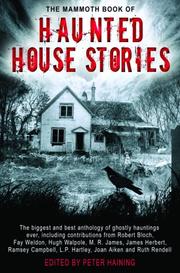
The Mammoth Book of Haunted House Stories
First published 2000. Subjects: ghost stories, haunted house stories, ghost story anthology, Ghost stories.
eBay marketplace picks
Marketplace Samples
Live-tested eBay searches with available results related to this page.
Endnotes
1.
Source: pluckley.net
Link:https://pluckley.net/village-life/history/ghosts/
Source snippet
Ghosts - Pluckley...
2.
Source: Wikipedia
Link:https://en.wikipedia.org/wiki/Pluckley
3.
Source: pluckley.net
Link:https://pluckley.net/visiting-pluckley/
4.
Source: pluckley.net
Link:https://pluckley.net/
5.
Source: pluckley.net
Title: St Nicholas’ Church
Link:https://pluckley.net/village-life/st-nicholass-church/
6.
Source: pluckley.net
Title: Village life
Link:https://pluckley.net/village-life/
7.
Source: Wikipedia
Title: Ghost story
Link:https://en.wikipedia.org/wiki/Ghost_story
8.
Source: Wikipedia
Title: Church of St Nicholas, Pluckley
Link:https://en.wikipedia.org/wiki/Church_of_St_Nicholas%2C_Pluckley
9.
Source: uwe.ac.uk
Link:https://www.uwe.ac.uk/news/research-uncovers-truth-about-pluckleys-ghosts
10.
Source: historicengland.org.uk
Title: Historic England Church of St Nicholas, Pluckley
Link:https://historicengland.org.uk/listing/the-list/list-entry/1362688
Source snippet
Historic EnglandChurch of St Nicholas, Pluckley - 1362688Listed on the National Heritage List for England.... The chancel, nave and towe...
11.
Source: britainexpress.com
Title: Britain Express Pluckley, Kent
Link:https://www.britainexpress.com/attractions.htm?attraction=3330
Source snippet
Britain ExpressPluckley, Kent - History, Travel, and accommodation information...
12.
Source: spookykent.com
Link:https://www.spookykent.com/pluckley-ghost-storytellers/
13.
Source: explorekent.org
Link:https://explorekent.org/activities/pluckley-walk/
14.
Source: instagram.com
Link:https://www.instagram.com/p/DQkEz9tCBP6/
15.
Source: instagram.com
Link:https://www.instagram.com/p/DQkEz9tCBP6/?hl=en
16.
Source: calehill-westwell.uk
Link:https://www.calehill-westwell.uk/pluckley
17.
Source: reddit.com
Title: pluckley kent is said to be the most haunted
Link:https://www.reddit.com/r/britpics/comments/1n0ytkw/pluckley_kent_is_said_to_be_the_most_haunted/
18.
Source: reddit.com
Link:https://www.reddit.com/r/Ghosts/comments/1jb00o9/pluckley_in_kent_england_nobody_was_smoking_and/
19.
Source: pluckleyghostwalk.co.uk
Link:https://www.pluckleyghostwalk.co.uk/
20.
Source: pluckleyghostwalk.co.uk
Link:https://www.pluckleyghostwalk.co.uk/pluckley-ghosts
21.
Source: tripadvisor.com
Title: Pluckley Ghost Walk
Link:https://www.tripadvisor.com/Attraction_Review-g503914-d27177189-Reviews-Pluckley_Ghost_Walk-Pluckley_Ashford_Kent_England.html
22.
Source: britainexpress.com
Link:https://www.britainexpress.com/counties/kent/churches/pluckley-st-nicholas.htm
23.
Source: independent.co.uk
Title: pluckley kent ghosts haunted research b2738882
Link:https://www.independent.co.uk/bulletin/news/pluckley-kent-ghosts-haunted-research-b2738882.html
24.
Source: independent.co.uk
Title: pluckley kent most haunted village in britain b2851150
Link:https://www.independent.co.uk/travel/uk/england/pluckley-kent-most-haunted-village-in-britain-b2851150.html
25.
Source: independent.co.uk
Title: pluckley kent ghosts haunted study b2738832
Link:https://www.independent.co.uk/news/uk/home-news/pluckley-kent-ghosts-haunted-study-b2738832.html
26.
Source: deringarms.com
Link:https://www.deringarms.com/history/
27.
Source: hauntedrooms.co.uk
Title: Pluckley, Kent
Link:https://www.hauntedrooms.co.uk/pluckley-village-kent
28.
Source: tea-and-coffee.com
Title: pluckley the most haunted village in england
Link:https://www.tea-and-coffee.com/blog/pluckley-the-most-haunted-village-in-england?srsltid=AfmBOop2GTKvWLD7xtl2C7Y9AjWnmVY4gi8cwYGMZjJWR1tE4efq7v6g
29.
Source: firesidehorror.co.uk
Link:https://www.firesidehorror.co.uk/blog-2/ghostly-folklore-englands-most-haunted-village
30.
Source: gary4716.wixsite.com
Link:https://gary4716.wixsite.com/pluckleyghosttours
31.
Source: pluckleyheritagecentre.co.uk
Link:https://www.pluckleyheritagecentre.co.uk/
32.
Source: citegeistpod.com
Title: pluckley kent britains most haunted
Link:https://citegeistpod.com/episode/pluckley-kent-britains-most-haunted
Additional References
33.
Source: facebook.com
Link:https://www.facebook.com/p/Canterley-Publishing-Ltd-100063769885838/
34.
Source: instagram.com
Link:https://www.instagram.com/reel/DPPFVIfgoV2/?hl=en
35.
Source: facebook.com
Link:https://www.facebook.com/sykescottages.co.uk/videos/-did-you-know-that-pluckley-in-kent-is-often-called-the-most-haunted-village-in-/806650591994855/
36.
Source: researchgate.net
Link:https://www.researchgate.net/publication/389805911Laying_Pluckley%27s_Ghosts_Frederick_Sanders_and_the_Origins_of_the%27Most_Haunted_Village_in_England%27
37.
Source: kentarchaeology.org.uk
Link:https://www.kentarchaeology.org.uk/notes/hauntings-of-pluckley-village-asfhford
38.
Source: facebook.com
Link:https://www.facebook.com/groups/184572175211655/posts/2601998276802354/
39.
Source: instagram.com
Link:https://www.instagram.com/p/DHT6j2eM61C/
40.
Source: achurchnearyou.com
Link:https://www.achurchnearyou.com/church/12073/
41.
Source: tripadvisor.com
Link:https://www.tripadvisor.com/Attraction_Review-g503914-d6585115-Reviews-St_Nicholas_Church-Pluckley_Ashford_Kent_England.html
42.
Source: kentarchaeology.org.uk
Link:https://www.kentarchaeology.org.uk/models/st-nicholas-church-pluckley
Topic Tree