Within Cromartyshire Hauntings
Is Cromarty House Cromartyshire's Eeriest Place?
Cromarty House gathers castle remains, graveyard paths and an underground servants' tunnel into one of the area's most atmospheric haunted-place traditions.
On this page
- Castle site, house and designed landscape
- The servants' tunnel and hidden routes
- Why estate boundaries attract ghost stories
Page outline Jump by section
Introduction
Cromarty House is not “haunted” in the sense of having a well-documented modern case file of named witnesses, dated sightings and formal investigation. Its eerie reputation is more local and layered: a real servants’ tunnel, an old castle site, St Regulus’ graveyard across the road, Chapel Burn, Gallow Hill and family burial ground memory all sit within a small estate landscape at the east end of Cromarty. The result is one of Cromartyshire’s most atmospheric haunted-place clusters, but the evidence is best read as folklore, rumour and place-memory rather than proof of apparitions.
The strongest facts are architectural and historical. Cromarty House stands on the site of Cromarty Castle, demolished in 1772, and its designed landscape includes the castle site, old approaches, woodlands, graveyard, well, ice house and the listed servants’ tunnel. Historic Environment Scotland describes the policies as historically, architecturally, archaeologically and scenically important, with the site of Cromarty Castle and St Regulus’ chapel and graveyard forming part of the same landscape setting.[trove.scot]trove.scotCromarty House | Designation | trove.scotCromarty House | Designation | trove.scot
Why Cromarty House feels haunted before any ghost appears
Cromarty House belongs to historic Cromartyshire’s Black Isle heartland, though modern records place it in Highland and the former county of Ross and Cromarty. That boundary shift matters less to the folklore than the shape of the ground itself. The house adjoins the east end of Cromarty town, on lower north-facing slopes above the Cromarty Firth, with parkland, woodland, burn valleys, old paths and burial ground all packed into a short walk. Historic Environment Scotland notes that the site of Cromarty Castle lies north-west of the house above Chapel Burn, while St Regulus’ pre-Reformation chapel and graveyard stand to the north-east, opposite Chapel Brae.[Historic Environment Scotland]portal.historicenvironment.scotOpen source on historicenvironment.scot.
This is exactly the kind of estate edge where ghost stories tend to collect. The visitor is not looking at one isolated “haunted house”, but at a compressed landscape of thresholds: town to estate, public road to private grounds, tunnel mouth to underground route, chapel ground to family vault, woodland path to old castle platform. The modern house, the buried tunnel and the graveyard do not need a single dramatic legend to feel uncanny; their arrangement already invites stories about hidden movement, forbidden access and the dead just across the road.
The official records are useful because they prevent the haunting tradition from floating free of the place. Cromarty House is not merely a picturesque backdrop. It is a designated landscape whose historic importance lies partly in the way Cromarty Castle, Cromarty House and the planned policies shaped the settlement. The landscape still preserves earlier features, including the old Causeway, once known as Castle Street, and woodland and approach routes that make the estate feel like a surviving map of older Cromarty.[Historic Environment Scotland]portal.historicenvironment.scotOpen source on historicenvironment.scot.

Castle site, house and designed landscape
The oldest atmosphere around Cromarty House comes from the castle it replaced. Historic Environment Scotland records that Cromarty Castle belonged to the Urquhart family in the seventeenth century, stood on high ground with the settlement to its north-west, and functioned as the administrative centre of the small sheriffdom of Cromarty. The same record describes the later castle as a substantial L-plan tower, dated to the fifteenth century, with a range of domestic buildings added in 1632 by Sir Thomas Urquhart.[Historic Environment Scotland]portal.historicenvironment.scotOpen source on historicenvironment.scot.
Hugh Miller’s nineteenth-century account gives the ruin a more Gothic presence. In Scenes and Legends of the North of Scotland, he describes the old castle as a massive, weathered building above a ravine, with turrets, loopholes, a dry moat, a court, vaults and a view down over the town. Miller also preserves a tradition of a seventeenth-century raiding party whose leader was shot from one of the castle turrets and carried away in plaids.[Electric Scotland]electricscotland.comElectric Scotland Scenes and Legends of The North of ScotlandElectric Scotland Scenes and Legends of The North of Scotland
That does not make Cromarty Castle a verified haunted castle. It does explain why later rumours could cling to the site. The castle was remembered as a place of power, violence, authority and decay. Miller quotes the Statistical Account tradition that the old castle was pulled down in 1772, and that urns, ashes and stone coffins were found around the building during work there. He also links the old proprietors with sheriffly power, “pit and gallows”, Gallow Hill and local memories of execution and witchcraft accusation.[Electric Scotland]electricscotland.comElectric Scotland Scenes and Legends of The North of ScotlandElectric Scotland Scenes and Legends of The North of Scotland
Cromarty House then adds a second layer. The listed-building record describes it as a large classical mansion built around 1772 by George Ross, who bought the estate from the Urquharts in 1765; its statement of special interest says plainly that it was built on the site of Cromarty Castle, demolished in 1772.[Trove]trove.scotCromarty House | Designation | trove.scotCromarty House | Designation | trove.scot The haunting interest therefore comes less from a single named ghost than from replacement: a Georgian house laid over a castle platform, a polite designed landscape laid over a site associated in local memory with old authority, burial, punishment and vanished fortification.
The servants’ tunnel and hidden routes
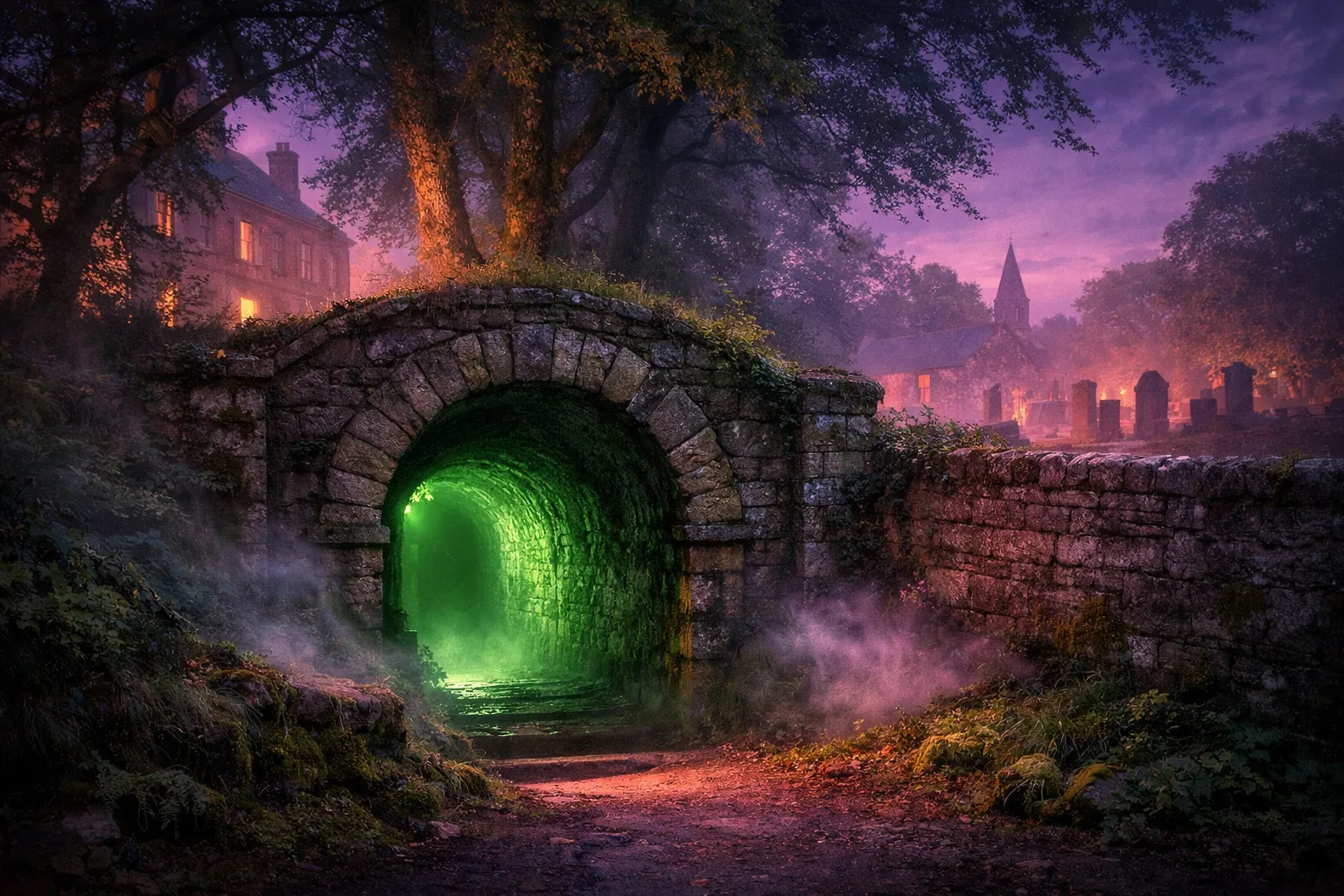
The servants’ tunnel is the feature most likely to catch a visitor’s imagination. It is real, mapped and listed, not an invented secret passage. Trove, drawing on Historic Environment Scotland records, identifies “Cromarty House, Servants’ Tunnel” as a tunnel in Cromarty parish, with National Record of the Historic Environment ID 14433 and grid reference NH 79346 67036. It is also linked in the records to nearby Cromarty House, the gardens, ice house and graveyard.[Trove]trove.scotOpen source on trove.scot.
Descriptions of the tunnel are practical rather than paranormal. Subterranea Britannica summarises it as a nineteenth-century tunnel running under the lawn so servants and tradesmen could reach the house without disturbing the owners.[Subterranea Britannica]subbrit.org.ukOpen source on subbrit.org.uk. The Cromarty Archive photograph page, which preserves local comments, describes it as the servants’ entrance to the big house; one commenter explains that the tunnel took the butcher, baker and servants “straight to below stairs” rather than through the front entrance.[thecromartyarchive.org]thecromartyarchive.orgTunnel to Cromarty HouseTunnel to Cromarty House
That practical purpose is exactly why it became a good ghost-story machine. A tunnel built to make labour invisible is already about hidden movement. Its locked or gated mouth, its underground line towards the house, and its position near the road and graveyard make it easy for children, walkers and visitors to turn social history into folklore. The Cromarty Archive comments show this process in miniature: people remember looking in, being frightened by ghost stories, wondering about the Green Lady, and asking whether the graveyard across the road was connected.[thecromartyarchive.org]thecromartyarchive.orgTunnel to Cromarty HouseTunnel to Cromarty House
The tunnel’s haunted reputation is therefore strongest as local rumour and childhood memory. A travel account of St Regulus’ graveyard says the disused tunnel is rumoured to be haunted and places it directly on the approach to the burial ground, behind iron gates.[tartantrailblazers.co.uk]tartantrailblazers.co.ukThe Pirate's Graveyard and Ancient CryptThe Pirate's Graveyard and Ancient Crypt That is not strong evidence for a specific apparition, but it is valuable evidence for how the site is experienced: the haunted story begins at the threshold, before anyone reaches the house.
St Regulus’ graveyard across the road
The tunnel feels more uncanny because St Regulus’ graveyard sits so close to it. Historic Environment Scotland places the pre-Reformation chapel and graveyard to the north-east of Cromarty House, on the opposite side of Chapel Brae, while the Trove records for the servants’ tunnel list the graveyard among nearby related places.[Historic Environment Scotland]portal.historicenvironment.scotOpen source on historicenvironment.scot.
Modern visitors often encounter the burial ground under the nickname “Pirate’s Graveyard”, because many stones carry skull-and-crossbones motifs. That nickname is atmospheric, but it needs handling carefully. Cemetery Club’s account says the correct name is St Regulus’ Graveyard and explains that the pirate label comes from the skull-and-crossbones carving, not from evidence of pirates being buried there.[Cemetery Club]cemeteryclub.wordpress.comCemetery Club The Pirate’s Graveyard – Cemetery ClubCemetery Club The Pirate’s Graveyard – Cemetery Club Graveyards of Scotland makes the same point more directly: St Regulus is sometimes called the pirates’ graveyard because of its sea-edge setting and skull-and-crossbones stones, but there is no evidence that pirates are buried there.[Graveyards of Scotland]graveyardsofscotland.comOpen source on graveyardsofscotland.com.
For the Cromarty House haunting tradition, that correction matters. The point is not that the tunnel leads to pirate graves, or that the burial ground proves a ghost legend. The point is that visitors see a gated underground passage opposite an old graveyard full of death’s-head carving. That visual pairing is powerful enough to generate rumours even when the historical explanation is sober: seventeenth- and eighteenth-century memento mori carving, family burial, old chapel remains and estate boundaries.
The archaeology around this area deepens the atmosphere without confirming any ghost. A Cromarty Medieval Burgh Community Archaeology Project design document places the former medieval castles, St Regulus’ Chapel and graveyard, and the present Cromarty House on or near the terrace above the town. It also notes Chapel Burn as an old boundary and the Causeway running downhill from the former castle site, probably forming the early burgh’s original main street.[Highland Historic Environment Record]her.highland.gov.ukHighland Historic Environment Record Microsoft WordHighland Historic Environment Record Microsoft Word This is a landscape where layers of town, castle, chapel and estate overlap tightly enough for folklore to feel almost inevitable.
The Green Lady problem
A “Green Lady” is sometimes folded into modern talk about Cromarty House and the tunnel, but the older printed evidence is more complicated. Hugh Miller does mention a green lady in Cromarty, but not as a clear Cromarty House tunnel ghost. In his description of the old town around 1720, he writes that a large house on the eastern side of the street was said to be haunted by a green lady, while another house opposite was associated with a brownie.[Electric Scotland]electricscotland.comElectric Scotland Scenes and Legends of The North of ScotlandElectric Scotland Scenes and Legends of The North of Scotland
That is important because it gives Cromarty a genuine nineteenth-century source for a green-lady tradition, but it does not securely attach that figure to the servants’ tunnel or to Cromarty House itself. The tunnel is later estate infrastructure; the green lady in Miller’s passage belongs to the old town’s street architecture and a broader Scottish class of female spectres. Modern comments on the Cromarty Archive show people recalling or debating “the Green Lady” in connection with the tunnel page, including one contributor saying the tale has been “around forever”, but such comments are informal local memory rather than a dated historical witness account.[thecromartyarchive.org]thecromartyarchive.orgTunnel to Cromarty HouseTunnel to Cromarty House
A careful reading therefore separates three things:
- Miller’s green lady: a Cromarty town tradition recorded in nineteenth-century literature.
- The tunnel rumours: modern and local recollections of being frightened by stories around the servants’ tunnel.
- The estate atmosphere: the later tendency to gather castle, graveyard, tunnel and house into one haunted cluster.
The Green Lady may belong emotionally to the same Cromarty haunted landscape, but the available evidence does not prove she was originally “the ghost of Cromarty House” or “the ghost in the tunnel”. Treating her as a floating local motif is more honest, and in some ways more interesting: she shows how an older Cromarty spectre can drift towards whichever local place feels most suitable for haunting.
Why estate boundaries attract ghost stories
Cromarty House’s rumours fit a wider pattern in haunted-place folklore: stories gather where the built environment marks separation. The servants’ tunnel separated owners and guests from labour and deliveries. The graveyard separated the living town from burial ground. Chapel Burn and the old approaches marked edges in the medieval and estate landscape. The woods and disused drives separated public movement from private ground. Historic Environment Scotland’s landscape record makes clear that these routes and edges were central to the estate’s history, including the Causeway, woodland walks, west drive, walled garden and old castle lawn.[Historic Environment Scotland]portal.historicenvironment.scotOpen source on historicenvironment.scot.
This helps explain why the haunting rumours remain compelling even when the evidence is thin. A ghost story does not need a fully preserved medieval castle if the place still gives people the sensation of crossing into older ground. The tunnel mouth is especially effective because it is both visible and inaccessible. It invites the question every ghost story loves: what lies beyond the gate?
There is also a social edge. Servants’ tunnels were not built for mystery; they were built for class management, convenience and concealment. The Cromarty Archive discussion captures modern discomfort with that idea, with one commenter asking whether the tunnel was built to “hide” servants from those in the big house.[thecromartyarchive.org]thecromartyarchive.orgTunnel to Cromarty HouseTunnel to Cromarty House That unease can easily become a haunting mood. The ghostly feeling is partly architectural: the house’s grandeur depends on hidden work, and the tunnel makes that hidden work physically legible.
How credible are the haunting rumours?
The Cromarty House tunnel and estate haunting tradition is credible as folklore, but weak as evidence for a specific paranormal event. The best-supported claims are that the tunnel exists, that it served the estate, that it is listed and mapped, that Cromarty House stands on the site of the demolished castle, and that St Regulus’ graveyard and old chapel site sit very close by. Those points are supported by official heritage records, local archive material and archaeology.[trove.scot]trove.scotOpen source on trove.scot.
The ghost claims are more fragile. “Rumoured to be haunted” appears in visitor-facing writing about the graveyard and tunnel, while local archive comments preserve memories of children frightening one another, stories of the Green Lady, and questions about the graveyard opposite.[tartantrailblazers.co.uk]tartantrailblazers.co.ukThe Pirate's Graveyard and Ancient CryptThe Pirate's Graveyard and Ancient Crypt These are valuable records of reputation, but they are not the same as independent, dated, corroborated sighting reports.
Hugh Miller adds depth, but not simple confirmation. He is crucial for Cromartyshire’s haunted history because he recorded older Cromarty traditions, including the green lady, the old castle, punishment places, burial finds and local legends. Yet Miller’s material is nineteenth-century literary folklore and traditional history, not a modern investigation. His work tells us what Cromarty remembered and imagined; it does not settle what “really” walks there.[Electric Scotland]electricscotland.comElectric Scotland Scenes and Legends of The North of ScotlandElectric Scotland Scenes and Legends of The North of Scotland
The fairest conclusion is that Cromarty House may be Cromartyshire’s eeriest estate setting, but not because one famous apparition dominates it. Its power comes from convergence. A demolished castle, a Georgian mansion, a real underground servants’ tunnel, a graveyard with death’s-head stones, a chapel site, a burn, woodland paths and old local legends all meet within a few hundred yards. The haunting, if the word is used carefully, is the way the landscape makes history feel unfinished.
Amazon book picks
Further Reading
Books and field guides related to Is Cromarty House Cromartyshire's Eeriest Place?. Use these as the next step if you want deeper reading beyond the article.
Scenes and legends of the north of Scotland, or The tradition...
Primary literary source for Cromarty traditions and landscape folklore.
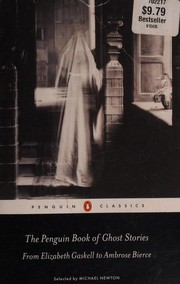
The Penguin Book of Ghost Stories
Introduces classic ghost-story traditions that complement heritage haunting themes.
Scottish folk and fairy tales
Provides cultural context for place-memory and supernatural traditions.
The Lore of Scotland
Places Cromarty legends within the wider tradition of Scottish haunted places.
eBay marketplace picks
Marketplace Samples
Live-tested eBay searches with available results related to this page.
Endnotes
1.
Source: trove.scot
Title: Cromarty House | Designation | trove.scot
Link:https://www.trove.scot/designation/LB1818
2.
Source: trove.scot
Link:https://www.trove.scot/place/14433
3.
Source: thecromartyarchive.org
Title: Tunnel to Cromarty House
Link:https://www.thecromartyarchive.org/picture/number1874/
4.
Source: tartantrailblazers.co.uk
Title: The Pirate’s Graveyard and Ancient Crypt
Link:https://tartantrailblazers.co.uk/2021/04/25/the-pirates-graveyard/
5.
Source: trove.scot
Link:https://www.trove.scot/designation/GDL00120
6.
Source: trove.scot
Link:https://www.trove.scot/place/105508
7.
Source: trove.scot
Link:https://www.trove.scot/place/14482
8.
Source: tartantrailblazers.co.uk
Title: 13 of scotlands scariest places
Link:https://tartantrailblazers.co.uk/2021/10/17/13-of-scotlands-scariest-places/
9.
Source: archive.org
Link:https://archive.org/details/sceneslegendsofn00milluoft
10.
Source: archive.org
Link:https://archive.org/details/sceneslegendsofn00mill
11.
Source: thecromartyarchive.org
Link:https://www.thecromartyarchive.org/picture/number97/
12.
Source: portal.historicenvironment.scot
Link:https://portal.historicenvironment.scot/apex/f?p=1505%3A300%3A%3A%3A%3A%3AVIEWTYPE%2CVIEWREF%3Adesignation%2CGDL00120
13.
Source: electricscotland.com
Title: Electric Scotland Scenes and Legends of The North of Scotland
Link:https://electricscotland.com/history/cromarty/chapter06.htm
14.
Source: subbrit.org.uk
Link:https://www.subbrit.org.uk/sites/cromarty-house-servants-tunnel/
15.
Source: cemeteryclub.wordpress.com
Title: Cemetery Club The Pirate’s Graveyard – Cemetery Club
Link:https://cemeteryclub.wordpress.com/2016/05/31/the-pirates-graveyard/
16.
Source: graveyardsofscotland.com
Link:https://graveyardsofscotland.com/2022/06/18/when-darkness-slowly-spreads-its-wings/
17.
Source: her.highland.gov.uk
Title: Highland Historic Environment Record Microsoft Word
Link:https://her.highland.gov.uk/api/LibraryLink5WebServiceProxy/FetchResourceFromStub/1-2-0-2-3-8_bc5afdc7f65b554-120238_40f1eea6e516938.pdf
18.
Source: her.highland.gov.uk
Link:https://her.highland.gov.uk/Monument/MHG8822
19.
Source: her.highland.gov.uk
Link:https://her.highland.gov.uk/Monument/MHG21742
20.
Source: electricscotland.com
Link:https://electricscotland.com/history/cromarty/index.htm
Additional References
21.
Source: youtube.com
Title: The Mysterious Tunnels Beneath Scotland That Historians Still Can’t Explain
Link:https://www.youtube.com/watch?v=wKjy6YBgnVQ
Source snippet
Redcastle Castle, Ross & Cromarty, Scotland...
22.
Source: youtube.com
Title: Forgotten Highlanders Hidden in a Scottish Graveyard
Link:https://www.youtube.com/watch?v=G1bUb9Gzqsw
Source snippet
The Mysterious Tunnels Beneath Scotland That Historians Still Can't Explain...
23.
Source: castlesandmanorhouses.com
Link:https://www.castlesandmanorhouses.com/ghosts.php?Sort=Country
24.
Source: facebook.com
Link:https://www.facebook.com/groups/2686102378119843/posts/25573310162305740/
25.
Source: instagram.com
Link:https://www.instagram.com/reel/Ce9K5YiocMN/
26.
Source: amazon.de
Link:https://www.amazon.de/Scenes-Legends-North-Scotland-International/dp/0405101104?tag=searcht-20
27.
Source: upload.wikimedia.org
Link:https://upload.wikimedia.org/wikipedia/commons/7/72/Scenes_and_legends_of_the_north_of_Scotland%2C_or_The_traditional_history_of_Cromarty_%28IA_sceneslegendsofn00mill%29.pdf
28.
Source: facebook.com
Link:https://www.facebook.com/groups/2683053621814578/posts/8509581085828440/
29.
Source: instagram.com
Link:https://www.instagram.com/p/DC8wGj-iNQj/
30.
Source: secret-scotland.com
Link:https://www.secret-scotland.com/blog/scotland-travel-blog-august-11
Topic Tree