Where Tyrone's Ghost Stories Still Gather
Tyrone’s haunted reputation is not built around one single famous castle or celebrity ghost. It is a patchwork of roadside apparitions, old-house poltergeists, battlefield memories, hotel rumours, fairy places and newspaper sensations, scattered from Coalisland and Cookstown to Omagh, Dungannon, Clogher and Fivemiletown.
Page outline Jump by section
Where Tyrone’s ghost stories sit on the map
For this haunted-history project, Tyrone means historic County Tyrone, one of the six historic counties of Northern Ireland. The county is still widely used as a cultural and geographical identity even though modern local government now works through district councils rather than county councils. Northern Ireland’s historic counties remain familiar reference points for place, ancestry, sport, tourism and local storytelling.[Wikipedia]WikipediaNorthern IrelandNorthern Ireland
That matters because Tyrone’s folklore does not always stop neatly at modern administrative lines. The Clogher Valley, for example, runs close to Fermanagh; Fivemiletown sits in west Tyrone near the county boundary; and stories such as the Cooneen poltergeist are often discussed in Tyrone circles because of their proximity and family connections, even when the farmhouse itself is usually placed over the line in County Fermanagh. A careful Tyrone page should therefore keep Tyrone as the centre of gravity while recognising that older parish, market-town and family networks carried stories across county borders.[Belfast Entries]belfastentries.comBelfast Entries The Cooneen GhostBelfast Entries The Cooneen Ghost
The county’s historical depth also helps explain why it is so fertile for legend. Tyrone was bound up with the O’Neill lordship, the Nine Years’ War, the Plantation of Ulster, rural migration, linen industry, roads through exposed countryside, and memories of conflict. Dungannon’s Hill of The O’Neill is presented by its heritage site as a key place for understanding Ulster’s history, while archaeological records describe Castle Hill as the O’Neill clan’s main administrative centre from at least the fourteenth century until the Flight of the Earls in 1607.[Hill of the O'Neill]hilloftheoneill.comOpen source on hilloftheoneill.com.
The white lady of Mullaghmoyle Road
The most publicised modern Tyrone haunting was the “white lady” of Mullaghmoyle Road, near Coalisland. In late 2008 and early 2009, reports circulated of a pale female figure seen near an isolated stretch of road and a derelict cottage. The Guardian described convoys of ghost-hunters camping in cars after repeated sightings, while the Belfast Telegraph reported that hundreds of visitors had gone to the road after nightly accounts of a mysterious woman.[The Guardian]theguardian.comThe Guardian Northern Ireland spooked by ghost of the Mullaghmoyle roadThe GuardianNorthern Ireland spooked by ghost of the Mullaghmoyle roadJanuary 10, 2009 — Ghoulish encounters on a lonely Coalisland road…
The story has several features common to modern roadside hauntings. It is tied to a specific location, it spread quickly through local talk and press coverage, and it became an event as much as a legend: people went there hoping to see the figure for themselves. Later summaries identify the site around Flush Hill and describe the apparition as emerging near the hedgerow, but the core claim remains a cluster of witness reports rather than a documented historical haunting.[Spirited Isle]spiritedisle.ieSpirited Isle Mullaghmoyle Road, Tyrone | Explore Haunted IrelandSpirited Isle Mullaghmoyle Road, Tyrone | Explore Haunted Ireland
The most interesting part is the sceptical layer. The Guardian noted that one proposed explanation linked the ghost to a deceased local woman, but also reported that this did not fit neatly because stories of a phantom on the road had reportedly circulated for much longer. The same report mentioned earlier local accounts of misty shapes and an investigation by the Northern Ireland Paranormal Research Association, making the case a mixture of folklore, local memory, journalism and ghost-hunting culture.[The Guardian]theguardian.comThe Guardian Coalisland's ghostly attraction | Northern IrelandThe Guardian Coalisland's ghostly attraction | Northern Ireland
Mullaghmoyle Road is therefore best read not as a confirmed apparition, but as a modern example of how a rural lane can briefly become a haunted destination. The ghost’s fame came from repetition, accessibility and atmosphere: a lonely road, a ruined building, winter darkness, crowds of watchers, and a story simple enough to retell in one sentence.
The Cookstown Ghost of 1874
The Cookstown Ghost is one of Tyrone’s more valuable cases because it was reported in nineteenth-century newspapers rather than appearing only in recent paranormal lists. The story centred on a grocer, Mr Allen, at Old Town Hill in Cookstown, where destructive and unexplained acts were said to have disturbed the household. Reports described damaged clothing, crockery and household disorder, with public interest peaking around November and December 1874.[Belfast Entries]belfastentries.comcookstown ghostBelfast EntriesThe Cookstown Ghost of Old Town Hill27 Dec 2024 — The Belfast Newsletter, 19th November 1874, reported an unusual explanat…
What makes the Cookstown case especially useful is that contemporary reaction was divided. Some people treated the events as proof of a ghost or spirit; others considered them vandalism, trickery or a failure of explanation. BelfastEntries’ archive-based account highlights that newspapers themselves wrestled with the uncertainty, noting both sympathy for the family and scepticism about a return to superstition.[Belfast Entries]belfastentries.comcookstown ghostBelfast EntriesThe Cookstown Ghost of Old Town Hill27 Dec 2024 — The Belfast Newsletter, 19th November 1874, reported an unusual explanat…
This is a classic poltergeist pattern: the “ghost” is not mainly seen as a figure, but inferred from noisy, disruptive, physical disturbances. The story’s social force came from embarrassment and publicity. A respectable household was made ridiculous by damage no one could explain, while neighbours, newspapers and readers became part of the spectacle. In that sense, the Cookstown Ghost belongs with a wider tradition of household hauntings where the central question is not “who saw the ghost?” but “who, or what, is causing the mischief?”
For a modern reader, the sensible conclusion is cautious. The Cookstown Ghost is historically interesting because it was discussed in contemporary print and attached to a named town location. Its evidential weakness is equally clear: the reported phenomena were not independently proven supernatural, and the strongest surviving value is as a window into nineteenth-century belief, class respectability, local gossip and newspaper entertainment.
Omagh’s Knock-na-Moe Castle Hotel and the haunted room
Omagh’s most frequently mentioned haunted building is Knock-na-Moe Castle Hotel, now remembered as much through local memory as through its physical remains. Cormac Strain’s book Haunted Tyrone is advertised as including “a lady” said to haunt a locked room in Knocknamoe Castle Hotel, and local coverage in the Tyrone Constitution described it as one of Omagh’s best-known ghost stories.[Internet Archive]archive.orgOpen source on archive.org.
The legend is usually told as a haunted-room story. Later paranormal summaries say that a room in the hotel was kept locked and that the ghost was linked to a young woman’s tragic death, with reported knocks, dragging sounds, cold sensations and an uneasy presence near the sealed room. These details should be treated carefully: they are part of the tradition, not verified historical evidence.[Spirited Isle]spiritedisle.ieSpirited Isle Haunted Tyrone: Tales from the ShadowsSpirited Isle Haunted Tyrone: Tales from the Shadows
The building’s real history is dramatic enough without embellishment. Local historical coverage describes Knock-na-Moe as a major entertainment venue, especially for dances and live music, and records fires that damaged the hotel over time. A local information-board description says the castle was built in 1875 for the Stack family, used by the US Army’s 34th Division in 1942, and later became a popular showband-era venue.[We Are Tyrone]wearetyrone.comWe Are Tyrone The triumph and tragedy of Knock-Na-Moe CastleWe Are Tyrone The triumph and tragedy of Knock-Na-Moe Castle
That social history helps explain why the ghost story lasted. Hotels and dance halls produce unusually strong local memories: courtship, music, alcohol, late-night journeys, staff rumours, off-limits rooms and stories told by people who once worked there. Knock-na-Moe’s haunting is less valuable as evidence for a ghost than as a reminder that modern haunted places are often former social hubs whose stories survive after the building has declined, changed use or disappeared.
Dungannon, ruined power and the pull of castle legends
Dungannon is not Tyrone’s clearest “haunted castle” case, but it is one of the county’s most atmospheric historical anchors. Castle Hill was associated with the O’Neills, the Gaelic lordship of Ulster, the Nine Years’ War and the later Plantation settlement. Archaeological work at Castle Hill uncovered medieval walling and confirmed the site’s long political importance.[Excavations]excavations.ieOpen source on excavations.ie.
This matters for haunted-history readers because castle legends often grow around places where power has visibly vanished. Dungannon Castle was burned, rebuilt, captured, slighted, reused and later associated with military and policing installations. The public heritage framing at the Hill of The O’Neill emphasises the site as a place where the story of Ulster and Northern Ireland can be read through landscape and archaeology.[Hill of the O'Neill]hilloftheoneill.comOpen source on hilloftheoneill.com.
Some modern haunted directories attach spectral-lady motifs to Dungannon Castle, but the stronger evidence is historical rather than paranormal. The site’s importance lies in the way it concentrates themes that often feed ghost lore: dispossession, ruined fortification, buried walls, vanished dynasties and the uneasy afterlife of contested places.[Eoghan Corry's TRAVEL Extra]travelextra.iehaunted places in irelands county tyronehaunted places in irelands county tyrone
A careful Tyrone haunting page should therefore avoid overselling Dungannon as a proven ghost site. Its real contribution is mood and memory. It gives the county’s ghost stories a deeper historical backdrop: a landscape where old authority was burned, abandoned, excavated and reinterpreted.
Benburb and the battlefield imagination
Battlefields often attract ghost stories because they offer a simple emotional explanation for unease: if many people died violently in a place, later lights, sounds or shapes are interpreted as the dead replaying the conflict. In Tyrone, the obvious example is Benburb, where Owen Roe O’Neill’s Confederate army defeated Robert Monro’s Scottish Covenanter force on 5 June 1646. History Ireland summarises Benburb as a major victory in east Tyrone, with perhaps 3,000 casualties inflicted on Monro’s side and around 300 losses for O’Neill.[History Ireland]historyireland.comOpen source on historyireland.com.
Modern haunted listings say the battlefield has acquired stories of flickering lights, ghostly shapes, battle cries and clashing steel. These should be read as battlefield folklore rather than as documented witness evidence. They matter because they show how military history is converted into sensory legend: lights become souls, wind becomes shouting, and a dark field becomes a replay of old violence.[Spirited Isle]spiritedisle.ieSpirited Isle Battle of Benburb | Explore Haunted IrelandSpirited Isle Battle of Benburb | Explore Haunted Ireland
Benburb’s historical memory is unusually strong because the battle was politically and culturally significant. Local historical accounts describe it as a celebrated Irish victory, while wider summaries note that it weakened Scottish Covenanter ambitions in Ireland even though O’Neill did not fully exploit the win.[O'Neill Country Historical Society]oneillcountryhistoricalsociety.combattle of benburbbattle of benburb
The ghost tradition, then, is secondary to the history but not irrelevant. It shows how communities make emotional sense of a battlefield long after the military details have faded from everyday memory.
Folklore from roads, wells, forts and lonely places
Tyrone’s eerie tradition is not limited to named “haunted attractions”. The Schools’ Collection and other folklore records preserve a wider world of ghosts, fairy places, holy wells, frightening roads and lonesome corners. These are often small, local stories, but they are essential because they show how supernatural belief worked in everyday rural life.[Dúchas]duchas.ieDúchasGhosts · Clochar · The Schools' CollectionAbout 50 years in the school side of Doonamona Cross roads a ghost… “When I came to Cl…
One Schools’ Collection entry from Clogher records local claims that ghosts had been seen “from time to time in many places”, including a spirit said to live under a road crossing after being banished from a nearby house by a priest. The same entry refers to a death-coach route, a motif found across Irish and Ulster folklore in which an uncanny coach is associated with death or warning.[Dúchas]duchas.ieDúchasGhosts · Clochar · The Schools' CollectionAbout 50 years in the school side of Doonamona Cross roads a ghost… “When I came to Cl…
Another Tyrone-linked road tradition appears in the Bragan material, where people were said to fear passing a place late at night because of a ghost connected with a famine-era death at a bridge. The value of this kind of account lies in its blend of landscape and social memory: a dangerous or lonely spot becomes memorable because a story explains why it feels wrong after dark.[Dúchas]duchas.ieOpen source on duchas.ie.
The same pattern appears in fairy-fort and holy-well material around the wider Tyrone borderland. A Dúchas entry records a peculiar rock in a Tyrone townland near the Donegal border, where water in marks on the stone was used as a local cure for toothache. This is not a ghost story, but it belongs to the same supernatural landscape: a place where natural features, healing belief and inherited explanation overlap.[Dúchas]duchas.ieOpen source on duchas.ie.
Houses, estates and the problem of thin evidence
Several Tyrone places appear in modern haunted directories, including Blessingbourne Estate near Fivemiletown, Wellbrook Beetling Mill near Cookstown, Bridge Street in Omagh, Scotch Street in Dungannon and private or demolished houses. These listings can be useful pointers, but they vary in evidential strength. Some preserve local tradition; others repeat unsourced motifs such as grey ladies, footsteps, shadow figures or tragic women.[Spirited Isle]spiritedisle.ieSpirited Isle Haunted Tyrone: Tales from the ShadowsSpirited Isle Haunted Tyrone: Tales from the Shadows
Blessingbourne is a good example. The estate’s own history records its Montgomery and Armar family connections, its eighteenth-century inheritance route, and figures such as Hugh “Colonel Eclipse” Montgomery. Haunted listings add a “Lady in Grey” said to wander the mansion, stables and grounds, but the historical estate record and the ghost tradition are not the same kind of evidence.[Blessingbourne Estate]blessingbourne.comOpen source on blessingbourne.com.
Wellbrook Beetling Mill offers another kind of caution. The site is a strong historic attraction in its own right: a restored nineteenth-century water-powered linen-finishing mill near Cookstown, associated with the linen industry and operated by the National Trust. Some haunted lists attach ghostly claims to it, but the most reliable public evidence concerns industrial heritage rather than paranormal activity.[Wikipedia]WikipediaWellbrook Beetling MillWellbrook Beetling Mill
For readers, the useful rule is simple: the more specific the source, date, witness chain and historical setting, the stronger the story as folklore evidence. A named 1874 newspaper case or a collected Schools’ Collection tale carries more interpretive weight than a modern list entry that offers only “a figure has been seen”.
How credible are Tyrone’s hauntings?
Tyrone’s ghost stories are credible as folklore, local memory and social history. They are not credible as proof that the dead physically haunt the county. The strongest cases have at least one of three supports: contemporary reporting, identifiable place attachment, or preservation through oral-history and folklore collection. The Cookstown Ghost has newspaper depth; Mullaghmoyle Road has modern press coverage and living-memory momentum; Clogher-area stories have folklore-collection value.[belfastentries.com]belfastentries.comcookstown ghostBelfast EntriesThe Cookstown Ghost of Old Town Hill27 Dec 2024 — The Belfast Newsletter, 19th November 1874, reported an unusual explanat…
The weaker cases tend to rely on familiar motifs with little supporting detail: a woman in white, a grey lady, a locked room, footsteps, cold spots, unexplained knocks. These motifs are not worthless, because repetition itself tells us what kinds of stories people find believable. But they should be framed as traditions and claims rather than as established events.[Spirited Isle]spiritedisle.ieOpen source on spiritedisle.ie.
Sceptical explanations vary by case. A roadside white figure may involve mist, headlights, expectation, group suggestion or a real person glimpsed briefly. A poltergeist outbreak may involve pranks, stress, misinterpretation or deliberate deception. A battlefield haunting may begin with natural lights, animals, wind or the emotional force of knowing what happened there. None of these explanations has to be proved in every case to justify caution; they simply show why haunted history should separate atmosphere from evidence.
Tyrone’s haunted landscape is most rewarding when read in that balanced way. The county offers eerie stories with real roots in place: the Coalisland road that became a winter spectacle, the Cookstown shop that baffled newspaper readers, the Omagh hotel whose locked-room rumour outlived its heyday, the Dungannon hill where ruined power invites legend, and the Benburb battlefield where history is easily heard as an echo after dark.
Amazon book picks
Further Reading
Books and field guides related to Where Tyrone's Ghost Stories Still Gather. Use these as the next step if you want deeper reading beyond the article.

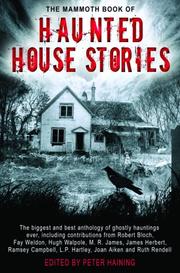
The Mammoth Book of Haunted House Stories
Provides classic haunted house stories that complement interest in local hauntings.
eBay marketplace picks
Marketplace Samples
Live-tested eBay searches with available results related to this page.


Endnotes
1.
Source: belfastentries.com
Title: cookstown ghost
Link:https://www.belfastentries.com/stories/cookstown-ghost/
Source snippet
Belfast EntriesThe Cookstown Ghost of Old Town Hill27 Dec 2024 — The Belfast Newsletter, 19th November 1874, reported an unusual explanat...
Published: November 1874
2.
Source: Wikipedia
Title: Northern Ireland
Link:https://en.wikipedia.org/wiki/Northern_Ireland
3.
Source: belfastentries.com
Title: Belfast Entries The Cooneen Ghost
Link:https://www.belfastentries.com/stories/cooneen-ghost/
4.
Source: excavations.ie
Link:https://excavations.ie/report/2003/Tyrone/0010880/
5.
Source: archive.org
Link:https://archive.org/details/hauntedtyrone0000stra?ui=embed&view=theater&wrapper=false
6.
Source: Wikipedia
Title: Dungannon Castle
Link:https://en.wikipedia.org/wiki/Dungannon_Castle
7.
Source: Wikipedia
Title: Battle of Benburb
Link:https://en.wikipedia.org/wiki/Battle_of_Benburb
8.
Source: blessingbourne.com
Link:https://www.blessingbourne.com/history-of-blessingbourne/
9.
Source: Wikipedia
Title: Wellbrook Beetling Mill
Link:https://en.wikipedia.org/wiki/Wellbrook_Beetling_Mill
10.
Source: Wikipedia
Title: County Tyrone
Link:https://en.wikipedia.org/wiki/County_Tyrone
11.
Source: Wikipedia
Title: Blessingbourne House
Link:https://en.wikipedia.org/wiki/Blessingbourne_House
12.
Source: belfastentries.com
Link:https://www.belfastentries.com/tag/county-tyrone/
13.
Source: belfastentries.com
Link:https://www.belfastentries.com/tag/ghost/
14.
Source: archive.org
Link:https://archive.org/stream/historicalnotice00youn/historicalnotice00youn_djvu.txt
15.
Source: theguardian.com
Title: The Guardian Northern Ireland spooked by ghost of the Mullaghmoyle road
Link:https://www.theguardian.com/uk/gallery/2009/jan/09/tyrone-ghost
Source snippet
The GuardianNorthern Ireland spooked by ghost of the Mullaghmoyle roadJanuary 10, 2009 — Ghoulish encounters on a lonely Coalisland road...
Published: January 10, 2009
16.
Source: duchas.ie
Link:https://www.duchas.ie/en/cbes/4427832/4348822/4434567?Route=stories
Source snippet
DúchasGhosts · Clochar · The Schools' CollectionAbout 50 years in the school side of Doonamona Cross roads a ghost... “When I came to Cl...
17.
Source: wikishire.co.uk
Link:https://wikishire.co.uk/wiki/Tyrone
18.
Source: wearetyrone.com
Title: the knocking house
Link:https://wearetyrone.com/news/the-knocking-house/
19.
Source: hilloftheoneill.com
Link:https://www.hilloftheoneill.com/explore/
20.
Source: spiritedisle.ie
Title: Spirited Isle Mullaghmoyle Road, Tyrone | Explore Haunted Ireland
Link:https://spiritedisle.ie/explore/listing/mullaghmoyle-road-tyrone/
21.
Source: theguardian.com
Title: The Guardian Coalisland’s ghostly attraction | Northern Ireland
Link:https://www.theguardian.com/uk/2009/jan/10/mullaghmoyle-ghost-coalisland-phantom-seekers
22.
Source: spiritedisle.ie
Title: Spirited Isle Haunted Tyrone: Tales from the Shadows
Link:https://spiritedisle.ie/haunted-tyrone/
23.
Source: spiritedisle.ie
Link:https://spiritedisle.ie/explore/listing/knock-na-moe-castle-hotel/
24.
Source: wearetyrone.com
Title: We Are Tyrone The triumph and tragedy of Knock-Na-Moe Castle
Link:https://wearetyrone.com/entertainment/the-triumph-and-tragedy-of-knock-na-moe-castle/
25.
Source: travelextra.ie
Title: haunted places in irelands county tyrone
Link:https://www.travelextra.ie/haunted-places-in-irelands-county-tyrone/
26.
Source: historyireland.com
Link:https://historyireland.com/new-on-line-documentary-on-the-battle-of-benburb/
27.
Source: spiritedisle.ie
Title: Spirited Isle Battle of Benburb | Explore Haunted Ireland
Link:https://spiritedisle.ie/explore/listing/battle-of-benburb/
28.
Source: oneillcountryhistoricalsociety.com
Title: battle of benburb
Link:https://oneillcountryhistoricalsociety.com/history/battle-of-benburb/
29.
Source: duchas.ie
Link:https://www.duchas.ie/en/cbes/4742066/4732128/4781954?transcribe=true
30.
Source: duchas.ie
Link:https://www.duchas.ie/en/cbes/4547216/4413794/4548054
31.
Source: spiritedisle.ie
Link:https://spiritedisle.ie/explore/listing/blessingbourne-estate/
32.
Source: spiritedisle.ie
Title: Video: 4 Ghost Stories From Co. Tyrone | Spirited Isle
Link:https://spiritedisle.ie/video-4-ghost-stories-from-co-tyrone/
33.
Source: duchas.ie
Title: Emper Folklore Proof
Link:https://www.duchas.ie/assets/pdf/Emper-Folklore-Proof.pdf
34.
Source: duchas.ie
Link:https://www.duchas.ie/en/meitheal/log/cbes
35.
Source: duchas.ie
Link:https://www.duchas.ie/en/cbes/4428281/4391441
36.
Source: duchas.ie
Link:https://www.duchas.ie/en/cbes/4723854/4719326/4759387
37.
Source: duchas.ie
Link:https://www.duchas.ie/en/cbes/5162158/5160030
38.
Source: duchas.ie
Title: NFC TGC SC Survey Final April 2022
Link:https://www.duchas.ie/assets/pdf/NFC-TGC-SC-Survey-Final-April-2022.pdf
Published: April 2022
39.
Source: duchas.ie
Link:https://www.duchas.ie/en/cbes/4493754/4416678/4530812
40.
Source: duchas.ie
Link:https://www.duchas.ie/en/cbes/4493719/4414235
41.
Source: duchas.ie
Link:https://www.duchas.ie/en/cbes/4541317/4422168/4541511?Route=stories
42.
Source: duchas.ie
Link:https://www.duchas.ie/en/cbes/5162158/5159982?HighlightText=Clogher&Route=schools&SearchLanguage=ga
43.
Source: duchas.ie
Link:https://www.duchas.ie/en/cbes/5009062/4982480/5119111
44.
Source: duchas.ie
Link:https://www.duchas.ie/en/cbes/stories?NameKey=mr-richard-eivers
45.
Source: duchas.ie
Link:https://www.duchas.ie/en/cbes/5162181/5161712?SearchLanguage=en
46.
Source: duchas.ie
Link:https://www.duchas.ie/en/cbes/4427832/4348515/4435488
47.
Source: duchas.ie
Title: Shan Crosack · St Boden’s, Culdaff · The Schools’ Collection Ghost Stories
Link:https://www.duchas.ie/en/cbes/4493804/4422373/4538355?Route=stories
48.
Source: duchas.ie
Link:https://www.duchas.ie/en/cbes/scealta?Page=2&SearchText=ghost
49.
Source: duchas.ie
Link:https://www.duchas.ie/en/cbes/4569047/4566593/4583650
50.
Source: duchas.ie
Link:https://www.duchas.ie/en/cbes/4798708/4792038/4924307
51.
Source: duchas.ie
Link:https://www.duchas.ie/en/cbes/4723854/4719354/4759509
52.
Source: duchas.ie
Link:https://www.duchas.ie/en/cbes/4921826/4909654/5185576
53.
Source: duchas.ie
Link:https://www.duchas.ie/en/cbes/4547213/4413735/4547924
54.
Source: duchas.ie
Link:https://www.duchas.ie/en/cbes/5162158/5160028/5163787
55.
Source: spiritedisle.ie
Title: Haunted Armagh: Exploring Ghostly Legends Discover Ireland’s most haunted places
Link:https://spiritedisle.ie/haunted-armagh/
56.
Source: spiritedisle.ie
Link:https://spiritedisle.ie/explore/listing/cooneen-coonian-farmhouse/
57.
Source: en.wikivoyage.org
Title: County Tyrone
Link:https://en.wikivoyage.org/wiki/County_Tyrone
58.
Source: discovernorthernireland.com
Link:https://discovernorthernireland.com/listing/hill-of-the-o%E2%80%99neill-%26-ranfurly-house/70524101/
59.
Source: eire.fandom.com
Title: County Tyrone
Link:https://eire.fandom.com/wiki/County_Tyrone
60.
Source: amazon.co.uk
Title: Haunted Tyrone
Link:https://www.amazon.co.uk/Haunted-Tyrone-Cormac-Strain-ebook/dp/B00MLDU9D2?tag=searcht-20
Additional References
61.
Source: hauntedrooms.co.uk
Link:https://www.hauntedrooms.co.uk/haunted-places/northern-ireland
62.
Source: atlasobscura.com
Link:https://www.atlasobscura.com/lists/haunted-northern-ireland-tour
63.
Source: rootsireland.ie
Link:https://www.rootsireland.ie/irish-world-family-history/about-county-tyrone/
64.
Source: ancientclans.org
Link:https://ancientclans.org/site/wp-content/uploads/2021/05/CAF-Dungannon-HLF-Statement.pdf
65.
Source: facebook.com
Link:https://www.facebook.com/groups/1402319486648434/posts/2665810266966010/
66.
Source: reddit.com
Link:https://www.reddit.com/r/northernireland/comments/t2isdc/any_haunted_place_in_northen_ireland_in_around_co/
67.
Source: reddit.com
Link:https://www.reddit.com/r/northernireland/comments/petse7/any_local_folklore_or_ghost_stories_what_you_got/
68.
Source: virtualvisittours.com
Link:https://www.virtualvisittours.com/ballygally-castle-hotel-ghost-room/
69.
Source: paranormaldatabase.com
Link:https://www.paranormaldatabase.com/ireland/antrim.php
70.
Source: paranormaldatabase.com
Link:https://www.paranormaldatabase.com/ireland/tyrone.php
Topic Tree
Follow this branch
Related pages 91
- Haunted Clackmannanshire
- Haunted Antrim
- Haunted Armagh
- Haunted Durham
- Haunted Londonderry
- +86 more in sidebar