Within Haunted Banffshire
What Lurks Beyond Banffshire's Castles?
Beyond named ghosts, Banffshire's older uncanny world includes dangerous water, healing places, fair neighbours and supernatural horses.
On this page
- Kelpies and uncanny horses near water
- Healing wells and sacred local places
- Fairy neighbours and north east folklore collecting
Page outline Jump by section
Introduction
Banffshire’s older uncanny folklore does not sit only in castles and ruined rooms. In the north-east tradition collected around the historic county, the dangerous places are often practical ones: a ford after dark, a deep pool under a bridge, a well visited before sunrise, a ravine spring south of Fochabers, or a house built too close to the fairies’ ground. The central pattern is clear: water could heal, warn, steal, cure, drown or carry away, depending on the story attached to it. That makes this part of Banffshire’s haunted history feel less like a gallery of named ghosts and more like a working rural map of risk and reverence. Historic Banffshire ran from the Moray Firth inland through the Deveron and Spey valleys towards the Cairngorms, so rivers, burns, coastal fishing communities and upland tracks all shaped the folklore people told there.[LordLieutenantBanff]lordlieutenantbanffshire.co.ukOpen source on lordlieutenantbanffshire.co.uk.
The strongest evidence for this page is not a modern ghost-hunt account but nineteenth-century folklore collecting, especially the work of the Reverend Walter Gregor, a Banffshire-born minister and folklorist whose Notes on the Folk-Lore of the North-East of Scotland was published for the Folk-Lore Society in 1881. Gregor said much of the material was gathered directly from “the mouths of the folk”, and his book repeatedly places fairies, water-kelpies, wells, charms and household protections inside the everyday life of the north-east.[Electric Scotland]electricscotland.comElectric Scotland Notes on the folk-lore of the north-east of ScotlandElectric Scotland Notes on the folk-lore of the north-east of Scotland
Why Banffshire’s uncanny world gathers round water
Historic Banffshire is a county of edges: coast, river valleys, hill farms, old roads and parish boundaries. That geography matters because north-east folklore often makes supernatural danger appear exactly where ordinary danger was already present. Gregor’s water-kelpie lives in deep pools of rivers and streams, appears at night, and is heard by travellers at fords and old bridges. In practical terms, these were the places where a person, horse or child might genuinely be lost in darkness, floodwater or bad weather. The story gives that danger a shape: a beautiful black horse, a splash in the water, a presence under the bridge.[Electric Scotland]electricscotland.comElectric Scotland Notes on the folk-lore of the north-east of ScotlandElectric Scotland Notes on the folk-lore of the north-east of Scotland
This is why Banffshire’s older supernatural landscape should not be read as a simple list of monsters. It is more like a set of warnings, habits and explanations attached to local movement. Rivers and burns marked routes, estates, parishes and practical crossings; wells supplied homes and animals; fishing communities watched weather, tides and harbours. In that world, the uncanny was not separate from daily work. Gregor’s description of north-east fireside storytelling says tales of fairies, water-kelpies, ghosts, witches and “black art” were told at night as part of household entertainment, with younger listeners drawing nearer as the peat fire faded.[Electric Scotland]electricscotland.comElectric Scotland Notes on the folk-lore of the north-east of ScotlandElectric Scotland Notes on the folk-lore of the north-east of Scotland
The tales also show how Christian practice, older folk custom and ordinary caution overlapped. In kelpie stories, a bridle marked with the sign of the cross can master the creature. At wells, visitors might leave pins, buttons, money or rags. At Wallakirk, healing water and bathing pools sat beside a saint’s well and an old church site, but church authorities later tried to suppress what they regarded as superstition. Banffshire’s haunted folklore is therefore not just about fear. It is about where people thought unseen power entered the material world.[Electric Scotland]electricscotland.comElectric Scotland Notes on the folk-lore of the north-east of ScotlandElectric Scotland Notes on the folk-lore of the north-east of Scotland

Kelpies and uncanny horses near water
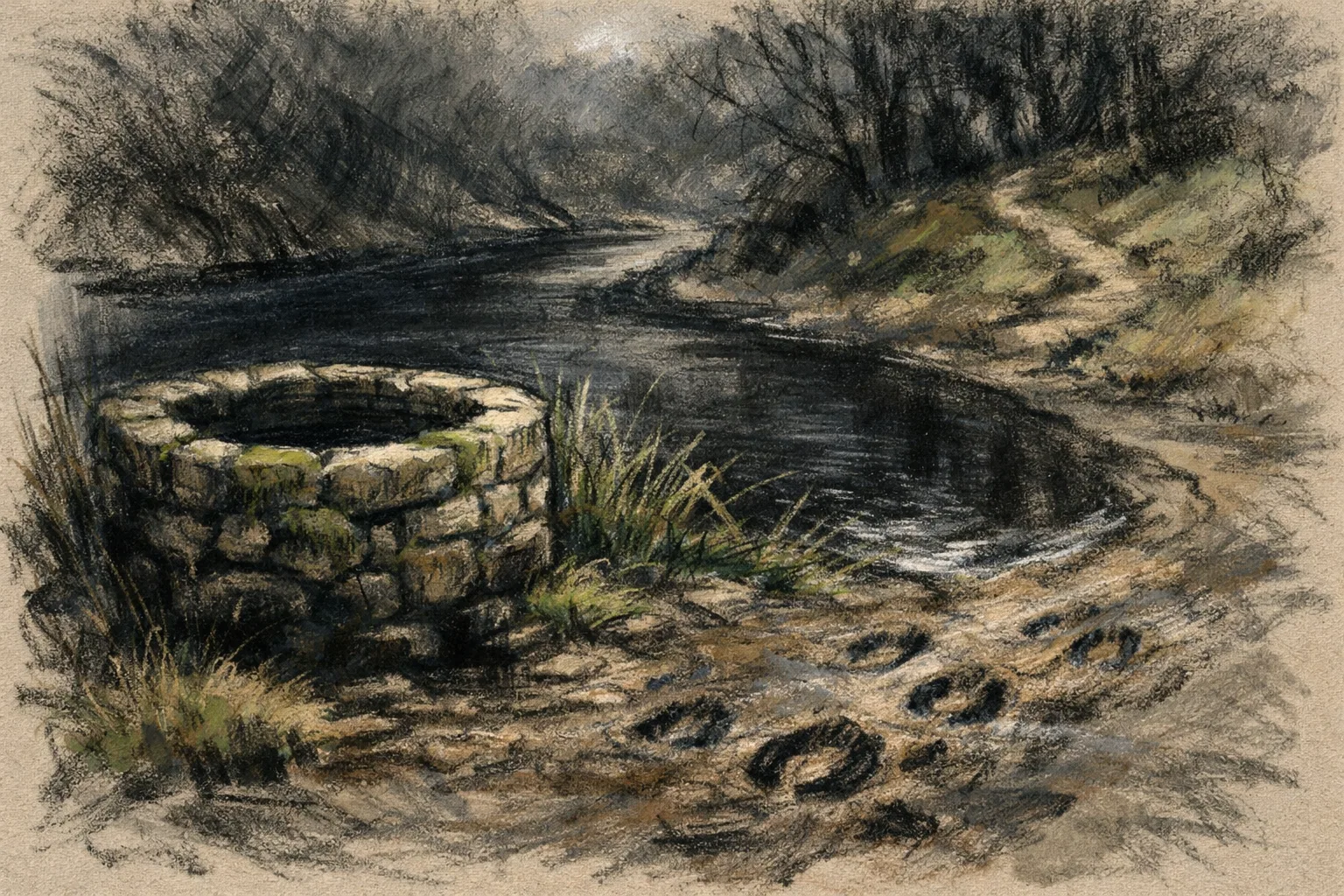
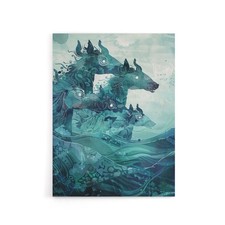
The water-kelpie is the clearest water spirit in the north-east Banffshire folklore orbit. Gregor describes it as a creature of deep pools, usually in the form of a black horse, appearing at night and enticing travellers to mount. Once the rider trusted it, the horse rushed back to its pool and drowned the victim. The detail is simple, memorable and morally sharp: do not trust the convenient horse waiting at the dangerous crossing after dark.[Electric Scotland]electricscotland.comElectric Scotland Notes on the folk-lore of the north-east of ScotlandElectric Scotland Notes on the folk-lore of the north-east of Scotland
This north-east version matches the wider Scottish kelpie tradition, but it has a distinctly practical Banffshire feel. Historic Environment Scotland summarises the kelpie as a water spirit, often horse-shaped, found in lochs, pools and rivers, while wider Scottish accounts often emphasise the fatal ride into water. Gregor’s version is less decorative and more workaday: the kelpie haunts fords, bridges, farm steadings and summer shielings, the kinds of places used by travellers, farm families and livestock.[Historic Environment Scotland Blog]blog.historicenvironment.scotHistoric Environment Scotland Blog Supernatural Creatures in Scottish FolkloreHistoric Environment Scotland Blog Supernatural Creatures in Scottish Folklore
One striking north-east motif is the captured kelpie made to work. Gregor says the creature could be subdued if someone cast over its head a bridle marked with the sign of the cross. Once controlled, it could be forced to carry heavy stones for a mill or farm-steading. When released, it complained in a brief Scots rhyme about its sore back and bones after carrying all the stones. This is not just a monster story; it turns the supernatural horse into a fantasy of labour, strength and building work in a rural economy where moving stone was exhausting human and animal work.[Electric Scotland]electricscotland.comElectric Scotland Notes on the folk-lore of the north-east of ScotlandElectric Scotland Notes on the folk-lore of the north-east of Scotland
Another tale makes the kelpie vulnerable to iron and craft. A blacksmith, whose family had been frightened by the creature at a summer shieling, heated two iron spits and drove them into the kelpie’s sides. The creature collapsed, according to Gregor’s account, into a strange heap. The blacksmith setting is important: iron, fire and skilled work repeatedly appear in British and Scottish folk belief as defences against uncanny beings. Here the smith does not merely witness the supernatural; he defeats it with the tools of his trade.[Electric Scotland]electricscotland.comElectric Scotland Notes on the folk-lore of the north-east of ScotlandElectric Scotland Notes on the folk-lore of the north-east of Scotland
Not every water-being in these stories is exactly a riding horse. Gregor also records the belief that deep pools contained guardian demons, and that some rivers and streams were spoken of as more “bloodthirsty” than others when drownings occurred. A story of a diver sent to recover a plate-chest from a deep pool ends with the pool demon warning him not to return; when he dives again, his heart and lungs rise to the surface. As folklore, this is grim and exaggerated. As social memory, it tells readers something real about deep water: it concealed valuables, bodies, danger and fear.[Electric Scotland]electricscotland.comElectric Scotland Notes on the folk-lore of the north-east of ScotlandElectric Scotland Notes on the folk-lore of the north-east of Scotland
Healing wells and sacred local places
Banffshire’s water folklore is not only frightening. Springs and wells also appear as healing places, visited with rules, offerings and seasonal timing. Gregor describes wells whose waters were thought to cure many kinds of disease. Visitors drank the water, washed the afflicted part, rubbed it with a stone shaped like the relevant body part, and left something personal behind: a pin, button, coin or rag from the patient’s clothing. Those objects were not casual litter in the old belief system. They marked a transfer of illness, and Gregor notes that people were warned not to touch or carry them away in case they contracted the disease left behind.[Electric Scotland]electricscotland.comElectric Scotland Notes on the folk-lore of the north-east of ScotlandElectric Scotland Notes on the folk-lore of the north-east of Scotland
The well at Altthash, south of Fochabers, is one of the most useful Banffshire anchors because it is placed in a specific landscape. Gregor says it lay at the bottom of a rugged brae in a deep ravine, and that it was believed to have moved after an “indignity” was committed against it. He adds that people thought wells could shift position if insulted, altered, deepened, built over or diverted. That belief makes the spring almost person-like: not merely a source of water but a local power that could withdraw, return or resist interference.[Electric Scotland]electricscotland.comElectric Scotland Notes on the folk-lore of the north-east of ScotlandElectric Scotland Notes on the folk-lore of the north-east of Scotland
Altthash also shows how healing water was tied to the calendar. Gregor records that the first three Sundays of May were the great pilgrimage days, especially the first Sunday. People came from surrounding parishes with skin diseases and running sores, arriving at midnight and drinking or washing before sunrise. Later visits continued until the end of September, but the water’s force was thought to decline as the season passed. The pattern is a mixture of practical rural healthcare, ritual timing and seasonal renewal.[Electric Scotland]electricscotland.comElectric Scotland Notes on the folk-lore of the north-east of ScotlandElectric Scotland Notes on the folk-lore of the north-east of Scotland
Wallakirk, in the parish of Glass on the Deveron, gives the tradition a more openly Christianised setting. Gregor identifies it with the church of the old parish of Dumeth, dedicated to St Wolok, with the church and churchyard on a haugh below Beldornie Castle and the saint’s well nearby. Two pools in the Deveron, called baths, were used by people seeking cures, and mothers bathed sickly children there in the hope of recovery. A local history account likewise describes St Wallack’s bath in the river and a celebrated well near the old church site, remembered as a healing place long after the saint’s time.[Electric Scotland]electricscotland.comElectric Scotland Notes on the folk-lore of the north-east of ScotlandElectric Scotland Notes on the folk-lore of the north-east of Scotland
The Kirk’s reaction is part of the story. Gregor quotes seventeenth-century Strathbogie presbytery records in which authorities ordered the restraint of burials in the kirk and the censuring of superstition at Wallakirk. Another entry concerns Agnes Jack, who confessed to going in pilgrimage with a diseased woman while denying “superstitious worship”. This does not prove that cures happened. It does show that the practice was real enough, public enough and troubling enough to draw church discipline.[Electric Scotland]electricscotland.comElectric Scotland Notes on the folk-lore of the north-east of ScotlandElectric Scotland Notes on the folk-lore of the north-east of Scotland
Another Banffshire example appears in a later antiquarian discussion of holy wells: St Michael’s Well near Kirkmichael. The account describes a once-celebrated fountain whose waters were credited with restoring patients to health, and a “guardian” fly whose movements were read as signs of whether an illness or love-affair would end well. The detail may sound odd to a modern reader, but it fits a wider Scottish pattern in which wells were not just curative sites but places of divination, where water, insects, offerings and behaviour were interpreted as messages.[Internet Archive]archive.orgOpen source on archive.org.
Fairy neighbours and north-east folklore collecting
The fairies of north-east Banffshire are not the tiny decorative figures of later children’s imagery. In Gregor’s account they are powerful neighbours: small, green-clad, sometimes helpful, often troublesome, and best spoken of with respectful names. He records that the word “fairy” itself was disliked, and that people called them “the fair folk” or “the good neighbours”. Their homes were green sunny hillocks and knolls beside rivers, streams, lakes or sea-braes, and they had their own “fairy wells”, where visitors left small offerings such as pins or buttons.[Internet Sacred Text Archive]sacred-texts.comOpen source on sacred-texts.com.
These fairy wells mattered because they were distinct from purely curative wells. Gregor explicitly says the fairy wells “seem to have been different” from healing wells. That distinction is useful for readers: not every uncanny spring was a medical place, and not every healing well was necessarily a fairy site. Some wells were visited for cure, some for favour, some for divination, and some because local tradition treated them as belonging to non-human neighbours.[Internet Sacred Text Archive]sacred-texts.comOpen source on sacred-texts.com.
The fairies’ relationship with households was especially tense at vulnerable moments. Gregor records that women after childbirth and unbaptised infants were thought to be at particular risk. Mothers and children were “sained”, or ritually protected, with a fir-candle carried around the bed, religious words, and items such as a Bible, bread and cheese placed under the pillow. The belief was not abstract: the fairies were said to covet human milk and to steal infants, leaving a wasting changeling in the cradle.[Electric Scotland]electricscotland.comElectric Scotland Notes on the folk-lore of the north-east of ScotlandElectric Scotland Notes on the folk-lore of the north-east of Scotland
One north-east changeling story gives the belief its disturbing domestic form. A fisherwoman’s healthy baby began to waste away after a beggar woman handled it; a later beggar man declared that the child had been stolen and performed a ritual involving a black hen and the hearth, after which the true child was said to return. In another case from Tyrie, a wise woman advised that the child’s clothes be washed at a south-running well and watched, again linking fairy recovery to running water and ritual direction. These are not reliable medical reports, but they are powerful evidence of how illness, infant mortality and fear could be explained through fairy theft.[Electric Scotland]electricscotland.comElectric Scotland Notes on the folk-lore of the north-east of ScotlandElectric Scotland Notes on the folk-lore of the north-east of Scotland
Fairies also belonged to work, food and sound. Gregor says that if a spinning-wheel was left ready when not in use, a fairy might spin all night; meal-mills had to be thrown out of gear for the same reason. Fairy music could be heard at twilight or midnight from hillocks, bridges and quiet nooks. Along the coast, fishermen were said to see fairies in little boats, dressed in green with red caps, working on fine summer mornings and evenings. These details make the fairies feel less like isolated apparitions and more like a parallel rural society, imitating or interfering with human labour.[Electric Scotland]electricscotland.comElectric Scotland Notes on the folk-lore of the north-east of ScotlandElectric Scotland Notes on the folk-lore of the north-east of Scotland
How credible are these stories?
The fairest answer is that Banffshire’s water spirits, wells and fairies are credible as folklore, not as proven hauntings. Gregor was a serious nineteenth-century collector, and his importance to north-east folklore is widely recognised; he was born near Keith in Banffshire, worked in Macduff, became minister at Pitsligo, and published extensively on north-east traditions. But his material is still made of remembered tales, customary practice, reported beliefs and local sayings, not controlled evidence of supernatural events.[Wikipedia]WikipediaWalter GregorWalter Gregor
That does not make the stories worthless. On the contrary, their value is that they preserve how people once mapped danger, illness, childbirth, water supply and moral behaviour onto familiar places. A kelpie explains why children and travellers should fear dark pools. A healing well offers hope when formal medicine was limited or distant. A fairy changeling gives a terrible story-shape to childhood wasting illness. A saint’s well contested by church authorities shows the friction between popular practice and official religion.[Electric Scotland]electricscotland.comElectric Scotland Notes on the folk-lore of the north-east of ScotlandElectric Scotland Notes on the folk-lore of the north-east of Scotland
For a haunted-history reader, the important shift is this: Banffshire’s older uncanny world is not only about seeing a figure in a castle corridor. It is about how place itself became charged. A ravine below Fochabers, the banks of the Deveron, a south-running well, a bridge over dark water, a green hillock near a stream, and a fishing community at the coast could all become haunted in the broader folk sense. They were not necessarily haunted by ghosts of named dead people, but by remembered presences, rules and risks that made the landscape feel watched.[lordlieutenantbanffshire.co.uk]lordlieutenantbanffshire.co.ukOpen source on lordlieutenantbanffshire.co.uk.
What lurks beyond Banffshire’s castles?
Beyond Banffshire’s castles, the older folklore points to a county where water was never neutral. It could be holy, healing, polluted, offended, guarded, bloodthirsty or inhabited. Kelpies turned drowning places into stories of black horses and fatal rides. Wells turned illness into pilgrimage, offering and seasonal ritual. Fairies turned hillocks, households, mills, cradles and fishing grounds into places of negotiation with unseen neighbours. The result is a haunted Banffshire that feels less theatrical than many ghost stories, but in some ways more intimate: the supernatural is woven into the route home, the child’s cradle, the working mill, the river pool and the water drawn before dawn.
Amazon book picks
Further Reading
Books and field guides related to What Lurks Beyond Banffshire's Castles?. Use these as the next step if you want deeper reading beyond the article.

The secret commonwealth of elves, fauns, and fairies
Directly explores fairy beliefs central to the page's themes.

The fairy-faith in Celtic countries
Provides rich background on fairy belief across Celtic regions including Scotland.
Scottish Ghost Stories
Appeals to readers exploring Scottish supernatural traditions beyond castles.
eBay marketplace picks
Marketplace Samples
Live-tested eBay searches with available results related to this page.
Endnotes
1.
Source: Wikipedia
Title: Walter Gregor
Link:https://en.wikipedia.org/wiki/Walter_Gregor
2.
Source: Wikipedia
Link:https://en.wikipedia.org/wiki/Baobh-sh%C3%ACth
3.
Source: archive.org
Link:https://archive.org/download/notesonfolklore00greg/notesonfolklore00greg_djvu.txt
4.
Source: archive.org
Link:https://archive.org/stream/antiquary26slsniala/antiquary26slsniala_djvu.txt
5.
Source: Wikipedia
Link:https://en.wikipedia.org/wiki/Kelpie
6.
Source: Wikipedia
Link:https://en.wikipedia.org/wiki/Buckie
7.
Source: Wikipedia
Link:https://en.wikipedia.org/wiki/Banffshire
8.
Source: archive.org
Link:https://archive.org/details/notesonfolklore00greg
9.
Source: scotland.org
Title: scottish myths folklore and legends
Link:https://www.scotland.org/inspiration/scottish-myths-folklore-and-legends
10.
Source: lordlieutenantbanffshire.co.uk
Link:https://www.lordlieutenantbanffshire.co.uk/historic-county-of-banffshire
11.
Source: electricscotland.com
Title: Electric Scotland Notes on the folk-lore of the north-east of Scotland
Link:https://electricscotland.com/history/men/notesonfolklore.pdf
12.
Source: blog.historicenvironment.scot
Title: Historic Environment Scotland Blog Supernatural Creatures in Scottish Folklore
Link:https://blog.historicenvironment.scot/2018/10/supernatural-creatures-scottish-folklore/
13.
Source: sacred-texts.com
Link:https://sacred-texts.com/neu/celt/nes/nes14.htm
14.
Source: electricscotland.com
Link:https://electricscotland.com/history/water/chapter10.htm
15.
Source: electricscotland.com
Link:https://www.electricscotland.com/history/records/extractsfrompres00stuauoft.pdf
16.
Source: mythus.fandom.com
Link:https://mythus.fandom.com/wiki/Kelpie
17.
Source: sacred-texts.com
Link:https://sacred-texts.com/neu/celt/nes/index.htm
18.
Source: britishfairies.wordpress.com
Title: fairy wells
Link:https://britishfairies.wordpress.com/2018/10/21/fairy-wells/
19.
Source: britishfairies.wordpress.com
Link:https://britishfairies.wordpress.com/tag/tylwyth-teg/page/5/
20.
Source: wikishire.co.uk
Link:https://wikishire.co.uk/wiki/Banffshire
21.
Source: en.wikisource.org
Title: Kelpie Stories
Link:https://en.wikisource.org/wiki/The_Folk-Lore_Journal/Volume_1/Kelpie_Stories
22.
Source: en.wikisource.org
Link:https://en.wikisource.org/wiki/1911_Encyclop%C3%A6dia_Britannica/Banffshire
23.
Source: sites.pitt.edu
Link:https://sites.pitt.edu/~dash/water.html
24.
Source: gbps.org.uk
Link:https://www.gbps.org.uk/tools/ukpo/pdfs/scotland/Banffshire.pdf
25.
Source: lordlieutenantbanffshire.co.uk
Link:https://www.lordlieutenantbanffshire.co.uk/banffshire-lieutenancy-area
Additional References
26.
Source: youtube.com
Title: Scottish St Bride’s Day Folklore (Imbolc) | Holy Wells & the White Serpent
Link:https://www.youtube.com/watch?v=tm-GWTum7kc
Source snippet
The Kelpies - Mythical Creatures Bestiary...
27.
Source: youtube.com
Title: The Shellycoat: Scotland’s Goblin of the Waterways
Link:https://www.youtube.com/watch?v=GHMmIUI-QaM
Source snippet
Scottish St Bride's Day Folklore (Imbolc) | Holy Wells & the White Serpent...
28.
Source: documentacatholicaomnia.eu
Link:https://www.documentacatholicaomnia.eu/03d/sine-data%2C_Folklore_of_the_North%2C_East_Of_Scotland_%5BGregor._Walter%5D%2C_EN.doc
29.
Source: instagram.com
Link:https://www.instagram.com/p/DTWVVL6iYxf/
30.
Source: oldroadsofscotland.com
Link:https://oldroadsofscotland.com/stataccbanff.htm
31.
Source: abcounties.com
Link:https://abcounties.com/counties/county-profiles/banffshire/
32.
Source: gazetteer.org.uk
Link:https://gazetteer.org.uk/place/Buckie%2C_Banffshire_6649
33.
Source: amazon.com
Link:https://www.amazon.com/Extracts-Presbytery-Strathbogie-Classic-Reprint/dp/0266393047?tag=searcht-20
34.
Source: alastairmcintosh.com
Link:https://www.alastairmcintosh.com/articles/1997_faerie_hills.htm
35.
Source: facebook.com
Link:https://www.facebook.com/groups/classicphotographyindia/posts/5402781243070329/
Topic Tree