Where Do Ross shire's Ghost Stories Gather?
Ross-shire’s haunted reputation is quieter than that of Edinburgh, Glamis or the Borders, but it has a distinctive Highland character: castle corridors, battlefield after-images, second-sight prophecy, eerie roads through glens, old Cromarty stories, and words for apparitions embedded in local tradition.
Page outline Jump by section
Introduction
Geographically, this page treats Ross-shire as the historic county. That matters because Ross-shire is not the same thing as the modern Highland Council area, and it has long been discussed alongside Cromartyshire and Ross and Cromarty. The county stretches from the North Sea to the Atlantic, includes Easter Ross, Wester Ross and the Isle of Lewis, and has Dingwall as its county town; Wikishire’s county map is a useful index for this historic-county frame.[gazetteer.org.uk]gazetteer.org.ukGazetteer Ross-shire, historiccounty | Gazetteer of British Place NamesGazetteer Ross-shire, historiccounty | Gazetteer of British Place Names
Where Ross-shire’s ghost stories are strongest
The most memorable Ross-shire hauntings gather around places that already feel historically “thick”: Tulloch Castle above Dingwall, Carbisdale Castle near the old border with Sutherland, Cromarty’s vanished castle and servants’ tunnel, the Brahan estate near Dingwall, and the lonely west-coast roads around Kishorn and Ullapool. These are not all equal as evidence. Some are recent hotel legends, some are recorded nineteenth-century folklore, and some are modern retellings attached to real historic sites. The value for a reader is in seeing which is which.
Tulloch Castle gives Ross-shire its clearest hotel ghost. The building is a Category B listed site, described by Historic Environment Scotland as a sixteenth-century square tower with later seventeenth- to twentieth-century additions; it passed from the Bains to the Davidsons in 1760 and contains features such as a remodelled first-floor hall, a wide stair and a tunnel entrance. The current hotel presents it as dating from the twelfth century, associated with the Bains and Clan Davidson, and retaining a 250-year-old panelled Great Hall.[Historic Environment Scotland]portal.historicenvironment.scotOpen source on historicenvironment.scot.
The haunting most often attached to Tulloch is the Green Lady. Haunted Rooms, a specialist ghost-tour and haunted-accommodation site rather than an official heritage body, says the Green Lady is the castle’s most talked-about apparition, connects her with Elizabeth Davidson, and notes that the hotel bar is named after her. This is exactly the sort of claim that should be treated as tradition, not proof: it is locally and commercially prominent, but the source base is folklore, guest testimony and paranormal investigation culture rather than contemporary documentary evidence.[Haunted Rooms®]hauntedrooms.co.ukOpen source on hauntedrooms.co.uk.
The reason Tulloch’s story travels well is that it has the classic ingredients of a castle haunting: an old family seat, a named woman, a stair, a portrait, a bar that keeps the legend visible, and repeated reports of cold spots, sounds or photographs. Those features make it memorable for visitors, but they also make it easy for later retellings to harden into “fact”. The cautious reading is that Tulloch has a well-established Green Lady tradition centred on the Davidson past, while the identity and origin story remain part of the legend rather than settled history.[Haunted Rooms®]hauntedrooms.co.ukOpen source on hauntedrooms.co.uk.

Carbisdale Castle and the battle memory of a restless corridor
Carbisdale Castle is one of Ross-shire’s most atmospheric haunted-place stories because its ghost tradition is tied to a real and well-documented military catastrophe. Historic Environment Scotland’s battlefield record describes Carbisdale as the last battle of James Graham, 1st Marquis of Montrose, fought in 1650 in support of the Royalist cause. The battle was a decisive Covenanter victory: Montrose’s force was routed, he escaped the field, but was soon handed over, taken to Edinburgh, tried and executed.[Historic Environment Scotland]portal.historicenvironment.scotHistoric Environment Scotland Battle of Carbisdale (BTL19Historic Environment Scotland Battle of Carbisdale (BTL19
The castle itself is much later than the battle. Canmore records Carbisdale Castle as a twentieth-century country house and youth hostel, designed by W. S. Weatherley and F. E. Jones in 1910–11, standing on a wooded bluff overlooking the Kyle and railway bridge. That date is important: any “battle ghost” inside the castle cannot be a report from a seventeenth-century building. It is a later haunting tradition attached to a later building placed beside a much older landscape of violence.[Canmore]canmore.org.ukOpen source on canmore.org.uk.
The present Carbisdale Castle history page links the haunting directly to the battle landscape. It says that on 27 April 1650 Montrose fought his last battle on the hill behind the castle, that Royalist forces were trapped and routed, and that the hill became known locally as the Hill of Lamentation. The same page reports a sighting of an angry, distressed sword-carrying apparition in a link corridor, with the figure’s dress interpreted as fitting the Battle of Carbisdale.[carbisdalecastle.com]carbisdalecastle.comHistory | Carbisdale CastleHistory | Carbisdale Castle
That makes Carbisdale a good example of how haunted history works in Ross-shire: the ghost story is not strong because the castle is ancient, but because the place looks back onto a battlefield. The haunting gives a human shape to a difficult memory — rout, pursuit, drowning, defeat and execution — while the official battlefield record helps keep the historical frame firm. The apparition itself remains a reported tradition; the battle is the documented event that gives the story weight.[Historic Environment Scotland]portal.historicenvironment.scotHistoric Environment Scotland Battle of Carbisdale (BTL19Historic Environment Scotland Battle of Carbisdale (BTL19
The Brahan Seer: prophecy, second sight and the Black Isle
No Ross-shire supernatural page is complete without the Brahan Seer, also known as Coinneach Odhar. His stories belong less to “ghost in a room” haunting and more to Highland second sight: the belief that some people could glimpse future events, deaths or hidden truths. Alexander Mackenzie’s nineteenth-century collection, The Prophecies of the Brahan Seer, presents Coinneach Odhar as the most celebrated of the Highland seers and says his prophecies had been known for more than two centuries.[Project Gutenberg]gutenberg.orgThe Project Gutenberg eBook of The Prophecies of the Brahan Seer (Coinneach Odhar Fiosaiche), by Alexander Mackenzie, F.S.A. Scot…
The legend ties the seer to the Seaforth Mackenzies around Brahan, near Dingwall and the Black Isle. In Mackenzie’s account, Lady Seaforth summons him to discover what her absent husband is doing; when the seer reveals an embarrassing truth, his fate is sealed. The book says he was taken to Chanonry Point and burnt in a tar barrel for witchcraft, with later tradition pointing to a stone slab near the lighthouse as the place of execution.[Project Gutenberg]gutenberg.orgThe Project Gutenberg eBook of The Prophecies of the Brahan Seer (Coinneach Odhar Fiosaiche), by Alexander Mackenzie, F.S.A. Scot…
For haunted Ross-shire, the Brahan Seer matters in three ways. First, he links Easter Ross, the Black Isle, Loch Ussie and Chanonry Point into one supernatural geography. Second, his story is full of the same anxieties that feed ghost legends: hidden guilt, family decline, punishment, prophecy and the fear that the unseen world knows what the living conceal. Third, his case shows how hard it is to separate folklore from history. Mackenzie’s account is influential, vivid and locally important, but it is a nineteenth-century literary and antiquarian presentation of tradition, not a court record proving the whole story exactly as told.[Project Gutenberg]gutenberg.orgThe Project Gutenberg eBook of The Prophecies of the Brahan Seer (Coinneach Odhar Fiosaiche), by Alexander Mackenzie, F.S.A. Scot…
The Brahan Seer is therefore best treated as one of Ross-shire’s great supernatural legends rather than as a verified biography. His story can sit naturally beside pages on second sight, the Black Isle, Chanonry Point, Brahan Castle and Highland prophecy, but a careful article should avoid claiming that the prophecies were objectively fulfilled. The interesting fact is not that Ross-shire “proved” second sight; it is that generations found in the seer a way to talk about fate, clan downfall and the moral danger of secrets.[Project Gutenberg]gutenberg.orgThe Project Gutenberg eBook of The Prophecies of the Brahan Seer (Coinneach Odhar Fiosaiche), by Alexander Mackenzie, F.S.A. Scot…
Cromarty: old houses, a Green Lady and a tunnel made for ghost tours
Cromarty gives Ross-shire a different kind of haunted texture: not one famous hotel apparition, but a townscape of remembered houses, old vaults, ruined authority and literary folklore. Hugh Miller, born in Cromarty in 1802, is now presented by the National Trust for Scotland as a geologist, folklorist, fossil hunter, writer and social campaigner. His Scenes and Legends of the North of Scotland; or, The Traditional History of Cromarty is one of the key nineteenth-century sources for Cromarty’s traditional history.[National Trust for Scotland]nts.org.ukOpen source on nts.org.uk.
In Miller’s picture of old Cromarty, the supernatural sits among ordinary buildings. He describes one large house on the eastern side of the street as said to be haunted by a Green Lady, while another house opposite was associated with a brownie that rearranged furniture and household platters. The passage is valuable because it shows that Ross-shire’s “Green Lady” motif was not confined to Tulloch Castle; it belonged to a wider Scottish vocabulary of female apparitions and domestic spirits.[Project Gutenberg]gutenberg.orgScenes and Legends of the North of Scotland | Project Gutenberg…
Miller also records the old castle of Cromarty as a massive building rising in places to six storeys, standing above a ravine and the town, before noting from the Statistical Account that it was pulled down in 1772 and that urns and stone coffins were found around it. That is not a ghost report by itself, but it explains why Cromarty’s haunted imagination gathers around vanished structures: the castle disappeared, but the physical traces of older burials and authority remained in local memory.[Project Gutenberg]gutenberg.orgScenes and Legends of the North of Scotland | Project Gutenberg…
Modern Cromarty has also used the eerie potential of built heritage. A community heritage report records that staff at Cromarty House used a tunnel for access and that the tunnel later formed part of a ghost tour in the town. Subterranea Britannica describes the Cromarty House servants’ tunnel as a nineteenth-century passage under the lawn, built to allow servants and tradesmen to move without disturbing the owners. The ghost-tour use turns a practical class-bound feature of estate life into a public spooky route, which is typical of how haunted tourism repurposes hidden infrastructure.[Amazon Web Services, Inc.]s3-eu-west-1.amazonaws.comAmazon Web Services, Inc.Microsoft WordAmazon Web Services, Inc.Microsoft Word
Wester Ross: haunted passes, fuaths and lonely roads
The west of Ross-shire has fewer widely marketed haunted hotels, but it has older folklore that suits its landscape: sea lochs, moor roads, narrow passes and places that felt dangerous after dark. The Gazetteer of British Place Names describes Wester Ross as a mountainous coast deeply cut by sea lochs, while the Association of British Counties notes Ross-shire’s sharp contrast between the gentler east and the severe, mountainous west. Those physical contrasts matter because supernatural stories often attach to thresholds: passes, shorelines, ferries, lonely roads and the edges of settlements.[Gazetteer]gazetteer.org.ukGazetteer Ross-shire, historiccounty | Gazetteer of British Place NamesGazetteer Ross-shire, historiccounty | Gazetteer of British Place Names
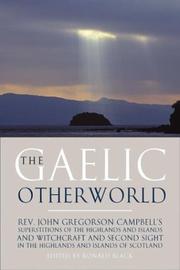
John Gregorson Campbell’s Witchcraft and Second Sight in the Highlands and Islands of Scotland gives a particularly useful Ross-shire detail. He explains that the word fuath means aversion or hatred, but in Ross-shire was commonly used to mean an apparition, ghost or spectre. He also notes a desolate moor near Ullapool whose name was understood as “the Flat-stoned Declivity of Fuaths”, arguing from that place-name that the figure was not simply a water spirit.[Global Grey]globalgreyebooks.comOpen source on globalgreyebooks.com.
A separate west Ross-shire folklore collection records a haunted place near Kishorn: Cumhag a’ Ghlinne, described as a gloomy, eerie “neck” or narrow part of the glen, was said to have been haunted “from time immemorial” by the apparition of a man who had died suddenly while visiting Inverness. The same search result preserves another chase-like motif, in which a walker sees a figure ahead near Kishorn but can never gain on it before it turns up the moor and disappears.[Electric Scotland]electricscotland.comElectric Scotland Folk-Lore from the West of Ross-shireElectric Scotland Folk-Lore from the West of Ross-shire
These west-coast stories are not tourist-polished in the same way as Tulloch or Carbisdale. Their power comes from motion and distance: walking after dark, seeing a figure ahead, entering a narrow glen, crossing a moor with a name that already implies spirits. For a haunted Ross-shire page, they are important because they prevent the county’s supernatural history from becoming only a list of castles. Much of the old fear belonged to roads and weather as much as to buildings.[Global Grey]globalgreyebooks.comOpen source on globalgreyebooks.com.
How credible are the Ross-shire hauntings?
The evidence varies sharply by case, and that variation is part of the story. The best-supported historical facts are the buildings, battles, writers and landscapes: Tulloch Castle’s listed fabric, Carbisdale’s battlefield context, Hugh Miller’s role as a Cromarty folklorist, and Ross-shire’s historic geography. The ghosts themselves are better described as reports, legends, motifs or traditions.[historicenvironment.scot]portal.historicenvironment.scotOpen source on historicenvironment.scot.
A sensible credibility scale for Ross-shire looks like this:(#endnote-11 “Endnote 11”)[gazetteer.org.uk]gazetteer.org.ukGazetteer Ross-shire, historiccounty | Gazetteer of British Place NamesGazetteer Ross-shire, historiccounty | Gazetteer of British Place Names
- Documented historic setting: Tulloch Castle, Carbisdale battlefield, Cromarty House tunnel, Hugh Miller’s Cromarty and the Black Isle are real, traceable places with heritage records or strong local-history sources.[historicenvironment.scot]portal.historicenvironment.scotOpen source on historicenvironment.scot.
- Strong folklore or tourism tradition: Tulloch’s Green Lady, Carbisdale’s sword-bearing apparition and the Brahan Seer are well-known enough to shape how places are presented, but their supernatural claims rely on tradition, retelling and witness culture.[hauntedrooms.co.uk]hauntedrooms.co.ukOpen source on hauntedrooms.co.uk.
- Older antiquarian or folklore record: Miller’s Cromarty Green Lady and brownie, Campbell’s Ross-shire use of fuath, and west Ross-shire apparition stories are valuable because they preserve older belief patterns, though not because they prove literal hauntings.[gutenberg.org]gutenberg.orgProject GutenbergScenes and Legends of the North of Scotland | Project Gutenberg…
- Thin or modern claims: some distillery, hotel and online haunted-place listings mention Ross-shire ghosts, but where they lack dates, named witnesses or independent local records, they are best treated as light folklore or travel colour rather than core evidence.[Cask Trade]casktrade.comOpen source on casktrade.com.
The most credible conclusion is not that Ross-shire is “full of proven ghosts”, but that its haunted identity is unusually layered. A visitor may encounter a hotel ghost at Dingwall, a battlefield apparition at Carbisdale, a prophecy legend at Chanonry Point, a Cromarty literary tradition, and west-coast place-names that preserve older words for spectres. Together, they show how haunting in Ross-shire is less about jump scares and more about memory clinging to roads, rooms, ruins and clan landscapes.
eBay marketplace picks
Marketplace Samples
Live-tested eBay searches with available results related to this page.
Endnotes
1.
Source: carbisdalecastle.com
Title: History | Carbisdale Castle
Link:https://carbisdalecastle.com/history/
2.
Source: gutenberg.org
Title: Project Gutenberg
Link:https://www.gutenberg.org/files/57840/57840-h/57840-h.htm
Source snippet
The Project Gutenberg eBook of The Prophecies of the Brahan Seer (Coinneach Odhar Fiosaiche), by Alexander Mackenzie, F.S.A. Scot...
3.
Source: gutenberg.org
Title: Project Gutenberg
Link:https://www.gutenberg.org/files/71325/71325-h/71325-h.htm
Source snippet
Scenes and Legends of the North of Scotland | Project Gutenberg...
4.
Source: amazon.com
Link:https://www.amazon.com/Legends-Scotland-Traditional-History-Cromarty/dp/1428627324?tag=searcht-20
5.
Source: amazon.de
Link:https://www.amazon.de/-/en/Hugh-Miller/dp/1873631383?tag=searcht-20
6.
Source: clan.com
Title: Folklore Thursday: The Brahan Seer
Link:https://clan.com/blog/folklore-thursday-the-brahan-seer?srsltid=AfmBOopI26W3tCpt2f7-pgoi63vSjx0aeJAsHg6aH5xDMDeOYUbv8i3Z
7.
Source: youtube.com
Title: The Brahan Seer
Link:https://www.youtube.com/watch?v=rE9evu_u42c
Source snippet
TULLOCH CASTLE & the GREEN LADY's GHOST feat @JRM Paranormal...
8.
Source: bespokehotels.com
Title: Bespoke Hotels Home
Link:https://bespokehotels.com/tullochcastlehotel/
9.
Source: hauntedrooms.co.uk
Link:https://www.hauntedrooms.co.uk/product/tulloch-castle-hotel-dingwall-ross-shire-scotland
10.
Source: portal.historicenvironment.scot
Title: Historic Environment Scotland Battle of Carbisdale (BTL19)
Link:https://portal.historicenvironment.scot/apex/f?p=1505%3A300%3A%3A%3A%3A%3AVIEWTYPE%2CVIEWREF%3Adesignation%2CBTL19
11.
Source: globalgreyebooks.com
Link:https://www.globalgreyebooks.com/online-ebooks/john-gregorson-campbell_witchcraft-and-second-sight-in-the-highlands-and-islands-of-scotland_complete-text.html
12.
Source: gazetteer.org.uk
Title: Gazetteer Ross-shire, historiccounty | Gazetteer of British Place Names
Link:https://gazetteer.org.uk/place/Ross-shire
13.
Source: abcounties.com
Title: Association of British Counties Ross-shire | Association of British Counties
Link:https://abcounties.com/counties/county-profiles/ross-shire/
14.
Source: portal.historicenvironment.scot
Link:https://portal.historicenvironment.scot/apex/f?p=1505%3A300%3A%3A%3A%3A%3AVIEWTYPE%2CVIEWREF%3Adesignation%2CLB24518
15.
Source: canmore.org.uk
Link:https://canmore.org.uk/site/13011
16.
Source: nts.org.uk
Link:https://www.nts.org.uk/visit/places/hugh-millers-birthplace
17.
Source: s3-eu-west-1.amazonaws.com
Title: Amazon Web Services, Inc.Microsoft Word
Link:https://s3-eu-west-1.amazonaws.com/s3.spanglefish.com/s/25066/documents/chhreport.pdf
18.
Source: electricscotland.com
Title: Electric Scotland Folk-Lore from the West of Ross-shire
Link:https://electricscotland.com/history/articles/folklore_ross.pdf
19.
Source: casktrade.com
Link:https://www.casktrade.com/news-events/scotland-s-top-10-haunted-distilleries/
20.
Source: Wikipedia
Link:https://en.wikipedia.org/wiki/Cromartyshire
21.
Source: Wikipedia
Title: Carbisdale Castle
Link:https://en.wikipedia.org/wiki/Carbisdale_Castle
22.
Source: Wikipedia
Title: Tulloch Castle
Link:https://en.wikipedia.org/wiki/Tulloch_Castle
23.
Source: Wikipedia
Title: Battle of Carbisdale
Link:https://en.wikipedia.org/wiki/Battle_of_Carbisdale
24.
Source: Wikipedia
Title: Brahan Seer
Link:https://en.wikipedia.org/wiki/Brahan_Seer
25.
Source: canmore.org.uk
Link:https://canmore.org.uk/site/69613/tulloch-castle-caisteal-gorach
26.
Source: canmore.org.uk
Link:https://canmore.org.uk/site/12792/brahan-wood
27.
Source: canmore.org.uk
Link:https://canmore.org.uk/site/12866/davids-fort
28.
Source: canmore.org.uk
Link:https://canmore.org.uk/site/12914/mountrich?GROUPCATEGORY=2&display=collection
29.
Source: nts.org.uk
Link:https://www.nts.org.uk/stories/scottish-ghost-stories-witches-murder-and-folklore
30.
Source: nts.org.uk
Link:https://www.nts.org.uk/stories/scottish-ghost-stories-witches-murder-and-folklore-part-2
31.
Source: celticcastles.com
Title: Tulloch Castle
Link:https://www.celticcastles.com/castles/tulloch/
32.
Source: facebook.com
Link:https://www.facebook.com/highlandpara/photos/the-geanies-poltergeistin-the-19th-century-a-cottage-a-mile-away-from-the-geanie/804053138427312/
33.
Source: facebook.com
Link:https://www.facebook.com/RealCounties/photos/the-county-of-ross-can-be-divided-into-three-parts-easter-ross-wester-ross-and-t/961502026133365/
34.
Source: facebook.com
Link:https://www.facebook.com/photo.php?fbid=804053138427312&id=100064678991093&set=a.663694815796479
35.
Source: facebook.com
Link:https://www.facebook.com/highlandpara/photos/the-geanies-poltergeistin-the-19th-century-a-cottage-a-mile-away-from-the-geanie/1354046326761321/
36.
Source: blog.historicenvironment.scot
Title: the wraith at fort george a ghost story for christmas
Link:https://blog.historicenvironment.scot/2022/12/the-wraith-at-fort-george-a-ghost-story-for-christmas/
37.
Source: blog.historicenvironment.scot
Title: haunted homes history allegedly
Link:https://blog.historicenvironment.scot/2017/10/haunted-homes-history-allegedly/
38.
Source: portal.historicenvironment.scot
Link:https://portal.historicenvironment.scot/apex/f?p=1505%3A300%3A%3A%3A%3A%3AVIEWTYPE%2CVIEWREF%3Adesignation%2CLB24519
39.
Source: portal.historicenvironment.scot
Link:https://portal.historicenvironment.scot/apex/f?p=1505%3A300%3A%3A%3A%3A%3AVIEWTYPE%2CVIEWREF%3Adesignation%2CLB24520
40.
Source: scotclans.com
Link:https://www.scotclans.com/blogs/bletherskite/prophecy-scottish-second-sight?srsltid=AfmBOoqujKQe8ox9qZjExE7nqMj8d7LD6zatRx3P7ykhMw4ju26J8hpi
41.
Source: pantheon.org
Link:https://pantheon.org/articles/f/fuath.html
42.
Source: electricscotland.com
Link:https://electricscotland.com/history/cromarty/index.htm
43.
Source: droversinn.co.uk
Title: Ghost Stories
Link:https://www.droversinn.co.uk/our-ghosts/
44.
Source: thecastlesofscotland.co.uk
Link:https://www.thecastlesofscotland.co.uk/the-best-castles/grand-castles/tulloch-castle/
45.
Source: scottish-paranormal.co.uk
Title: carbisdale castle
Link:https://www.scottish-paranormal.co.uk/post/carbisdale-castle
Additional References
46.
Source: youtube.com
Title: Witchcraft in Scotland
Link:https://www.youtube.com/watch?v=Xk_USw5gOlw
Source snippet
"The TRUTH about Seers of Scotland: GIFT or CURSE?...
47.
Source: facebook.com
Link:https://www.facebook.com/groups/lovestraveling/posts/573531907116228/
48.
Source: facebook.com
Link:https://www.facebook.com/groups/yourtartan/posts/3384087925235633/
49.
Source: visitscotland.com
Link:https://www.visitscotland.com/nl-nl/things-to-do/attractions/castles/haunted
50.
Source: facebook.com
Link:https://www.facebook.com/LindsaysHighlandTours/posts/12th-century-tulloch-castle-is-widely-considered-haunted-the-most-prominent-spir/1338386678316890/
51.
Source: wildaboutargyll.co.uk
Link:https://www.wildaboutargyll.co.uk/blogs/7-enchanted-locations-filled-with-stories-in-argyll-the-isles/
52.
Source: afhs.co.uk
Link:https://afhs.co.uk/ayrshires-most-haunted-ten-top-ayrshire-ghost-encounters/
53.
Source: scotlandsfinest.nl
Link:https://www.scotlandsfinest.nl/what-s-to-see/scotland-s-finest-battle-sites/battle-site-of-carbisdale
54.
Source: instagram.com
Link:https://www.instagram.com/p/CzlNAxqoKXV/
55.
Source: medium.com
Link:https://medium.com/%40beekeeper292/buying-a-haunted-castle-8f74389b10eb
Topic Tree
Follow this branch
Related pages 91
- Haunted Clackmannanshire
- Haunted Antrim
- Haunted Armagh
- Haunted Durham
- Haunted Londonderry
- +86 more in sidebar